Forés @ UVPress


         Universitat de València PRESS -UVPress- weblog for research uses

April 21, 2012

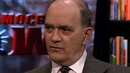
05 Exclusive: NSA Whistleblower William Binney on Growing State Surveillance

Filed under: archivo personal,future,módulo básico,política,tecnología — fores @ 2:02 am

Friday, April 20, 2012 Whole Show

Exclusive: National Security Agency Whistleblower William Binney on Growing State Surveillance

Javascript is required to watch video inline on this page.
You can choose another option on the listen/watch page if you prefer.

William_binney

In his first television interview since he resigned from the National Security Agency over its domestic surveillance program, William Binney discusses the NSA’s massive power to spy on Americans and why the FBI raided his home after he became a whistleblower. Binney was a key source for investigative journalist James Bamford’s recent exposé in Wired Magazine about how the NSA is quietly building the largest spy center in the country in Bluffdale, Utah. The Utah spy center will contain near-bottomless databases to store all forms of communication collected by the agency, including private emails, cell phone calls, Google searches and other personal data.

Binney served in the NSA for over 30 years, including a time as technical director of the NSA’s World Geopolitical and Military Analysis Reporting Group. Since retiring from the NSA in 2001, he has warned that the NSA’s data-mining program has become so vast that it could “create an Orwellian state.” Today marks the first time Binney has spoken on national television about NSA surveillance. This interview is part of a 4-part special. Click here to see segment 2, 3, and 4. [includes rush transcript]

Guest:

William Binney, served in the NSA for over 30 years, including a time as director of the NSA’s World Geopolitical and Military Analysis Reporting Group. Since retiring from the NSA in 2001, he has warned that the NSA’s data-mining program has become so vast that it could “create an Orwellian state.”

April 20, 2012

05 Nicolas Sarkozy: Why is the French president so disliked?

Filed under: future,Holístico,módulo básico,política — fores @ 2:22 am


19 April 2012 Last updated at 19:40 ET

Nicolas Sarkozy: Why is the French president so disliked?

By Hugh Schofield BBC News, Paris

Sarkozy campaign poster covered in graffiti

If President Nicolas Sarkozy fails to win a second term, as many polls are predicting ahead of Sunday’s first round of voting, perhaps the biggest factor will be the personal loathing that he elicits in so many of the French. What’s behind it?

From the moment he took office in 2007, no French president in modern times has been the object of such blatant dislike.

It is an animosity quite distinct from opposition to his actual policies.

All leaders expect hostility for the things they do. Few get it in such measure for the things they are.

“There is an irrational hatred of Nicolas Sarkozy among much of the public, and it is playing a major part in this election,” says Jean-Sebastien Ferjou who edits the news website Atlantico.

“I say ‘irrational’ because that is what it is. Polls show that if you ask people about this or that policy of Sarkozy’s – but don’t mention his name – they will tend to support it.

Continue reading the main story

And his policies…

“The reforms that have defined his period in office – raising the retirement age from 60 to 62, relaxing the 35-hour working week, overhauling the universities and altering the tax system to encourage overtime and home ownership – have done little to impress voters.”

“But they’re still not going to vote for him.”

For Ferjou, the main reason for the hostility is that Sarkozy was the first French leader to declare himself unashamedly on the political right.

“It is ironic because in fact he is ideologically totally unstructured. His talent is for energy and movement, and it is impossible to say what sort of intellectual history he comes from,” says Ferjou.

“But he sent out a message very clearly that he was not embarrassed about saying he was on the right – and this set off a huge backlash of hostility.

“You have to understand that for years the right in France has totally abandoned the intellectual debate to the left.

“For so-called ‘right-wing’ parties, the only argument they put forward was that they were better managers than the left. They could run things better. But they had surrendered in the battle of ideas and values.

“Sarkozy ended that complicity, and people hated him for it.”

Nicolas Sarkozy and Carla Bruni Sarkozy’s lifestyle has come under much scrutiny in France

The tone for this “Sarkophobia” is set in the cafes and cultural salons of bourgeois Paris, where the president is routinely viewed as vulgar, money-obsessed, semi-racist and dangerous.

Recently the film director Mathieu Kassowitz said that if the president made it to round two of the election, it would show that France was a “neo-fascist collaborationist” country.

The entertainer Christophe Aleveque said in an interview that Sarkozy is “dangerous… from another planet… a fool who believes his own lies… psychologically not normal”.

“If he loves money so much that is fine, but it is his problem, so may I suggest he get a job in a bank or something. And leave us alone!” he said.

Nicolas Sarkozy surrounded by supporters and flags Nicolas Sarkozy won comfortably in 2007, six percentage points ahead of his socialist rival Segolene Royal

Five years after he celebrated his 2007 election victory at the pricey Champs-Elysees restaurant Le Fouquet’s, this is still held up as a symbol of his supposed jet-set lifestyle.

However as his supporters grow tired of pointing out, senior Socialists are regularly seen dining in expensive Paris eateries. President Mitterrand had no shortage of wealthy friends.

In 2002, the wife of the Socialist candidate Lionel Jospin told a magazine profiler how she did her shopping at Le Bon Marche – the Paris equivalent of Harrod’s food hall.

But being a sophisticated display of wealth, that was considered acceptable.

For the right-wing lawyer and polemicist Gilles-William Goldnadel, the roots of the anti-Sarkozism lie in a public culture still in thrall to the allure of the left.

“It is that old tradition – revolutionary, romantic – which will attack anything that smacks of money or privilege,” he says.

“And it’s allied to a journalistic profession that is overwhelmingly on the left.

“Polls show that 80 to 95% of journalists are on the left or far-left, and with their obsessive focus on the so-called vices of Sarkozy, they are pushing the same agenda.”

Continue reading the main story

“Start Quote

He is far more in phase with ordinary people than are the intellectuals who govern public life”

End Quote Michel Maffesoli Sociology Professor, Sorbonne University

Another interpretation of Sarkophobia is offered by writer Andre Bercoff, author of La Chasse au Sarko (The Sarko Hunt).

He says the real reason people dislike the president is not “Fouquet’s or bling-bling or all that nonsense. It’s because he broke the rules of how to be president.

“When de Gaulle set up the Fifth Republic, he created a presidency that was very like a monarchy. And since then all presidents, of left and right, have been happy to go along with that.

“But then along came Sarkozy who said, ‘I don’t want to be a king – I want to be a politician. I want to be like a football coach.’ And the people really resent him for it.”

For Bercoff, the other reason why the president is loathed is that he has told the French some inconvenient truths.

“The French were happy as long as they were ruled by a Mitterrand or Chirac, leaders who nurtured their post-Revolutionary belief that the French are a kind of chosen people for whom the normal rules of economics don’t apply,” he says.

“There is still a widespread feeling in France that we should set the path to a new way of being. Look at the success of (far-left candidate) Jean-Luc Melenchon.

“But Sarkozy punctured that illusion – and again people hate him for it.”

Ferjou, Goldnadel and Bercoff all believe that Sarkozy has already lost the election, and that the prevailing anti-Sarkozism is a major cause.

Nicolas Sarkozy signing a book Campaigning must stop at midnight on Friday

But at Sorbonne University, sociology professor Michel Maffesoli is not so sure.

He agrees that Sarkozy is the butt of an official culture whose exponents in the media, universities and the arts are overwhelmingly hostile.

But he draws a distinction between published opinion – the views of the intelligentsia – and public opinion.

And with the mass of the population, he argues, the president has far more of a rapport than is ever acknowledged.

“French public life has been dominated for two or three centuries by the rationalist ideas of the Enlightenment.

“But these ideas, which we might describe as those that have shaped ‘modernity’, are now giving way to the ideas and values of ‘post-modernity,'” he says.

“Post-modernity, which is the condition our societies are moving into, is far more anchored around the emotional than the rational or intellectual.

“And Sarkozy seems to have grasped this instinctively. He is far more in phase with ordinary people than are the intellectuals who govern public life.”

Maffesoli does not believe in opinion polls, because he says people know what they are expected to say, and so underplay their support for Sarkozy.

“But in the voting-booth it is different. The booth is like a womb where people reconnect with the purely emotional. It means going with their gut rather than their brains.

“That’s why I think Sarkozy can still do it.”

It seems a bit of a long shot. Whatever Maffesoli thinks of them, the opinion polls are pretty categoric.

But as Ferjou also points out: “More than 60% of people voting for Hollande say they are going to do it purely to get rid of Sarkozy.”

Perhaps not the most positive way to embark on a new political era.

05 Phone data shows romance ‘driven by women’

Phone data shows romance ‘driven by women’

Pallab Ghosh By Pallab Ghosh Science correspondent, BBC News

relationships (Thinkstock) Women drive the formation of romantic relationships based on evidence from mobile phone calls and texts

A study of mobile phone calls suggests that women call their spouse more than any other person.

That changes as their daughters become old enough to have children, after which they become the most important person in their lives.

The study has been published in the journal Scientific Reports.

It also shows that men call their spouse most often for the first seven years of their relationship. They then shift their focus to other friends.

The results come from an analysis of the texts of mobile phone calls of three million people.

According to the study’s co-author, Professor Robin Dunbar of Oxford University, UK, the investigation shows that pair-bonding is much more important to women than men.

“It’s the first really strong evidence that romantic relationships are driven by women,” he told BBC News.

“It’s they who make the decision and once they have made their mind up, they just go for the poor bloke until he keels over and gives in!”

But the data shows that women start to switch the preference of their best friend from about the mid-30s, and by the age of 45 a woman of a generation younger becomes the “new best friend”, according to Professor Dunbar.

Continue reading the main story

“Start Quote

Human societies are moving back to a matriarchy”

End Quote Prof Robin Dunbar Oxford University

“What seems to happen is that women push the ‘old man’ out to become their second best friend, and he gets called much less often and all her attention is focussed on her daughters just at the point at which you are likely to see grandchildren arriving,” he says.

Prof Dunbar also claims that the findings suggest that human societies are moving away from a patriarchy back to a matriarchy.

The aim of the project was to find out how close, intimate relationships vary over a lifetime.

This kind of anthropological study is normally very difficult to do because it is hard for researchers to get such a big picture of people’s lives.

But by looking at an at an extremely large mobile phone database, they were able to track these changes extremely accurately.

They had access to the age and sex of the callers, who between them made three billion calls and half a billion texts over a period of seven months.

Intensely focussed

The team wanted to find out how the gender preference of best friends, as defined by the frequency of the calling, changed over the course of a lifetime and differed between men and women.

They found that men tend to choose a woman the same age as themselves – which the researchers presumed to be their girlfriend or wife – as a best friend much later in life than women do, and for a much shorter time. This occurs when they are in their early-30s, possibly during courtship, and stops after seven years or so.

Women, however, choose a man of a similar age to be their best friend from the age of 20. He remains for about 15 years, after which time he’s replaced by a daughter.

Woman Scientists The pendulum between the two sexes is swinging back towards women, says Prof Dunbar

The researchers say that a woman’s social world is intensely focussed on one individual and will shift as a result of reproductive interests from being the mate to children and grandchildren.

According to Prof Dunbar, the data suggests that “at root the important relationships are those between women and not those between men”.

“Men’s relationships are too casual. They often function at a high level in a political sense, of course; but at the end of the day, the structure of society is driven by women, which is exactly what we see in primates,” he explains.

Many anthropologists argue that most human societies are patriarchal on the basis that in most communities men stay where they are born whereas the wives move.

But Professor Dunbar and his colleagues are arguing that this only occurs in agriculturally based societies.

“If you look at hunter-gatherers and you look at modern humans in modern post-industrial societies, we are much more matriarchal. It’s almost as if the pendulum between the two sexes, power-wise, is swinging (back) as we move away from agriculture toward a knowledge-based economy,” he says.

April 19, 2012

05 The online copyright war: the day the internet hit back at big media

Battle for the internet

The online copyright war: the day the internet hit back at big media

As the demise of the Sopa anti-piracy act showed, established arguments for protecting the rights of content creators are almost impossible to apply to a digital world

  • guardian.co.uk, Wednesday 18 April 2012 13.03 EDT
  • Article history
  • SOPA protest

    A protester demonstrates against the proposed Stop Online Piracy Act (Sopa) in New York. Photograph: Mario Tama/Getty Images

    A casual observer could be forgiven for thinking that major media firms hate technology. They certainly fear it. Since Jack Valenti, the legendary film industry lobbyist, said in 1982 that the VCR was like the Boston Strangler, preparing to murder the innocents of Hollywood, they have viewed such advances as a Godzilla creature rising from the sea to threaten their existence.

    In the past 30 years in the US, they have lobbied for 15 pieces of legislation aimed at tightening their grip on their content, as technology has moved ever faster to prise their fingers open.

    In this seemingly never-ending battle, 18 January 2012 was a defining date, a day when the internet hit back. Mike Masnick, founder of TechDirt and one of Silicon Valley’s most well-connected bloggers, remembers running through the corridors of the Senate in Washington, laptop open, desperately trying to find a Wi-Fi signal.

    Around him was chaos. Amid a cacophony of phones, political interns were struggling to keep up with the calls and emails from angry people across the US and the world claiming Hollywood-backed legislation was about to break the internet and end its open culture forever. In an unprecedented day of action, Wikipedia and Reddit, a social news website, had gone offline in a protest organised by their communities of editors, and backed by thousands of other sites, large and small. Google had blacked out its logo in protest. Students around the world were bitching on Twitter that they couldn’t get their homework done without Wikipedia. Even Kim Kardashian came out swinging.

    One senator’s office that Masnick visited calculated they had taken 3,000 calls. Within hours of the unprecedented assault, Sopa, the Stop Online Piracy Act, was dead and a sister act, Pipa, a neat acronym for the tortuously titled Protect IP Act (Preventing Real Online Threats to Economic Creativity and Theft of Intellectual Property Act) was sunk too. In Europe, the action buoyed up opponents of Acta, the US-backed international copyright treaty that has sparked protests across the continent. Countries including Bulgaria, Germany, the Netherlands, Poland and Slovakia have all refused to sign, arguing that Acta endangers freedom of speech and privacy, and the bill has stalled. But for how long? “The industry has this down cold,” Masnick says. The Motion Picture Association of America (MPAA), Valenti’s old stomping ground and one of the most powerful lobbying bodies in Washington, has emerged bruised from the battle, but few doubt it will rally.

    There is widespread anger among leading media companies about the way the Sopa fight played out. The protest had many voices but there was no doubting whom the media executives blamed – Silicon Valley in general and Google in particular. President Barack Obama had “thrown in his lot with Silicon Valley paymasters”, according to Rupert Murdoch, whose News Corp empire includes the Fox studios. “Piracy leader is Google who streams movies free, sells advts around them,” Murdoch wrote on Twitter. “No wonder pouring millions into lobbying.”

    But trying to blame Google or even to cast this as a battle between Silicon Valley and Hollywood is to misrepresent a major shift in the media landscape, say those pushing for a more open internet.

    Elizabeth Stark, a free culture advocate who has been campaigning for a relaxation of copyright law for years, says the Sopa battle will be seen as a landmark in a much wider debate about the open nature of the internet compared with the closed, copyright-protected world from before the digital age.

    “This wasn’t Google v Hollywood,” says Stark, a visiting fellow at the Yale Information Society Project. “This was 15 million internet users v Hollywood. That’s what they don’t get. I think they think we can just get a few executives and put them in a room and call those people ‘the internet’. Well, now they know that’s not going to work.” That said, Stark doubts that this battle is over. The losing side is rallying its troops. The media giant Viacom, owner of Paramount Pictures and Comedy Network, has reanimated a $1bn (£630m)suit against Google’s YouTube, which it accuses of allowing users to use its copyright material from shows such as South Park and The Colbert Report. No legislation in the US is likely before November’s election. But as Wikileaks showed, the US has already pushed for Sopa-style legislation in Spain and in the tech community, few doubt that Sopa will be revived.

    After the act was shelved, Cary Sherman, chief executive of the Recording Industry Association of America (RIAA), which represents music labels, wrote a blistering article in the New York Times attacking Wikipedia and Google for spreading misinformation in order to cause a “digital tsunami” that “raised questions about how the democratic process functions in the digital age”.

    Sherman wrote: “The hyperbolic mistruths, presented on the home pages of some of the world’s most popular websites, amounted to an abuse of trust and a misuse of power. When Wikipedia and Google purport to be neutral sources of information, but then exploit their stature to present information that is not only not neutral but affirmatively incomplete and misleading, they are duping their users into accepting as truth what are merely self-serving political declarations.” Wikipedia’s co-founder Jimmy Wales says the RIAA is missing the point. “They are irrelevant at this point. I don’t care what they have to say. Someone is so far out of touch with what is going on in Washington, with the public and with their own industry.”

    For decades, the media industry has tightened its hold on copyright material. There are valid arguments for protecting the rights of content creators, but it is now clear that applying these rules to the digital age isn’t going to work – not least because those now affected by copyright rules are not just other companies but ordinary people. “The public think it’s gone too far,” said Wales. “It’s just possible that we may be at a point where we can stop the march forward of this ridiculousness.”

    The internet has changed the world so much that current legislation is not adequate, said Wales. “Go back 50 years and copyright was an industrial regulation that most people had no contact with,” he said. “It was pretty difficult to find yourself in a position where you had committed a felony.” Now the US is trying to extradite Richard O’Dwyer, a 23-year-old UK-based computer science student, on copyright infringement charges. “When, 50 years ago, could a kid sitting in his basement in the UK commit a crime in the US? It’s disturbing.”

    What are the legitimate limits to copyright? What’s the ethical norm for copying? “None of that is clear yet. It’s going to take time to work that out,” said Wales. Until 18 January, the debate within legislatures had been about extension and enforcement of the current rules. Now he hopes there may be time for a bigger debate. “We also need to bring back into discussion serious issues about the length of copyright, which has been extended again and again for no good purpose. We need to talk about what constitutes fair use, what kind of copying can the public do without getting into trouble.” If, for example, someone uploads a video of their child’s birthday party and then finds it has been deleted because a copyrighted song is playing in the background, “that’s not piracy. That’s how we use our music these days,” says Wales. “A lot of what people want to do now is not legal but should be legal. We can say that and still be against full-scale piracy.”

    Wales said he had never heard of Megaupload, the online file sharing site at the centre of an international criminal investigation, before it was shut down, but had friends who used it. “It was people who lived outside the US who said they would have bought such and such but they don’t sell it here,” he says. “If there’s some great show that they are not showing over here, they are very tempted. We can morally disapprove, but that’s the way people are.” Megaupload was charging a subscription to people who wanted a lot of content. “Why should you pay these assholes money when you could pay the people who actually made it some money?” said Wales. If the media industry addressed the needs of its audience, there would be less piracy, he believes.

    Stark points to a study by Musiksverige (Music Sweden), an industry association, that found music piracy in Sweden fell significantly after the introduction of Spotify, a streaming music service. “It shows what we have said all along: people want to reward artists for their work.”

    Alexis Ohanian, Reddit’s co-founder, agrees. “I’m hopeful right now. These are not soundbite issues, they are complicated. If you look at the work that Reddit’s community did investigating Sopa, you can see that there is a lot of thought going into these issues in the community. Like a lot of rights, I think we took our right to a life online for granted until it was challenged. I think we are on guard now.”

    Media execs are on guard too. Many look to the music industry and fear they may be next. Since the peer-to-peer filesharing site Napster emerged in 1999, music sales in the US have dropped 53%, from $14.6bn to $6.9bn in 2010. The digital world is a lot less lucrative than selling DVDs.

    Last year the movie industry made $30bn at the box office worldwide. Ed Epstein, author of The Hollywood Economist, calculates box office revenue accounts for just 10% of a hit movie’s money. The rest comes from cable and satellite channels, pay-per-view TV, video rentals, DVD sales and digital downloads. All that extra cash comes from sources that Hollywood once railed against, and pressed Washington to crack down on.

    But this time Epstein believes the industry may be right to be worried.

    As the music industry has shown, digital sales are worth a fraction of physical sales. There are already signs that the movie industry is changing.

    There was a new player in town at the Sundance film festival this year, one who had financed 17 of the movies on show. That player was you. Kickstarter, a three-year-old website that hosts crowdsourced fundraising for creative projects, had funded 17 films at Sundance, about 10% of the total, and had another 33 films at the South by Southwest festival in March. The company is now a significant player in independent film, allowing cinematic hopefuls to take their case right to the people. It’s just the beginning of a major change in the industry, says Kickstarter’s co-founder Yancey Strickler.

    “I think we are at a point where we are asking whether you really need a film industry for a film to be made or a music industry to make music. People can now speak directly to their audiences,” he said. “And the demands of an audience are very different to the demands of an industry. An industry wants to know about merchandising tie-ins with McDonalds – that’s not necessarily what the audience is looking for, or what the artist is concerned with.”

    Strickler was at Sundance this year, where a number of Kickstarter-financed films were offered distribution deals. But many people were also rejecting deals they saw as disadvantageous.

    “Going straight to the web, or video on demand, or doing a deal with independent cinemas – these are all viable options now,” said Strickler. “Look at the success of that Joseph Kony video. This is just the beginning.”

April 18, 2012

05 Tim Berners-Lee: demand your data from Google and Facebook

Filed under: future,Holístico,módulo básico,política,tecnología — fores @ 4:53 pm

Tim Berners-Lee: demand your data from Google and Facebook

Exclusive: world wide web inventor says personal data held online could be used to usher in new era of personalised services

  • guardian.co.uk, Wednesday 18 April 2012 02.51 EDT
  • Article history
  • Tim Berners-Lee

    Tim Berners-Lee said personal data could help computers offer services such as telling you what to read in the morning. Photograph: Martin Argles for the Guardian

    Tim Berners-Lee, the father of the world wide web, has urged internet users to demand their personal data from online giants such as Google and Facebook to usher in a new era of highly personalised computer services “with tremendous potential to help humanity”.

    Tim Berners-Lee on the potential misuses of personal information Link to this audio

    Berners-Lee, the British born MIT professor who invented the web three decades ago, says that while there has been an explosion of public data made available in recent years, individuals have not yet understood the value to them of the personal data held about them by different web companies.

    Tim Berners-Lee on the rise of walled gardens Link to this audio

    In an interview with the Guardian, Berners-Lee said: “My computer has a great understanding of my state of fitness, of the things I’m eating, of the places I’m at. My phone understands from being in my pocket how much exercise I’ve been getting and how many stairs I’ve been walking up and so on.”

    Exploiting such data could provide hugely useful services to individuals, he said, but only if their computers had access to personal data held about them by web companies. “One of the issues of social networking silos is that they have the data and I don’t … There are no programmes that I can run on my computer which allow me to use all the data in each of the social networking systems that I use plus all the data in my calendar plus in my running map site, plus the data in my little fitness gadget and so on to really provide an excellent support to me.”

    Berners-Lee, who has been an outspoken defender of the “open internet”, said big web companies were beginning to respond to consumer pressure to make users’ data more easily recoverable. Google now offers users immediate access to all data it holds on them and Facebook will send users their data, though it may take as long as three months to recover all of it.

    Once the data outputs from different sites had been standardised, he said, our computers would be able to offer increasingly sophisticated services such as telling us what to read in the morning. “It will know not only what’s happening out there but also what I’ve read already and also what my mood is, and who I’m meeting later on.”

    Tim Berners-Lee warns against web snooping bill Link to this audio

    Berners-Lee has in the past warned that the rise of social-networking “silos” such as Facebook, and “closed world” apps such as those released by Apple, which cannot be indexed by web search engines, threaten the openness and universality that the architects of the internet saw as central to its design.

    He said he was still worried about the effect of hugely dominant or monopolistic companies but believed that the greater ability of small companies to innovate meant it was unlikely that the current web giants would maintain their dominance indefinitely.

    “It’s interesting that people throughout the existence of the web have been concerned about monopolies. They were concerned [about] Netscape having complete control over the browser market until suddenly they started worrying that Microsoft had complete control of the browser market. So I think one of the lessons is that things can change very rapidly.

    “Before the web, Gopher [an early alternative to the world wide web] was taking over the whole internet, it seemed, very quickly. I remember in an internet engineering meeting, somebody remarked that it was incredible how quickly it was taking over. One of the wiser people said: ‘Well it’s funny, it’s amazing how quickly people on the internet can pick something up, but it’s also amazing how quickly they can drop it.'”

    He said web users needed to be more conscious that websites that seemed to be permanent fixtures of the online world could disappear within a few years. “Whatever social site, wherever you put your data, you should make sure that you can get it back and get it back in a standard form. And in fact if I were you I would do that regularly, just like you back up your computer … maybe our grandchildren depending on which website we use may or may not be able to see our photos.”

    Berners-Lee said he was concerned by the rise of so-called “native apps” such as those produced for the iPhone and iPad because they were not searchable. “Every time somebody puts a magazine on a phone now and doesn’t put it on to a web app [a form of open software] you know we lose a whole lot of information to the general public discourse – I can’t link to it, so I can’t tweet it, I can’t discuss it, I can’t like it, I can’t hate it.”

    But he said the rapid improvement of web apps, and their ability to offer functionality and slickness previously only available from Apple or Android apps would return more information to the open internet.

    In a clear dig at Apple’s highly restrictive ecosystem he said: “I should be able to pick which applications I use for managing my life, I should be able to pick which content I look at, and I should be able to pick which device I use, which company I use for supplying my internet, and I’d like those to be independent choices.”

    He said he was also concerned about the rise of relatively restrictive smartphones, at the expense of PCs or Macs. “One of the things I like about the computer that I use is that I can write a program on it or I can download a program on to it and run it. That’s kind of important to me, and that’s also kind of important to the whole future of the internet … obviously a closed platform is a serious brake on innovation.”

    He is most worried by moves by some makers of laptop operating systems to “lock those down too, because they like the environment of the locked-down phone”. He said such limited operating systems could improve security but “on the other hand this is the end of the road for the general innovative space which is general computers.”

    Berners-Lee was speaking to the Guardian as part of its week-long series on the battle for control of the internet, examining how states, companies and technological developments are challenging the principles of openness and universal access on which the net was built.

    Acknowledging growing concerns about online privacy, he said computer users received significant benefits from the vast amount of data that big web companies accumulate about them but that increasingly they would seek to apply limits to how the data could be used.

    “If I go to a shop and I buy some clothes, it’s helpful if the clothes shop remembers what size I am because I’m terribly bad at remembering … Instead of preventing people from getting information together we’re moving towards a world in which people agree not to use information for particular purposes … so [for instance] making sure that an insurance company, even if its insurance agent happens to be a friend of a friend of yours on Facebook, won’t use that information to set your premium.”

    He said the development of a “do not track” protocol, currently being debated by the Federal Trade Commission, would increase web users’ confidence that data about them was not being abused – by “flipping a switch” on their browsers they will be able to instruct websites not to track their online behaviour.

    Of all internet developments, Berners-Lee said those costing him the most sleep were attempts by governments to tighten their control of or spy on the internet, which he said amounted to “a destruction of human rights”. He was highly critical of British government plans to expand surveillance of communication to include emails, social media and Skype, as well as monitoring all web use by individuals.

    But he also said he was worried by the Cyber Intelligence Sharing and Protection Act, a proposed US bill that would increase the government’s ability to enforce patents and copyright.

    “[It] is threatening the rights of people in America, and effectively rights everywhere, because what happens in America tends to affect people all over the world. Even though the Sopa and Pipa acts were stopped by huge public outcry, it’s staggering how quickly the US government has come back with a new, different, threat to the rights of its citizens.”

    • Explore the seven-day special series on the Battle for the internet

« Previous Page — Next Page »

WPMU Theme pack by WPMU-DEV.