Forés @ UVPress


         Universitat de València PRESS -UVPress- weblog for research uses

February 16, 2012

05 Detenido en Valencia un alumno que protestaba contra los recortes

Filed under: archivo personal,Holístico,política — fores @ 2:23 am

Detenido en Valencia un alumno que protestaba contra los recortes
El menor tiene 17 años y ha sido llevado a la comisaría de Zapadores
El claustro del IES Lluís Vives se reúne para condenar la actuación policial
Encierros en sedes públicas y en el sistema educativo por los recortes

NEUS CABALLER Valencia 15 FEB 2012 – 23:47 CET28

Archivado en: Protestas estudiantiles Comunidades autónomas Generalitat Valenciana Vida estudiantil Administración autonómica Administración pública Educación Sociedad
Las protestas habituales que se vienen haciendo en las puertas del instituto público Lluís Vives de Valencia, desde hace un mes, por el decreto de recortes aprobado en enero por la Generalitat, han acabado este miércoles con una detención. Un estudiante de 17 años ha sido arrestado durante la protesta y llevado a la comisaría de Zapadores.

Según ha relatado un profesor del instituto que ha acudido a la comisaría, el alumno ha sido “golpeado” y detenido alrededor de las tres de la tarde por agentes de la Policía Nacional, cuando intentaban disolver la manifestación, que ha cortado el tráfico en la céntrica calle de Xàtiva de Valencia. La versión de la policía difiere sustancialmente de la del profesor. Según un portavoz de la policía nacional, el menor ha sido retirado “en tres ocasiones” de la calzada. Al tratar de impedir que volviera a cortar el tráfico, según la policía, el estudiante “ha mordido” a un agente, le ha quitado la gorra y ha proferido insultos, lo que ha desembocado en su detención.      

El profesor del Lluís Vives que ha denunciado a este periódico los hechos asegura que el menor ha tenido “que ser ingresado en el centro de salud próximo a la comisaría de Zapadores” y ha permanecido “aislado”. Pasadas las cinco y media de la tarde se encontraba aún con la madre del alumno y una abogada en la comisaría. “La desproporción de la fuerza de los agentes”, insiste el  profesor, “ha hecho que arrastraran a las niñas” por la calzada e, incluso, a algunas se les ha roto el sujetador.

Un portavoz policial ha declarado, por su parte, que los agentes que han intervenido en la manifestación no han utilizado material de orden público, como cascos, y han recurrido a la “fuerza pasiva” para permitir la circulación de vehículos durante la protesta. Se trataba de la tercera jornada, ha añadido el portavoz, que los estudiantes cortaban la calle. Además del mordisco a un agente, otro policía ha sufrido un esguince, ha añadido.

El profesor ha anunciado que pondrá una denuncia en el juzgado de guardia por la actuación policial y el trato en la comisaría. “Nadie me ha informado de nada”, sostiene el profesor, a quien no le permitían ver al alumno.

El claustro del instituto se ha reunido esta tarde, antes de la reunión del consejo de gobierno, para condenar la actuación policial. Y ha emitido un comunicado en el que califica de “violentísima” y “desproporcionada” la actuación de la policía, con el resultado de “diversos alumnos heridos y contusionados, con la ropa rota e incluso con un detenido, que ha sido conducido, esposado, a la comisaría de Zapadores y que posteriormente, debido a las heridas que padecía, ha sido llevado a un centro de salud”. El claustro muestra su “repulsa” por este tipo de actuaciones que, añade, “sin duda se enmarcan en los intentos de nuestras autoridades para desprestigiar la enseñanza pública y criminalizar” a todos los que están comprometidos con ella. Y anuncia que este jueves volverán a concentrarse a la puerta del instituto.

Los grupos parlamentarios de Compromís e Izquierda Unida en el Congreso de los Diputados pedirán explicaciones al ministro del Interior, Jorge Fernández Díaz, sobre lo ocurrido en el instituto valenciano. Además de pedir a la Delegación del Gobierno de la Comunidad Valenciana que dé “explicaciones” y “depure responsabilidades”.

El diputado nacional de Compromís-Q, Joan Baldoví, ha registrado una batería de preguntas dirigidas al ministro del Interior para que aclare los motivos de la “brutal carga” contra los alumnos.

La portavoz de Esquerra Unida en Las Cortes y coordinadora de la formación de izquierdas, Marga Sanz, ha manifestado su indignación por los hechos ocurridos estos días, tanto en la manifestación en Campanar, donde los manifestantes sufrieron las restricciones y limitaciones por no haberse cortado el tráfico, como en la intervención policial de esta mañana ante el instituto Lluís Vives. “Estas actuaciones no tienen precedentes y está conculcándose el derecho de los ciudadanos a manifestarse”, ha asegurado Sanz.

“Exigimos a la delegada del Gobierno, Paula Sánchez de León una explicación y la depuración inmediata de responsabilidades”, ha afirmado Sanz. “Estamos convencidos de que estas actuaciones responden a la intención del PP, a nivel estatal, de reducir la frecuencia y lo masivo de las numerosas protestas que se prevén para los próximos meses, todas como consecuencia de su gestión”, ha destacado.

Por otro lado, el diputado de EUPV-Los Verdes en el Congreso, Ricardo Sixto, pedirá explicaciones también a Interior.

February 13, 2012

05 Korruptionsskandal bei der “Sun”

Filed under: módulo básico — fores @ 6:19 am
NO se encuentra en la versión en inglés.
SPIEGEL ONLINE

SPIEGEL ONLINE


12. Februar 2012, 16:07 Uhr

Korruptionsskandal bei der “Sun”

Murdoch eilt persönlich nach London

Riesenärger für Medienmogul Rupert Murdoch: Wegen der Korruptionsvorwürfe gegen die britische Boulevardzeitung “The Sun” reist der News-Corp.-Chef nun persönlich an – auch in den USA könnte das Unternehmen für den Skandal juristisch belangt werden.

London – Rupert Murdoch hat ein Problem – schon wieder. Sieben Monate nachdem der Medienzar sein britisches Skandalblatt “News of the World” einstellen musste, ist jetzt die Boulevardzeitung “The Sun” massiv unter Beschuss geraten. Am Samstag wurden erneut fünf “Sun”-Journalisten unter Bestechungsverdacht festgenommen; vor zwei Wochen waren es bereits vier frühere oder noch dort arbeitende “Sun”-Leute. Unter den vorläufig Festgenommenen sind so hochkarätige Mitarbeiter wie der aktuelle Bild-Chef, ein Chef-Reporter und der Nachrichtenchef.

Auch wenn die Verdächtigen alle gegen Kaution wieder frei sind: Es drängt sich die Annahme auf, dass die “Sun” in großem Stil mit Hilfe schwarzer Kassen Amtsträger zum Reden gebracht hat, um ihre Seiten mit Exklusivem über Promis, Kriminelle und Streitkräfte füllen zu können.

Jetzt kündigte Murdoch an, noch in dieser Woche persönlich nach London jetten zu wollen, um der Redaktion des Boulevardblattes symbolisch den Rücken zu stärken. Schon vorher hatte er über seinen Londoner Verlagschef Tom Mockridge der Öffentlichkeit versichert, es werde die “Sun” auch weiterhin geben. “Ich habe heute die persönliche Versicherung von Rupert Murdoch bekommen, dass er sich vollkommen verpflichtet fühlt, weiterhin als Eigner und Verleger der “Sun” zu fungieren.”

Doch nicht nur in Großbritannien, sondern auch in den USA droht Murdoch nun Ungemach. Laut einem Bericht des “Guardian” gehen Juristen davon aus, dass eine amerikanische Firma wie News Corp., deren ausländische Tochterfirma der Bestechung überführt wurde, auch nach US-Recht belangt werden könnte. Eine solche Untersuchung unter dem sogenannten Foreign Corrupt Practices Act wäre ein weiterer schwerer Schlag für das Medienunternehmen.

Murdoch ist der “News of the World”-Skandal der vergangenen sieben Monate schon kräftig an den Geldbeutel gegangen. Der Milliarden-Deal zur Komplettübernahme des Fernsehkonzerns BSkyB ist gescheitert. Allein im zweiten Quartal des vergangenen Geschäftsjahres musste seine News Corp. wegen des Skandals Einbußen in Höhe von 66 Millionen Euro verkraften.

Auch andere Blätter unter Verdacht

Mit dem Überschwappen auf die “Sun” hat sich der britische Skandal um illegale Nachrichtenbeschaffung endgültig ausgeweitet. Schon zuvor waren immer wieder Spekulationen hochgekocht, “die ganze Fleet Street” – die Straße, in der früher Londons große Zeitungsverlagshäuser saßen – sei von dem Virus angesteckt. Der Verlag der “Daily Mail” führt inzwischen einen Zweikampf mit Schauspieler Hugh Grant, der die Zeitung des Abhörens beschuldigt. Und selbst die “Times” ist schon ins Visier geraten.

Auch die renommierte Medienwissenschaftlerin Claire Enders geht davon aus, dass die Murdoch-Medien nicht allein sind. “Es erscheint mir unwahrscheinlich, dass die ‘Sun’ die einzige ist.” Gleichwohl glaubt auch sie: “Die ‘Sun’ wird in den nächsten Jahren immer noch bei uns sein.” Die Situation sei mit der der “News of the World” nicht vergleichbar. Die Sonntagszeitung sei nicht mehr rentabel gewesen, Anzeigenkunden seien in großem Stil abgesprungen. All das sei jetzt nicht der Fall.

Rund acht Millionen Briten schlagen jeden Tag die “Sun” auf. Mit einer verkauften Auflage von inzwischen leicht unter drei Millionen Exemplaren täglich ist sie noch immer die größte Boulevardzeitung des Königreichs, liegt aber im europaweiten Vergleich etwa deutlich hinter der deutschen “Bild”-Zeitung.

Großer Einfluss im Wahlkampf

In der Politik, etwa bei Parlamentswahlen, nimmt die “Sun” massiv Einfluss. Im Wahlkampf zur jüngsten Parlamentswahl 2010 entzog sie dem damaligen Premierminister Gordon Brown von der Labour-Partei die Unterstützung und schlug sich offen auf die Seite des konservativen späteren Wahlsiegers David Cameron.

Dem Regierungschef dürften die neuerlichen Festnahmen nicht ungelegen kommen: Beweisen sie doch, dass die Regierung in der Sache wie versprochen mit dem eisernen Besen fegt.

Cameron war zunächst selbst unter Beschuss geraten. Er hatte den früheren “News of the World”-Chef Andy Coulson als Regierungssprecher in die Downing Street geholt. Anschließend versprach der Premier aber, rückhaltlos aufzuräumen. Inzwischen sind über 800 Opfer identifiziert, weit über 20 Journalisten, Polizisten und Beamten wurden festgenommen. Eine Reihe von Managern und sogar Londons Ex-Polizeichef Paul Stephenson mussten gehen. Und ein Archiv von 300 Millionen E-Mails muss erst noch durchforstet werden.

sto/Michael Donhauser, dpa

URL:

Mehr auf SPIEGEL ONLINE:

© SPIEGEL ONLINE 2012
Alle Rechte vorbehalten

Vervielfältigung nur mit Genehmigung der SPIEGELnet GmbH


SPIEGEL ONLINE

SPIEGEL ONLINE


11. Februar 2012, 15:02 Uhr

Bestechungsskandal

Britische Polizei nimmt fünf “Sun”-Journalisten fest

Von Frank Patalong

Die britische Boulevard-Zeitung “Sun” ist wegen ruppiger Recherchemethoden berüchtigt. Jetzt nahmen Ermittler fünf Journalisten des Blattes fest. Sie sollen Polizisten und Mitarbeiter des Verteidigungsministeriums bestochen haben. Auch dort klickten Handschellen.

London/Hamburg – Zum zweiten Mal innerhalb von zwei Wochen hat die britische Polizei am frühen Samstagmorgen fünf Journalisten der Boulevardzeitung “The Sun” festgenommen. Im Rahmen der seit mehreren Monaten laufenden Operation “Elveden” wurden sowohl Büros als auch die Privatwohnungen der Journalisten durchsucht.

Die Sondereinheit “Elveden” ermittelt wegen Bestechungsvorwürfen. Die Journalisten in Diensten von Rupert Murdochs Mediengruppe News International sollen Polizisten, Ministeriumsmitarbeiter und Armeeangehörige bestochen haben, um Informationen zu erlangen. Verhaftet wurden am Samstag auch ein Polizist, ein Armeeangehöriger und ein Angestellter des Verteidigungsministeriums.

Bereits am 28. Januar hatten “Elveden”-Ermittler vier “Sun”-Journalisten festgenommen, die inzwischen gegen Kaution wieder auf freiem Fuß sind. Die Gesamtzahl der Verhaftungen in der fortlaufenden Bestechungs-Ermittlung, mit der mittlerweile 61 Beamte beschäftigt sein sollen, liegt damit bei 19 Personen, zehn davon Journalisten, von denen mindestens sieben in gehobenen Positionen arbeiteten.

“Elveden” mausert sich so von einem Nebenschauplatz des “News of the World”-Skandals zu einer immensen Belastung des übermächtigen Murdoch-Medienimperiums in Großbritannien, das die Methoden der Blätter immer fragwürdiger erscheinen lässt. Auch bei der renommierten “Times” wird inzwischen mit dem Verdacht ermittelt, Journalisten der Zeitung könnten an illegalen Abhöraktionen beteiligt gewesen sein.

Illegal? Völlig normal!

Begonnen hatte Großbritanniens bisher größter Medienskandal mit einer schmierigen Abhöraffäre: Über Jahre hatten Journalisten des so populären wie traditionsreichen Revolverblatts “News of the World” angeblich bis zu 4000 Politiker, Prominente und zeitweilige Personen des Zeitgeschehens – beispielsweise Opfer von Verbrechen – abgehört und ausgeforscht. Die so offenkundig kriminellen Arbeitsmethoden führten zu einem Aufschrei öffentlicher Empörung, zu parlamentarischen Untersuchungsausschüssen, strafrechtlichen Ermittlungen und – am 10. Juli 2011 – zur Einstellung des seit 1843 veröffentlichten Blattes durch seinen Besitzer Rupert Murdoch.

Der australisch-amerikanische Medienzar mag geglaubt haben, mit diesem Opfer die Kritik verstummen zu lassen, die Ermittlungen eindämmen zu können. Wenn dem so war, war diese Hoffnung vergeblich. News International steht mit dem Rücken zur Wand, unterstützt die Ermittlungen mittlerweile. So sollen sowohl die Verhaftungen vom 28. Januar, als auch die vom 11. Februar auf Hinweise zurückgehen, die das interne Untersuchungsgremium des Medienkonzerns der Polizei übergeben hatte.

Am Samstag bekräftigte dieses “Management Standards Committee”, das angetreten ist, den Konzern und seine Arbeitsweisen intern zu säubern, noch einmal, man werde auch weiterhin eng mit den Ermittlungsbehörden zusammenarbeiten. Zugleich sei man bemüht, alle legitimen journalistischen Privilegien zu schützen und auch den Informantenschutz zu gewährleisten.

Die ungeklärte Frage: Wussten die Murdochs von den illegalen Praktiken?

Ermittlungen wegen illegalen Abhörens gegen Journalisten von Murdoch-Zeitungen hatte es bereits ab 2005 gegeben. Schon 2007 wurden ein Redakteur und ein von ihm beauftragter Privatdetektiv zu jeweils mehrmonatigen Haftstrafen wegen des illegalen Abhörens von Mitgliedern der königlichen Familie verurteilt. Dass solche Praktiken aber nicht etwa die Ausnahme, sondern ein häufig angewandtes Mittel der Murdoch-Journalisten waren, blieb noch lange ein unbewiesenes Gerücht.

Und zudem ein mäßig interessantes: Dass gerade die Journalisten britischer Boulevard-Blätter oft alles andere als seriös arbeiteten, galt in Großbritannien lange als Binsenweisheit, über die sich kaum jemand erregen konnte. Dass, wie sich schnell abzeichnete, etwa Politiker und Prominente Opfer von illegalen Abhöraktionen geworden waren, war zwar strafrechtlich relevant, regte die britische Öffentlichkeit aber kaum weiter auf.

Das änderte sich abrupt, als im Sommer 2011 klar wurde, dass Murdochs Boulevard-Schnüffler gezielt auch Verbrechensopfer und die Hinterbliebenen gefallener Soldaten ausgeforscht hatten. Seitdem gelten die Murdochs in Großbritannien als weitgehend diskreditiert. Wenig hilfreich waren dabei auch die Aussagen, die Rupert und James Murdoch Ende 2011 vor dem parlamentarischen Untersuchungsausschuss zur Affäre leisteten. Mitte Dezember wurden Indizien bekannt, die darauf hindeuteten, dass James Murdoch in seinen Aussagen zum Abhörskandal nicht die Wahrheit gesagt haben könnte. Sollte sich das bestätigen, könnten die Affären auch für Mitglieder der Konzern-Gründerfamilie noch juristische Konsequenzen haben.

© SPIEGEL ONLINE 2012
Alle Rechte vorbehalten
Vervielfältigung nur mit Genehmigung der SPIEGELnet GmbH

05 News Corp may face US inquiry after Sun arrests at News International

News Corp may face US inquiry after Sun arrests at News International

Alleged bribery in Britain could fall foul of US law as editor Dominic Mohan tries to rally staff at embattled tabloide

  • The Guardian, Sunday 12 February 2012

  • News Corporation


    News Corporation’s headquarters in New York, where the company could face a US inquiry. Photograph: Mario Tama/Getty Images

    Rupert Murdoch‘s News Corporation faces the increased prospect of a full-blown inquiry by US authorities as part of the continuing investigation into alleged bribery of public officials under America’s foreign corrupt practices act, after the latest round of arrests of senior journalists at the Sun this weekend.

    Murdoch flies into London later this week on a scheduled visit at a time of turmoil for Britain’s best-selling newspaper, with journalists on the title angry at News Corp’s powerful management and standards committee (MSC), whose reconstruction and trawl of the company’s email archive produced the evidence that led to the arrests.

    It was reported on Sunday night that the solicitor representing the family of Milly Dowler and other alleged victims of phone hacking is to take his battle against Murdoch to America. Mark Lewis, one of several lawyers representing clients pursuing claims against the News of the World for phone hacking, is expected to travel to the US within the next few weeks to meet American lawyers to discuss legal action there. Lewis was reported to be in the “advanced stages” of bringing at least one case against Murdoch’s company in the US. He said he was “not prepared to deny” the reports.

    The threat of prosecution under the US foreign corrupt practices act, which criminalises the payment of bribes to public officials by American companies overseas, exposes the company to tens of millions of dollars in fines and the risk of imprisonment of its executive officers – and brings the fallout from the phone-hacking scandal to the US.

    Mike Koehler, an expert in FCPA law at Butler University, said the arrests on Saturday marked an escalation in the risk of an FCPA prosecution for the New York-based News Corp. “This spreads the alleged bribery to a completely different newspaper, to a different segment of the company and to other public officials,” he said.

    Eric Holder, the US attorney general, launched a preliminary investigation into News Corp’s activities last July. The FBI is known to be involved in the investigation, but its activities have so far remained at an early stage, and News Corp sources in London say the investigators have not yet been in direct contact with the MSC.

    Meanwhile, over at a battered Sun the editor, Dominic Mohan, addressed staff on Sunday in an effort to rally journalists. Those not on duty came into work to show solidarity with a title whose future is uncertain after the arrest of the 10 journalists on suspicion of making corrupt payments to public officials.

    Those arrested on Saturday include Geoff Webster, the deputy editor; John Kay, chief reporter; Nick Parker, chief foreign correspondent; Mike Sturgis, reporter; and John Edwards, picture editor. It is understood that the evidence giving rise to their arrests by police from Operation Elveden dates back a number of years; it also prompted the arrest the same day of a Surrey police officer, a Ministry of Defence official, and a member of the armed forces.

    Anger and frustration in the Sun’s newsroom is in part directed at the MSC – with one Sun reporter, Jen Blackburn, the girlfriend of Chris Pharo, the news editor arrested as part of the same inquiry last month, tweeting quotes from media lawyer Mark Stephens. The lawyer had said, according to Blackburn, that “the police are effectively working towards criminalising the relationship between … the media and their sources, and that is a bad thing for democracy”.

    However, those close to the MSC, which ultimately reports to Rupert Murdoch, believe the body had acted in the only way it could if there was evidence of possible crime. “What are we supposed to do? Payments to public officials are illegal,” said one person close to the body, noting that after allegations that News Corp had participated in a cover-up of phone hacking, now the company was being accused of being too helpful to the police.

    It is also understood that the US Securities and Exchange Commission (SEC) is conducting its own inquiries. The SEC takes an interest in cases where false financial information has been provided – in the case of News International, the use of false names in company records and accounts to disguise the recipients of bribes from journalists could fall into that category.

    Koehler said the FCPA inquiry was likely to consider whether any News Corp executives were culpable. “The Department of Justice and SEC wouldn’t be doing their job if they didn’t ask what the executive officers of the company knew about corruption and whether they authorised it, or did anything to stop it.”

    The scale of any penalties that flow from the FCPA investigation would be based on a calculation of how much benefit the company derived from any corruption. Against that, mitigating factors would be taken into account such as the extent of co-operation given to the investigating authorities by the company.

    That helps explain why News Corp has bent over backwards in recent months to assist the police by handing over evidence of possible wrongdoing, to the dismay of some of its own journalists. British law also states that the police cannot serve warrants on News Corp for evidence if the company is co-operating with inquiries.

    The costs of an FCPA prosecution can be severe. The largest fine in FCPA history was imposed in 2008 against Siemens for $800m (£508m), while the heaviest prison term was handed out last October to Joel Esquenazi, who is now serving 15 years in jail for bribery of telecoms officials in Haiti.

    Meanwhile, interviewed on BBC1’s Andrew Marr Show and Radio 4’s The World This Weekend, culture secretary Jeremy Hunt said that since the Leveson inquiry started he had been “shocked” to learn that misconduct in the newspaper industry was “a lot more widespread than I initially thought”. Commenting on the role played by News International, he said: “I think it’s greatly to their credit that News Corporation are co-operating fully [with the police investigation]. I wish they had done so a bit earlier.”

    He added that there was more agreement than he expected on the “tougher” form of newspaper regulation that will emerge in the light of the phone-hacking scandal, a system that the minister said he wanted in place before 2015. “We’ve come much closer to a consensus on the way forward than I would perhaps have predicted,” he added.

    While stressing that he wanted to put off any decisions until Leveson has published his recommendations, Hunt indicated that he agreed with the broad thrust of the consensus that was emerging.

    “I think everyone recognises that we don’t want politicians telling people what to write, so no statutory regulation of press content,” Hunt said.

    “But we do need a much tougher system to deal with newspapers who step out of line. Basically, the body that decides on whatever the punishments are for newspapers who step out of line needs to be fully independent from newspaper proprietors and current newspaper editors.”

  • © 2012 Guardian News and Media Limited or its affiliated companies. All rights reserved.


February 8, 2012

05 La III Guerra Mundial como gancho

http://www.rtve.es/noticias/20120207/nueva-estafa-facebook-iii-guerra-mundial-como-gancho/496193.shtml
No sólo se trata de una nueva estafa o un método de propagación de malware (que ya ha afectado a 60.000 usuarios) se trata fundamentalmente de ir calentando el ambiente para justificar el ataque a Iran y Arabia Saudi, o como el titular dice tan sensacionalistamente “empezar la III Guerra Mundial”.
Hace semanas y meses que Israel está haciendo lo imposible por provocar a los Iraníes y al mundo para justificar ssu agresión a Irán, que está planeada y detallada hasta la última coma desde hace años. Fue el propio Barack Obama, el que el otro día tuvo que recordarles públicamente que están judando con fuego y que mejor se estén quietecitos que no está el horno para bollos bélicos a lo salvaje y descerebrado.
Con Bush o con Romney, Teherán ya habría sido bombardeado desde hace tiempo, para todos los inconscientes que todavía atacan a Obama sin saber de qué narices hablan.

Una nueva estafa en Facebook con la III Guerra Mundial como gancho

  • Se propaga en los muros una falsa noticia de la CNN
  • Asegura que EE.UU. ha atacado Irán y Arabia Saudita
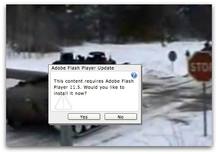
  • Utiliza una falsa actualización de flash para propagar programas maliciosos
Ampliar fotoEl gancho surge a raíz de una supuesta noticia publicada en la web de la CNN que asegura que Estados Unidos ataca Irán y Arabia Saudita.


El gancho surge a raíz de una supuesta noticia publicada en la web de la CNN que asegura que Estados Unidos ataca Irán y Arabia Saudita.

Ampliar foto Al hacer clic sobre la imagen del vídeo, la web falsa pide a los usuarios que instalen una actualización de Adobe Flash Player que propaga el malware


Al hacer clic sobre la imagen del vídeo, la web falsa pide a los usuarios que instalen una actualización de Adobe Flash Player que propaga el malware

Vídeos relacionados


Ver vídeo  'Ser ciberdelincuente sale barato'Vídeo

RTVE.es / EUROPA PRESS 07.02.2012 – 11:09h

Una nueva estafa para propagar malware (programas maliciosos) a través de las actualizaciones de Facebook vuelve a extenderse por la red social. En esta ocasión el gancho surge a raíz de una supuesta noticia publicada en la web de la CNN. La noticia asegura que Estados Unidos ataca Irán y Arabia Saudita, lo que supondría el inicio de la Tercer Guerra Mundial.

Los ciberdelincuentes aprovechan la gran cantidad de usuarios que tiene la red social de Mark Zuckerberg para propagar sus ataques de spam, phishing o malware.

En esta ocasión, los cibercriminales juegan con el inicio de la Tercera Guerra Mundial. Durante este fin de semana se han propagado por el muro de los usuarios actualizaciones de estado referentes a un ataque de EE.UU. a Irán y Arabia Saudí. El mensaje afirma: “EE.UU. ataca a Irán y Arabia Saudita.:-( ¿El Comienzo de la Tercera Guerra Mundial?”, según recoge el blog de seguridad de Sophos, Naked Security.

Si los usuarios hacen clic en el enlace serán redirigidos a una página web falsa del canal de noticias CNN, la cual asegura tener vídeos sobre el conflicto. Sin embargo, al hacer clic sobre la imagen del vídeo, la web falsa pide a los usuarios que instalen una actualización de Adobe Flash Player. No es una verdadera versión de Flash, sino un ataque de malware.

El programa malicioso, que Sophos ha detectado como Troj/Rootkit-KK, instala el ‘rootkit’ llamado Troj / Rootkit-JV en ordenadores con Windows.

Es probable que el código malicioso reenvíe el mensaje en Facebook

Dentro de las tres primeras horas de esta campaña, unos 60.000 usuarios de Facebook han sido engañados para que visiten el enlace malicioso. Lo que no es del todo claro es cómo el mensaje está siendo compartido por tantos perfiles de Facebook.

Lo más seguro, según asegura Sophos, es que el código malicioso instalado en los ordenadores de los usuarios está enviando el mensaje a Facebook sin que los usuarios lo sepan.

Por ello, recomiendan examinar el ordenador con un software antivirus actualizado y asegurarse de que los últimos parches de seguridad estén instalados.

February 5, 2012

05 Insight: Inside Rupert Murdoch’s UK newspaper clean-up operation

Filed under: future,Holístico,módulo básico,política — fores @ 7:09 pm

Insight: Inside Rupert Murdoch’s UK newspaper clean-up operation

Workers clear a drain at the entrance to News International's newspaper headquarters in Wapping, East London, November 23, 2011. REUTERS-Andrew Winning
News Corporation Chairman and CEO Rupert Murdoch listens to remarks while participating in the Wall St. Journal CEO Council on 'Rebuilding Global Prosperity' in Washington, November 16, 2009. REUTERS-Kevin Lamarque
The last edition of News of the World newspaper goes on sale alongside other British Sunday newspapers in London, July 9, 2011. REUTERS-Paul Hackett

1 of 7. Workers clear a drain at the entrance to News International’s newspaper headquarters in Wapping, East London, November 23, 2011.

Credit: Reuters/Andrew Winning

By Georgina Prodhan and Kate Holton

LONDON | Thu Feb 2, 2012 8:17am EST

LONDON (Reuters) – The centre of Rupert Murdoch’s British newspaper clean-up operation is an unimposing set of offices in a corner of the company’s campus in Wapping, east London.

It is here that the scarred reputation and the future of Murdoch’s UK newspaper titles may be rescued or broken for good. The chairman and chief executive of News Corp says he has entrusted the operation, known as the Management and Standards Committee (MSC), to investigate the details of phone-hacking and alleged police bribery by his London tabloids and prevent such events from happening again.

On a typical day, say people who are familiar with the operations of the MSC, up to 100 personnel from several of London’s top law firms as well as forensic advisers and computer experts file into the MSC’s office through special security to search through more than 300 million emails, expense claims, phone records and other documents that amount to several terabytes of data. Their work is expected to take at least another 18 months. Reams of paperwork that cannot fit in the offices are stored in warehouses at another, secret location. In an unusual arrangement, 15 or 20 police are embedded with the team.

The committee was in the spotlight last weekend, when British police arrested three senior current staffers and one former journalist from Murdoch’s Sun tabloid in a bribery investigation. The company’s chief executive said he understood the arrests came as a result of documents handed over by the MSC. In December, the committee surfaced an email trail that indicated James Murdoch, Rupert’s son and heir apparent, was alerted to the scale of the alleged hacking years ago -potentially contradicting testimony James gave to the British Parliament last summer.

Fact-finding committees are a common strategy employed by multinationals engulfed in scandal. But so far, the committee has brought more strife than relief for New York-based News Corp and its British newspaper division, News International. The MSC’s work is earning respect from many who have clashed with the company over phone hacking. But it also faces criticism on multiple fronts, including News International journalists who fear it is tossing loyal staff under the bus, parliamentarians who suspect it is insufficiently independent of Murdoch, and lawyers who allege the committee’s main interest is in repairing the company’s reputation, not outing the truth.

Mark Lewis, a lawyer for victims of phone hacking by Murdoch’s now-defunct News of the World, said News Corp’s push to settle the dozens of civil cases against News International – the committee is the primary point of contact for lawyers representing hacking victims – conflicts with its remit of transparency. His clients include the family of murdered schoolgirl Milly Dowler. The revelation that her cell phone was hacked on the orders of a News of the World reporter turned the paper’s illegal voicemail interception into an international scandal.

“If they really want the truth to come out, then they should be willing to let things go to a trial,” Lewis said. “They should stop trying to settle cases and let it go to a trial.”

News International says it “is committed to reaching fair and where possible swift settlements with victims of illegal voicemail interception.” It has also launched an online scheme to enable people to settle their cases without having to go to court. Reuters is a competitor of Dow Jones Newswires, a unit of News Corp.

SOUNDPROOFED ROOMS

The MSC was set up last July, in the heat of the phone-hacking scandal. News International’s long-held defense that illegal voicemail interceptions were the work of a single, “rogue” reporter had crumbled under the weight of evidence of an industrialized hacking operation. Advertisers pulled out of the News of the World. News International closed the 168-year-old tabloid, apologized and agreed to compensate some victims.

The committee consisted of a group of three executives who were relatively new to the company, including Will Lewis, an award-winning former editor of Britain’s Daily Telegraph who joined News International as general manager in 2010 and was seen as a rising star at the company before being seconded to the MSC. The committee is chaired by Anthony Grabiner, a leading London commercial barrister.

News Corp said the group would root out the causes of the wrongdoing, cooperate with criminal and civil investigations, and establish new standards of behavior that would ensure no such scandal could recur at Murdoch’s remaining British titles: the Sun tabloid, the Times of London broadsheet and its sister, the Sunday Times.

News Corp says the committee is independent of News International. But it isn’t independent of the parent company: via Joel Klein it reports to News Corp board member Viet Dinh, who was an associate counsel to the U.S. senate banking committee for the Whitewater investigation of President Bill Clinton. Dinh, who also served as a U.S. assistant attorney general in the George W. Bush administration, has been on the board for eight years, and is godfather to a child of Lachlan Murdoch, Rupert’s eldest son.

Klein was initially hired by Rupert Murdoch to head a new education division at News Corp.

In the United States, people in News Corp’s headquarters are aware of the growing tensions in London but feel they have no alternative but to stick to their course, according to a company insider.

The committee is divided into teams of lawyers and police who work in soundproofed offices, according to the people who are familiar with the work. The volume of data is so large that there is no question of reading each document. Instead, searches are carried out for key terms, meaning that no one knows what secrets may be buried in the documents – many of them deleted or corrupted emails that have been recently recovered – until the right term is hit upon.

MSC workers try to keep a distance from News International’s journalists. At first they were in the same building, but kept bumping into reporters and editors in the lobby or lifts. Now they are in a separate building where they share a floor with BrandAlley, an online clothing retailer in which News International has a stake.

“FILTHY INSECTS”

But different buildings do not guarantee peace. News International journalists say they are furious at the committee. When media reports began circulating that an insider had described the MSC’s work as “draining the swamp,” tempers flared.

“What do they mean, ‘drain the swamp’?” asked a News International journalist. “Are they saying we’re a bunch of filthy insects?” News Corp, the journalist continued, “is seen as the enemy now. They have failed to exercise due diligence… and their response now is to dump on their own employees. It’s a disgrace.”

Tom Mockridge, who was brought in from another division to take over News International after the scandal broke, said in an email to staff after the Sun arrests: “News International is confronting past mistakes and is making fundamental changes about how we operate which are essential for our business … Despite this very difficult news, we are determined that News International will emerge a stronger and more trusted organization.”

“SLOW AND PARTIAL”

Some outsiders see the MSC as an honest but potentially futile attempt at righting wrongs.

“My experience in the civil cases is that they appear to be trying to get to the bottom of things – they have disclosed documents which are unhelpful to the company, for example,” said one lawyer acting for phone-hacking victims. “But there’s still been a huge problem in getting disclosure which has been very slow and partial, and the claimants have had to fight every step of the way.”

Tom Watson, a member of the British parliamentary committee investigating the hacking, said the new board “is a huge improvement on what the company had in the past.” But the lawmaker, who once likened News Corp to the Mafia, added: “The governance arrangements of the company and the culture that exists within in it are part of the leadership of James and Rupert Murdoch. So what you end up with is a company in conflict with itself. Unless the Murdochs provide a convincing case that they are as keen for the truth to come out, I don’t think they’ll have credibility.”

Watson said on his Twitter feed on Thursday that the police had started to investigate the Times newspaper over email hacking. News International declined to comment and the police said they would not give a running commentary over their investigation, although they did confirm that they had been in contact with the parliamentarian.

Lawyer Mark Lewis, said the company should have had higher standards in the first place.

“They’re doing this bizarre thing of saying that they’re cooperating with the police. Well hang on a minute, you’re meant to cooperate with the police. That’s what we do.”

LASTING DAMAGE

James Murdoch is one executive who could have bridged the culture gap between News International and its parent. The 39-year-old son of Rupert, James arrived at News International in 2007, when the phone-hacking activity at the company appeared to have died down. But six months after his arrival, he approved a 700,000 pound ($1.1 million) payoff to a hacking victim, soccer union boss Gordon Taylor, after it emerged that Taylor had evidence that phone hacking was rife in the organization. Company insiders describe James as being supportive of the MSC’s work but not the driving force behind it or the executive who deals with the committee.

James has consistently said that he did not know all the facts when he approved the payment, despite the revelation by the MSC in December of an email trail that would have alerted him to the scale of the problem, had he read it. His defense was that he likely read the email on his BlackBerry, as he received it on a Saturday, and did not scroll down to read all of the correspondence.

The MSC did not receive any praise for turning up the email trail, with critics, including the parliamentary committee, questioning why it took so long to find. This week, the committee published a response from the MSC’s law firm, Linklaters, saying the email had originally been found in hard copy form by a junior employee, who had not appreciated its significance.

The MSC recognizes it has an uphill struggle. With a judge-led inquiry about to start questioning journalists about payments to police, a civil trial involving multiple hacking victims due to start next month if settlements are not reached, and a potential flood of criminal trials of ex-News International journalists later this year, its work is only just beginning. A legal bid by victims to force the private investigator behind the hacking to reveal who gave him his orders is also pending. A ruling against the company in that case could leave the MSC, even with its army of lawyers, with a lot more to manage.

(With additional reporting by Mark Hosenball in Washington, Michael Holden in London and Yinka Adegoke in New York; Editing by Simon Robinson)

(Created by Simon Robinson)

« Previous Page — Next Page »

WPMU Theme pack by WPMU-DEV.