Forés @ UVPress


         Universitat de València PRESS -UVPress- weblog for research uses

October 11, 2013

08 Elevar la calidad de la educación

TRIBUNA

Elevar la calidad de la educación

El director del programa PISA revisa el resultado de España y sugiere soluciones

10 OCT 2013 – 00:00 CET


Por primera vez, la encuesta de competencias de los adultos nos permite medir directamente la preparación de las personas adultas en la actualidad y no solo qué titulación han obtenido. Los resultados muestran que lo que las personas saben y lo que son capaces de hacer con lo que saben condiciona enormemente sus oportunidades de futuro. En España, el salario medio de los trabajadores que han obtenido niveles de competencia cuatro o cinco en comprensión lectora —lo que significa que pueden realizar inferencias, sacar conclusiones complejas y detectar matices en los textos escritos— supera en más de un 60% el salario por hora de los trabajadores que obtienen niveles de competencia uno o menor de uno —que pueden, como mucho, leer textos relativamente breves y entender vocabulario básico—. Las personas con baja competencia lectora tienen también casi el doble de probabilidades de estar desempleados. En resumen, tener un nivel bajo en este terreno limita seriamente el acceso a empleos mejor remunerados y más gratificantes. Y las competencias básicas determinan más que los ingresos o el empleo. En todos los países, los adultos con niveles más bajos en comprensión lectora son mucho más propensos a tener mala salud, a percibirse a sí mismos como objetos más que como actores en los procesos políticos y a tener menos confianza en los demás. En otras palabras, no podemos desarrollar políticas justas e inclusivas e implicar a todos los ciudadanos si un dominio pobre de las competencias básicas impide a las personas participar plenamente en la sociedad.

No podemos cambiar el pasado, pero podemos hacer algo de cara al futuro

La importancia de la adquisición y mantenimiento de la competencia lectora es bastante evidente, pero su dominio varía considerablemente entre individuos. Aproximadamente uno de cada cinco adultos en Japón y Finlandia ha obtenido el nivel más alto en la encuesta. En cambio, en España solo uno de cada 20 adultos es competente a ese nivel y más de uno de cada tres está en el nivel de referencia medio o por debajo de este. Dado que la encuesta muestra los resultados de toda la población adulta, no se trata de lo que el Gobierno actual haya hecho o no, sino de lo que los Gobiernos y la sociedad hayan logrado a través de generaciones sucesivas. Los jóvenes coreanos, por ejemplo, solo han sido superados por los japoneses, mientras que la población coreana de 55 a 64 años está entre los tres grupos de más bajo rendimiento de esta franja de edad entre todos los países participantes en la encuesta. Los resultados de Finlandia muestran un resultado similar. A primera vista, los jóvenes españoles también han obtenido mejores resultados que los españoles de más edad, pero a pesar de eso siguen apareciendo entre los de peores resultados. De hecho, uno de cada cinco jóvenes españoles no puede leer tan bien como se esperaría de un niño de 10 años. Durante mucho tiempo, España fue capaz de mejorar su rendimiento debido al aumento del número de matrículas en las escuelas. Pero el crecimiento se detuvo una vez que se generalizó la escolarización de la población. España tiene ahora que poner en marcha un proceso de reactivación de un mecanismo que conlleve una mejora de resultados. En otras palabras, elevar la calidad y relevancia de la educación, lo cual no se ha hecho todavía.

Lo datos también muestran que los niveles de competencias reales difieren mucho de lo que sugieren las cualificaciones que se obtienen. Por ejemplo, España aparece mejor posicionada en los rankings internacionales cuando se considera la proporción de jóvenes que tienen titulación universitaria que cuando se evalúa el nivel de comprensión lectora o habilidad aritmética en esa misma edad. En promedio, los jóvenes japoneses y holandeses que han cursado estudios de postsecundaria superan fácilmente a los graduados universitarios españoles y más de un tercio de los graduados universitarios españoles no obtienen una puntuación más alta del nivel dos en la prueba de comprensión lectora. Por tanto, no están suficientemente preparados para lo que sus puestos de trabajo les exigen.

Son esenciales los vínculos entre el mundo educativo y el del trabajo

No podemos cambiar el pasado, pero podemos hacer algo con vistas al futuro. El impresionante progreso que algunos países han hecho en la mejora de las competencias de su población adulta a lo largo de las sucesivas generaciones muestra lo que puede lograrse. Estos países han puesto en marcha sistemas que combinan una educación inicial de calidad con oportunidades e incentivos para que toda la población continúe desarrollando su competencia en lectura y matemáticas, tanto en el lugar de trabajo como fuera de él, después de haber completado la educación y la formación inicial. Mucho de esto tiene que ver con una mayor flexibilidad. Cada persona aprende de manera diferente y la manera de aprender también cambia en las distintas etapas de la vida. Es por eso que un sistema educativo “industrial” y de “talla única para todos” ya no puede satisfacer las necesidades de las sociedades modernas. La educación española tiene que ser relevante para cada uno de sus estudiantes y lo suficientemente flexible tanto en el contenido como en la forma en que se imparte como para adaptarse a sus necesidades.

Los países que obtienen buenos resultados en la encuesta también han desarrollado fuertes vínculos entre el mundo de la educación y el del trabajo. El desarrollo de competencias puede ser más apropiado y eficaz si se vinculan ambas esferas. El aprendizaje en el lugar de trabajo permite a los jóvenes desarrollar competencias duras, utilizando equipos modernos, y competencias blandas, tales como el trabajo en equipo, la comunicación y la negociación, a través de la experiencia en el mundo real. La formación práctica en el lugar de trabajo también puede ayudar a motivar a aquellos jóvenes que se hayan desconectado del sistema educativo a permanecer o volver a comprometerse con el mismo y a hacer más suave la transición entre la educación y el mercado laboral.

A pesar de que los países no puedan cambiar el pasado, las políticas diseñadas para brindar oportunidades para el aprendizaje a lo largo de la vida de alta calidad pueden contribuir a asegurar que los adultos del futuro mantengan su nivel de competencias. Esto requiere un compromiso acordado por todas las partes implicadas: los Gobiernos, empleadores, empleados, padres y alumnos necesitan establecer mecanismos eficaces y equitativos sobre quién paga para qué, cuándo y cómo. Dado que es poco probable que las personas con niveles bajos de competencias participen en la educación y la formación por iniciativa propia y que además tienden a recibir menos formación por parte de sus empleadores, las iniciativas de segunda oportunidad pueden ofrecerles una manera de salir de ese círculo vicioso que es “a bajas competencias / bajos salarios”.

Encontrar la manera de que España alcance el nivel de los sistemas más avanzados no será fácil, pero la encuesta de competencias proporciona una base firme para construir políticas sólidas, desmonta las excusas de aquellos que son complacientes y permite a los países establecer metas significativas teniendo como referencia las de los modelos más importantes del mundo.

Andreas Schleicher es subdirector de la OCDE para temas educativos.

October 9, 2013

08 El PISA de adultos también deja a España a la cola de la OCDE

El PISA de adultos también deja a España a la cola de la OCDE

La población de 16 a 65 años está a 19 puntos de la media en lectura y a 23 en matemáticas

Los más jóvenes reducen las diferencias, mucho más marcadas entre los mayores

Madrid 8 OCT 2013 – 00:02 CET1235

El examen de competencias básicas de la población adulta hecho por la OCDE en 23 países (una especie de informe PISA para adultos) ofrece a España dos conclusiones muy claras: la primera, que está a la cola de las economías desarrolladas (el penúltimo en lectura, y el último en matemáticas); y la segunda, que cualquier tiempo pasado no fue mejor: los jóvenes puntúan mucho más alto que los mayores y están más cerca de la media. De hecho, la diferencia entre los resultados entre unos y otros es de las más grandes (junto a la de Corea) de todos los participantes en el estudio, de más de 30 puntos, pero España tenía la peor situación de partida.

Fuente: OCDE. / EL PAÍS

La mejora, en todo caso, no ha sido suficiente como para sacar del furgón de cola a España, que comparte con Italia, Francia y cercano a EE UU. “Hay mucho espacio para la mejora, como demuestran otros países”, como Finlandia o Corea dijo ayer el secretario general adjunto de la OCDE, Yves Leterme. Y menos habilidades básicas, añadió, está relacionado con menos oportunidades laborales (en España, el 75% de los que han sacado mejor nota tenía trabajo, frente al 47% de los de notas más bajas), incluso, con menor calidad de vida en general (con malos resultados hay el triple de probabilidad de tener mala salud).

España obtiene 252 puntos de media (sobre una base de 500) en comprensión lectora (solo está por delante de Italia), 19 menos que la media OCDE y 246 en matemáticas (23 menos), en una prueba que hicieron 166.000 personas de 16 a 65 años de 23 países (algo más de 6.000 españoles) entre agosto de 2011 y marzo de 2012. Y, como en PISA (que evalúa a chicos de 15 años), tiene a más gente que la media en los dos niveles más bajos (27,5% frente a 15% en lectura, y 30% frente a 19% en matemáticas) y muy pocos en los superiores (4,7% frente 11% y 4,1% frente a 13%, respectivamente); no hay prácticamente nadie en el nivel más alto, el 5.

Educación culpa a la LOGSE de ralentizar la mejora; algunos expertos rechazan esa explicación

En cuanto a la progresión de España, la secretaria de Estado de Educación, Montserrat Gomendio, destacó que las mayores diferencias de puntuación están entre los que tienen 35 y 54 años y los mayores de esa edad (hasta 33 puntos), por lo que hizo una lectura en la que atribuye la gran mejora a la etapa en la que estaba en vigor la Ley General de Educación de 1970 (la de la EGB), y una ralentización (cuatro puntos con la cohorte posterior) a la LOGSE, la ley educativa que se aprobó en 1990. “Hay evidencia de que la LOGSE no tuvo éxito al mejorar las competencias en comprensión lectora y matemáticas”, ha dicho Gomendio. Apoyan esta idea un trabajo del profesor de la Pablo de Olavide Antonio Villar y, con menos rotundidad, otro de José Antonio Robles Zurita, de la misma universidad. Ambos estudios forman parte de un libro encargado por el ministerio a distintos especialistas para analizar los resultados del estudio.

Sin embargo, otros dos autores del mismo libro, Julio Carabaña, de la Complutense, y José Saturnino Martínez, de La Laguna, rechazan de plano esa explicación. Martínez asegura que es incorrecto comparar la mejora cuando solo una parte de la población estaba escolarizada con otra en la que lo estaba ya todo el mundo (a partir de los noventa). “Lo que no se puede decir, en cualquier caso, es que no se mejoraron las competencias con la LOGSE, porque los resultados son mejores, aunque sea con menos diferencia”, insiste.

La clave de las competencias es lo que se aprenda en la escuela obligatoria

Por su parte, Carabaña tacha de “disparate total” la explicación del ministerio. “Es absolutamente imposible detectar ningún influjo legislativo en estos datos”, asegura. Lo que señalan tanto este como otros estudios anteriores similares es que la edad, sobre todo, y el nivel de escolarización, explican las diferencias: “Hasta los 25 años se mejora, hasta los 35 se estanca y a partir de ahí decrece”, asegura. Sobre la mejora en el tiempo, insiste en que no debería medirse según las diferencias entre los distintos grupos de edad de un mismo país, sino sobre la distancia de las personas de la misma edad en distintos países. Por ejemplo, los españoles de 16 a 24 años están a 12 puntos de la media de su edad en matemáticas y los de 55 a 65 años, a 32 puntos.

En general, lo que señala el estudio es que la base de las competencias lectoras y matemáticas se adquiere durante la escolarización obligatoria (primaria y secundaria), pero que a lo largo de los años estas se pueden atrofiar o mejorar dependiendo del tipo de trabajo y la formación continua. En general, los trabajadores españoles escriben y resuelven problemas con la misma frecuencia que sus compañeros de la OCDE.

Los titulados superiores españoles tienen la misma nota que los bachilleres japones

Por eso, Leterne insistió ayer en que una de las principales vías de mejora, aparte de reforzar las competencias en la escuela, sería hacer un esfuerzo con los programas de educación continua para adultos, sobre todo, teniendo en cuenta que los trabajadores más cualificados se muestran tres veces más dispuestos a participar en estas actividades y que España tiene una enorme base de personas con baja cualificación.

Sin embargo, el estudio también advierte de que no vale solo con aumentar el número de títulos, sino que lo importante de verdad es la calidad de la educación. Un ejemplo: los adultos españoles con un diploma de FP de grado superior y universitario tienen las mismas competencias medias en lectura que tras el bachillerato en Japón, País Bajos y Australia; y que los de Países Bajos, Japón, Suecia, Austria, Eslovaquia y Dinamarca en matemáticas. Teniendo en cuenta, claro está, que se están comparando situaciones y contextos y sistemas educativos muy distintos, sobre todo, comparados con los de la España de los años sesenta.

El título, en todo caso, parece que sigue siendo importante, pues al mismo nivel de competencias, “un mayor nivel educativo supone más participación”, escribe Laura Hernández y Lorenzo Serrano, de la Universidad de Valencia. Al fin y al cabo, la lectora y la matemática quizá son las habilidades más básicas, pero no son las únicas.

Lo que significan las notas

Fuente: OCDE. / EL PAÍS

Los resultados se dividen en seis niveles. Las siguientes son ejemplos de las destrezas que se tienen en tres de ellos:

Nivel -1. Menos de 176 puntos. Solo requiere conocimiento de vocabulario básico y no es necesario entender la estructura de los párrafos. Por ejemplo, sobre un texto corto sobre unas elecciones sindicales y tres tablas con los resultados de tres candidatos, hay que decir quién recibió menos votos. En matemáticas, este nivel requiere contar, ordenar, operaciones aritméticas con números enteros o dinero.

Nivel 2. Entre 226-275 puntos. Relacionar textos, parafrasear y hacer inferencias a bajo nivel, integrar dos o más fragmentos o contrastar información. En matemáticas, operaciones de dos o más pasos con cálculo con números decimales, porcentajes y fracciones. Por ejemplo, calcular cuánto va a pagar una empresa por el kilometraje y las dietas a partir de los datos básicos de un día: kilómetros recorridos, euros por kilómetro…

Nivel 4. Entre 326-375 puntos. Integrar, interpretar y sintetizar información de varios textos largos y complejos, hacer inferencias complejas usando conocimientos previos o datos ambiguos. Por ejemplo, en una búsqueda bibliográfica simulada en la web de una librería, buscar un libro a favor de los alimentos transgénicos y otro en contra. En matemáticas, hace falta un nivel de análisis y razonamiento más complejo sobre cantidades, relaciones espaciales y fórmulas.

September 26, 2013

08 Polanski Rape Case ‘I Don’t Feel I Was a Victim’

Filed under: archivo personal,Holístico,interesting news — fores @ 9:17 pm
SPIEGEL ONLINE

09/26/2013 07:48 PM

Polanski Rape Case

‘I Don’t Feel I Was a Victim’

When she was 13, Samantha Geimer was raped by Roman Polanski at Jack Nicholson’s home in Los Angeles. She has written a new book about that night in 1977 and its aftermath. In an interview with SPIEGEL, she tells why she still doesn’t hate the director.


Photo Gallery: 'I Don't Feel Like a Victim of Roman' Photos
Max S. Gerber/ DER SPIEGEL

Part 2: ‘It Horrifies Everyone’

On March 10, 1977, director Roman Polanski raped Samantha Geimer, who was 13 at the time, during a photo shoot in Los Angeles. The agonizing legal dispute that followed lasted a year and ended with the prominent director fleeing the United States.

Thirty-two years later, Polanski was taken into custody in Switzerland and placed under house arrest. A Swiss court was supposed to rule on his extradition, which triggered yet another bitter controversy over the case. Geimer, now 50, has described her version of the events in a book to be published next week (“The Girl. A Life in the Shadow of Roman Polanski.” Orell Füssli Publishing House; €19.90).

SPIEGEL interviewed Geimer in Las Vegas, where she works for a real estate company, although she lives in Hawaii with her husband and three sons. She never saw Polanski, now 80, again.

SPIEGEL: Mrs. Geimer, you write in your book that you weren’t pleased when Roman Polanski was finally arrested in 2009.

Geimer: No. Why would I want him to go to prison?

SPIEGEL: Because what he did to you in 1977 made your life miserable, as you write in your book.

Geimer: It wasn’t Roman who made my life miserable. It was the people who treated him unfairly at the time and now had him arrested in Switzerland. And — nothing against you — the press made my life miserable. Roman didn’t intend for any of that. When he was arrested again four years ago, I knew it meant trouble. Now the press was after me again. That’s why I wasn’t happy.

SPIEGEL: If Polanski had stopped himself from having sex with the 13-year-old girl you were on that evening in March 1977, none of this would have happened.

Geimer: That’s very true. But Roman Polanski already pleaded guilty to the crime in court, and he even went to prison for it in 1977. I don’t know what else he could have done.

SPIEGEL: You think the 42 days he spent in prison at the time were enough?

Geimer: I never asked that he spend even a single day in prison. We had a deal with the judge to which all sides had agreed, and it called for probation. The judge didn’t stick to the deal, and because he was worried about his reputation, he ordered an additional 90 days in prison. There was no reason for that. Roman was supposed to receive a psychological assessment there.

SPIEGEL: Polanski wasn’t supposed to begin his prison sentence until he had finished shooting a film, but when a photo turned up of him together with young women at the Munich Oktoberfest, the judge felt duped and ordered him to return to the United States immediately to begin his sentence.

Geimer: But the psychologists at Chino State Prison found no pedophilic tendencies in Roman, and so he was released after 42 days. It was humiliating for the judge, who wanted to send Roman back to prison, this time for an indefinite period of time. It could have been five days or five years.

SPIEGEL: That’s possible?

Geimer: It was certainly possible at the time. Roman must have had the impression that the judge could no longer be trusted, which is why he fled. To be honest, I can understand that.

SPIEGEL: When listening to you, and after reading your book, it’s easy to get the impression that you don’t think that what Polanski did to you was all that bad.

Geimer: At any rate, I was never as devastated and traumatized as people claimed I was. What I still don’t understand is that if everyone felt that what Roman did was so terrible, why do they still want to see me as a deeply traumatized victim? Oh, Polanski did this to you — but why, then, aren’t you in worse shape?

SPIEGEL: We don’t understand that.

Geimer: I’m also a feminist. I understand the motives of the women who attacked me publicly. But they wanted me to feel like a victim, because only a deeply hurt victim could truly benefit them and their cause. But I wasn’t one. To this day, I don’t feel that I was a victim of Roman, but rather a victim of the public, the courts and the media. That explains this book and this interview.

SPIEGEL: How did it come about that Roman Polanski wanted to photograph you in 1977?

Geimer: My older sister’s boyfriend knew him from Hollywood circles. That was how he met my mother at a party. Roman told her that he was looking for young girls to photograph for the French edition of Vogue. My sister’s boyfriend suggested me, which is how Roman came to our house. He brought along the photos he had taken of Nastassja Kinski for Vogue.

SPIEGEL: But then it was all clear. They were erotic photos of a 15-year-old girl.

Geimer: I thought they were beautiful. I wanted to be an actress. Apparently it all worked out pretty well for Nastassja.

SPIEGEL: Had you already heard about Polanski before then?

Geimer: I knew that he had directed the film “Chinatown.” I had seen it in the theater, but I didn’t like it. Too dark. But I knew that Roman Polanski was important.

SPIEGEL: Did you know about the tragedies in his life? About his parents, who were in concentration camps? About his mother, who died in Auschwitz? About the eight-year-old boy who fled on his own? About Sharon Tate, who was carrying his unborn child when she was brutally murdered by the Charles Manson gang?

Geimer: Nothing. I didn’t find about all that until later. It’s all so gruesome.

SPIEGEL: You met him eight years after the murder of Sharon Tate. He wanted to take test shots of you. Your mother had agreed to that?

Geimer: Yes. But when she wanted to come along, Roman said it wasn’t such a good idea. The two of us walked up the street behind our house, and he started taking pictures. At some point he asked me to change my top. I wasn’t wearing a bra, because I didn’t need one yet, and I turned away from him to change. The funny thing was that he kept taking pictures. And then he asked me to turn around.

SPIEGEL: Didn’t that seem strange to you?

Geimer: It was 1977. The world was different then. I grew up at a time when 13-year-old Jodie Foster played a prostitute in “Taxi Driver.” Soon afterwards, Brooke Shields was in “Pretty Baby,” playing a 12-year-old prostitute. The sexualization of girls my age was mainstream. It was everywhere. That’s why it didn’t seem very odd. I know how strange that sounds today.

SPIEGEL: Did you tell your mother about the topless pictures afterwards?

Geimer: No. Somehow I knew that I shouldn’t have done that. But, anyway I didn’t expect that Roman would be photographing me again. He didn’t seem all that taken with me.

SPIEGEL: But he came back.

Geimer: Two or three weeks later. I wasn’t crazy about it, because I knew that it wasn’t right the first time. On the other hand, I still wanted to be in Vogue. We picked out some clothes, and he said that we would go to a friend’s house and take some real pictures there.

SPIEGEL: And your mother wasn’t concerned?

Geimer: No. He was this powerful, famous director, someone who also had a reputation to lose.

SPIEGEL: He also had a reputation as a womanizer, just like Jack Nicholson and Robert De Niro. There were rumors at the time that Polanski had an affair with Nastassja Kinski.

Geimer: We know that today. I didn’t know it back then. At any rate, Roman drove with me in his Mercedes, first to Jacqueline Bisset’s and then to Jack Nicholson’s house.

SPIEGEL: Did you know Nicholson?

Geimer: I knew that he had been in “Chinatown.” But as far as I was concerned, they were just a bunch of boring adults. Nicholson wasn’t home either. Polanski asked me if I wanted some champagne.

SPIEGEL: Had you ever drunk alcohol before?

Geimer: Maybe a glass on New Year’s Eve. But I had no sense of how much to drink. Later, Polanski offered me a Quaalude pill. He asked me if I knew what it was. I didn’t want to seem like a stupid kid, so I said: “Sure.” And I did know. Quaalude was the drug of choice in Los Angeles in 1977. It was part of the culture. Quaalude pills were depicted on T-shirts and were in the lyrics of pop songs.

SPIEGEL: It’s actually a sleeping pill.

Geimer: Yes. But when it’s combined with alcohol, it produces a sleepy, relaxed high.

SPIEGEL: When did the photo shoot start feeling strange?

Geimer: Everything was fine while he was taking pictures. He did photograph me topless again, but he didn’t flirt with me. It was business. For the last photos, he asked me to get into the jacuzzi. Once I was in the hot water, the alcohol and the Quaalude kicked in. I felt light and dizzy. I also felt a little panicky. At some point, Polanski said that the light wasn’t good for taking pictures anymore, and that he was getting into the jacuzzi, too. That was when I knew it wasn’t good. I told him I had asthma and jumped out of the water.


‘It Horrifies Everyone’

SPIEGEL:Did Polanski believe you?Geimer: Yes. The only problem was that now he wanted me to lie down and relax. He took me into a dark room, and then I knew: “Okay, the guy wants to have sex with you.” I was surprised, because he didn’t really seem to like me much. But I didn’t know how to stop him. I had told him that I didn’t want to go into that room. When he touched me, I said no. But when “no” didn’t work, I didn’t know what to do anymore. “Let him do it,” I thought, “and then I’ll go home.” I knew what sex was. I had a boyfriend, and yes, we had had sex. At the time, I thought I was an adult.

SPIEGEL: Pretty early.

Geimer: I didn’t think so. I definitely wasn’t the only one at the time. Roman was constantly asking me whether I liked it. I didn’t reply. He was the movie director, so he could write his own dialogue. He asked me when I had had my last period. But I was too confused and too high to remember. Then he asked me: “Would you want me to go through your back?” I had no idea what he was talking about, but to be on the safe side, I said “no.” When it did happen, I thought to myself: “Wait a minute, was that my butt?”

SPIEGEL: It sounds horrible. It’s hard to listen to.

Geimer: It horrifies everyone. At the time, it wasn’t clear to me that what was called sodomy was such a big deal. It wasn’t as bad as everyone thought. It didn’t hurt. I was high. All I cared about was that he would get it over with quickly so I could go home. I know that that too sounds odd today.

SPIEGEL: It sounds succinct.

Geimer: I didn’t feel good just after that. But I know people who have had worse things done to them.

SPIEGEL: There are people whose lives are destroyed after an experience like that.

Geimer: I wasn’t like that. I wasn’t raised with that strange sense of shame. Sex wasn’t evil. I knew what sex was. No one had ever drummed it into my head that sex was dirty or shameful. Besides, I wasn’t afraid for my life. I wasn’t afraid that he would hurt me.

SPIEGEL: Not even emotionally?

Geimer: I don’t think I had time for that. When it was over, it took less than an hour before “Oh, I can’t believe what just happened” turned into a whole world of problems.

SPIEGEL: Actually, you didn’t even want to tell your parents about what had happened.

Geimer: Oh no! But I had to talk to someone about it, so I called my ex-boyfriend Steve, who was a few years older than me. My sister overheard me and told my mother. And then all hell broke loose: the police, the hospital, the district attorney’s office, Polanski being arrested, the paparazzi, telephones that wouldn’t stop ringing. There was no time to reflect.

SPIEGEL: Did you wish that they hadn’t called the police?

Geimer: I thought so at the time and repeatedly over the years. But what else should my mother have done? She couldn’t simply let it go. Did we know what we were in for? No. Maybe it would be more obvious nowadays. If it had been my daughter, I would also have called the police.

SPIEGEL: Does your mother share any of the blame?

Geimer: No. But she blames herself because she let me go. We were all naïve. We all made mistakes.

SPIEGEL: Would you call it rape?

Geimer: I was 13. Under the law, it was rape.

SPIEGEL: And morally?

Geimer: I didn’t want it. I tried to say no. That makes it rape. Did I think it was rape at the time? No. I thought rape meant physical violence or kidnapping. Then I got home and everyone was shouting: “You’re 13. It’s rape!” I was really surprised.

SPIEGEL: After he had dropped you off at home, Polanski went to his friend Robert De Niro’s house. Apparently he didn’t feel guilty at all.

Geimer: Polanski didn’t think he had done anything wrong. He hadn’t intended to hurt me. He wanted me to enjoy it. I was stunned when I heard the next day that Polanski had been arrested. And then Anjelica Huston was also arrested. She was Nicholson’s girlfriend at the time and had walked in on us during the sex in Nicholson’s house. When the police searched Nicholson’s house for evidence, they found cocaine in Huston’s purse. So there I was: Polanski was arrested, Huston was arrested and Nicholson certainly wasn’t happy that all of this had happened in his house. Great start to my acting career. I knew that it wasn’t my fault. But I felt bad.

SPIEGEL: Isn’t it odd that Polanski, but you too, apparently, didn’t think having sex with a 13-year-old was such a big deal?

Geimer: Today it’s hard to imagine what the mood was like in the late ’70’s, especially in Hollywood. Elvis Presley had married Priscilla in the ’60’s. She was 14 when Elvis met her. Woody Allen’s “Manhattan” was an homage to a middle-aged man in love with a teenager. I saw a photo of Don Johnson with his later wife Melanie Griffith sitting on his lap. She was 14 when they met. The girl who becomes a woman was no taboo. The term child abuse didn’t exist. Or at least no one talked about it.

SPIEGEL: Do you accept that as justification?

Geimer: There is no justification. Roman should have known better. But you have to recognize that people behaved somewhat differently at the time when it came to sexual matters. Roman believed, as he said later on, that his actions had been based on warmth and affection. And you know what? I believe him. Condemning it from today’s perspective is ignoring the historical context. Nevertheless, it was shitty of him to do it, no matter what he thought at the time, and no matter how he feels today.

SPIEGEL: We are experiencing a similar debate in Germany at the moment. Members of the Green Party, a liberal, leftist environmental party, stand accused of having supported and downplayed sexuality with children in the 1980s, for ideological or pedagogical reasons, but apparently without malicious intentions.

Geimer: Anyone who was somewhere between 13 and 45 in the ’70’s knows that both Roman and your Greens in Germany probably felt exactly that way. There was no calculation or malicious intent involved. Erotic experiences were seen as beneficial. People also believed that emotional growth was fostered by a more expanded — or early – sexuality. And it applied to both sides, to those with power, like Roman, and to the relatively powerless, like me. Roman didn’t see me as a victim.

SPIEGEL: So sexual morality was better in the ’70’s, even though it may have contributed to what happened to you with Polanski?

Geimer: I thought it was better at the time. Maybe it was just because that was how I grew up. I think it’s wrong to establish rules about when sex is okay for an individual and when it isn’t. I want to decide that for myself.

SPIEGEL: But in your case, 43-year-old Polanski made the decision.

Geimer: He decided for me, because he thought it was right. And I would rather relive the evening with Polanski than the court hearing. It was humiliating. Those questions. That’s where I was the victim.

SPIEGEL: After that you went through 10 pretty wild years. You did drugs, drank a lot, and had various relationships. Was it a consequence of the Polanski incident?

Geimer: My mother and my sister would tell you that I was never the same person after that. I was terrible. I didn’t talk to anyone anymore. I didn’t come out of my room anymore. I shut down my life. The press, the court, the judges, the photographers, the fear of the trial, the bad things that were said about my mother and me — I couldn’t stand it. But it had nothing to do with Roman. A year later, after Roman had left the country, all I felt was a sense of relief: “He’s gone! No more trials! Party!” I became a stoner. We drank a lot, took LSD, speed, cocaine, Quaaludes, everything.

SPIEGEL: Did you have problems with sex?

Geimer: No. I liked having sex.

SPIEGEL: In 1988 you decided to file a civil suit against Polanski, 11 years later. Why did you do that, all of a sudden? After all, you wanted to be left alone.

Geimer: But I had realized that it would never happen. This issue will never leave me alone. I couldn’t go on living like that. We — my husband and I — needed money and had a young child. The fact that it was starting up again was Roman’s fault, because he had written some unflattering things about my mother and me in his autobiography. In that case, I thought to myself, Roman should help me now. In other words, he should pay for it.

SPIEGEL: Polanski did pay.

Geimer: A six-figure amount.

SPIEGEL: Half a million dollars.


‘I Don’t Have to Hate Him’

Geimer:I don’t feel bad about it. Roman paid without hesitation, just as he hadn’t hesitated back then to plead guilty, as part of the deal, and go to prison for it.SPIEGEL: Four years ago, in 2009, you suddenly received a letter from Polanski.

Geimer: It was a small, hand-written note. He FedExed it to me in Hawaii from France. I had already heard that he had found my address, and I thought to myself: “Oh no, I hope he’s not coming here!”

SPIEGEL: What did he write?

Geimer: He had seen the 2008 documentary “Wanted and Desired,” which portrayed the case pretty accurately. Roman wrote that he had watched the film twice, and that he felt a need to write to me. He wanted me to know how much he regretted having inflicted so much damage on my life. He also wrote that he was impressed by how much integrity I had shown in the film. The most important thing he wrote was that my mother should be left alone, and that it was entirely his fault.

SPIEGEL: Did it affect you?

Geimer: It meant a lot to me. But especially to my mother who, 30 years later, could finally read that it wasn’t her fault. But it was also important for the rest of my family. They all wanted to hate Roman. It was one of the reasons I’ve now published this book.

SPIEGEL: It sounds strange, the way you talk about Roman. You never saw him again, and yet that evening in 1977, which is now 36 years ago, has tied together your life and his life. Could it be that it feels as if you knew each other well?

Geimer: We have a shared life, and yet we are complete strangers.

SPIEGEL: Did you watch his films after that?

Geimer: No. I wanted to keep my distance.

SPIEGEL: But in a weird way you kind of like him?

Geimer: Well, he went through just as much as I did.

SPIEGEL: It almost sounds like Stockholm syndrome.

Geimer: Just because I don’t forever hate the person who has atoned for his crime? I don’t have to hate him. Enough people do that already. I don’t have to say anything bad about him, because I know what it feels like.

SPIEGEL: Did you ever feel sorry for him?

Geimer: I felt bad in 2009. He was put in jail pending extradition for a crime for which he had served his sentence 32 years earlier. At the time, it was a narcissistic judge, and this time it was all happening because District Attorney Steve Cooley wanted to become California’s attorney general. I woke up every morning and thought: “Oh my God, Roman is in his mid-70s. He has children. It’s horrible.” But did I feel sorry for him? No. We’re all adults. We’ve all made our mistakes and paid for them. He doesn’t need me.

SPIEGEL: Would you ever like to meet Roman Polanski again?

Geimer: I don’t know. Maybe. It would certainly be strange. But interesting, too. I would never say that I wouldn’t do it. But I would never expect to have the opportunity, either.

SPIEGEL: Mrs. Geimer, thank you for this interview.

Interview conducted by Philipp Oehmke. Translated from the German by Christopher Sultan.

© SPIEGEL ONLINE 2013
All Rights Reserved
Reproduction only allowed with the permission of SPIEGELnet GmbH

August 20, 2013

07 Cuando las élites fracasan

Filed under: economía,future,política,recomendaciones — fores @ 6:02 am
LA CUARTA PÁGINA

Cuando las élites fracasan

El Gobierno alemán puede cometer un error histórico si sigue defendiendo políticas de corto alcance que lo favorecen en casa en vez de enfrentarse a los problemas que han puesto a Europa en situación de emergencia

20 AGO 2013 – 00:01 CET

ENRIQUE FLORES

Con el título, tan significativo, de “Kein deutsches Europa!” [No queremos una Europa alemana], Wolfgang Schäuble desmentía hace poco en un artículo publicado simultáneamente en diarios de Inglaterra, Francia, Polonia, Italia y España, que Alemania aspire a asumir el liderazgo político en la Unión Europea (Süddeutsche Zeitung 20/21 de julio de 2013). Schäuble que, junto con la ministra de Trabajo, es el último “europeo” de corte germano-occidental que queda en el gabinete de Angela Merkel, habla desde el pleno convencimiento personal. Es cualquier cosa menos un revisionista que quiera anular la integración de Alemania en Europa y destruir así el fundamento de la estabilidad del orden de posguerra. Conoce el problema cuyo regreso debemos temer nosotros, los alemanes.

Tras la fundación del imperio en el año 1871, Alemania había adoptado una funesta posición semihegemónica en Europa, tal como expresa la famosa frase de Ludwig Dehio, “demasiado débil para dominar el continente pero demasiado fuerte para integrarse”. Y esto también contribuyó a allanar el camino hacia las catástrofes del siglo XX. La lograda unificación europea impidió, no solo a la Alemania dividida sino también a la Alemania reunificada, volver a caer en el antiguo dilema. Es evidente que la República Federal está interesada en que esto no cambie. Pero ¿no ha cambiado de hecho la situación? Wolfgang Schäuble reacciona ante un peligro actual. Él mismo es quien impone a la fuerza el testarudo rumbo de Angelika Merkel en Bruselas y quien palpa la grieta que podría resquebrajar el núcleo de Europa.

Es Wolfgang Schäuble quien impone a la fuerza el testarudo rumbo de Merkel en Bruselas y quien palpa la grieta que podría resquebrajar el núcleo de Europa

Él es quien tropieza con la resistencia de los “países receptores” en los círculos de los ministros de Hacienda de la comunidad monetaria europea cada vez que bloquea los intentos de introducir un cambio de política. El impedir una unión bancaria para la asunción comunitaria de los costes de la liquidación de los bancos malos es tan solo el ejemplo más reciente de ello. Schäuble no se aparta ni un milímetro de la norma de la canciller de no cargar a los contribuyentes alemanes con nada que rebase el alcance exacto de los créditos que requieran en cada caso los mercados financieros para el rescate del euro, y que siempre han recibido como consecuencia de una “política de rescate” indisimuladamente favorable a los inversores. Por supuesto, este rumbo seguido tan tenazmente no excluye un gesto de 100 millones en créditos para las clases medias que el tío rico berlinés toma de la caja fuerte del banco nacional para sacar del apuro a los primos de Atenas que se han quedado sin blanca.

La potencia líder que se niega a sí misma

Es un hecho que el gobierno de Merkel obliga a Francia y a los “países del Sur” a aceptar su controvertida agenda de crisis mientras que la política de adquisiciones del BCE brinda un respaldo no admitido. Pero al mismo tiempo, Alemania niega su responsabilidad en el marco de una Europa global por las consecuencias desastrosas que asume al poner en práctica ese papel – considerado como algo enteramente normal – de política de poder. Solo hay que pensar en el exorbitante paro juvenil del sur de Europa como una de las consecuencias de una política de ahorro con cargo a los miembros más débiles de la sociedad. Visto de este modo, el mensaje “nada de Europa alemana” cobra también el sentido, bastante menos bonito, de que la República Federal se coloca en un segundo plano. Desde un punto de vista formal, el Consejo Europeo decide de forma unánime. Angelika (sic) Merkel solo puede perseguir abiertamente intereses nacionales, o lo que ella considera como tales, como uno de los 17 miembros integrantes. El Gobierno alemán saca ventaja, incluso una ventaja desproporcionada, de la preponderancia económica del país siempre y cuando sus socios no duden de la lealtad, carente de ambiciones políticas, de los alemanes hacia Europa.

Pero ¿cómo puede resultar creíble este gesto de humildad a la vista de una política que se aprovecha descaradamente de la propia preponderancia económica y demográfica? Cuando, por ejemplo, toca imponer normas de emisión de gases más estrictas para el nuevo rico que fanfarronea de sus berlinas de lujo y estas normas perjudican – por supuesto, siempre en el marco del cambio energético – a la industria automovilística alemana, la votación se retrasa, por intervención de la canciller, hasta que el grupo de presión está satisfecho o ya han pasado las elecciones al Bundestag [Parlamento]. El artículo de Schäuble responde, me parece a mí, a la irritación que este doble juego del Gobierno federal produce en los círculos de los jefes de Gobierno de los restantes países del euro.

El Gobierno alemán saca ventaja, incluso una ventaja desproporcionada,  siempre y cuando sus socios no duden de la lealtad de los alemanes hacia Europa

Un Gobierno federal cada vez más aislado trata de imponer frente a Francia y a los países en crisis una dura política de ahorro en nombre de imperativos de mercado que supuestamente no dejan otra alternativa. En contra de los hechos, da por sentado que todos los estados miembros de la Comunidad Monetaria Europea pueden decidir por sí mismos sobre sus respectivas políticas económicas y presupuestarias. Si es necesario deberán “modernizar” el Estado y la economía y aumentar su competitividad con ayuda de créditos del fondo de rescate, pero siempre por cuenta propia. Esta soberanía ficticia es cómoda para la República Federal porque ahorra al socio más fuerte tener en consideración los efectos negativos que pueden acarrear sus propias políticas a los socios más débiles. Por el contrario, Mario Draghi ya advertía hace un año “que no es legítimo ni soportable desde un punto de vista económico que la política económica de países concretos entrañe riesgos que rebasen las propias fronteras y afecten a los restantes socios de la unión monetaria” (Die Zeit 30 de agosto de 2012).

¿Ha caído Europa en una trampa sin salida?

Hay que repetirlo una y otra vez: las condiciones poco óptimas en las que la Comunidad Monetaria Europea opera hoy día se deben al error de construcción de una Unión Política que no es plena. Por eso la clave no está en cargar los problemas sobre los hombros de los países en crisis a través de la financiación crediticia. La imposición de políticas de ahorro no puede eliminar los desequilibrios económicos existentes dentro de la zona euro. Solo se puede esperar una equiparación de estas diferencias de nivel a medio plazo como resultado de una política fiscal, económica y social común o en estrecha sintonía recíproca. Y si no se quiere derivar por completo en una tecnocracia al seguir este camino, hay que preguntar a los ciudadanos de los países europeos cómo conciben el núcleo de una Europa democrática. Wolfgang Schäuble lo sabe. Lo dice también en entrevistas concedidas a la revista Spiegel, entrevistas que no tienen consecuencias por lo que respecta a su propia actuación política.

La política europea ha caído en una trampa que Claus Offe define con precisión: si no queremos abandonar la unión monetaria, resulta, por un lado necesario y por otro impopular, llevar a cabo una reforma institucional que necesita tiempo. Por eso los políticos que desean ser reelegidos van dejando el problema para más adelante. Este dilema afecta sobre todo al Gobierno alemán, pues hace mucho que asumió con sus actos responsabilidades en el marco de una Europa global. Además, es el único que puede plantear una iniciativa prometedora para dar un paso hacia adelante, debiendo ganarse para ello a Francia. No se trata de bagatelas, sino de un proyecto en el que los hombres de Estado europeos más destacados llevan invirtiendo sus mejores energías desde hace más de medio siglo.

La política europea ha caído en una trampa: si no queremos abandonar la unión monetaria, resulta necesaria una reforma institucional que necesita tiempo

Pero, por otro lado, ¿qué significa realmente “impopular”? Si una solución política es razonable, no debe suponer el menor problema plantearla al electorado de una democracia. ¿Y cuándo hacerlo si no es antes de unas elecciones al Bundestag? Cualquier otra opción supone un encubrimiento tutelar. Infravalorar y exigir demasiado poco a los electores constituye siempre un error. Creo que será un fracaso histórico de las élites políticas de Alemania el seguir cerrando los ojos y hacer como si el business as usual, es decir, el forcejeo corto de miras sobre la letra pequeña a puerta cerrada, fuera la respuesta a la situación del momento.

En lugar de eso, deberían hablar claramente a sus ciudadanos, que se sienten inquietos y que jamás se ven confrontados como electores con cuestiones europeas de peso. Deberían pasar a la ofensiva y dirigir un debate, que implica una polarización inevitable, sobre alternativas que siempre tienen un coste. Tampoco deberían callar por más tiempo los negativos efectos redistributivos que deberán asumir a medio y corto plazo los “países donadores” como resultado de la única solución constructiva de la crisis, aunque ello redundará en su propio interés a largo plazo.

Vacío normativo

Conocemos la respuesta de Angela Merkel: tranquilo quehacer dilatorio. Su persona pública parece carecer de todo núcleo normativo. Desde la irrupción de la crisis griega en mayo de 2010 y el posterior fracaso en las elecciones al Parlamento de la región de Renania del Norte-Westfalia, somete cada uno de sus meditados pasos al oportunismo de la conservación del poder. Desde entonces, la astuta canciller sale adelante con una lógica clara, pero sin unos principios definidos y por segunda vez aleja cualquier tema controvertido de las elecciones al Bundestag, por no hablar de la política europea, minuciosamente aislada. Puede definir la agenda porque, si la oposición se apresura con el tema europeo, de gran carga emocional, es de temer que acabe siendo machacada con la maza de la “unión de la deuda”. Y además, por obra de aquellos que solo podrían decir lo mismo si realmente llegaran a decir algo. Europa se encuentra en situación de emergencia y el poder político está en manos de quien decide qué temas pueden llegar a la opinión pública. Alemania no baila, sino que dormita sobre el volcán.

Europa se encuentra en situación de emergencia
y el poder político está en manos de quien decide qué temas pueden llegar a la opinión pública

¿Fracaso de las élites? Todo país democrático tiene los políticos que se merece. Y esperar de los políticos que han sido votados un comportamiento que vaya más allá de la rutina resulta un tanto peculiar. Me alegro de vivir desde 1945 en un país que no necesita héroes. Tampoco creo en el dicho de que los individuos hacen la historia, al menos no por lo general. Solo constato que existen situaciones extraordinarias en las que la capacidad perceptiva y la fantasía, el valor y la disposición a asumir responsabilidades de los individuos que actúan marcan la diferencia en el curso de los acontecimientos.

Jürgen Habermas es filósofo alemán, ganador del Premio Príncipe de Asturias de Ciencias Sociales 2003. La editorial Suhrkamp acaba de publicar el último volumen de sus Kleinen Politischen Schriften (Breves Escritos Políticos), Im Sog der Technokratie (Arrastrados por la tecnocracia).
© 32/2013, Der Spiegel.
Traducción de News Clips.

August 5, 2013

07 Neonicotinoids are the new DDT killing the natural world

Neonicotinoids are the new DDT killing the natural world

UK is collaborating in peddling the corporate line that neonicotinoid pesticides are safe to use – they are anything but

Beta
Monbiot on Neonicotinoids : Farmer spraying insecticide in agricultural field of  Bedfordshire

A farmer spraying crops with insecticide in Bedfordshire. Photograph: David Wootton/Alamy

It’s the new DDT: a class of poisons licensed for widespread use before they had been properly tested, which are now ripping the natural world apart. And it’s another demonstration of the old truth that those who do not learn from history are destined to repeat it.

It is only now, when neonicotinoids are already the world’s most widely deployed insecticides, that we are beginning to understand how extensive their impacts are. Just as the manufacturers did for DDT, the corporations which make these toxins claimed that they were harmless to species other than the pests they targeted. Just as they did for DDT, they have threatened people who have raised concerns, published misleading claims and done all they can to bamboozle the public. And, as if to ensure that the story sticks to the old script, some governments have collaborated in this effort. Among the most culpable is the government of the United Kingdom.

As Prof Dave Goulson shows in his review of the impacts of these pesticides, we still know almost nothing about how most lifeforms are affected. But as the evidence has begun to accumulate, scientists have started discovering impacts across a vast range of wildlife.

Neonicotinoids are already known as a major cause of the decline of bees and other pollinators. These pesticides can be applied to the seeds of crops, and they remain in the plant as it grows, killing the insects which eat it. The quantities required to destroy insect life are astonishingly small: by volume these poisons are 10,000 times as powerful as DDT. When honeybees are exposed to just 5 nanogrammes of neonicotinoids, half of them will die. As bees, hoverflies, butterflies, moths, beetles and other pollinators feed from the flowers of treated crops, they are, it seems, able to absorb enough of the pesticide to compromise their survival.

But only a tiny proportion of the neonicotinoids that farmers use enter the pollen or nectar of the flower. Studies conducted so far suggest that only between 1.6% and 20% of the pesticide used for dressing seeds is actually absorbed by the crop: a far lower rate even than when toxins are sprayed onto leaves. Some of the residue blows off as dust, which is likely to wreak havoc among the populations of many species of insects in hedgerows and surrounding habitats. But the great majority – Goulson says “typically more than 90%” – of the pesticide applied to the seeds enters the soil.

Europe Ban insecticide Fipronil : A bee collects pollen from a sunflowerA bee collects pollen from a sunflower. Neonicotinoid containing insecticides used in gardens and fields have proved fatal for the bee population, which has a knock-on effect on the wider ecology. Photograph: Roland Weihrauch/AFP/Getty ImagesIn other words, the reality is a world apart from the impression created by the manufacturers, which keep describing the dressing of seeds with pesticides as “precise” and “targeted”.
Neonicotinoids are highly persistent chemicals, lasting (according to the few studies published so far) for up to 19 years in the soil. Because they are persistent, they are likely to accumulate: with every year of application the soil will become more toxic.

What these pesticides do once they are in the soil, no one knows, as sufficient research has not been conducted. But – deadly to all insects and possibly other species at tiny concentrations – they are likely to wipe out a high proportion of the soil fauna. Does this include earthworms? Or the birds and mammals that eat earthworms? Or for that matter, the birds and mammals that eat insects or treated seeds? We don’t yet know enough to say.

This is the story you’ll keep hearing about these pesticides: we have gone into it blind. Our governments have approved their use without the faintest idea of what the consequences are likely to be.

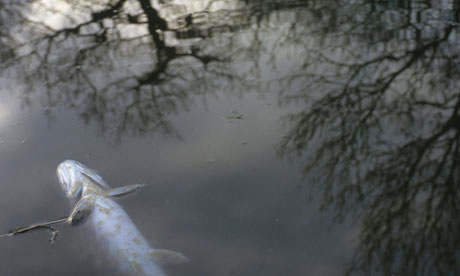
Monbiot blog on Neonicotinoids : A dead pike due to pollution on the River KennetA dead pike on the River Kennet. Photograph: Adrian Arbib/AlamyYou may have the impression that neonicotinoids have been banned by the European Union. They have not. The use of a few of these pesticides has been suspended for two years, but only for certain purposes. Listening to the legislators, you could be forgiven for believing that the only species which might be affected is honeybees, and the only way in which they can be killed is through the flowers of plants whose seeds were dressed.

But neonicotinoids are also sprayed onto the leaves of a wide variety of crop plants. They are also spread over pastures and parks in granules, in order to kill insects that live in the soil and eat the roots of the grass. These applications, and many others, remain legal in the EU, even though we don’t know how severe the wider impacts are. We do, however, know enough to conclude that they are likely to be bad.

Of course, not all the neonicotinoids entering the soil stay there indefinitely. You’ll be relieved to hear that some of them are washed out, whereupon … ah yes, they end up in groundwater or in the rivers. What happens there? Who knows? Neonicotinoids are not even listed among the substances that must be monitored under the EU’s water framework directive, so we have no clear picture of what their concentrations are in the water that we and many other species use.

But a study conducted in the Netherlands shows that some of the water leaving horticultural areas is so heavily contaminated with these pesticides that it could be used to treat lice. The same study shows that even at much lower concentrations – no greater than the limits set by the EU – the neonicotinoids entering river systems wipe out half the invertebrate species you would expect to find in the water. That’s another way of saying erasing much of the foodweb.

I was prompted to write this article by the horrible news from the River Kennet in southern England: a highly protected ecosystem that is listed among the few dozen true chalk streams on Earth. In July, someone – farmer or householder, no one yet knows – flushed another kind of pesticide, chlorpyrifos, down their sink. The amount was equivalent – in pure form – to two teaspoonsful. It passed through Marlborough sewage works and wiped out most of the invertebrates in 15 miles of the river.

The news hit me like a bereavement. The best job I ever had was working, during a summer vacation from university, as temporary waterkeeper on the section of the Kennet owned by the Sutton estate. The incumbent had died suddenly. It was a difficult job and, for the most part, I made a mess of it.

But I came to know and love that stretch of river, and to marvel at the astonishing profusion of life the clear water contained. Up to my chest in it for much of the day, I immersed myself in the ecology, and spent far more time than I should have done watching watervoles and kingfishers; giant chub fanning their fins in the shade of the trees; great spotted trout so loyal to their posts that they had brushed white the gravel of the river bed beneath their tails; native crayfish; dragonflies; mayflies; caddis larvae; freshwater shrimps and all the other teeming creatures of the benthos.

In the evenings, wanting company and fascinated in equal measure by the protest and the remarkable people it attracted, I would stop at the peace camp outside the gates of the Greenham Common nuclear base. I’ve told the strange story that unfolded during my visits in another post.

Campaigners seeking to protect the river have described how, after the contamination, the river stank from the carcasses of the decaying insects and shrimps. Without insects and shrimps to feed on, the fish, birds and amphibians that use the river are likely to fade away and die.

After absorbing this news, I remembered the Dutch study, and it struck me that neonicotinoid pesticides are likely, in many places, to be reducing the life of the rivers they enter to a similar extent: not once, but for as long as they are deployed on the surrounding land.

Richard Benyon, the minister supposed to be in charge of protecting wildlife and biodiversity, who happens to own the fishing rights on part of the River Kennet, and to represent a constituency through which it passes, expressed his “anger” about the chlorpyrifos poisoning. Should he not also be expressing his anger at the routine poisoning of rivers by neonicotinoids?

Were he to do so, he would find himself in serious trouble with his boss. Just as they are systematically poisoning our ecosystems, neonicotinoids have also poisoned the policies (admittedly pretty toxic already) of the department supposed to be regulating them. In April, the Observer published a letter sent by the minister in charge of the Department for Environment, Food and Rural Affairs (Defra), Owen Paterson, to Syngenta, which manufactures some of these pesticides. Paterson promised the company that his efforts to prevent its products from being banned “will continue and intensify in the coming days”.

And sure enough, the UK refused to support the temporary bans proposed by the commission both in April and in July, despite the massive petitions and the 80,000 emails on the subject that Paterson received. When Paterson and his department “Deathra” were faced with a choice between the survival of natural world and the profits of the pesticides companies, there was not much doubt about how they would jump. Fortunately they failed.

Their attempt to justify their votes led to one of the most disgraceful episodes in the sorry record of this government. The government’s new chief scientist, Sir Mark Walport, championed a “study” Deathra had commissioned, which purported to show that neonicotinoids do not kill bees. It was not published in a peer-reviewed journal, nor could it be, as any self-respecting scientist, let alone the government’s chief scientist, should have been able to see in a moment that it was complete junk. Among many other problems, the controls were hopelessly contaminated with the pesticide whose impacts the trial was supposed to be testing. The “study” was later ripped apart by the European Food Safety Authority.

But Walport did still worse, making wildly misleading statements about the science, and using scare tactics and emotional blackmail to try to prevent the pesticides from being banned, on behalf of his new masters.

It is hard to emphasise sufficiently the importance of this moment or the dangers it contains: the total failure of the government’s primary source of scientific advice, right at the beginning of his tenure. The chief scientist is not meant to be a toadying boot-licker, but someone who stands up for the facts and the principles of science against political pressure. Walport disgraced his post, betrayed the scientific community and sold the natural world down the river, apparently to please his employers.

Last week, as if to remind us of the extent of the capture of this government by the corporations it is supposed to be regulating, the scientist who led the worthless trials that Walport and Paterson cited as their excuse left the government to take up a new post at … Syngenta. It seems to me that she was, in effect, working for them already.

So here we have a department staggering around like a drunkard with a loaded machine gun, assuring us that “it’sh perfectly shafe.” The people who should be defending the natural world have conspired with the manufacturers of wide-spectrum biocides to permit levels of destruction which we can only guess. In doing so they appear to be engineering another silent spring.

Monbiot.com

« Previous Page — Next Page »

WPMU Theme pack by WPMU-DEV.