Forés @ UVPress


         Universitat de València PRESS -UVPress- weblog for research uses

November 10, 2012

06 ´El piquete estudiantil debe respetar nuestro derecho a no ir a la huelga´

´El piquete estudiantil debe respetar nuestro derecho a no ir a la huelga´

El catedrático que denunció a un alumno afirma que les lanzaron sillas y vaciaron un extintor


MAITE DUCAJÚ VALENCIA El catedrático de Filología Inglesa de la Universitat de València, Miguel Martínez López, aporta 25 testigos, la mayoría alumnos que estaban en clase de Literatura inglesa medieval, al juicio por su denuncia contra la irrupción del piquete estudiantil por los presuntos delitos de “coacciones, atentado contra la autoridad pública del profesorado y desorden público”, del pasado 18 de octubre, jornada de movilizaciones en institutos y campus. También ha pedido análisis de las huellas de un extintor.
“Mis alumno me habían dicho que ese día querían dar clase, a pesar de que no había ningún problema por mi parte para quien quisiera ejercer el derecho de hacer la huelga. Llegué al aula y estaban casi todos, unos cuarenta estudiantes, pero el piquete informativo no nos dejó ni empezar” relata el catedrático quien asegura que “tras un enorme estruendo, entraron en nuestra clase sin permiso -nunca había visto esto en ninguna parte- y un grupo de unas diez o doce personas con altavoces, gritando, insultándonos a mis alumnos y a mí, acabaron lanzando sillas, apagaron las luces, y vaciaron un extintor sobre nuestras cabezas”.
El profesor, que recuerda que la huelga de esa jornada era estudiantil y no docente, afirma que intentó el diálogo y permitió hablar a uno de los jóvenes, pero que como ni sus alumnos ni él se movían de sus asientos, porque “nadie quiso salir de clase”, entonces “empezaron los insultos y las agresiones que pasaron de ser verbales”. En ese momento, apunta que se sintió “humillado, indignado y sorprendido de pensar que en el ámbito de la universidad, que es el del diálogo, el del respeto académico, pudiera estar ocurriendo esto”.
En declaraciones a Levante-EMV, que ayer informó sobre la denuncia, Martínez López comenta que acudió tanto al rectorado para que abriera un expediente informativo, porque los hechos ocurrieron en el ámbito académico, como al juzgado porque “es obligación de todo ciudadano cuando es testigo de la comisión de un delito y, en este caso, cuando uno es víctima junto a mis estudiantes. Yo he hecho lo que el Código Penal dice que hay que hacer: presentar una denuncia”. Así, subraya que cuenta con el respaldo de su Facultad de Filología y de su departamento de Filología Inglesa y Alemana, del que es director por unanimidad.
En su opinión, se vive una situación en la que hay “muchas convocatorias de huelga” y “lo que no puede ser es que ir a la huelga se convierta en una obligación. La huelga es un derecho y no una obligación el seguirla. Nosotros hemos respetado su derecho a la huelga y ellos tienen que respetar el nuestro a no seguirla. Y no lo hicieron: fueron violentos y agresivos al máximo. El derecho democrático a las movilizaciones debe ser tan protegido como el mío a dar clases si yo quiero. En España nunca se hacen huelgas a la japonesa. Me duele que el estudiante tenga más tasas, pero el Estado financia un 80 por ciento de la educación superior a base de los impuestos y damos cada vez peor servicio con tanta huelga”.
Tras cuestionar que “el día que no hay manifestación hay una pitada”, el catedrático, quien dice no pertenecer a ningún partido, cree que “habría que separara el derecho legítimo a la manifestación, a la discrepancia política, sindical, económica, de lo que es el cumplimiento de las obligaciones”. Además, lamenta que “mucha gente quiere dar clase pero, en cuanto oye a estas hordas gritando y arrasando las facultades salen corriendo. Esto no es un Estado de Derecho avanzado; es la selva”.


Vicente Forés López recommends a link.
Es increible que estas cosas sucedan. Creo que los métodos que usan los estudiantes son obsoletos, pero más obsoleto me parece el discurso de mi querido colega y compañero de deptartamento, y también director, ya que yo no vivo la universidad como si fuera o estuviera en una selva. Ni creo haber observado en muchos años que las pitadas o las huelgas hayan interrumpido, en absoluto, el buen funcionamiento de la universitat. Por ello, me refuerzo en la idea que esta forma de protesta ha quedado obsoleta. La violencia anti-universitaria siempre ha sido ejercida por la derecha, en este país. Si ahora nos encontramos con elementos de calleborroka posiblemente estarán más vinculados al ´botellón´que a una orientación política. Creo que el dialogo y no la denuncia ante la policia son la forma de resolver estos hechos. Académicamente, entre los que vivimos en la universidad, aún preferimos eso de lavar la ropa sucia en casa y no en Levante o otros medios. Espero que no se llegue a una cobertura de plató de TV. Incidentes aislados, como el que nos ocupa, hay que tratarlos con excepcionalidad, tal como suceden, si de no llegar a ningún tipo de acuerdo, siempre queda la salida de gastar innecesariamente escasos dineros públicos en hacer que la maquinaria policial y sobre todo judical se ahogue y se paralice más en papeleo, pleitos, y denuncias. Así NO podrán dedicarse a resolver problemas de verdad. salut vicente

´El piquete estudiantil debe respetar nuestro derecho a no ir a la huelga´ – Levante-EMV

www.levante-emv.com

El catedrático de Filología Inglesa de la Universitat de València, Miguel Martínez López, aporta 25 testigos, la mayoría alumnos que estaban en clase de Literatura inglesa medieval, al juicio por su denuncia contra la irrupción del piquete estudiant

06 Inside the Secret World of the Data Crunchers Who Helped Obama Win

Filed under: archivo personal,future,Holístico,política,tecnología — fores @ 10:13 am


2012 Election

Inside the Secret World of the Data Crunchers Who Helped Obama Win

image "The cave" at President Obama's Election headquarters in Chicago
Daniel Shea for TIME”The cave” at President Obama’s campaign headquarters in Chicago

In late spring, the backroom number crunchers who powered Barack Obama’s campaign to victory noticed that George Clooney had an almost gravitational tug on West Coast females ages 40 to 49. The women were far and away the single demographic group most likely to hand over cash, for a chance to dine in Hollywood with Clooney — and Obama.

So as they did with all the other data collected, stored and analyzed in the two-year drive for re-election, Obama’s top campaign aides decided to put this insight to use. They sought out an East Coast celebrity who had similar appeal among the same demographic, aiming to replicate the millions of dollars produced by the Clooney contest. “We were blessed with an overflowing menu of options, but we chose Sarah Jessica Parker,” explains a senior campaign adviser. And so the next Dinner with Barack contest was born: a chance to eat at Parker’s West Village brownstone.

(MORE: Four More Years: Obama Wins Re-election)

For the general public, there was no way to know that the idea for the Parker contest had come from a data-mining discovery about some supporters: affection for contests, small dinners and celebrity. But from the beginning, campaign manager Jim Messina had promised a totally different, metric-driven kind of campaign in which politics was the goal but political instincts might not be the means. “We are going to measure every single thing in this campaign,” he said after taking the job. He hired an analytics department five times as large as that of the 2008 operation, with an official “chief scientist” for the Chicago headquarters named Rayid Ghani, who in a previous life crunched huge data sets to, among other things, maximize the efficiency of supermarket sales promotions.

Exactly what that team of dozens of data crunchers was doing, however, was a closely held secret. “They are our nuclear codes,” campaign spokesman Ben LaBolt would say when asked about the efforts. Around the office, data-mining experiments were given mysterious code names such as Narwhal and Dreamcatcher. The team even worked at a remove from the rest of the campaign staff, setting up shop in a windowless room at the north end of the vast headquarters office. The “scientists” created regular briefings on their work for the President and top aides in the White House’s Roosevelt Room, but public details were in short supply as the campaign guarded what it believed to be its biggest institutional advantage over Mitt Romney’s campaign: its data.

On Nov. 4, a group of senior campaign advisers agreed to describe their cutting-edge efforts with TIME on the condition that they not be named and that the information not be published until after the winner was declared. What they revealed as they pulled back the curtain was a massive data effort that helped Obama raise $1 billion, remade the process of targeting TV ads and created detailed models of swing-state voters that could be used to increase the effectiveness of everything from phone calls and door knocks to direct mailings and social media.

(Election 2012: Photos From the Finish Line)

How to Raise $1 Billion
For all the praise Obama’s team won in 2008 for its high-tech wizardry, its success masked a huge weakness: too many databases. Back then, volunteers making phone calls through the Obama website were working off lists that differed from the lists used by callers in the campaign office. Get-out-the-vote lists were never reconciled with fundraising lists. It was like the FBI and the CIA before 9/11: the two camps never shared data. “We analyzed very early that the problem in Democratic politics was you had databases all over the place,” said one of the officials. “None of them talked to each other.” So over the first 18 months, the campaign started over, creating a single massive system that could merge the information collected from pollsters, fundraisers, field workers and consumer databases as well as social-media and mobile contacts with the main Democratic voter files in the swing states.

The new megafile didn’t just tell the campaign how to find voters and get their attention; it also allowed the number crunchers to run tests predicting which types of people would be persuaded by certain kinds of appeals. Call lists in field offices, for instance, didn’t just list names and numbers; they also ranked names in order of their persuadability, with the campaign’s most important priorities first. About 75% of the determining factors were basics like age, sex, race, neighborhood and voting record. Consumer data about voters helped round out the picture. “We could [predict] people who were going to give online. We could model people who were going to give through mail. We could model volunteers,” said one of the senior advisers about the predictive profiles built by the data. “In the end, modeling became something way bigger for us in ’12 than in ’08 because it made our time more efficient.”

Early on, for example, the campaign discovered that people who had unsubscribed from the 2008 campaign e-mail lists were top targets, among the easiest to pull back into the fold with some personal attention. The strategists fashioned tests for specific demographic groups, trying out message scripts that they could then apply. They tested how much better a call from a local volunteer would do than a call from a volunteer from a non–swing state like California. As Messina had promised, assumptions were rarely left in place without numbers to back them up.

MORE: TIME Staff: Live Twitter Reactions

The new megafile also allowed the campaign to raise more money than it once thought possible. Until August, everyone in the Obama orbit had protested loudly that the campaign would not be able to reach the mythical $1 billion fundraising goal. “We had big fights because we wouldn’t even accept a goal in the 900s,” said one of the senior officials who was intimately involved in the process. “And then the Internet exploded over the summer,” said another.

A large portion of the cash raised online came through an intricate, metric-driven e-mail campaign in which dozens of fundraising appeals went out each day. Here again, data collection and analysis were paramount. Many of the e-mails sent to supporters were just tests, with different subject lines, senders and messages. Inside the campaign, there were office pools on which combination would raise the most money, and often the pools got it wrong. Michelle Obama’s e-mails performed best in the spring, and at times, campaign boss Messina performed better than Vice President Joe Biden. In many cases, the top performers raised 10 times as much money for the campaign as the underperformers.

Chicago discovered that people who signed up for the campaign’s Quick Donate program, which allowed repeat giving online or via text message without having to re-enter credit-card information, gave about four times as much as other donors. So the program was expanded and incentivized. By the end of October, Quick Donate had become a big part of the campaign’s messaging to supporters, and first-time donors were offered a free bumper sticker to sign up.

(PHOTOS: Election 2012: Photos from the Finish Line)

Predicting Turnout
The magic tricks that opened wallets were then repurposed to turn out votes. The analytics team used four streams of polling data to build a detailed picture of voters in key states. In the past month, said one official, the analytics team had polling data from about 29,000 people in Ohio alone — a whopping sample that composed nearly half of 1% of all voters there — allowing for deep dives into exactly where each demographic and regional group was trending at any given moment. This was a huge advantage: when polls started to slip after the first debate, they could check to see which voters were changing sides and which were not.

It was this database that helped steady campaign aides in October’s choppy waters, assuring them that most of the Ohioans in motion were not Obama backers but likely Romney supporters whom Romney had lost because of his September blunders. “We were much calmer than others,” said one of the officials. The polling and voter-contact data were processed and reprocessed nightly to account for every imaginable scenario. “We ran the election 66,000 times every night,” said a senior official, describing the computer simulations the campaign ran to figure out Obama’s odds of winning each swing state. “And every morning we got the spit-out — here are your chances of winning these states. And that is how we allocated resources.”

Online, the get-out-the-vote effort continued with a first-ever attempt at using Facebook on a mass scale to replicate the door-knocking efforts of field organizers. In the final weeks of the campaign, people who had downloaded an app were sent messages with pictures of their friends in swing states. They were told to click a button to automatically urge those targeted voters to take certain actions, such as registering to vote, voting early or getting to the polls. The campaign found that roughly 1 in 5 people contacted by a Facebook pal acted on the request, in large part because the message came from someone they knew.

(MORE: Why the Importance of Early Voting Is Here to Stay)

Data helped drive the campaign’s ad buying too. Rather than rely on outside media consultants to decide where ads should run, Messina based his purchases on the massive internal data sets. “We were able to put our target voters through some really complicated modeling, to say, O.K., if Miami-Dade women under 35 are the targets, [here is] how to reach them,” said one official. As a result, the campaign bought ads to air during unconventional programming, like Sons of Anarchy, The Walking Dead and Don’t Trust the B—- in Apt. 23, skirting the traditional route of buying ads next to local news programming. How much more efficient was the Obama campaign of 2012 than 2008 at ad buying? Chicago has a number for that: “On TV we were able to buy 14% more efficiently … to make sure we were talking to our persuadable voters,” the same official said.

The numbers also led the campaign to escort their man down roads not usually taken in the late stages of a presidential campaign. In August, Obama decided to answer questions on the social news website Reddit, which many of the President’s senior aides did not know about. “Why did we put Barack Obama on Reddit?” an official asked rhetorically. “Because a whole bunch of our turnout targets were on Reddit.”

That data-driven decisionmaking played a huge role in creating a second term for the 44th President and will be one of the more closely studied elements of the 2012 cycle. It’s another sign that the role of the campaign pros in Washington who make decisions on hunches and experience is rapidly dwindling, being replaced by the work of quants and computer coders who can crack massive data sets for insight. As one official put it, the time of “guys sitting in a back room smoking cigars, saying ‘We always buy 60 Minutes’” is over. In politics, the era of big data has arrived.

PHOTOS: Last Days on the Road with Obama

Read more: http://swampland.time.com/2012/11/07/inside-the-secret-world-of-quants-and-data-crunchers-who-helped-obama-win/#ixzz2BnzaOntR

November 9, 2012

06 China superará a EE UU en 2016

China superará a EE UU y se convertirá en la primera potencia mundial en 2016

India también adelantará a la economía estadounidense en poco más de una década

La OCDE sitúa al gigante chino por delante del conjunto de la Eurozona ya en 2012

http://economia.elpais.com/economia/2012/11/09/actualidad/1352456628_222082.html?videoid=1352456628_222082_1352458958
Madrid 9 NOV 2012 – 11:23 CET41

China adelantará en apenas cuatro años a Estados Unidos como la primera potencia mundial, según las previsiones a largo plazo que ha publicado la Organización para la Cooperación y el Desarollo Económico (OCDE). Además, en su imparable ascensión, la economía china logrará situarse por delante del conjunto de la Eurozona ya en 2012 y, gracias a un crecimiento que va a seguir siendo muy superior durante los próximos 50 años, lo triplicará en 2060. Además de China, el país que pisará fuerte el acelerador hasta 2060 será India, con lo que a mitad de este periodo también logrará superar a EE UU.

El Producto Interior Bruto (PIB) de China fue en 2011 un 17% del total mundial, porcentaje equivalente al de la eurozona pero todavía inferior al 23 % de Estados Unidos. No obstante, el PIB chino pasará a suponer el 28% en 2030, cuando los de los otros dos bloques habrán quedado reducidos al 12% y al 18% respectivamente, indica la OCDE, que utiliza datos de PIB en términos de paridad de poder de compra, lo que corrige las distorsiones que generan los diferentes niveles de precios existentes entre países.

En cuanto a España, el informe que ha publicado la OCDE indica que su economía crecerá de media entre 2011 y 2060 un 1,7%, por debajo de la media de la economía global (2,9%) y de la OCDE (2%). Además, frenará su ritmo de avance a medida que pase el tiempo, ya que frente al alza del 2% esperada para el periodo comprendido entre 2011 y 2030, entre este último año y 2060 la tasa media será del 1,4%. Ambas cifras son inferiores a la media del 2,9% registrada entre 1995 y 2011.

En la presentación del informe, un pesimista Gurría ha advertido de que no se ha salido de la crisis y que no se sabe cuándo se superará ni cuáles serán los efectos, ni tampoco el impacto de las medidas que se han tomado para combatirla. “No creo que estemos fuera del túnel todavía”, ha sentenciado.

“El PIB mundial está previsto que crezca alrededor del 3% de media en los próximos 50 años, aunque se prevén amplias diferencias entre países y regiones. Los países emergentes de rápido crecimiento serán los principales impulsores de las perspectivas a largo plazo”, explica la institución en su estudio Looking to 2060: A Global Vision of Long-Term Growth.

Entre las economías analizadas por la OCDE que más crecerán en los próximos 50 años se encuentran India (5,1%), Indonesia (4,1%), China (4%) y Arabia Saudí (3,1%). Por el contrario, las que menos serán Alemania y Luxemburgo (1,1% ambas), Japón (1,3%), Austria, Grecia, Italia y Portugal (1,4% en los cuatro países) y Francia, Corea y Polonia (1,6%).

06 Freedom & Diversity: A Liberal Pentagram for Living Together

Filed under: archivo personal,economía,future,Holístico,política — fores @ 9:43 am

NYRB Logo

Freedom & Diversity: A Liberal Pentagram for Living Together

November 22, 2012

Timothy Garton Ash

Font Size: A A A

Europe’s Angry Muslims: The Revolt of the Second Generation
by Robert S. Leiken
Oxford University Press, 354 pp., $27.95

Muslims in Europe: A Report on 11 EU Cities
by the Open Society Institute
346 pp., available at opensocietyfoundations.org

The Emancipation of Europe’s Muslims: The State’s Role in Minority Integration
by Jonathan Laurence
Princeton University Press, 366 pp., $80.00; $29.95 (paper)

The New Religious Intolerance: Overcoming the Politics of Fear in an Anxious Age
by Martha C. Nussbaum
Belknap Press/Harvard University Press, 285 pp., $26.95

Immigrant Nations
by Paul Scheffer, translated from the Dutch by Liz Waters
Polity, 390 pp., $84.95; $29.95 (paper)

1.

According to US Census Bureau projections, non-Hispanic whites will be outnumbered by other ethnic groups in the United States in about 2042. As a chorus chanted at a Chicago cabaret: “In 2042, there’ll be more of us than of you.” If Turkey joins the European Union, then by 2030 one in every five residents of the EU could be Muslim. This diversity is most visible in cities such as London, Amsterdam, Toronto, and New York. Some 37 percent of New Yorkers are foreign-born; in Toronto, the figure is close to 50 percent. Three hundred languages are spoken in London. One in four newborns in Britain have at least one parent who was born overseas.*

gartonash_1-112212.jpgReuters

Malala Yousufzai, a Pakistani schoolgirl from the Swat Valley who was shot by the Taliban in early October for advocating education for girls. She is now receiving medical care in Birmingham, England.

These are not just “immigrants.” Increasingly, they are people “with a migration background,” as the German government classifies them, or “postmigrants,” in Robert S. Leiken’s snappier phraseology. It has long been observed that the problems of conflicted identity, or cultural schizophrenia, can be most acute in the second or third generation. Cheap air travel, the Internet, satellite TV, and mobile phones bring the two homelands closer than they were for Irish or Italian migrants to the US a hundred years ago. Even more than Italian-Americans in the early twentieth century, today’s Turkish-Germans, Pakistani-Brits, Mexican-Americans, Cambodian-Canadians, and Chinese-Australians feel that they belong to two worlds.

These new Europeans, Canadians, Americans, or Australians cannot be characterized simply by one group identifier, be it culture, ethnicity, nationality (“the Turks”), religion (“the Muslims”), or a specially invented collective marker such as “Hispanic” or “Afro-Caribbean.” In Birmingham, England, for example, a city that is expected to have a nonwhite majority by 2024, the postmigrants are not just Hindu, Sikh, or Muslim, but also Punjabi or Mirpuri (from Mirpur in Azad Kashmir), Labour, Conservative, or Liberal Democrat voters, supporters of this or that soccer club, and, by no means least, Brummies—residents of the great city of Birmingham, with its distinctive accent and local patriotism. Around a million people in Britain now identify themselves as of “mixed” ethnicity. In many countries, more and more people are, as President Barack Obama once famously put it, “mutts like me.”

The multiculturalist literature, with its tendency to pigeonhole people by culture, often fails to acknowledge the sheer diversity of this increasingly mixed-up world. More than ever, that must include the diversity to be found inside a single human skin, mind, and heart.

2.

“Multiculturalism” has become a term of wholly uncertain meaning. Does it refer to a social reality? A set of policies? A normative theory? An ideology? Last year, I served on a Council of Europe working group with members from eight other European countries. We found that the word meant something different, and usually confused, in every country.

Some, though not all, of the policies described as “multiculturalism” over the last thirty years have had deeply illiberal consequences. They have allowed the development of “parallel societies” or “subsidized isolation.” Self-appointed community leaders have used public funds to reinforce cultural norms that would be unacceptable in the wider society, especially in relation to women. This has come close to official endorsement of cultural and moral relativism. A perverse effect has been to disempower the voices of the more liberal, secular, and critical minority within such ethnically or culturally defined minorities.

If, therefore, you want to elaborate a version of multiculturalism that is genuinely compatible with liberalism, as some distinguished political theorists do, you have to spend pages hedging the term about with clarifications and qualifications. By the time you have finished doing that, the justification for a separate new “ism” has evaporated. Why not simply talk about the form of modern liberalism suited—meaning also, developed and adapted—to the conditions of a contemporary, multicultural society?

When understandings of liberalism were expanded to embrace equal liberty under law for people of all social classes, it was not thought necessary to speak of “multiclassism”; nor, when extended to those of all skin colors, “multicolorism”; nor again, when to those of all genders and sexualities, “multigenderism” or “multisexualitism.” Painful though this will be to those who have expended their academic careers on multiculturalism, the term should be consigned to the conceptual dustbin of history.

To say this it is not necessary to endorse any crude summary judgment on whether multiculturalism was, in the famously parodic terms of 1066 and All That, a Good Thing or a Bad Thing. One of the word’s crippling handicaps is precisely that it has included some very bad things (e.g., publicly subsidized, illiberal postmigrant community ghettos in Western European cities) and some quite good things (e.g., efforts to get neighbors better acquainted with one another’s cultures).

To be clear: it is the “ism” that should be a “wasm.” Although the adjective “multicultural” questionably gathers in one tag what are in reality multiple kinds of human difference—religion, ethnicity, language, nationality, color, etc.—it has become a generally understood shorthand for the mainly postmigrant diversity of these societies. There is no need to throw out the descriptive baby with the prescriptive bathwater.

3.

How, then, if not by referring to “multiculturalism,” should we summarize the challenges posed and opportunities offered by the increasingly multicultural character of these societies? On the principle that one should not use complicated terms when simpler ones will do, I suggest “combining freedom and diversity.” This does not mean that freedom and diversity are first-order values of comparable worth, like peace and justice. Increasing diversity can certainly enhance freedom. Where there is no choice, there is no freedom. The more choices between different ways of life we have readily available, on our big city doorstep, the greater the effective freedom we may be said to have.

But in practice, growing diversity can also be a challenge to existing freedoms—and to the social practices and shared understandings that historically have sustained those freedoms. From Robert Putnam’s influential work on the erosion of social trust to the violent controversy around the Danish cartoons of Muhammad, from ethnic minority slums to Arizona’s illiberal immigration law, anyone with eyes to see must recognize that we are far from a condition of rainbow nation bliss.

When I say “combining freedom and diversity,” I refer mainly to diversity as a reality. So the phrase might be parsed at greater length as “how to defend and enhance the freedoms of an open society in conditions of growing diversity.” This requires close attention to the details of policy on education, housing, the labor market, welfare, culture, political representation, and so on. The local level is as important as the regional, national, and—in Europe—supranational ones. What works for Pakistanis in Bradford may not work for Turks in Berlin or Berbers in Rotterdam, let alone for Mexicans in Los Angeles or Cambodians in Toronto.

Nor is this only a task for public policy. It is the personal responsibility of every one of us who lives in such a society. The character of everyday interactions, at school, at work, on the street, in the café, will affect the attitudes of migrants and postmigrants at least as much as any high policy. Small slights alienate, small courtesies integrate.

4.

A conspectus of “what is to be done” would therefore fill an encylopedia. Here I can only sketch certain qualities that should run through and inform both public policy and personal conduct. I propose a pentagram of liberal virtues: inclusion, clarity, consistency, firmness, and liberality. Theoretically, these may be understood as expressions of the attempt by Isaiah Berlin and others to blend liberalism and pluralism. Practically, they draw lessons from a half-century of trial and error. Needless to say, these five liberal pluralist virtues are effective only in combination, hence the image of a pentagram.

Inclusion

At some high level of unworldly abstraction it may be possible to argue that restricting immigration into rich, free countries is illiberal. In real life, limiting immigration is the precondition for maintaining a liberal society. (Let everyone enter Switzerland who would wish to, and see what happens next.) What liberalism does require, however, is that everyone who has arrived in a given legal-political space—be it a single state, the territory of the EU, or the larger Europe of the Council of Europe—should have their human rights respected, even if those people are there briefly and illegally. It further requires that those who live there legally, for longer periods, should be entitled to that fuller “equal respect and concern” that Ronald Dworkin prescribes as the duty of the liberal state to all its citizens.

Over the last half-century, many Western European countries have fallen down on both steps of this two-step argument. They have let in very large numbers of people, through a combination of deliberately generous, chaotically unmanaged, and simply illegal immigration. Countries like Norway, with no modern experience of large-scale immigration, have experienced an inflow approaching the record proportions of immigration to the United States before World War I. Until recently, however, most European states have done far too little to integrate the new or not-so-new arrivals and their children—that is, to enable them to feel at home, as fully participating members of the societies in which they live.

In a famous article entitled “The Multicultural Drama,” published in 2000, the Dutch political writer Paul Scheffer criticized the Netherlands’ policy of “liberal admission and limited integration.” By “liberal” he presumably meant “generous,” but in truth, as he himself argues in his excellent book Immigrant Nations, this combination was not liberal at all. In Germany, for example, by 1994 more than seven million inhabitants out of a total of 80 million were officially listed as “foreigners.” They included Turks who had lived in Cologne or West Berlin for thirty years.

Most Western European countries, including Germany, have now moved toward granting citizenship to long-term residents, but Germany’s revised citizenship law continues to demand that they renounce any other citizenship. This is increasingly unrealistic, and arguably unreasonable, in a world where ever more postmigrants have two closely connected homelands. As one woman in the British city of Bradford put it: “Pakistan is our country. Britain is our country too.”

The mere granting of citizenship is only the beginning of inclusion. These days, many Western European countries have introduced citizenship tests and ceremonies. The questions in those national knowledge tests may have a somewhat random quality, and might be failed by people whose families have lived in the country for generations. (To some amusement in Britain, even Prime Minister David Cameron could not immediately tell the American talk show host David Letterman what “Magna Carta” means in English, and who composed “Rule, Britannia.”) The ceremonies may be perfunctory, or teeter on the verge of self-parody (tea, sandwiches, and a pianist playing “Land of Hope and Glory,” while the rain patters down on the roof of an English village hall). Nonetheless, the new citizens I have spoken to found these ceremonies moving, or at least “nice.”

gartonash_2-112212.jpgChris Steele-Perkins/Magnum Photos

Children playing in Wolverhampton, England, 1978

Beyond that single festive affirmation of civic national belonging, the hard grind of inclusion happens in multiple settings: education, housing, the workplace, media, politics, entertainment, and sport. Few things help more than unselfconscious everyday mixing at home, school, and work. The novelist Zadie Smith recalls growing up in London with girls in headscarves, Jewish boys with yarmulkes, and Hindu kids with bindis on their foreheads: “United in the same primary schools, we were neither mesmerized by, nor especially frightened of, our differences.”

In France, despite its great republican tradition of difference-blind integration through schooling, the problem of educational segregation persists because postmigrants are concentrated in particular city quarters. Careful studies have demonstrated the existence in the French labor market of severe discrimination against people with foreign names in general and Muslims in particular.

In journalism, there is a double challenge of representation: to report the lives of people from different cultures accurately and with understanding, and to have individuals from those backgrounds visible and audible on television, in print, and online. The two kinds of representation need not coincide. Indeed, African-Americans should not always be reporting on African-Americans, Muslims on Muslims, women on women. In politics, too, visible representation of both the faces and the interests of significant minorities is desirable; and again, the two need not coincide. Cem Özdemir, a leader of Germany’s Green Party, speaks for voters with a special concern about the environment, not specifically for his fellow German Turks or Turkish Germans.

Entertainment and sport probably have the largest impact on the perceptions of a wider public. Most European soccer teams boast a strong showing of players of migrant background—France’s legendary Zinedine Zidane, now retired, Italian striker Mario Barwuah Balotelli, and former England captain Sol Campbell, to name but three. The magic in their boots has done more for the emergence of “a new We” than anything done by any politician.

Clarity

In multicultural societies, the basic principles and values of the political community, including the rights and duties of the citizen, need to be spelled out more clearly. Most European countries with high levels of immigration have made moves in this direction. Italy, for example, produced a Charter of Values in 2007. The EU has a list of eleven “common basic principles on integration” that, while necessarily general, are both liberal and clear.

It is also important to distinguish between the liberal essentials, on which there can be no compromise, and those parts of civic life in which negotiation and accommodation are both possible and desirable. One mistake made by many European societies over the last decade has been to spend vast amounts of time and indignation on what are at best secondary issues—the question whether the minaret on the Cologne mosque may be higher than the spire of Cologne cathedral, a referendum on banning minarets in Switzerland, all the endless controversies around hijab, niqab, and burqa—while allowing large concessions in matters where there should be none, including equality under one law, freedom of expression, and the fundamental rights of women.

So these societies have been needlessly intransigent on nonessentials, and dangerously lax on essentials. In 2008, for example, British authorities received reports of some 1,600 suspected forced marriages while the police reckoned so-called “honor” murders were running at an average of one a month (with the real numbers in both cases likely to be higher). These are horrifying figures for any country, but especially for one that prides itself on being “the mother of the free.”

Jonathan Laurence, whose study of European governments’ recent approaches to their Muslim populations usefully draws on the historic experience of other minorities in Europe, tells us that the preamble to Napoleon’s agreement with the French Jewish community included explicit reference to the Talmudic principle dina demalchuta dina—“the law of the land is the law.” How people of different faiths and cultures get to that point is their own business, but get there they must, or the foundations of a free society are fissured. An essential corollary is that citizens of whatever background have an equal opportunity to work toward changing that law of the land, through a democratically elected legislature.

Consistency

Modern secular liberal states claim to give their citizens equal treatment under one law. The arrival of people from diverse cultures, faiths, and countries exposes this claim to a probing searchlight. Why, for example, are there blasphemy laws protecting only Christianity? Faith schools for only some faiths but not all? Memory laws covering only some genocides, such as the Holocaust? Pockets of legal exceptionalism for only some communities, such as the Amish in the US? “Double standards!” cry articulate representatives of new minorities—and they have a point.

We then stand at a fork in the road. We can multiply the taboos, so that those of all communities and faiths are equally protected, or we can dismantle previously unchallenged taboos, moving toward a more consistent liberalism of equal treatment. Representatives of more socially conservative postmigrant minorities would often prefer us to take the former route. Thus, for example, British Muslims lobbied early in the last decade not for the British blasphemy law to be abolished, but for it to be extended to give equal protection to Islam. In the event, Britain repealed its blasphemy law and replaced it with a new offense of “incitement to religious hatred.” However, following a campaign by defenders of free speech, that offense was qualified by what has come to be known as “the English PEN clause,” which protects “criticism or expressions of antipathy, dislike, ridicule, insult or abuse” of religious beliefs and practices. The net effect was to move toward a more consistent liberalism—but it was a close-run thing.

It is, to be sure, unrealistic to expect the achievement of total consistency. In a remarkable letter he wrote in 2004 to the German legal scholar Ernst-Wolfgang Böckenförde, the man who was then Cardinal Joseph Ratzinger and is now Pope Benedict XVI somewhat plaintively insisted that Sunday must surely remain the day of rest: a reasonable enough practical point. However, he went on to argue that a state could not entirely cut itself off from its cultural roots, and become what he called a reiner Vernunftstaat, a state built purely on reason.

This is to elide two things: the claim that a secular, liberal state needs some shared values to underpin it, and the claim that such values must be tied to one particular culture. The challenge of our time is precisely to build on values that are defensible in the light of reason and can be found across cultures. “Believe me,” insists the philosopher Almut Bruckstein Çoruh, “the basic values of the German constitution (Basic Law) can very well be justified from the Jewish and Islamic traditions.”

Firmness

The liberal essentials that a free country requires all its citizens and residents to respect should be clearly defined and limited in scope, but they must then be unflinchingly defended. This requires new responses to new challenges. Thus Britain, for example, now has a Forced Marriage Unit, which is a joint initiative between the Foreign Office and the Home Office since—in this world of dual homelands—many of the forced marriages actually take place in countries such as Pakistan. In 2007, Parliament passed the Forced Marriage Act. The British police have developed a wide-ranging strategy to combat what they call “honour based violence,” including forced marriages, murders, and female genital mutilation. As they rightly comment, “There is no honour in the commission of murder, rape, kidnap and the many other acts, behaviour and conduct which make up ‘violence in the name of so-called honour.’”

In our time, one of the biggest threats to established liberties comes from violent intimidation to deter free speech. In an Oxford University research project on freedom of expression (www .freespeechdebate.com), we have formulated a core principle thus: “We neither make threats of violence nor accept violent intimidation.” Those are two sides of the same coin. To yield to violent intimidation is, in effect, to encourage those who have made threats of violence to make more of them, and others to follow.

This is a challenge that many European societies have failed badly to meet over the last twenty years. What in American free speech literature is called the “heckler’s veto” has in our time become the assassin’s veto. There are certainly tens, probably hundreds, of individuals in or from Europe who are living under a threat to their lives, just because of thoughts or feelings they have expressed, in writing, speech, drama, or visual art. They include not just non-Muslim and ex-Muslim critics of Islam, but also Muslims who have criticized what is done in the name of their own faith. Sikhs, Hindus, and others have also felt the violent edge of intimidation.

Far too often, the reaction of the forces of law and order has been to try to suppress the forms of expression giving offense, rather than focusing on those who threaten violence. Faced with violent demonstrations, the British police told those who were staging the play Behzti, which painted a bitingly negative picture of Sikh community life in Britain, to stop the production. While the actions of the state are of secondary importance in some other areas, such as entertainment and sport, the state’s role is vital here since it has the monopoly of legitimate violence. A more diverse society is bound to manifest more sharply conflicting views. The job of the liberal state is not to reduce, let alone to eliminate, that conflict, but to ensure that it remains within peaceful bounds.

Jeremy Waldron has recently argued that European-style laws against “hate speech” should be seriously considered in the United States, on the grounds that they protect the dignity of vulnerable minorities. My own view is that Europe should move more in a First Amendment direction. We in Europe can learn from the way the United States has traditionally used freedom of expression precisely to help it live with diversity. As President Obama observed at the UN General Assembly, reflecting on the controversy around the “Innocence of Muslims” YouTube video, “in a diverse society, efforts to restrict speech can quickly become a tool to silence critics and oppress minorities.” In a liberal democracy, a hateful tweet is best combated by popular condemnation and social pressure—which social media also allow and magnify—rather than taking the time of police who have more important things to do.

The state needs to intervene decisively at the point where “hate speech” becomes what Susan Benesch calls “dangerous speech.” As Benesch argues, determining when that line is crossed requires a careful analysis of the specific circumstances of speaker and audience. But “if you say that, we will kill you”—when seriously meant—clearly qualifies as dangerous speech. Combating violent intimidation should not, however, be left to the police and the courts alone. Threatened individuals, be they a famous writer or an unknown young woman in an oppressive community, need solidarity from the wider society. They should be able to feel that there are people they can turn to for protection and for support. (Such solidarity does not, however, require holding back criticism of the views of those individuals. Self-censorship is not a good way to defend free speech.)

Institutions such as political parties, trade unions, schools, universities, and publishers all need to play their part. It is, for example, lamentable that Yale University Press (full disclosure: Yale is my American publisher) decided not to publish an already prepared section of illustrations to the Danish scholar Jytte Klausen’s book about the controversy around the Danish cartoons of Muhammad. As a result, in a careful, scholarly book entitled The Cartoons That Shook the World, the one thing we cannot see is the cartoons that shook the world.

At the moment, facing down violent intimidation is the most important example of this essential liberal firmness, but it is not the only one. Firmness is also required in the face of popular, tabloid-stoked hysteria (“something must be done!”), overt and covert lobbying by rich and powerful interests at home and abroad (from Rupert Murdoch, through all manner of ethnic and faith-based groups, to the authorities of Saudi Arabia and China), and every other pressure to prevent or pervert the consistent application of explicit standards to all members of a multicultural society.

Liberality

I describe the last side of the pentagram with a word that picks up some old, now half-buried connotations of “liberal.” The meanings of “liberality” include generosity, open-mindedness, and freedom from prejudice. It evokes the strand of liberalism that takes a generous, curious, imaginative interest in other cultures, philosophies, and ways of life. Most brilliantly represented by Isaiah Berlin, this liberal pluralist approach goes beyond the mere affirmation that liberal societies do not require all their citizens to be liberals. It takes seriously the proposition that we can understand, appreciate, and learn from others even while profoundly disagreeing with them. Its qualities are evoked in phrases such as “liberal mind,” “liberal spirit,” and Lionel Trilling’s The Liberal Imagination.

Martha Nussbaum eloquently speaks for, and continues, this tradition in her book The New Religious Intolerance. She pleads for the use of our “inner eyes,” for that “curious and sympathetic imagination” that is adept at “recognizing humanity in strange costumes.” Like Trilling, she illustrates this liberal imagination with works of literature—in her case ranging from Lessing’s Nathan the Wise all the way to the children’s books of Marguerite de Angeli. We can’t all be novelists or poets, but some of their imaginative skills are essential if we are to combine the stern, singular legal and political requirements of equal freedom with the baggy, polyphonous reality of social and cultural diversity.

To say “a curious…imagination” implies that you go on to find out a bit more about the others next to whom you are now living. This is essential because, as the writer Devla Murphy has observed, “if you know nothing about a people, you can believe anything.” The Council of Europe now promotes what it usefully calls “intercultural” education and understanding. Yet paper knowledge will be useless without the imagination to inform it. With a little imagination, and with human contact, we soon discover the shared humanity beneath unfamiliar garb and tongue. This is the subject of many a novel and poem, but also, as Zadie Smith recalls, the everyday experience of schoolmates and neighbors engaged in joint activities that have nothing to do with getting to know each other’s cultures: smoking your first cigarette behind the school gym, for example, or campaigning for a new local bus route.

Behind the curtain of alien idiom, we may also find insights that we can recognize as valuable and true. As we have seen, this will not always be the case: sometimes there is ineradicable conflict, requiring only toleration up to the frontier of the liberal essentials, and iron firmness at that frontier. (Violent intimidation of free expression, honor killings, and forced marriages are all-too-actual examples.) But closing ranks in the defense of basic values and human rights does not require, and should not lead, to the closing of minds.

Reflecting on the sometimes hysterical debate about Islam in Europe, in an essay originally entitled “The Dialectics of Secularization,” Jürgen Habermas insists that since fellow citizens should be “taken seriously as modern contemporaries,” so

secular citizens are expected not to exclude a fortiori that they may discover, even in religious utterances, semantic contents and covert intuitions that can be translated and introduced into a secular discourse.

In contemporary Western Europe, this admonition is addressed to a secular, if not an atheist, majority. In the United States, one has to turn this around, addressing the expectation to a religious majority in respect of an atheist minority. But as Habermas himself points out, it is not just a call to the given majority.

As someone whose ancestors have been at home in England for as long as our sketchy family tree stretches back, I do feel a special obligation to reach out, in a spirit analogous to hospitality, to assist those more newly arrived to feel at home in England. But if we take seriously the aspiration to create a “new We,” there has to come a point when those whose families arrived somewhat more recently are as much hosts as I am. To treat them still as guests—let alone as Gastarbeiter—is precisely the illiberal thing to do.

Moreover, while postmigrants remain an overall minority in most Western countries, there are London boroughs in which they already are, and whole English cities in which they soon will be, a majority. So the very distinction between majority and minority will become inadequate. Meanwhile, the “We” and “They” are, with the aid of love and lust, getting ever more gloriously mixed up together.

The demand for liberality therefore extends to the whole of a multicultural society, not just to its current majorities. If the atheist is called upon to allow the possibility of hidden value “even in religious utterances,” the Muslim, Hindu, Sikh, or fundamentalist Christian is equally called upon to have the imaginative generosity of spirit to understand the values of, say, a homosexual atheist. While liberality cannot be codified in law, let alone delivered by government departments, it is the vital fifth ingredient in combining freedom and diversity.

Having reached the last corner of the pentagram, a disaffected reader may complain, “but here is nothing new; just old, familiar liberal virtues, applied and adapted to the new circumstances of multicultural societies.” Exactly so.

  1. *This essay draws upon my 2008 Isaiah Berlin Lecture at Wolfson College, Oxford; my 2011 Tony Judt Memorial Lecture at New York University; participation in a Council of Europe working group chaired by Joschka Fischer, which reported in 2011 under the title Living Together: Combining Diversity and Freedom in 21st Century Europe (PDF file); and my concluding address at a June 2012 conference in Oslo organized by the Fritt Ord Foundation and The New York Review. ↩

Copyright © 1963-2012 NYREV, Inc. All rights reserved.

October 28, 2012

06 La grandeza de Ursula K. Le Guin

Filed under: future,Holístico,política — fores @ 9:31 am
sábado, 6 de agosto de 2011
Análisis:LECTURAS COMPARTIDAS

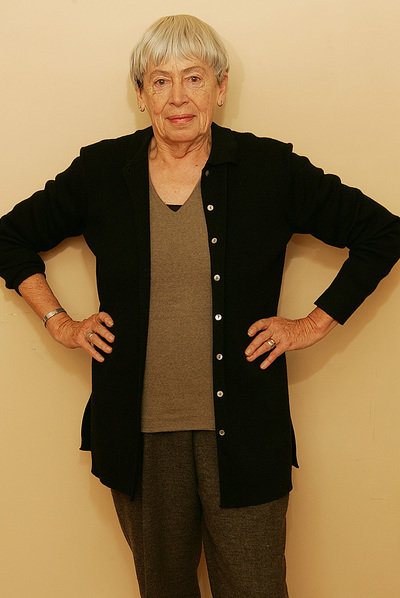
La grandeza de Ursula K. Le Guin

La escritora Ursula K. Le Guin. / DAN TUFFS / GETTY IMAGES
6 AGO 2011
La escritora estadounidense contempla la vida con perspectiva de águila. Sus libros -La mano izquierda de la oscuridad, Lavinia, Los desposeídos…- tienen una visión telescópica capaz de apreciar a la vez lo diminuto y lo grandioso, el infinito encerrado en la nuez.

Adónde me llevará el estudio de la astronomía?”, le pregunta un personaje a otro en la novela La mano izquierda de la oscuridad, de Ursula K. Le Guin. Y la contestación es: “A la grandeza”. Es una respuesta que define con exactitud el tono del libro, porque leyendo esta y otras novelas de Le Guin sientes que, en efecto, te estás asomando a la vastedad del Universo, al secreto mismo de la vida, a la belleza pura. Dentro de una cáscara de nuez cabe el infinito, pero sólo los escritores verdaderamente buenos son capaces de atisbar esa vibrante enormidad.

Creo que la norteamericana Ursula K. Le Guin (1929) es uno de los mejores novelistas vivos del mundo. Para mí, sin lugar a dudas, una maestra. Su obra está catalogada como ciencia ficción, y en ese territorio ha ganado todos los premios posibles: cinco Hugos, seis Nébulas y diversos galardones más. Pero la etiqueta del género, y más aún de un género tan injustamente menospreciado como éste, le ha dificultado el reconocimiento mayoritario que merece y la aprobación de los pretenciosos mandarines de la cultura oficial. España es, precisamente, uno de los países en donde la ciencia ficción es más desdeñada, sobre todo por puro desconocimiento: la mayoría de las personas que dicen que no les gusta nada no han leído jamás un solo texto de este tipo. Es una pena; sé que, si fueran capaces de levantarse de la poltrona de sus prejuicios y se asomaran a los libros de Le Guin, se darían cuenta de que son reconocibles y espléndidos relatos sobre la condición humana, exactamente igual que cualquier gran novela.

Cada novela es una obra completa en sí misma, compuesta de innumerables, sutiles, poderosas capas expresivas

Lo que hace única a Le Guin es la magnitud y complejidad de su mirada: a esta mujer le cabe literalmente el Cosmos en la cabeza. Varias de sus novelas suceden en distintos mundos de Ekumen, una especie de federación humana compuesta por más de ochenta planetas. Son relatos que, más allá de ese marco común, no tienen que ver unos con otros; cada novela es una obra completa en sí misma, compuesta de innumerables, sutiles, poderosas capas expresivas. Porque los libros de esta autora son, en primer lugar, narraciones absorbentes que no puedes dejar de leer, como si te llevaran anillada de las narices. Pero además contienen estupendos retratos psicológicos, densos trasfondos políticos y filosóficos, gran fuerza simbólica. Y todo en un lenguaje limpio y bello.

Le Guin posee una imaginación y una inteligencia excepcionales, y la mezcla de ambas cosas (razón y visión) consigue unos resultados maravillosos; las sociedades que inventa son coherentes, sólidas, están construidas hasta su más pequeño detalle, y en su veracidad abrumadora son un revelador espejo de lo que somos. De la mediocridad humana pero también de la posibilidad de lo sublime; de nuestras incoherencias, nuestros anhelos y nuestras necesidades. Por ejemplo, La mano izquierda de la oscuridad habla de un mundo habitado por individuos hermafroditas, lo cual nos sumerge en una vertiginosa, deslumbrante indagación sobre los géneros sexuales y el modo en que condicionan nuestras vidas. Y Los desposeídos, que es una de las novelas que más me gustan, traza un colosal fresco de las ambiciones sociales, de los sueños de justicia, de las ansias de poder y las formas posibles de gobierno. La amplia, serena mirada de la novelista nos permite atisbar un confuso pataleo de hormigas, un afán siempre traicionado de grandeza, el conmovedor esfuerzo de los humanos por ser un poco mejores. Ursula contempla la vida con perspectiva de águila.

Voy a mencionar sólo otro título más dentro de la extensa obra de Le Guin: Lavinia, su última novela, publicada en 2008 y que, curiosamente, no es de ciencia ficción. Lavinia es una libérrima versión de la Eneida pero contada por la esposa de Eneas, de quien Virgilio sólo proporciona el nombre y apenas nada más, un personaje mudo que aquí adquiere espléndida elocuencia. De manera que es, digamos, una novela histórica. Y, sin embargo, para mí es exactamente igual que sus otros libros: la misma capacidad mítica, idéntica mezcla de brillantez intelectual y emoción turbadora, y, sobre todo, esa visión telescópica capaz de apreciar a la vez lo diminuto y lo grandioso, el infinito encerrado en la nuez. A medida que avanza Lavinia, el relato se va elevando a cotas épicas. Escuchamos el eterno quejido de la humanidad, el metálico entrechocar de los ejércitos, el retumbar de los imperios que se colapsan. Pero, también, el casi inaudible, glorioso suspiro de los enamorados cuando el amor se consuma. Son los mismos elementos que podemos encontrar en sus novelas de ciencia ficción: toda esa pasión, toda esa alegría y esa tristeza brillan como joyas en sus páginas. ¿Qué importa que la acción transcurra, como en Lavinia, en un pasado impreciso y legendario, o que suceda en un futuro igualmente incierto e ilusorio? La distancia temporal no es más que una herramienta para poder atrapar la sustancia de lo que somos, para retratar mejor la realidad.

Y es que la realidad no es sólo lo tangible, lo visible, lo matemáticamente mensurable. La realidad está compuesta también por los mitos, por los arquetipos esenciales heredados desde nuestro pasado más oscuro, por nuestros sueños y también por nuestros delirios: por ejemplo, el nazismo fue un delirio pero cambió la realidad del siglo XX. “Voy a presentar mi informe como si contara un relato, porque me enseñaron de niño, en mi mundo de origen, que la Verdad es un asunto de la imaginación”, dice el comienzo de La mano izquierda de la oscuridad. Y de eso trata la obra de Le Guin: de una Verdad fabulosa y hermosa que parece ser capaz de abarcarlo todo.

La mano izquierda de la oscuridad. Ursula K. Le Guin. Traducción de Francisco Abelenda. Minotauro. Barcelona, 2009. 304 páginas. 17,95 euros (bolsillo: 8,95). Los desposeídos. Ursula K. Le Guin. Traducción de Matilde Horne. Minotauro. Barcelona, 1999. 382 páginas. 9,95 euros. Lavinia. Ursula K. Le Guin. Traducción de Manuel Mata Álvarez-Santullano. Minotauro. Barcelona, 2009. 384 páginas. 19,50 euros. Los mundos de Ursula K. Le Guin. Edición recopilatoria con tres novelas: La mano izquierda de la oscuridad, Los desposeídos y El nombre del mundo es Bosque. Traducción de Matilde Horne y Francisco Abelenda. Minotauro. Barcelona, 2008. 832 páginas. 29 euros.


sábado, 19 de julio de 2008
Reportaje:EN PORTADA | Reportaje

Una galaxia que se apaga

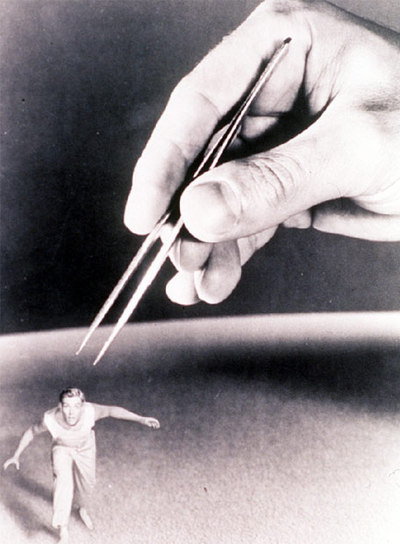
Fotograma de la película El increíble hombre menguante (1957), de Jack Arnold.

El futuro parece ya demasiado cerca para imaginarlo. La literatura de ciencia-ficción pasa por una crisis achacable a los nuevos hábitos culturales, aunque el género funciona en otros formatos. Los viejos maestros desaparecen y no surgen nombres a su altura.

Hace mucho tiempo, en una galaxia muy, muy lejana

… snif.

La ciencia-ficción está de capa caída, un manto más oscuro que el de Darth Vader parece haber caído sobre nuestro querido género, en el terreno literario. La muerte y el crepúsculo se han adueñado de los viejos grandes maestros: el risueño Arthur C. Clarke ha fallecido (adieu Rama), JG Ballard se enfrenta a su personal apocalipsis en forma de cáncer y Ray Bradbury, a punto de cumplir 88 años, estruja su melancolía soñando con que esparcirán sus cenizas en los desiertos de Marte. Ya no están con nosotros Stanislaw Lem, Zelazny, Heinlein, Asimov… Son unos ancianos Aldiss, Pohl, Harry Harrison. No se ve surgir nombres a la altura de aquellos grandes que desaparecen. Muchos buenos autores se pasan a la fantasía. Ursula K. Le Guin acaba de publicar en Estados Unidos Lavinia, ¡una relectura de la Eneida contada por una mujer! Pero es que además, y esto es lo peor, nadie parece leer ya ciencia-ficción. Las colecciones languidecen. Editoriales que se lanzaron a publicar sellos nuevos, confiadas en un boom como el de la historia militar, se replantean la decisión. Los aficionados de siempre aparecen como aquellos vagabundos solitarios de Fahrenheit 451 que deambulaban como fantasmas con los viejos libros memorizados buscando infructuosamente a alguien a quien traspasar el legado. ¿Alguien ha oído hablar de La Fundación? ¿Qué ha sido de los Heechees? ¿Queda vida en el superjoviano planeta Mesklin, aunque sea vida muy aplastada por la gravedad?

Clarke ha muerto, Ballard padece cáncer y Bradbury, con 88 años, pide que sus cenizas se esparzan en Marte
“Las crisis en la ciencia-ficción son cíclicas, pero ahora es más serio, me temo”, afirma Miquel Barceló
Como la narrativa erótica, la ciencia-ficción ha desbordado el género propiamente dicho y tiñe otras literaturas
La crisis no afecta a la fantasía, que funciona de lo lindo como prueban las novelas de Sapkowski y Georges R. R. Martin

El futuro ya no es lo que era. Clarke, al que le gustaba hacer profecías científicas, había vaticinado alegremente para este julio de 2008 (véase Greetings, carbon-based bipeds, Harper Collins, 2000) que en su ochenta cumpleaños Kubrick recibiría un Oscar especial de Hollywood. Claro que también veía al príncipe Harry en 2013 en el espacio (de momento ha estado en Afganistán) y a él mismo en su centenario (16 de diciembre de 2017) alojado en el hotel espacial Hilton Orbiter… Pobrecillo, que los Superseñores de El fin de la infancia le tengan en su seno.

En fin, no sigamos poniéndonos nostálgicos. ¿Qué le pasa a la ciencia-ficción? ¿Está realmente mal la cosa?

Miquel Barceló, editor de la legendaria colección Nova, veterano fan del género, autor de una obra de referencia sobre éste (Ciencia-ficción, guía de lectura, Nova, 1990, de la que todos esperamos ansiosamente su anunciada puesta al día: ¡vamos Miquel!) y profesor en la Facultad de Informática de la Universidad Politécnica de Cataluña (UPC), responde con un gesto elocuente: en la cafetería de la UPC, tan vacía en estos días veraniegos como un club de admiradores de Hal Clements -el más duro de la SF dura, muerto, por cierto, hélas, en 2003-, inclina el pulgar hacia abajo. “En la historia de la ciencia-ficción hay épocas de vacas gordas y de vacas flacas. Ésta es de flacas. Es algo cíclico. Pero ahora es más serio, mucho más serio, me temo”.

Barceló, factótum del veterano premio UPC del género, hace una pausa dramática. La cafetera del bar aprovecha para emitir un ruido ominoso que recuerda los servomecanismos de los marcianos en La guerra de los mundos mientras se enciende una lucecita que sugiere el inquietante ojo escrutador de Hal (por cierto, ¿recuerdan la frase del supercomputador en 2001, una odisea del espacio?: “Tenemos un problema”, ¡Clarke se adelantó dos años al leitmotiv del Apolo XIII!; parafraseémoslo: Ciencia-ficción, tenemos un problema). “La ciencia-ficción está yendo a menos. Es un hecho. En Estados Unidos hay un cambio de nombres y los nuevos no son conocidos, no logran un reconocimiento como antes. Aquí nadie se atreve a publicarlos. Las cifras de venta caen. En España, a la mitad. Ha habido un exceso de oferta en los últimos años que ha saturado el mercado, y a eso hay que añadir ahora una falta de demanda”.

El especialista tiene una teoría sobre lo que está pasando -y que a él como editor le ha llevado a recortar su número de títulos-. Son varias las razones que llevan al declive del género en su faceta literaria. “El lector de ciencia-ficción típico es una persona interesada, en mayor o menor grado, en temas tecnológicos. Es una persona que pasa mucho tiempo en internet y ese tiempo ya no lo dedica a leer. Y está el audiovisual. El aficionado a la ciencia-ficción, al que siempre le han encantado las películas, encuentra un acceso ilimitado a ellas y a las series de televisión del género en la red, puede bajarse lo que quiera y verlo tranquilamente en casa. En referencia a la televisión, estamos hablando de muchas horas: las diez temporadas de Stargate SG 1, las cuatro de Stargate Atlantis, todos los capítulos de Battlestar Galactica, Star Trek

… ¿Cuánto tiempo significa eso de recorte de lectura?”.

Lo paradójico es que bastante gente sigue interesada genéricamente en la ciencia-ficción, pero no en los libros, sino en otros soportes. Como en el cine. Aunque es difícil encontrar en los últimos tiempos alguna película que compita por el título de la mejor del género o que haya influido tanto como lo hizo en su día, por ejemplo, la Matrix de los Wachowski (1999: ¡hace ya nueve años!).

Otro fenómeno que perjudica a la ciencia-ficción, apunta Barceló, es que muchos de los temas clásicos del género forman parte hoy de nuestra vida cotidiana y ya no los percibimos como tales. La bioingeniería, por ejemplo, la inteligencia artificial o la continua revolución en las comunicaciones. Eso ya no nos parece ficción, sino pura ciencia. En general, la especulación parece haber perdido el sentido que tenía antes. El mañana se está comiendo el futuro. “La realidad deja obsoleta pronto cualquier predicción o hace ridículos los escenarios imaginados. Por eso una buena parte del género se dedica desde hace tiempo al futuro cercano, inmediato, más controlable, como hizo Gibson con Neuromante (Minotauro) y como ha hecho el ciberpunk. El futuro lejano interesa menos”. Gibson predijo en 1984 el ciberespacio como una realidad virtual consensuada por los usuarios que accedían a él mentalmente a través de la interfaz cerebral con el ordenador. Es verdad que algunos lugares más allá de la pantalla en los que se meten hoy en día nuestros adolescentes no resultan menos complejos y siniestros que los escenarios de Neuromante, Conde Zero o Mona Lisa acelerada…

“Si nos fijamos en los autores clásicos que mejor continúan funcionando, dentro de la crisis”, apunta el estudioso, “son los de la ciencia-ficción más cercana, los de los mundos interiores, personales, obsesivos, muchas veces mundos enajenados, insanos, autores de los que atrae, más que la ciencia, la complejidad psicológica, muy interesante para la gente de hoy. Escritores como Philip K. Dick o Ballard. Significativamente, son autores que, como en el caso de Ballard, han ido saliéndose del género o creándose un lector propio”.

Ballard, no lo olvidemos, capaz de revelar lo abismal que puede ser una piscina, vacía, es el hombre que ha dicho que el único planeta realmente extraño es la Tierra -no en balde pasó la II Guerra Mundial en el campo de prisioneros japonés de Lunghua con compatriotas que se negaban a desprenderse de sus palos de cricket-, y que es el espacio interior, no el exterior, el que ha de explorarse (Guía del usuario para el nuevo milenio, ensayos y reseñas, Minotauro, 2002).

“Hay un cambio cultural: creo que podríamos vaticinar la muerte de la ciencia-ficción por disolución en el contexto”, continúa Barceló. Como decíamos, el mañana está tan cerca que se come la ciencia-ficción. Quién hubiera dicho que el cambio climático, por ejemplo, que ha inspirado sensacionales novelas como El mundo sumergido (1962) o La sequía (1964) -ambas en Minotauro-, por no salir de Ballard, se convertiría en un tema esencial de la actualidad inmediata.

Un síntoma de esa disolución de la ciencia-ficción es cómo la literatura generalista está apropiándose de obras que hace unos años se hubieran publicado en colecciones del género y con esa etiqueta. “La literatura digamos convencional se ha permeabilizado a los contenidos de ciencia-ficción de una manera que parecía impensable. Se han roto muchas barreras. Pasó con Criptonomicón (Ediciones B, tres volúmenes), de Neal Stephenson, publicitado como libro para hackers y muy vendido. Se intenta con Spin (Omicron, 2008), de Robert Charles Wilson (sobre un escudo misterioso instalado por unos alienígenas en torno a la Tierra), presentado como matrimonio entre la ciencia-ficción hard y la novela literaria y que ganó el Premio Hugo en 2006″. Otro caso es el de Greg Bear (1951), uno de los grandes nombres actuales, un tipo tan del género que hasta se casó con la hija de Poul Anderson. Bear, autor, de Eon (Ultramar, 1988) -alucinante revisión del tema clásico del asteroide o mundo hueco- y uno de los continuadores de la saga de La Fundación asimoviana (Fundación y caos, Nova, 1999), se pasó en su último libro, Quantico (Harper Collins, 2005, en España lo publicará Ediciones B, fuera de la colección especializada Nova), al technothriller, con mezcla de biotecnología y política. Del antes citado Stephenson se ha publicado Interfaz (Nova, 2007), una novela del mismo estilo escrita a medias por el autor con su tío, un profesor de Ciencias Políticas, y que trata sobre un presidente de Estados Unidos al que le implantan un chip en el cerebro. Richard Morgan (autor de Carbono alterado, Minotauro), ha ganado el Arthur C. Clarke a la mejor novela de ciencia-ficción publicada en el Reino Unido en 2007 por Black Man, un thriller, de nuevo, sobre genética. “El technothriller está por todas partes”, señala Barceló mirando alrededor con aire alerta como si estuviéramos en El día de los trífidos.

Una clara evidencia de la mencionada permeabilidad de fronteras es que le hayan dado el Nebula, otro de los grandes galardones del género, a El sindicato de policía yiddish, nada menos, de alguien a quien la gente relaciona tan poco con la ciencia-ficción como Michel Chabon. Es cierto que la novela es una distopía -una utopía negativa- en la que Israel ha quedado colapsado en 1948 y los judíos europeos han debido establecerse en Alaska, que ya es tema. En España la ha publicado Mondadori. En buena manera, como ha señalado muy ingeniosamente un colega, la ciencia-ficción está siguiendo los pasos de la narrativa erótica, que ha desbordado el género estricto salpicándolo todo, y perdón por la imagen. La ciencia-ficción, podría decirse, está perdiendo su identidad genérica.

Encontramos, pues, ciencia-ficción por todas partes: en los numerosos thrillers biotecnológicos que han proliferado en las colecciones de best sellers, por ejemplo. “Pero la buena ciencia-ficción”, considera Barceló, “en última instancia pierde en esos formatos. Domingo Santos, el gran padre teórico del género entre nosotros, decía que la ciencia-ficción no puede ser editada en España por editoriales grandes porque tiene un clarísimo tope de mercado y eso hace impacientarse, frustrarse y desanimarse a las empresas que buscan muchos beneficios. En este país han funcionado tradicionalmente las pequeñas editoriales, de las que ahora son ejemplo Bibliópolis, La Factoría de Ideas, Gigamesh…, que publican quizá dos mil ejemplares por norma de cada título y cuidan más sus programaciones”. Un problema grave para la salud de la literatura de ciencia-ficción es que el lector típico del género, que era muy coleccionista, muy seguidor de las colecciones y solía comprarse todos los títulos de sus favoritas, ha dejado de serlo. “Antes vivíamos mucho de ese lector que compraba todo lo que publicabas, que quería estar al día, seguir contigo las vicisitudes del género. Ese lector casi ha desaparecido”.

Para más inri, diríase que la ciencia-ficción ha perdido punch social, parte de lo que era su función en nuestra sociedad. “La ciencia-ficción clásica hablaba de un futuro lejano. Hoy parece no tener sentido la gran especulación. Las cosas cambian demasiado deprisa. Los sueños de un futuro lejano pierden rápidamente verosimilitud. La realidad lo deja casi todo obsoleto en veinte años”.

La ciencia-ficción escrita, por otro lado, parece haberse alejado, a diferencia de la fantasía, del lector que busca más la evasión, un lector al que quizá no le apetece tanto meterse en novelas que requieren una honda formación científica. “Es cierto que Asimov y Clarke, de los que ahora muchos fans de la ciencia-ficción echan pestes, escribían tan sencillito que llegaban a todo el mundo. Recuerdo haber leído algo sobre un estudio literario acerca de los tropos y metáforas en la obra de Asimov y que concluía que no los hay”.

Otro elemento distorsionador es que en la actualidad la narrativa para jóvenes se ha convertido en un género con carta de naturaleza propia, mientras que antes, a falta de esos productos específicos (el paradigma sería Harry Potter), si exceptuamos la inefable Enid Blyton y sus epifenómenos, la ciencia-ficción (como la gran narrativa de aventuras) era una iniciación a la lectura para muchos jóvenes, que luego permanecían en él. O sea, que no se crea público de futuro. Curiosamente, algunos clásicos de la ciencia-ficción de los setenta que se prestan a ello están siendo reeditados para el público joven, presentados como género fantástico en un sentido amplio. Es el caso de la hermosa saga de los dragoneros de Pern, de Anne MacCaffrey -historia ambientada en una lejana colonia de la Tierra en la que los humanos han aprendido a operar simbióticamente con criaturas telepáticas semejantes a dragones en lucha contra una amenaza alienígena-, cuya trilogía original editó Acervo en 1977 y acaba de reeditar ahora Roca editorial, ¡en la estela del fenómeno Eragorn!

Hoy en día la iniciación en la ciencia-ficción es mucho más difícil. Paradójicamente, los jóvenes tecnológicamente más punteros de la historia se están perdiendo un género literario que parece hecho para ellos.

Llegados a este punto, ¿podemos dar algunas notas de optimismo? Bueno, la ciencia-ficción interesa en cine, en parte gracias a que a Willie Smith le gusta el género. En ensayo encontramos que el Premio Anagrama de la categoría lo ha ganado este año Descenso literario a los infiernos demográficos, de Andreu Domingo, un libro sobre las distopías, con muchísimas referencias a la ciencia-ficción. Las convenciones, foros y encuentros del género siguen reuniendo a mucha gente -en Valencia uno sobre la La guerra de las galaxias logró un éxito al traer al actor Garrick Hagon, intérprete de uno de los pilotos colegas de Luke Skywalker, Biggs Darklighter (Rojo Tres), caído en el ataque a la Estrella de la Muerte-. Una de las grandes exposiciones de la temporada y que se inaugura el próximo día 22 en el Centro de Cultura Contemporánea de Barcelona (CCCB) está dedicada a Ballard. Y, sin duda, se están publicando, pese a todo, buenos títulos del género. Quien firma estas líneas, sin ir más lejos, ha leído recientemente un par de novelas muy sugerentes, La vieja guardia, de John Scalzi (Minotauro), con unas entrañables tropas del espacio de la tercera edad, y Camuflaje, del viejo amigo Joe Haldeman (Omicrón), que sin ser nada del otro mundo (!) te devuelve el entretenimiento de aquellos viejos clásicos con los que aprendimos a amar el género (trata sobre dos extraterrestres capaces de modificar su aspecto enfrentados en la Tierra).

Y la crisis, y esto es un consuelo, no afecta a la fantasía, un género hermano que funciona de lo lindo. Que se lo digan a Bibliópolis, que triunfa con el polaco Sapkowski y su brujo cazador de monstruos, Geralt de Rivia. O a Alejo Cuervo, editor de Gigamesh, que pasea estos días bajo palio por España al gran Georges R. R. Martin (autor, por cierto, de una de las novelas más conmovedoras jamás escritas de la ciencia-ficción, Muerte de la luz, historia de un amor imposible en un planeta condenado, reeditada por Gigamesh, que reedita también la bellísima novela de vampiros y amistad Sueño del Fevre). Martin ha conseguido unas ventas y una popularidad extraordinarias en España con su larga serie de Fantasía Canción de hielo y fuego.

La ciencia-ficción, para acabar, sigue siendo, pese a todo, como recalca Barceló, el género mejor para explicar el presente con especulaciones sobre nuestro futuro. Sólo la ciencia-ficción nos permite imaginar las consecuencias indeseables del presente. Es nuestra mejor herramienta y no deberíamos perderla. –

« Previous Page — Next Page »

WPMU Theme pack by WPMU-DEV.