Forés @ UVPress


         Universitat de València PRESS -UVPress- weblog for research uses

April 18, 2015

09 Goytisolo por Goytisolo

EN PORTADA / Premio Cervantes

Goytisolo por Goytisolo

El escritor recibe el jueves el galardón más importante de las letras en español

En su casa de Marraquech selecciona y comenta los textos que mejor resumen su obra

17 ABR 2015 – 15:10 CEST

Juan Goytisolo, en el patio de su casa de Marraquech. / Bernardo Pérez

Juan Goytisolo camina muchas tardes hasta el viejo palacio real de Marraquech para ver a las cigüeñas. Durante un tiempo, cuenta, hubo en su casa una que no podía volar. Su foto, con el escritor en segundo plano, aparece en la cubierta de Las semanas del jardín. “Hubo quien pensó que era un truco, pero la foto es real. Se tomó ahí”, dice señalando la galería de su casa. “La alimentamos hasta que se fue. Un vecino francés me dijo que si le cortaba las plumas del pecho no volaría ya nunca y me la podría quedar. Yo le dije:‘Monsieur, no quiero presos políticos en mi casa”.

Nacido en Barcelona en 1931, también Goytisolo, recuerda él mismo, ha hecho vida de ave migratoria entre Europa y África. Salió de España camino de París en 1956 y no ha vuelto a pasar en la Península más de dos meses seguidos. El jueves próximo recibirá en Alcalá de Henares el Premio Cervantes. Allí, adelanta lacónicamente, hablará del Quijote —un libro que ha leído cuatro veces—, de “la situación social y política” y, qué remedio, de los huesos de Cervantes: “Encontrarlos no alimenta la cultura, sino la burocracia. Que los dejen en paz”.

En el comedor de su casa de Marraquech, a resguardo de una lluvia que amenaza con dejarle sin paseo y sin cigüeñas, el escritor despliega unas fotocopias con fragmentos que ha seleccionado de su obra.

VIAJE A LA POBREZA

∂ Hacia Cabo de Gata. Tres autobuses diarios cubren los nueve kilómetros de trayecto Almería-El Alquián. La carretera está alquitranada hasta Níjar y, a la salida de la ciudad, una bifurcación paralela a la Nacional 340 lleva a los baños de Sierra Alhamilla, en cuyo balneario, actualmente derruido, acostumbraban reposar sus fatigas los ricos ociosos de la capital. El autocar toma el camino de Níjar dejando atrás las últimas casuchas del suburbio almeriense. Mi vecino es hombre de una cuarentena de años, moreno y enjuto. Cuando le ofrezco de fumar me pregunta si soy extranjero. Le respondo que soy de Barcelona y pronuncia unas palabras en catalán.

—He trabajado allí casi diez años — dice—. En Hospitalet, Barcelona, Tarrasa… Aquello sí que es vía. Ojalá que nunca me hubiera marchao. A la mujer no le sentaba bien el clima y cometió la estupidez de volver. Ahora, con cuatro hijos y otro en camino, no puede tentar la suerte como antes.

—Aquí uno se hace viejo en seguía, y luego, la familia que le amarra…

Mientras se desahoga contra el destino contemplo el paisaje por la ventanilla. Una llanura ocre se extiende hasta el golfo de Almería, salpicada de tanto en tanto por el verde de alguna higuera. El suelo está agrietado y lleno de cantizales. El mar cabrillea a lo lejos.

Campos de Níjar (1959)

∂ Los libros de viaje son una constante en la obra de Juan Goytisolo. De Cuba a Capadocia pasando por Sarajevo, Argelia o Chechenia, el testimonio y el periodismo (de guerra) han sido una corriente paralela a su escritura narrativa. Cinco años después de publicar su primera novela—Juegos de manos— publicó Campos de Níjar, un periplo de Almería a Carboneras convertido hoy en un clásico de la literatura viajera. El libro, explica el escritor, refleja bien la orientación literaria de los jóvenes narradores de la posguerra: “Un realismo crítico y el deseo de expresar literariamente la realidad oculta por la prensa. Para nosotros la literatura cumplía el deber que en los países democráticos corresponde a los medios de comunicación”.

La elección de Almería como destino tuvo un detonante curioso: la mili. De allí era la mayoría de los reclutas con los que el novelista coincidió en, todavía recita los datos de carrerilla, el Regimiento de Infantería Badajoz número 26: “Me llamaba la atención el desamparo educativo y social en el que vivían. La mayor parte eran analfabetos. Me interesaron mucho los giros idiomáticos que empleaban. Anotaba frases que me llamaban la atención. Me serví de ellas al redactar Campos de Níjar”.

Ese libro y el posterior, La Chanca (1962), dedicado al barrio del mismo nombre en la capital almeriense, le valieron a Goytisolo el título de hijo adoptivo de Almería. Años después, en 2000, sus protestas por la persecución de inmigrantes subsaharianos y magrebíes en El Ejido le valdrían el de persona non grata: “Un país de emigración como España se transformó en país de inmigración. El cambio fue demasiado rápido: de la extrema pobreza a la extrema riqueza sin recibir una educación política y cultural. Esto dio lugar a episodios tan lamentables como los de El Ejido”.

Pese al extremo realismo de sus páginas, Campos de Níjar pasó la censura franquista “sin recorte alguno”. Juan Goytisolo tiene una explicación para esa, añade irónicamente, “hazaña”: “El lector sacaba una impresión desoladora de la pobreza, pero no había nada concreto a lo que referirse. Estaba todo tan minuciosamente calcu­lado que el censor no podía aferrarse a una frase concreta. Esto lo consideré entonces una gran victoria, pero luego me entró cierta melancolía: me di cuenta de que si no lo habían censurado era porque me había censurado yo mismo. A partir de entonces decidí dejar al censor su papel y yo cumplir con el mío. Lo que se publicó después fue prohibido”.

Un grupo de inmigrantes magrebíes observa cómo arden algunas chabolas en El Ejido (Almería), en 2000. / Julián Rojas

EL LIBRO-FRONTERA

∂ La matanza de Yeste. Compuesta de la doble y contradictoria versión de los protagonistas del suceso, he aquí la síntesis informativa divulgada posteriormente en los periódicos imparciales.

“Al sonar las primeras detonaciones hay un movimiento de pánico. Los paisanos tratan de arrebatar los fusiles a los guardias y los acometen con sus hoces y sus cuchillos. En tanto que el grueso de la multitud se desbanda, los hombres más audaces forcejean con los civiles y emprenden con ellos un violento cuerpo a cuerpo. Un campesino logra apoderarse del mosquetón de uno de los números y dispara sobre él. El guardia Pedro Domínguez Requena se lleva las manos a las cartucheras y las retira empapadas de sangre. Al caer, un paisano le hunde en el cuello un gancho de conducir pinos. El delegado del Ayuntamiento de Yeste, Andrés Martínez Muñoz, primer teniente de alcalde y presidente de la oficina de colocación, implora inútilmente una tregua. El brigada le hace fuego a bocajarro diciendo: ‘¡Toma, por ser de la Gestora!’. Desde tierra suplica vida salva en nombre de sus hijos y el brigada le remata con tres balazos. ‘De éste no os ocupéis — grita—, que no sana”. […]

“Cuando los periodistas llegan al lugar unas horas después del tiroteo se divisan todavía cuajarones de sangre en la boca de la atarjea. En la otra alcantarilla hay un reguero negruzco de varios metros de longitud. Entre los zarzales, una boina nueva, un pañuelo y varios trozos de paño manchados de rojo revelan los esfuerzos de las víctimas por restañar la hemorragia. Olvidados en medio del campo yacen cuatro cadáveres. Una mujer llora arrodillada junto a uno de los cuerpos. El hombre herido en el brazo y en la pierna agoniza aún, perdiendo sangre y escupiendo baba. El sol brilla implacablemente y hormigas y moscas se disputan el inesperado festín bajo la presencia agorera de los buitres que, en círculos tenaces y concéntricos, planean sin prisa sobre los olivares”.

Señas de identidad (1966)

∂ Juan Goytisolo recuerda que empezó a escribir Señas de identidad en París en 1962. La publicó en 1966, eso sí, en México. En España estuvo prohibida hasta la muerte de Franco. Durante meses, el original tuvo como título provisional un verso de Luis Cernuda: “Mejor la destrucción, el fuego“. Del poeta sevillano aprendió el novelista barcelonés el uso de la segunda persona tan característico de su estilo. El libro es además el parteaguas de la narrativa del último premio Cervantes: “Con él empieza mi obra adulta”. Goytisolo tenía 35 años cuando la publicó y era ya autor de novelas “tradicionales” más que dignas pero que no le convencen:“Señas nace de la insatisfacción respecto a mi propio trabajo. Con los primeros libros había cumplido con mi deber de ciudadano, pero no con mi deber de escritor”. ¿Qué deber? “Devolver a la literatura algo distinto de lo que recibiste. Sin la idea de novedad no hay obra verdadera, y yo no había roto con el canon literario”.

Dice Goytisolo que a partir de Señas de identidad su escritura no distingue la prosa de la poesía. “Verso libre narrativo”, llama a un estilo que rompe la ortografía y la linealidad del argumento y en el que las crónicas de prensa se mezclan con las citas de los clásicos, las canciones populares con los diálogos de películas baratas y la religión con la pornografía. Aunque se aparte de la tradición realista española, la novela no se aparta de España, su grisura presente y su crueldad pasada. En 1981, Goytisolo volvió al pueblo albaceteño de Yeste para comprobar que, “aunque la vida había mejorado y se respiraba mayor libertad”, todavía se hablaba de “canalla roja” en los escenarios de uno de los acontecimientos recreados en su relato: la matanza en mayo de 1936 de varios campesinos “a manos de las fuerzas del orden enviadas por el cacique del pueblo”. Junto a cuestiones históricas y políticas, el libro recoge también cuestiones más sociológicas: la especulación inmobiliaria, por ejemplo. Ahora es fácil reparar en ello; en los años sesenta, no tanto: “La literatura siempre se adelanta a la realidad. Lo que dice no lo ve una mayoría, pero poco a poco se va imponiendo”.

Además de un hito en la trayectoria de su autor, Señas de identidad se convirtió en una fórmula usada hasta el absurdo: “En un periódico hablaban de un exhibicionista que a la salida de un colegio de niñas mostraba sus ‘señas de identidad’. Me encantó la acepción que le daban al título”, se ríe el escritor. Por lo demás, la contundencia del sintagma ha confundido a muchos lectores: “El título está al final de la novela cuando se habla de ‘Álvaro Mendiola a secas, sin señas de identidad’. No se trata de afirmar la identidad, sino de negarla”.

ELOGIO DEL TRAIDOR

Juan Goytisolo, en Tánger en 2007. / Joaquín Mayordomo

∂ En el café del moro. altivo, gerifalte Poeta, ayúdame : a luz más cierta, súbeme : la patria no es la tierra, el hombre no es el árbol : ayúdame a vivir sin suelo y sin raíces : móvil, móvil : sin otro alimento y sustancia que tu rica palabra : palabra sin historia, orden verbal autónomo, engañoso delirio : poema : alfanje o rayo : imaginación y razón en ti se aúnan a tu propio servicio : palabra liberada de secular servidumbre : ilusión realista del pájaro que entra en el cuadro y picotea las uvas : palabra-transparente, palabra-reflejo, testimonio ruinoso yerto e inexpresivo : cementerio de coches, oxidada hecatombe en las orillas de la gran ciudad : incontinencia verbal que ensucia y no abona, deyección maloliente e inútil : discursos, programas, plataformas, sonoras mentiras : palabras simples para sentimientos simples : amores honestos, convicciones fáciles : las tuyas, Julián, en qué lengua forjarlas? : palabra extrema de pasión extrema, orquídea suntuosa que envuelve e hipnotiza : pasión vedada, sentimiento ilícito, fulgurante traición

Don Julián (1970)

∂ Narrador y ensayista, Juan Goytisolo es también autor de dos títulos fundamentales de la literatura autobiográfica en español: Coto vedado (1985) y En los reinos de taifa (1985). Escritas sin tapujos familiares, sexuales o literarios, esas memorias terminan con el autor contemplando la costa española desde Tánger, la ciudad en la que todavía pasa cada verano para huir del calor de Marraquech. La evocación del conde don Julián, el noble visigodo que según la leyenda habría facilitado la entrada en la Península de los musulmanes, era evidente. En 1970 Goytisolo publicó la segunda novela en la que aparece Álvaro Mendiola, la voz surgida en Señas de identidad. En ella, un español asentado en Tánger desata su cólera contra la tradición moral y cultural del nacionalcatolicismo hispánico. “Su violencia extrema responde a una situación que para mí era muy violenta”, recuerda. “La prensa española me insultaba, la censura prohibía mis libros y el Partido Comunista me atacaba. Si a eso le sumas el descubrimiento de mi homosexualidad…”. De todo ello habla en esas memorias que terminan en la orilla africana del Estrecho. De todo ello surgió su particular elogio del traidor oficial de la España oficial, publicado con el primer título de Reivindicación del conde don Julián. El hecho de que todas las traducciones se limitaran al nombre del reivindicaco llevó al escritor a rebautizar un libro al que se refiere como “una explosión irrepetible”. “En 1969 me vi mezclado en una lucha interna del PCE a raíz de un artículo que publiqué en L’Express como motivo del 25º aniversario del final de la Guerra Civil. Decía que el franquismo no iba caer víctima de la lucha de la izquierda, sino que la transformación social que estaba ocurriendo en España iba a arrinconar al régimen como a una antigualla, que es lo que sucedió”.

¿Tan claro estaba? El progreso económico no siempre trae la democracia. Ahí está China. Goytisolo escucha la pregunta y continúa: “Era lo que intentaban en el tardofranquismo: mantener las estructuras del régimen y el poder de la Iglesia abriendo la libre concurrencia. En España fue esencial la salida a Europa de tres millones de españoles, que entraron en contacto con sociedades abiertas, y la llegada masiva de los turistas. Este doble influjo alteró profundamente la sociedad. El franquismo no pudo contenerlo y el PCE no quiso verlo, y decir aquello en aquel momento era una blasfemia. Al haber mostrado mi artícu­lo a Fernando Claudín y Jorge Semprún, y contar con su aval, me vi mezclado en la polémica. Yo no sabía que existía una dispu­ta interna y Santiago Carrillo arremetió contra mí y usó el artículo como elemento de la lucha contra Claudín y Semprún. Esto me desanimó”.

La “agresión onírica y esquizofrénica” contra el canon que supone Don Julián nació también, añade Goytisolo, de “la conciencia de que el régimen de Franco no era fruto de la casualidad, sino de una larga tradición nacionalcatólica”. Partiendo de una invocación de Góngora, el narrador trata de “destruir la imagen de la España sagrada, incapaz de abarcar la riqueza y la variedad de la tradición española”. El escritor, no obstante, insiste en que no se juzgue la novela como un ensayo. Para eso están sus estudios sobre La lozana andaluza, José María Blanco White o Manuel Azaña. La otra España posible. La heterodoxa, dicen.

APÁTRIDA AL FIN

Juan Goytisolo en la terraza del Café de France, en la plaza de Xemaá-el-Fná, en Marraquech, en 1985. / Bernardo Pérez

∂ cuando las voces broncas del país que desprecias ofenden tus oídos, el asombro te invade : qué más quieren de ti? : no has saldado la deuda? : el exilio te ha convertido en un ser distinto, que nada tiene que ver con el que conocieron : su ley ya no es tu ley : su fuero ya no es tu fuero : nadie te espera en ítaca : anónimo como cualquier forastero, visitarás tu propia mansión y te ladrarán los perros : tu chilaba de espantapájaros se confunde con la de los habituales mendigos y alegremente aceptarás la ofrenda de unas monedas : el asco, la conmiseración, el desdén será la garantía de tu triunfo : eres el rey de tu propio mundo y tu soberanía se extiende a todos los confines del desierto : vestido con los harapos de tu fauna de origen, alimentándote de sus restos, acamparás en sus basureros y albañales mientras afilas cuidadosamente la navaja con la que un día cumplirás tu justicia : la libertad de los parias es tuya, y no volverás atrás ávidamente te asirás a tu anomalía magnífica

Juan sin Tierra (1975)

∂ “Los que no me entendéis, / dejad de seguirme. / Nuestra comunicación ha terminado. / Estoy definitivamente al otro lado, / con los parias de siempre, / afilando el cuchillo”. Con estas líneas, pero escritas en caracteres árabes, termina Juan sin Tierra, la novela que cierra la llamada trilogía de Álvaro Mendiola, iniciada con Señas de identidad y continuada con Don Julián. Alguna vez se han publicado juntas bajo el título de Tríptico del mal, pero Goytisolo aclara que se trató de una decisión editorial. Lo que fue decisión suya fue podar en sus obras completas, publicadas por Galaxia Gutenberg/Círculo de Lectores, la “carga teórica” en esta novela, que defiende respecto a la moral dominante una rebelión sexual similar a la rebelión textual planteada por Don Julián respecto al canon dominante. “En los años sesenta”, recuerda su autor, “leía más a los formalistas rusos, el círculo de Praga, Benveniste, lingüística… Llegó un momento en que tenía que elegir entre seguir siendo un escritor-novelista o convertirme en un teórico de la literatura. Y corté con este tipo de lectura. Como decía Proust en El tiempo recobrado: “Una obra en la que hay teorías es como un objeto en el que se deja la etiqueta del precio”. Como sugiere su título, Juan sin Tierra buscaba certificar la “muerte” de Juan Goytisolo como escritor español. Al menos desde el punto de vista de las reglas dictadas por “doña Hakademia”.

LEER MARRAQUECH

∂ La mancha de lo perfecto. Para facilitar el primer contacto, la Guide Bleu aconseja subir al atardecer a la terraza florida de algún café, cuando el sol incendia el paisaje urbano y es posible atalayar en su esplendor la ubicua improvisación de su fiesta

Fodor propone, al revés, una irrupción matinal por Bab Fteuh, a fin de captar muy a lo vivo el increíble bric-à-brac de sus mercados

Nagel, Baedeker, Pol, más precavidas, sugieren una aproximación leve y discreta : pillarla de flanco sin prevención ni aparato, y dejarse arrastrar por el gentío hasta desembocar inopinadamente en ella couleur lócale breakaway fascinación

y sin embargo

como una araña, como un pulpo, como un ciempiés que se desliza y escurre, bulle, forcejea, elude el abrazo, veda la posesión

todas las guías mienten

no hay por dónde cogerla

Makbara (1980)

∂ En la plaza de Xemaá-el-Fná de Marraquech, esa sobre la que las guías “mienten”, hay una placa enorme que certifica en varios idiomas su declaración como patrimonio inmaterial de la humanidad. Mucho tuvo que ver en esa declaración Juan Goytisolo, que presidió durante años el comité de selección de la Unesco. “Fue una manera de protegerla de la especu­lación inmobiliaria”, explica. Él vive cerca de allí, en una casa que compró en 1981, “cuando nadie quería vivir en la Medina”. Un año antes había publicado Makbara (cementerio en árabe), una novela dedicada “a quienes la inspiraron y no la leerán”, es decir, a los habitantes de la ciudad ocre-rosada. Goytisolo llegó a ella por primera vez en 1976 para aprender el árabe dialectal: “En Tánger todo el mundo terminaba hablándome en español. Aquí no, y yo decía que no sabía francés, pero sí algo de árabe”. Ahora se dirige en ese idioma a los vecinos que se encuentra por la calle o en el Cafe de France.

Si Don Julián fue escrita bajo la advocación de Góngora, Makbara invoca al Arcipreste de Hita: “Escuchando una de las historias que contaba un juglar de la plaza al que apodaban Cohete —era muy alto— reparé en que en el Libro de Buen Amor hay una versión parecida. Frecuentar la plaza me ayudó a comprender la tradición española y en qué contexto funcionaba la oralidad. Traté de que eso estuviera en la novela, por eso siempre aconsejo, como para el resto de mis libros adultos, una lectura en voz alta, a veces incluso cambiado el tono: grave, irónico… Por ejemplo, en Paisajes después de la batalla”.

PARÍS MESTIZO

Porteadores clandestino en el barrio parisiense del Sentier, en 1998. / Avelino Estévez

∂ Ni Stalin ni Trujillo ni Pol Pot: Bela Lugosi. La idea me vino al contemplar el culebrón interminable que diariamente se formaba a lo largo de la acera de mi manzana durante el festival del Filme de Terror: millares y millares de personas, de todas edades y categorías socioprofesionales, aguardaban pacientemente, soportando los rigores de un tiempo ­desapacible y hosco, el instante exquisito de abonar el precio, bastante elevado por cierto, para introducirse en la sala archirrepleta, y pasar allí una hora y pico de angustia y sobresalto, sudores fríos, palpitaciones y vuelcos del corazón, gemidos ahogados y a veces gritos de verdadero pánico, en un estado de febrilidad, casi de trance, sólo comparable, por su intensidad y plenitud, al deliquio amoroso. Descubrimiento capital, incontrovertible, del que no tardaría en sacar provecho: aquel gentío anhelaba vivir en una atmósfera de zozobra y espanto, estaba dispuesto a sufrir, a pagar por ello.

En consecuencia, desde mi ascensión al poder, he ajustado a dicha observación mi conducta y gobierno, procurando al pueblo, a mi pueblo, de continuo y de balde, un ambiente y acción parecidos a los que antes, por pura frustración, se veían obligados a buscar en la penumbra y anonimato del cine: vivir en un estado de inquietud asfixiante, temblar cada vez que suena el timbre y no es la hora en que suele venir el lechero, bajar desprevenido la escalera y topar con la cabeza ensangrentada del vecino que había contraído la necia costumbre de lamentarse y hablar mal de mí; salir a la calle con el temor de que un coche oscuro, sin matrícu­la, frene junto a una persona inofensiva cualquiera y cuatro individuos enmascarados la empujen brutalmente al interior del vehícu­lo y desaparezcan con ella sin dejar rastro.

Paisajes después de la batalla (1982)

∂ Instalado en París desde 1956, Juan Goytisolo empezó a trabajar al año siguiente como asesor de la editorial Gallimard, donde conoció a su futura esposa, Monique Lange. Con ella se instaló en la mestiza Rue Poissonière, escenario de Paisajes después de la batalla, una novela fragmentaria, política y loca, cargada de humor, que se abre cuando el protagonista, trasunto de Goytisolo, sale a la calle y se da cuenta de que no entiende las pintadas porque no están en francés, sino en turco: “La experiencia de la emigración que había conocido en la mili la reviví cuando me establecí en París, en el Sentier, un barrio compuesto primitivamente por una mayoría de franceses de origen armenio y judío que luego vivió la llegada de oleadas de italianos y españoles. Más tarde aparecieron los árabes y poco después, masivamente, los turcos tras el golpe militar en su país. También paquistaníes e hindúes. Salir a la calle era, como en el libro de Cortázar, dar la vuelta al día en ochenta mundos”. Las pintadas podían decir, en turco, cosas como ‘Viva la lucha de las masas populares del Perú’. ¿La razón? El apoyo a Sendero Luminoso de los trabajadores exiliados que se reunían en una asociación a la que Goytisolo, que vivía a 200 metros, acudía cada tarde para aprender el idioma.

La novela está llena de referencias a la alta y a la baja cultura —“¿sabrán los jóvenes de hoy quién era Bela Lugosi?”— y retrata un París ajeno a todo glamour. Tal retrato tuvo sus consecuencias: “No era precisamente un barrio aristocrático, no. En Estados Unidos e Inglaterra las críticas fueron muy buenas; en Francia, no. La responsable de las páginas literarias de Le Monde dijo de mí: ‘¿Quién se cree que es para hablar así de París?’. Lo consideraron una ofensa porque los novelistas extranjeros hablaban del Barrio Latino o de Montmartre, pero no de los barrios poco elegantes”.

Para Goytisolo, el Sentier era un ejemplo de integración quebrado por la “expulsión” de los inmigrantes de origen musulmán hacia las afueras, hoy célebres por las revueltas de 2005: “Fue un fracaso de la República respecto a la inmigración. Hoy vas a los barrios de la banlieu, al norte de París, y notas la segregación. A la especulación inmobiliaria se sumaron los errores de Chirac. Jóvenes que se estaban integrando en el centro —conozco varios casos— fueron desplazados a los arrabales. Volvían convertidos en pequeños delincuentes. Se crearon guetos. Muchos terminaron cayendo en el extremismo islámico. Como no se les consideraba verdaderos franceses, trataron de convertirse en auténticos musulmanes sin atender al discurso delirante al que estaban sometidos. El resultado está en los atentados contra Charlie Hebdo y el supermercado judío. Algo horroroso. Por eso mucha gente dijo ‘Yo no soy Charlie, soy Ahmed”.

MÍSTICA Y MIEDO (AL SIDA)

Ilustración de Frederic Amat para ‘Las virtudes del pájaro solitario’.

∂ La agonía sanjuanista. pronto, rápido, agárrate a la sombra huidiza del tiempo, coge tus deseos por el rabo, repasa con celo los recuerdos más bellos, atesora imágenes de cuerpos, rostros, miembros hermosos, instantes felices, afanes colmados, rememora la dichosa plenitud de tus versos y su lectura encendida en voz alta sin olvidar la sonrisa y figura de quienes te inspiraron, las notas del piano expresamente tocadas para ti, tus tormentos y goces de enamorado, apresúrate, no dispones de tiempo, el reloj de la mesilla de noche escurre sus últimos granos de arena, frailes comisarios malsines enfermeras doctores parecen agitarse en torno al lecho con mascarillas y guantes protectores, todo ha sido breve, denso, apasionante y confuso como un sueño, infancia estudios vocación escritura beatitud extática, todo soñado!, persecuciones encierro castigos manuscritos quemados, puro sueño!, celda del convento procesión en jaulas soledad de amor herido en las alhamas, igualmente soñados!, despierta de tu sueño, penetra al punto en el que lo contiene, en el círculo de materia incompósita que lo ciñe y abarca, tu vida ha sido recia, los raudales de luz que te deslumbran son fruto de la hiperestesia?, de una droga nueva y más fuerte que tus veladores te han inyectado?, o has llegado al fin al Loto del Término y sus mansos ríos?, recita, recita una vez más los versos traducidos por Ben Sida, la pasión persevera y la unión se demora, el encuentro no llega y la paciencia se agota, si no hay posible amor contigo, promételo al menos a mi esperanza y prolóngala por mí aunque no te propongas realizarla, un gesto tuyo desabrido me resulta infinitamente más dulce que el sí de un amante solícito!

Las virtudes del pájaro solitario (1988)

Ilustración de Frederic Amat para ‘Las virtudes del pájaro solitario’

∂ “En 1985 contraje en Egipto una dolencia intestinal que no lograban curarme. Muchos amigos estaban muriendo de sida y yo llegué a pensar que lo tenía. Algunos síntomas coincidían. En febrero de 1986 empecé a escribir Las virtudes del pájaro solitario. Me salió de un tirón. Hay libros que he ido escribiendo por fragmentos que luego he montado. Fue el caso de Señas de identidad y de Paisajes después de la batalla. Don Julián y Las virtudes los escribí de principio a fin, en estado febril casi”. Así recuerda Juan Goytisolo la génesis de un libro atravesado por la muerte y contrapunteado por la voz de San Juan de la Cruz, que en sus Dichos de luz y amor describió las cinco condiciones del pájaro solitario: “La primera, que se va a lo más alto; la segunda, que no sufre compañía, aunque sea de su naturaleza; la tercera, que pone el pico al aire; la cuarta, que no tiene determinado color; la quinta, que canta suavemente”.

A Goytisolo siempre le fascinó el hecho de que San Juan se tragara unas páginas suyas antes de ser detenido. Los versos del poeta y las circunstancias de su detención se mezclan en una novela de la que partió José María Sánchez-Verdú para componer la ópera El viaje a Simorgh. Se estrenó en el Teatro Real de Madrid el 4 de mayo de 2007 con dirección musical de Jesús López Cobos y coreografía de Cesc Gelabert. La dirección y la escenografía corrieron a cargo de Frederic Amat. Pintor y escritor colaboraron también en una edición ilustrada de novela.

La muerte

Monique Lange, la primera por la izquierda, al lado de Juan Goytisolo.

∂ Habla el demiurgo. “No hay grandes diferencias entre tú y yo. Aunque fuiste engendrado por una gotica de esperma y a mí me fabricaron a golpe de especulación y concilio, los dos tenemos lo primordial en común: la inexistencia. Somos quimeras o espectros soñados por algo ajeno, llámalo azar, contingencia o capricho. Tú naciste muerto y perteneces ya al reino de las sombras. Yo fui inventado a lo largo de milenios de querellas bizantinas y dejaré de existir el día en que el último de tus semejantes cese de creer en mí. Cada uno de mis atributos o propiedades imaginarios fueron causa de disputas, enmiendas, precisiones, luchas mortíferas. ¿Soy Uno, soy Trino, soy Misericordioso? […] ¿Por qué Trino y no Cuádruple? La madre de mi Hijo ¿no reunía acaso los requisitos de una verdadera Deidad? Y, puestos a soñar, yo, el Soñado, ¿por qué no sería un Hexágono o, mejor aún, un Decaedro de tantas caras y ángulos como mandamientos esculpidos en las Tablas de la Ley que entregué a Moisés? Me veía a mí mismo como un bloque cristalino y prismático, como esos ojos de las moscas capaces de examinar los seres y cosas desde enfoques opuestos. Te confieso mi envidia a los dioses paganos: tenían competencias limitadas, pero vivían sin rebozo sus pasiones y odios, no se tomaban demasiado en serio, os mentían pero se dejaban sobornar y aplacar. A mí, en cambio, me vedáis el humor y la risa. Soy solemne como vuestros autócratas o Napoleón en el día de su coronación. […]”.

Telón de boca (2003)

∂ Juan Goytisolo se instaló definitivamente en Marraquech en 1997, donde vive con su “tribu”, la familia de su amigo Abdelhadi. Un año antes había muerto su mujer, Monique Lange, que en la novela Casetas de baño narra el modo en que encajó la homosexualidad de su marido. Encima de la tele, en casa de Goytisolo, hay una foto de Lange y su figura, su ausencia, atraviesa Telón de boca, un lamento con tres personajes: el narrador, Ella y el demiurgo, Mefisto, que se hace pasar por Dios. Cuando se publicó en 2003, el escritor anunció que con esa novela cerraba su obra aunque en 2008 publicó El exiliado de aquí y allá, una secuela de Paisajes después de la batalla. El resto han sido artículos y ensayos, algún poema. Eso sí, acaba de entregar a su agente, Carmen Balcells, un libro “sobre asuntos sociales y personales”, dice escuetamente. Ha dado orden de que solo se publique 10 años después de su muerte.

March 24, 2015

09 Islamic State Pursues Apocalyptic Logic

Medieval Fantasies? Islamic State Pursues Apocalyptic Logic

An Essay By Georg Diez

March 19, 2015 – 01:56 PM

Islamic State fighters destroy artifacts in the northern Iraqi city of Mosul. Zoom

DPA

Islamic State fighters destroy artifacts in the northern Iraqi city of Mosul.

Islamic State is making headlines by destroying historical artifacts in Iraq. But far from being an expression of medieval nihilism, the campaign on culture is a strategy aimed at drawing the West into battle. The destruction is reminiscent of that wrought by the US.

The images are meant to create an impression, and in this war of images, they don’t miss their mark. Heads are cut off: both the heads of human beings and those of statues. Museums are looted, ancient sites are bulldozed. These images are then dispatched around the world.


It is a calculated escalation that Islamic State is pursuing. It may even be that the images of destroyed artifacts are more effective than those depicting executions, because they are televised everywhere and not relegated to the depths of the Internet. And because we can understand the images of destruction — unlike the photos and videos of executions, which we see as acts of insanity beyond the scope of rational thought.We aren’t just able to kill in the present, that is the message of these images, we are also able to destroy the past: We are the masters of both time and space. The caliphate’s goal is to expand its path of destruction into the fourth dimension.

The global press uses terms like “monsters,” “acts of barbarism” and “breaking taboos” to describe the actions of the IS terrorists. But is Islamic State really on an irrational rampage against the modern age? Are they really trying to bring back the Middle Ages? Or is it perhaps a rational plan, a propaganda trick calculated to pull the West into what the apocalyptic visionaries of IS see as the final battle?

For David Pinault, a professor of Islamic Studies at the University of Santa Clara, the videos are primarily “recruiting videos” intended to motivate Islamists in the struggle against infidels. According to Pinault, they are also meant to infuriate and instill fear in the group’s enemies.

Illigitimate War

There is a widely held view that a jihadist who strikes a Mesopotamian statue with a hammer or uses a drill to destroy a winged bull from Nineveh is destroying the cradle of civilization, and this is certainly true. But it is also true that all of this didn’t begin in February 2015 or in 2013, when Islamic State first appeared on the radar of Western media.

It began on March 20, 2003, when the American-led “Coalition of the Willing” invaded Iraq. It was this illegitimate war that created the “failed state” of Iraq in the first place, and today’s threat arose from its ruins. The vacuum of power was what enabled the Islamists’ fury to develop in the first place. The war on terror created today’s terror being perpetrated by IS.

And it appears also to be true that American and later Polish troops caused serious damage to the ancient city of Babylon back then, undoubtedly another “cradle of mankind,” when they built military camps and destroyed ancient streets, and when the rotors of their helicopters caused temples to collapse. “Look at this land,” Maitham Hamza, director of the completely empty museum of Babylon, said in 2008. “It is packed with remnants. They filled their bags with them.” The sandbags he was referring to, filled with archeological valuable earth, were used to secure a base for 2,000 troops. At the time, the base in Babylon was nicknamed “the Hanging Gardens of Halliburton,” because this now notorious military contracting firm was responsible for the camp. Nebuchadnezzar ruled Babylon in the 6th century B.C., but then, 2,600 years later, American soldiers arrived and sprayed “Miss you, Smoothy!” onto the walls.

John Curtis, director of the Department of the Middle East at the British Museum, describes what happened there as “ignorance and stupidity.” “This is tantamount to establishing a military camp around the Great Pyramid in Egypt or around Stonehenge in Britain,” reads a report by the British Museum. And only when aerial images revealed the enormous scope of the base, says Curtis, did “military authorities of the coalition start to be very nervous and decide that they had to leave.” The Guardian called it an “act of cultural barbarism.” To this day, what happened in Babylon remains far less publicized that the vandalism committed by IS terrorists.

There were warnings, such as when a group of archeologists concluded before the Iraq War that 8,000 years of human history were in danger. To address these concerns, a delegation of academics, museum directors, art collectors and art dealers met with Pentagon officials in January 2003 to convince them to protect the archeological digs. But there were also other interests at play. In 2002, Ashton Hawkings of the American Council for Cultural Property said that the “legitimate dispersal of cultural material through the market,” was the best way to protect these treasures. “This is just the sort of thing,” Dominique Collon of the British Museum warned at the time, “that will encourage looting.”

‘Stuff Happens’

And that was precisely what happened. Flames engulfed the National Library in Baghdad between April 10 and 12, 2003, and 70 percent of the inventory at the university library in Basra and a third of the inventory at the university library in Mosul was destroyed. Concurrently, some 15,000 objects were stolen from the National Museum in Baghdad, including jewelry, ceramics, sculptures and a world-famous marble mask from the year 3100 B.C., presumably by professional thieves working for art dealers.


Iraqi National Museum Deputy Director Mushin Hasan amid the ruins of the museum following looting on April 13, 2003. Zoom

Getty Images

Iraqi National Museum Deputy Director Mushin Hasan amid the ruins of the museum following looting on April 13, 2003.

“Stuff happens,” said former U.S. Secretary of Defense Donald Rumsfeld. “Freedom’s untidy.” The loss attributable to art theft in Iraq is estimated at $10 billion (€9.4 billion).What happened in Iraq was a violation of the Geneva Convention and the Hague Conventions. The troops in the coalition fighting Saddam Hussein did nothing to prevent the looting, and as a result 16 Assyrian bronze reliefs from the 9th century B.C. were stolen from the museum in Mosul — a site Islamic State has now targeted as well. Three members of the White House’s Cultural Property Advisory Committee resigned in protest at the time. Beyond a couple of reports, nothing much was done. “As long as Britain and America remain in denial over the anarchy they have created in Iraq, they clearly feel they must deny its devastating side-effects,” columnist Simon Jenkins wrote in the Guardian in 2007.

IS is one of those side-effects, and its members are in fact not monsters from the Middle Ages. On the contrary, says British philosopher John Gray, who calls IS a “modern movement through and through,” a sort of terrorist startup with a clearly defined business model. “There is nothing random or irrational about IS violence,” writes British religious scholar Karen Armstrong, noting that “IS is not an atavistic return to a primitive past.”

The argument holds that the IS approach, including its destruction of ancient cultural sites, can be viewed as more than merely the act itself. Instead, there is a tactic behind its actions, an escalation for the sake of escalation. Instead of a message from the 6th century, it is more of a military program intended to serve further conquests or the chance to finally draw the West into a last battle. After all, the logic behind Islamic State, and the logic underpinning the caliphate it has established, is that of constant conflict. A slowing of the expansion is not part of the plan.

Fighting for Rome

In his article “What ISIS Really Wants,” for the American magazine The Atlantic, journalist Graeme Wood writes that the Caliph wouldn’t be doing his job if he eventually stopped marching and murdering. Politics, peace, national borders, elections — none of this is of any relevance to the caliphate and its interpretation of Islam. As we have now seen, this interpretation apparently also includes the destruction of treasures of world history in Mosul and Nimrud — and, of course, subjugating the rest of the world under the laws of Sharia.

German-Iranian author Navid Kermani, who traveled around Iraq last year for a three-part series in SPIEGEL, also sees IS as a serious threat. He argues that the manner in which the world views this conflict with IS has little to do with the true meaning of the conflict.


All of this is evident in the scope of destruction: a methodical, nihilistic act of terror, perpetrated by an organization that in no way seeks broad support or even any form of sympathy. As Wood writes, it is important to take the apocalyptic desires of IS seriously. It’s about the fight for “Rome,” as IS says itself.All of this must be taken into account if we hope to understand Islamic State’s rampage against art. And the West faces a dilemma: If we don’t intervene, if we don’t deploy troops to fight IS, the situation will only deteriorate further. But really, the time to intervene has already passed. By invading Iraq, the West created a failed state, and by failing to intervene in Syria, it created a second failed state. But after so many mistaken and failed wars, from Iraq to Libya, the public is no longer willing to fight the one war that makes sense. So is it really enough for the West to send weapons to the Kurds and arm the Iraqi army?

The arbitrary borders and false promises made by the colonial powers after World War I, the support for the Wahhabi regime in Saudi Arabia, which is in large part responsible for funding global terror, and the fatal consequences of the erroneous response to the attacks of Sept. 11, 2001 — all of these things are reflected in today’s images of destruction. IS is more than just a horde of insane vandals. But what will we do if the Iraqi army fails to defeat IS in the days and weeks ahead? Then the West will have to start thinking about fixing its own mistakes.

09 Teléfono Rojo: muy malas noticias

Teléfono Rojo: muy malas noticias

El recién retirado jefe de los servicios de inteligencia exteriores británicos, MI6, alerta de que “la amenaza de confrontación militar nuclear” con Rusia aún está presente

23 MAR 2015 – 18:08 CET


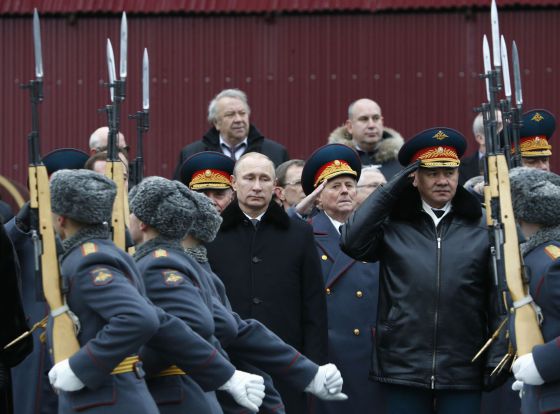
Putin preside un desfile militar en el Kremlin en febreroPutin preside un desfile militar en el Kremlin en febrero. / SERGEI KARPUKHIN (REUTERS)

“En la película Teléfono rojo, volamos hacia Moscú, estrenada en 1964, el presidente de Estados Unidos [Peter Sellers] llama al presidente soviético. Tiene malas noticias. Y muy malas noticias. ¿Las malas? Ha habido un terrible error. Un avión militar estadounidense se dirige a la Unión Soviética con órdenes de lanzar una bomba nuclear. ¿Las muy malas? No hay manera de revocar las órdenes”.

Esta es la traducción de las palabras con las que sir John Sawers, recién retirado jefe de los servicios de inteligencia exteriores británicos (MI6), eligió iniciar una conferencia el mes pasado en la Universidad de King’s College (Londres). Como si hubiera querido replicar la sangre fría de M, versión ficticia en las películas de James Bond del papel que él interpretó en la vida real, Sawers adoptó un aire distendido para transmitir un mensaje alarmante: por primera vez desde el final de la Guerra Fría, a raíz de las tensiones creadas en Ucrania, planea sobre el mundo la amenaza de un choque nuclear entre Occidente y Rusia.

“La amenaza de confrontación militar nuclear, incluyendo un error de cálculo o simple mala suerte, aún está presente”, declaró Sawers en su conferencia. “Mantenemos esto en mente cuando tratamos con la Rusia de Vladímir Putin”.

La clave está en el matiz: error de cálculo o mala suerte. Ni siquiera durante los momentos de mayor tensión entre la Unión Soviética y Estados Unidos, como se demostró en la crisis de los misiles en Cuba de 1962, existió la intención por parte de las grandes potencias de iniciar una conflagración que les llevaría al aniquilamiento mutuo asegurado. Sería absurdo pensar que la mentalidad haya cambiado hoy. El llamado “equilibrio del terror” seguirá siendo la gran garantía de paz. Pero en el actual clima entre Rusia y Occidente, con el pronóstico de que se avecinan tormentas peores, crece el peligro de que la ley de las consecuencias imprevistas entre en juego una vez más, como en el guion de Teléfono Rojo.

Cuando Sawers habla en primera persona plural (“mantenemos esto en mente”) se refiere no solo a sus colegas en las altas esferas de la política exterior británica sino también a los de Estados Unidos y de la OTAN, con los que trabajó codo con codo durante los cinco años que estuvo al mando de MI6. El temor que comparten es que la actual crisis militar en Ucrania será el preludio de otra aventura rusa, esta vez en los países bálticos antes pertenecientes a la Unión Soviética, hoy miembros de la OTAN a los que la OTAN está obligada a proteger.

El riesgo de que Rusia intente anexionarse territorio en Estonia, Lituania o Letonia aumentará en función del desgaste de la economía rusa, azotada por las sanciones impuestas por los países de Occidente como castigo por la incursión en Ucrania y, aún más, por el desplome del precio del petróleo. Desde el final de la Guerra Fría, los rusos han aspirado a mucho más que la mera supervivencia. Al ver que sus expectativas se desvanecen, y el descontento aumenta, la alternativa tentadora que se le presentará a Putin para conservar la alta popularidad de la que actualmente goza, según entienden analistas como Sawers, será recurrir con mayor insistencia al populismo nacionalista, apelando al ancestral espectro de la amenaza que proviene de Occidente. Gideon Rachman, experto en política internacional del Financial Times, escribió a finales del año pasado que “el agresivo y autocompasivo nacionalismo que orquesta el señor Putin recuerda la política de Rusia y Alemania en los años treinta”. Chrystia Freeland, autora de un libro sobre la transición rusa del comunismo al capitalismo titulado La venta del siglo, comentó hace poco que la ruina económica podría hacer que Rusia se vuelva “más agresiva e imprevisible”.

La retórica rusa ya es más agresiva que en ningún otro momento desde la llegada al poder de Mijaíl Gorbachov. La búsqueda de chivos expiatorios occidentales va acompañada por una tendencia, como la de un adolescente grandote pero acomplejado, a recordar al mundo que puede que Rusia sea un país sin modernizar pero posee un arsenal nuclear no solo colosal sino recientemente modernizado. El diario Pravda, portavoz soviético en su día y hoy vocero de Putin, tituló un artículo hace poco con las palabras “Rusia prepara sorpresa nuclear para la OTAN”. Varios políticos rusos se han hecho eco de una advertencia que lanzó Putin, ex alto cargo de la KGB, el año pasado: los de fuera no deben “meterse con nosotros” ya que “Rusia es una de las principales potencias nucleares”.

Amenaza rusa

EL PAÍS, Madrid

El embajador ruso en Copenhague, Mijail Vanin, advirtió el sábado de que Moscú podría atacar con misiles nucleares a barcos daneses si ese país, miembro de la OTAN, se une al sistema antimisiles de la Alianza. Si ocurre, “corremos el riesgo de considerarnos mutuamente enemigos”, dijo al diario Jyllands-Posten.

El ministro de Exteriores danés, Martin Lidegaard, que se esforzó ayer en que no subiera la tensión entre ambos países, declaró que los comentarios de Vanin son “inaceptables” y le acusó de haber “cruzado la línea” roja al decir que cualquiera que se una a la Alianza puede ser objetivo de misiles balísticos rusos.

Hace 15 días, Putin fue citado en un documental de la televisión rusa diciendo que cuando se inició la crisis en Ucrania hace un año estaba dispuesto a poner sus armas nucleares en disposición de combate “porque allí viven rusos”. En semejante contexto, la reciente intrusión de dos bombarderos rusos capaces de lanzar armas nucleares muy cerca de la costa del suroeste de Inglaterra no fue, como comentó un diplomático británico a este diario, “ninguna broma”. “El peligro de que un malentendido, o un incidente a primera vista inocuo, desate un conflicto catastrófico siempre existe”, dijo el diplomático, como Sawers cuando advirtió del riesgo que podría proceder de un error o de la mala suerte.

Putin juega con fuego. Sin que ni él ni nadie lo quieran, se puede generar una dinámica parecida a la que buscan los terroristas islamistas, cuyo objetivo es utilizar el miedo para sembrar indignación y rabia en los países occidentales y así provocar respuestas desproporcionadas y contraproducentes, como ocurrió en Irak tras la caída de las Torres Gemelas. El caos y la confusión pueden provocar malas decisiones y terribles accidentes. Y más si llegase al poder en Estados Unidos una figura como el vicepresidente de George W. Bush, Dick Cheney, lo más parecido que se ha visto en Washington al demencial Dr. Strangelove, protagonista de Teléfono Rojo.

“La crisis de Ucrania no solo tiene que ver con Ucrania. Se trata ahora de una crisis mucho mayor y más peligrosa entre Rusia y los países occidentales”, dijo en su conferencia sir John Sawers, que posee más información sobre el balance geopolítico actual que casi nadie. Y agregó: “No habrá convergencia entre Rusia y Occidente mientras Putin siga al mando… Gestionar las relaciones con Rusia será el problema que definirá la seguridad de Europa durante varios años más”. Ante la posibilidad, de la que también advirtió Sawers, de que el sucesor de Putin podría representar un peligro incluso mayor, la alocada tesis de Teléfono Rojo vuelve a cobrar relevancia.

Con buena suerte y con los cálculos bien hechos por los que controlan los botones nucleares nunca ocurrirá, pero sí existe la posibilidad de que dentro de no mucho tiempo volvamos a convivir, como nuestros padres o nuestros abuelos, con el miedo latente de que nos matemos todos.

March 10, 2015

09 Samuel Beckett Krapp’s Last Tape

Filed under: archivo personal,Holístico,politics & literature — fores @ 1:05 pm

Samuel Beckett

Krapp’s Last Tape


A late evening in the future.

Krapp’s den.

Front centre a small table, the two drawers of which open towards audience.

Sitting at the table, facing front, i.e. across from the drawers, a wearish old man: Krapp

Rusty black narrow trousers too short for him. Rust black sleevless waistcoat, four capaciou pockets. Heavy silver watch and chain. Grimy white shirt open at neck, no collar. Surprising pair of dirty white boots, size ten at least, very narrow and pointed.

White face. Purple nose. Disordered grey hair. Unshaven.

very near-sighted (but unspectacled). Hard of hearing.

Cracked voice. Distinctive intonation.

Laborious walk.

On the table a tape-recorder with microphone and a number of cardboard boxes containing reels of recorded tapes.

table and immediately adjacent area in strong white light. Rest of stage in darkness.

Krapp remains a moment motionless, heaves a great sigh, looks at his watch, fumbles in his pockets, takes out an evelope, puts it back, fumbles, takes out a small bunch of keys, raises it to his eyes, chooses a key, gets up and moves to front of table. He stoops, unlocks first drawer, peers into it, feels about inside it, takes out a reel of tape, peers at it, puts it back, locks drawer, unlocks second drawer peers into it, feels about inside it, takes out a large banana, peers at it, locks drawer, puts keys back in his pocket. He turns, advances to edge of stage, halts, strokes banana, peels it, drops skin at his feet, puts end of banana in his mouth and remains motionless, staring vacuously before him. Finally he bites off the end, turns aside and begins pacing to and fro at edge of stage, in the light, i.e. not more than four or five paces either way, meditatively eating banana. He treads on skin, slips, nearly falls, recovers himself, stoops and peers at skin and finally pushes it, still stooping, with his foot over the edge of the stage into pit. He resumes his pacing, finishes banana, returns to table, sits down, remains a moment motionless, heaves a great sigh, takes keys from his pockets, raises them to his eyes, chooses key, gets up and moves to front of table, unlocks second drawer, takes out a second large banana, peers at it, locks drawer, puts back his keys in his pocket, turns, advances to the edge of stage, halts, strokes banana, peels it, tosses skin into pit, puts an end of banana in his mouth and remains motionless, staring vacuously before him. Finally he has an idea, puts banana in his waistcoat pocket, the end emerging, and goes with all the speed he can muster backstage into darkness. Ten seconds. Loud pop of cork. Fifteen seconds. He comes back into light carrying an old ledger and sits down at table. He lays ledger on table, wipes his mouth, wipes his hands on the front of his waistcoat, brings them smartly together and rubs them.

KRAPP

(briskly). Ah! (He bends over ledger, turns the pages, finds the entry he wants, reads.) Box . . . thrree . . . spool . . . five. (he raises his head and stares front. With relish.) Spool! (pause.) Spooool! (happy smile. Pause. He bends over table, starts peering and poking at the boxes.) Box . . . thrree . . . three . . . four . . . two . . . (with surprise) nine! good God! . . . seven . . . ah! the little rascal! (He takes up the box, peers at it.) Box thrree. (He lays it on table, opens it and peers at spools inside.) Spool . . . (he peers at the ledger) . . . five . . . (he peers at spools) . . . five . . . five . . . ah! the little scoundrel! (He takes out a spool, peers at it.) Spool five. (He lays it on table, closes box three, puts it back with the others, takes up the spool.) Box three, spool five. (He bends over the machine, looks up. With relish.) Spooool! (happy smile. He bends, loads spool on machine, rubs his hands.) Ah! (He peers at ledger, reads entry at foot of page.) Mother at rest at last . . . Hm . . . The black ball . . . (He raises his head, stares blankly front. Puzzled.) Black ball? . . . (He peers again at ledger, reads.) The dark nurse . . . (He raises his head, broods, peers again at ledger, reads.) Slight improvement in bowel condition . . . Hm . . . Memorable . . . what? (He peers closer.) Equinox, memorable equinox. (He raises his head, stares blankly front. Puzzled.) Memorable equinox? . . . (Pause. He shrugs his head shoulders, peers again at ledger, reads.) Farewell to–(he turns the page)–love.

He raises his head, broods, bends over machine, switches on and assumes listening posture, i.e. leaning foreward, elbows on table, hand cupping ear towards machine, face front.

TAPE

(strong voice, rather pompous, clearly Krapp’s at a much earlier time.) Thirty-nine today, sound as a–(Settling himself more comfortable he knocks one of the boxes off the table, curses, switches off, sweeps boxes and ledger violently to the ground, winds tape back to the beginning, switches on, resumes posture.) Thirty-nine today, sound as a bell, apart from my old weakness, and intellectually I have niw every reason to suspect at the . . . (hesitates) . . . crest of the wave–or thereabouts. Celebrated the awful occasion, as in recent years, quietly at the winehouse. Not a soul. Sat before the fire with closed eyes, separation the grain from the husks. jotted down a few notes, on the back on an envelope. Good to be back in my den in my old rags. Have just eaten I regret to say three bananas and only with difficulty restrained a fourth. Fatal things for a man with my condition. (Vehemently.) Cut ’em out! (pause.) The new light above my table is a great improvement. With all this darkness around me I feel less alone. (Pause.) In a way. (Pause.) I love to get up and move about in it, then back here to . . . (hesitates) . . . me. (pause.) Krapp.

Pause.

The grain, now what I wonder do I mean by that, I mean . . . (hesitates) . . . I suppose I mean those things worth having when all the dust has–when all my dust has settled. I close my eyes and try and imagine them.

Pause. Jrapp closes his eyes briefly.

Extraordinary silence this evening, I strain my ears and do not hear a sound. Old Miss McGlome always sings at this hour. But not tonight. Songs of her girlhood, she says. Hard to think of her as a girl. Wonderful woman, though. Connaught, I fancy. (Pause.) Shall I sing when I am her age, if I ever am? No. (Pause.) Did I sing as a boy? No. (Pause.) Did I ever sing? No.

Pause.

Just been listening to an old year, passaages at random. I did not check in the book, but it must be at least tne or twelve years ago. At that time I think I was still living on and off with Bianca in Kedar Street. Well out of that, Jesus yes! Hopeless business. (Pause.) Not much about her, apart from a tribute to her eyes. Very warm. I suddenly was them again. (Pause.) Incomparable! (Pause.) Ah well . . . (Pause.) These old P.M.s are gruesome, but I often find them–(Krapp switches off, broods, switches on)–a help before embarking on a new . . . (hestitates) . . . retrospect. Hard to believe I was ever that young whelp. The voice! Jesus! And the aspirations! (Brief laugh in which Krapp joins.) And the resolutions! (Brief laugh in which Krapp joins.) To drink less, in particular. (Brief laugh of Krapp alone.) Statistics. Seventeen hundred hours, out of the preceding eight thousand odd, consumed on licensed premises alone. More than 20%, say 40% of his waking life. (Pause.) Plans for a less . . . (hesitates) . . . engrossing sexual life. Last illness of his father. Flagging pursuit of happiness. Unattainable laxation. Sneers at what he calls his youth and thanks to God that it’s over. (Pause.) False ring there. (Pause.) Shadows of the opus . . . magnum. Closing with a –(brief laugh)–yelp to Providence. (Prolonged laugh in which Krapp joins.) What remains of all that misery? A girl in a shabby green coat, on a railway-station platform? No?

Pause.

When I look–

Krapp switches off, broods, looks at his watch, gets up, goes backstage into darkness. Ten seconds. pop of cork. Ten seconds. Second cork. Ten seconds. Third cork. Ten seconds. Brief burst of quavering song.

KRAPP

(sings).

Now the day is over,
Night is drawing nigh-igh,
Shadows–

Fit of coughing. He comes back into light, sits down, wipes his mouth, switches on, resumes his listening posture.

TAPE

–Back on the year that is gone, with what I hope is perhaps a glint of the old eye to come, there is of course the house on the canal where mother lay a-dying, in the late autumn, after her long viduity (Krapp gives a start), and the–(Krapp switches off, winds back tape a little, bends his ear closer to the machine, switches on)–a-dying, after her long viduity, and the–

Krapp switches off, raises his head, stares blankly before him. His lips move in the syllables of “viduity.” No sound. He gets up, goes back stage into darkness, comes back with an enormous dictionary, lays it on table, sits down and looks up the word.

KRAPP

(reading from dictionary). State–or condition of being–or remaining–a widow–or widower. (Looks up. Puzzled.) Being–or remaining? . . . (Pause. He peers again at dictionary. Reading.) “Deep weeds of viduity” . . . Also of an animal, especially a bird . . . the vidua or weaver bird . . . Black plumage of male . . . (He looks up. With relish.) The vidua0bird!

Pause. He closes dictionary, switches on, reusmes listening posture.

TAPE

–bench by the weir from where I could see her window. There I sat, in the biting wind, wishing she were gone. (Pause.) Hardly a soul, just a few regulars, nursemaids, infants, old men, dogs. I got to know them quite well–oh by appearance of course I mean! One dark young beauty I recall particularly, all white and starch, incomparable bosom, with a big black hooded perambulator, most funereal thing. Whenever I looked in her direction she had her eyes on me. And yet when I was bold enough to speak to her–not having been introduced–she threatened to call a policeman. As if I had designs on her virtue! (Laugh. Pause.) The face she had! The eyes! Like . . . (hesitates) . . . chrysolite! (Pause.) Ah well . . . (Pause.) I was there when–(Krapp switches off, broods, switches on again)–the blind went down, one of those dirty brown roller affairs, throwing a ball for a little white dog, as chance would have it. I happened to look up and there it was. All over and done with, at last. I sat on for a few moments with the ball in my hand and the dog yelping and pawing at me. (Pause.) Moments. Her moments, my moments. (Pause.) The dog’s moments. (Pause.) In the end I held it out to him and he took it in his mouth, gently, gently. A small, old, black, hard, solid rubber ball. (Pause.) I shall feel it, in my hand, until my dying day. (Pause.) I might have kept it. (Pause.) But I gave it to the dog.

Pause.

Ah well . . .

Pause.

Spiritually a year of profound gloom and indulgence until that memorable night in March at the end of the jetty, in the howling wind, never to be forgotten, when suddenly I saw the whole thing. The vision, at last. This fancy is what I have cheifly to record this evening, againt the day when my work will be done and perhaps no place left in my memory, warm or cold, for the miracle that . . . (hesitates) . . . for the fire that set it alight. What I suddenly saw then was this, that the beleif I had been going on all my life, namely–(Krapp switches off impatiently, winds tape foreward, switches on again)–great granite rocks the foam flying up in the light of the lighhouse and thw wind-gauge spinning like a propellor, clear to me at last that the dark I have always struggled to keep under is in reality–(Krapp curses, switches off, winds tape foreward, switches on again)–unshatterable association until my dissolution of storm and night with the light of the understanding and the fire–(Krapp curses loader, switches off, winds tape foreward, switches on again)–my face in her breasts and my hand on her. We lay there without moving. But under us all moved, and moved us, gently, up and down, and from side to side.

Pause.

Past midnight. Never knew such silence. The earth might be uninhabited.

Pause.

Here I end–

Krapp switches off, winds tabe back, switches on again.

–upper lake, with the punt, bathed off the bank, then pushed out into the stream and drifted. She lay streched out on the floorboards with her hands under her head and her eyes closed. Sun blazing down, bit of a breeze, water nice and lively. I noticed a scratch on her thigh and asked her how she came by it. Picking gooseberries, she said. I said again I thought it was hopeless and no good going on, and she agreed, without opening her eyes. (Pause.) I asked her to look at me and after a few moments–(pause)–after a few moments she did, but the eyes just slits, because of the glare. I bent over her to get them in the shadow and they opened. (Pause. Low.) Let me in. (Pause.) We drifted in among the flags and stuck. The way they went down, sighing, before the stem! (Pause.) I lay down across her with my face in her breasts and my hand on her. We lay there without moving. But under us all moved, and moved us, gently, up and down, and from side to side.

Pause.

Past midnight. Never knew–

Krapp switches off, broods. Finally he fumbles in his pockets, encounters the banana, takes it out, peers at it, puts it back, fumbles, brings out the envelope, fumbles, puts back envelope, looks at his watch, gets up and goes backstage into darkness. Ten seconds. Sound of bottle against glass, then brief siphon. Ten seconds. Bottle against glass alone. Ten seconds. He comes back a little unsteadily into light, goes to the front of table, takes out keys, raises them to his eyes, chooses key, unlocks first drawer, peers into it, feels about inside it, takes out reel, peers at it, locks drawer, puts keys back in his pocket, goes and sits down, takes reel off machine, lays it on dictionary, loads virgin reel on machine, takes envelope from his pocket, consults back of it, lays it on table, switches on, clears his throat and begins to record.

KRAPP

Just been listening to that stupid bastard I took myself for thirty years ago, hard to beleive I was ever as bad as that. Thank God that’s all done with anyway. (Pause.) The eyes she had! (Broods, realizes he is recording silence, switches off, broods. Finally.) Everything there, everything, all the–(Realizing this is not being recorded, switches on.) Everything there, everything on this old muckball, all the light and dark and famine and feasting of . . . (hesitates) . . . the ages! (In a shout.) Yes! (Pause.) Let that go! Jesus! Take his mind off his homework! Jesus (Pause. Weary.) Ah well, maybe he was right. (Broods. Realizes. Switches off. Consults envelope.) Pah! (Crumples it and throws it away. Broods. Switches on.) Nothing to say, not a squeak. What’s a year now? The sour cud and the iron stool. (Pause.) Revelled in the word spool. (With relish.) Spooool! Happiest moment of the past half million. (Pause.) Seventeen copies sold, of which eleven at trade price to free circulating libraries beyond the seas. Getting known. (Pause.) One pound six and something, eight I have little doubt. (Pause.) Crawled out once or twice, before the summer was cold. Sat shivering in the park, drowned in dreams and burning to be gone. Not a soul. (Pause.) Last fancies. (Vehemently.) Keep ’em under! (Pause.) Scalded the eyes out of me reading Effir again, a page a day, with tears again. Effie . . . (Pause.) Could have been happy with her, up there on the Baltic, and the pines, and the dunes. (Pause.) Could I? (Pause.) And she? (Pause.) Pah! (Pause.) Fanny came in a couple of times. Bony old ghost of a whore. Couldn’t do much, but I suppose better than a kick in the crutch. The last time wasn’t so bad. How do you manage it, she said, at your age? I told her I’d been saving up for her all my life. (Pause.) Went to Vespers once, like when I as in short trousers. (Pause. Sings.))

Now the day is over,
Night is drawing nigh-igh,
Shadows–(coughing, then almost inaudible)–of the evening
Steal across the sky.

(Gasping.) Went to sleep and fell off the pew. (Pause.) Sometimes wondered in the night if a last effort mightn’t–(Pause.) Ah finish yout booze now and get to your bed. Go on with this drivel in the morning. Or leave it at that. (Pause.) Leave it at that. (Pause.) Lie propped up in the dark–and wander. Be again in the dingle on a Christmas Eve, gathering holly, the red-berried. (Pause.) Be again on Croghan on a Sunday morning, in the haze, with the bitch, stop and listen to the bells. (Pause.) And so on. (Pause.) Be again, be again. (Pause.) All that old misery. (Pause.) Once wasn’t enough for you. (Pause.) Lie down across her.

Long pause. He suddenly bends over machine, switches off, wrenches off tape, throws it away, puts on the other, winds it foreward to the passage he wants, switches on, listens staring front.

TAPE

–gooseberries, she said. I said again I thought it was hopeless and no good going on, and she agreed, without opening her eyes. (Pause.) I asked her to look at me and after a few moments–(pause)–after a few moments she did, but the eyes just slits, because of the glare. I bent over her to get them in the shadow and they opened. (Pause. Low.) Let me in. (Pause.) We drifted in among the flags and stuck. The way they went down, sighing, before the stem! (Pause.) I lay down across her with my face in her breasts and my hand on her. We lay there without moving. But under us all moved, and moved us, gently, up and down, and from side to side.

Pause. Krapp’s lips move. No sound.

Past midnight. Never knew such silence. The earth might be uninhabited.

Pause.

Here I end this reel. Box–(pause)–three, spool–(pause)–five. (Pause. Perhaps my best years are gone. When there was a chance of happiness. But I wouldn’t want them back. Not with the fire in me now. No, I wouldn’t want them back.

Krapp motionless staring before him. The tape runs on in silence.

CURTAIN


February 6, 2015

09 Multicultural Shakespeare

http://www.degruyter.com/view/j/mstap.2012.9.issue-24/issue-files/mstap.2012.9.issue-24.xml

Multicultural Shakespeare

Volume 9, Issue 24 (Dec 2012)

Issues

Volume 10 (2013)

Volume 8 (2011)


Most Downloaded Articles

  1. Theatre Reviews
  2. A Holonic Approach to Shakespeare: The Digital Reference System (DRS) by Forés López, Vicente and Saiz Molina, Jose.

  3. Theatre Reviews by Heijes, Coen/ Georgopoulou, Xenia and Konstantinidis, Nektarios-Georgios
  4. Nothing like the Sun: Shakespeare in Spain Today by González, José Manuel
  5. “What country, friends, is this?”: Australian and New Zealand Productions of Twelfth Night in the Twentieth Century by Carnegie, David

View Top 20 Most Downloaded Articles

A Holonic Approach to Shakespeare: The Digital Reference System (DRS)

Forés López, Vicente / Saiz Molina, Jose

Page 61

Published Online: 12/28/2012

61
Multicultural Shakespeare: Translation, Appropriation and Performance vol. 9 (24), 2012
DOI: 10.2478/v10224-011-0016-3
Vicente Forés López and Jose Saiz Molina*
A Holonic Approach to Shakespeare:
The Digital Reference System (DRS)
Prefatory Remarks
When hypertext was made available on the Internet after 1994 it shaped the concepts of
public domain and free access. The web server and browsing system that Tim Berners-Lee
and Robert Cailliau designed, determined the future digital, editorial and cultural
developments for traditional audiences and digital natives alike. They quickly became the
generalized interface tools and thus contributed to today’s editorial standards. As they helped
to create this innovative environment called the Internet, they also helped to establish many
standards such as URL, URI, HTTP, HTML or XML, which provided interoperability
amongst different platforms and allowed internationalization.
Shakespeare’s texts became part of the interoperable and open network environment
which took off after Grady Ward compiled and distributed a public domain version of the
Complete Works of William Shakespeare, the so called Moby Shakespeare, which has been
credited as being the most widely distributed version of Shakespeare’s Works in the world. The
concepts such as free use, fair use and worldwide distribution, including many practical any
platform–applications significantly increased the added value of the emergent digital
environment, providing the opportunity to encode, transcode, clone and distribute the best
Shakespearean file(s) in digital environment. Gary Taylor and Ian Lancashire have already
discussed this issue from an ontological point of view, so we spare the reader a repetition of
their arguments.
From a computational perspective, and after analyzing both the functionality and
quality of the Moby Project, we can say that the main advantage of Grady Ward’s proposal is
that it allows Internet users to e a s i l y access the complete unabridged works of
Shakespeare in a digital format (plain text or as TXT), which has produced many important
technological advances since it was first published. The disadvantage is that, as David
Greetham (348) pointed out, Grady Ward adds “nothing” to the editorial methodology
because as a would-be editor he used as the most authoritative text the famous Globe
Edition (1886) edited by W.G. Clark and W.A. Wright. This ideal out-of-copyright edition did
not improve upon the computational modern spelling edition of the Riverside Shakespeare’s
Complete Works by Marvin Spevack (digitized with the IBM 7094 in 1969), nor Trevor
Howard-Hill’s old spelling concordances (generated with the English Electric KDF9 also in
1969), nor the First Folio facsimile published by Sir Sidney Lee in 1902, which continues
to be the most used and popular digital text available for free downloading from the
Internet.1
* Vicente Forés López is Associate Professor at the University of Valencia; Jose Saiz Molina holds PhD in English
Studies and is a member of the MultiMediaModules (mmm) team at the University of Valencia.
1 We can also use the Plays of Shakespeare in XML by the distinguished engineer John Bosak (in “XML”
Unauthenticated
Download Date | 2/6/15 10:18 PM
Vicente Forés López and 62 Jose Saiz Molina
In the context of this debate, we undertook an in-depth study of a series of different
accessories (also called para-textual elements), which have been added throughout time in
most of the standard editions, for example the main functional/dramatic characteristics of
textual divisions, character headings, stage directions, etc. We compared the main elements
of the sequential line numbering (SLN) system with the famous through line numbering
(TLN) system. Having detected their most important inadequacies for today’s digital use,
which we discuss in the present paper, we developed our own system, which we called either
the key line numbering (KLN) or the digital reference system (DRS), depending on what aspect
of the proposal we want to stress.
Standard Abbreviations for Play-Titles
Each time we want to cite, quote or even concord any verse, line or word of any of
Shakespeare’s plays we usually make use of traditional and accepted devices such as a sigil
(commonly named abbreviation or textual identifier) for the plays’ title (Tit. for Titus
Andronicus; HAM for Hamlet), followed by act and scene division (I.i. or II.iii.) and line
numbers (I.ii.124-127). We have studied exhaustively almost all existing Shakespearean
editions to establish the abbreviation methods used throughout time and decided what could
be improved to make these textual identifiers more standard, international, bibliographical
and digital.2
We analyzed different authors and projects to establish how they refer to each of the
Shakespearean plays’ title and what abbreviations they use. Our study of the traditional and
standard abbreviations of Shakespeare’s works enabled us to establish the way these
alphanumeric notations connect older/print and modern/digital traditions. Following the
analysis of different evolutionary sequences of these abbreviations, we created a new method
of abbreviating the play titles:
1. Using the original First Folio title for each play.
2. Using the following notation:
a. TN, WT and JC (two-letter abbreviations) widely used and unchanged since
1805.
b. LLL, MND (three-letter abbreviations), established by the New Variorum
Shakespeare (NVS) and used by most editors.
c. Tmp, MfM, CoE, MoV, ToS, TaC, RaJ, ToA, AaC (three-letter abbreviations)
and TGoV, MWoW, MAaN, AyLi, AwEw (four-letter abbreviations), used to
help the reader identify easily the title of each play. Lower-case letters in the
abbreviations mean they are pronouns, conjunctions or prepositions.
d. COR, TIT, MAC, HAM, OTH, CYM (three- letter abbreviations for six
character names, but all in upper-case.
e. KJN, KR2, 1KH4, 2KH4, KH5, 1KH6, 2KH6, 3KH6, KR3, KH8 and KLR
for all the Histories (where “K” stands for “King”).
3. Using abbreviation PRE for Prefatory Materials (proposed by Stanley Wells, Gary
Taylor).
format) and the first on-line Shakespearean concordance published by Eric M. Johnson (at the
“OpenSourceShakespeare” website). Both are technically very useful projects, but from a biblio-philological
point of view they both are still incomplete.
2 The in-depth study on which the present article is based is available (in its hypertextual and in Spanish
version) at http://www.uv.es/uvpress/thesisJSAIZM/
Unauthenticated
Download Date | 2/6/15 10:18 PM
A Holonic Approach To Shakespeare 63
Textual Division: Traditions and Editorial Standards
In the First Folio edition we observed the irregular editorial method in relation to
the act and scene divisions that has maintained many editors so busy for so long. But only
three differentiated variants exist:
• Variant A: 6 plays (2 Histories + 4 Tragedies) with neither Act nor scene
divisions.
• Variant B: 10 plays (6 Comedies + 1 History + 3 Tragedies) with Act divisions
only.
• Variant C: 20 plays (8 Comedies + 7 Histories + 5 Trag.) with both Act and scene
divisions.
Figure 1: Standardizing the Textual Sequences
In the case of Titus Andronicus (see Figure 1),3 the textual divisions changing through
time range from a minimum of 7 scenes (by Nicholas Rowe, 1709) up to the maximum of
34 scenes (by Thomas Hanmer, 1750). The first attempt to establish a textual sequence in
Shakespeare’s Plays was undertaken by W.G. Clark and W.A. Wright in 1860/6 who divided
the play into 5 Acts and 14 scenes. This division became the stable structure of Titus
Andronicus and has remained almost unchanged since.
The Sequential Line Numbering (SLN)
Apart from creating the most authoritative textual divisions for each of Shakespeare’s
play and establishing a general Act and scene standard, W.G. Clark and W.A. Wright
contributed also by editing their Shakespeare’s Complete Works as a conflated text, which reads
and mixes Quarto, Folio and other publishing traditions, trying to establish what is called
the ideal text. Thus , they created what became the first virtual text. They also created a
Sequential Line Numbering (SLN) system that:
1. Assigned a non-random and unique identifier to each line using a tabular system
(they started counting the line numbers of the play at the beginning of the first
character’s speech, so e.g. the line in Titus: “Noble Patricians, Patrons of my
right,” spoken by Saturninus becomes Act I, scene i, line 1).
2. Automatically incremented numeric values that use textual divisions, e.g. in Titus:
“Defend the iustice of my Cause with Armes,” becomes Act I, scene i, line 2 and
3 We use Titus Andronicus as our copy text, since we worked on its translation while preparing this article.
Unauthenticated
Download Date | 2/6/15 10:18 PM
Vicente Forés López and 64 Jose Saiz Molina
Saturninus: “Be it so Titus, and Gramercy to.” becomes Act I, scene i, the last line
495.
3. They repeat the same counting method every single scene, thus in Titus, Act I,
scene ii, line 1 is: “Now climbeth Tamora Olympus toppe,” said by Aaron.
The Through Line Numbering (TLN)
The next step in developing editorial standards was the famous and now almost
unique standard established by Charlton Hinman in The Norton Facsimile of the First Folio
(F1) of Shakespeare: Based on Folios in the Folger Library Collection, published in 1968. He
thought he had produced the best possible F1 edition as a result of collating all available
copies of the First Folio texts kept in the library. The characteristics, but also the main
problem of this edition is that it:
1. Idealizes the First Folio with the use of the Collation Machine with which Hinman
generates an inexistent and therefore virtual First Folio.
2. Establishes the now famous Through Line Numbering (TLN), which is exclusive for
each play, and includes stage directions, speech prefixes and any para-textual element
of the text. (e.g. Titus, Act I, scene i, line 1: “Actus Primus. Scoena Prima” and
Saturninus: “Noble Patricians, Patrons of my right.” becomes Act 1, scene i, line 7.)
Hinman also created a cross-referencing4 between TLN and SLN which allows both a linear
and sequential approach between each part and the whole of the text (see Figure 2).
Figure 2: Cross-referencing TLN and SLN
The Fixed Line Numbering (FLN)
What really helped us establish what we now call our own Key Line Numbering
(KLN) system was the discovery of the Lay-Out and Referential Method introduced by
Samuel Ayscough, in his concordance entitled “An Index to the Remarkable Passages and
Words Made Use of by Shakespeare; Calculated to Point out the Different Meanings to Which
the Words are Applied”, published by John Stockdale in 1790, which became the first
4 There are two other examples of this type of cross-referencing: the Shakespeare in-Quarto facsimiles by James
Frederick Furnivall, William Greggs and Charles Praetorius in 1880 and the First Folio facsimile first published
by Sir Sidney Lee in 1902.
Unauthenticated
Download Date | 2/6/15 10:18 PM
A Holonic Approach To Shakespeare 65
computationally designed concordance. It helped because Ayscough included in his Fixed
Line Numbering (FLN) system alphanumeric references to each “Play, Act, Scene, Page,
Column and Line” using George Steevens’ text (1778) to implement and develop his own
edition and concordance. He also started counting by hand all lines of each two-columns
page, and for that purpose he used the center space between both columns, which is the
solution we followed in our digital system.
Figure 3: Samuel Ayscough’s Fixed Line Numbering (FLN) system.
Current Problems with Retro-conversion (scanning of printed texts)
Neither the use of computers nor digitizing texts changed the textual or editorial
traditions as much as it might have been expected in the late twentieth century. Basically,
through the retro-conversion (scanning), the already published printed texts are simply
reproduced and most of the times just spell- checked and corrected by hand for a later on-line
edition without any major changes. Thus all the advantages that an on-line edition can
provide being available and easily accessed by any user are wasted.
Figure 4: An example of retro-conversion with TLN
Unauthenticated
Download Date | 2/6/15 10:18 PM
Vicente Forés López and 66 Jose Saiz Molina
The diachronical development of editorial standards that we are discussing here consists of
the following stages:
1. Creation of machine readable formats, beginning in 1976 (formats generated in
ASCII, TXT, later HTML, etc.).
2. Introduction of mark-up languages (COCOA, SGML, HTML, XML, etc.).
3. The ongoing public debate between what people call General Editor of Shakespeare’s
Works (e.g. Stanley Wells, Gary Taylor) vs. Digital Editor as they are called (e.g. Lou
Burnard, John Lavagnino).
4. Old spelling transcription of the First Folio (e.g. by Sidney Lee) or a modern spelling
transcription (e.g. by Jonathan Bate and Eric Rasmussen).
5. Application of different Line Numbering systems (TLN and SLN).
The 1623 First Folio object
We decided to use the 1623 First Folio edition of Shakespeare’s Complete Works with which,
as we assumed, it should have been rather simple to come up with a line numbering method
that could work as a digital reference system, which later would allow us to adjust
automatically all other reference systems. Besides, everybody agrees that the First Folio is a
unique, easy to access and very popular edition of Shakespeare’s Works (at least on the
Internet). We decided that we only needed to treat the First Folio as an object and not as a
text. Until today most of the editors have looked at the First Folio as a transcript of the plays,
examining the text only instead of considering also the book and printing conditions of the
time. Since we have been editing in an on-line digital media, the fact that the book shall never
change has played a fundamental role in establishing our Digital Reference System (DRS).
The first decision was to establish a Key Line Numbering of all lines in any given
single page. In the case of the First Folio all the pages are always 66 lines long (if you
exclude top play headers, signatures and catchwords, with which we will deal later). There
are also always two columns and one rule line. Bearing this in mind, you can refer to any
typographic/linguistic item (e.g. verses, ornaments, play titles and finis, stage directions, null
lines, etc.) with a high-degree of precision. The idea of such a fixed lay-out is what allows us
to count all the items contained in any single page using just three elements as a single
unit, i.e. the left column (L)+ rule line + the right column (R). Figure 5 should help to better
visualize what we propose. It presents page A and page B, and on each page a left column (L)
and a right column (R). (L) pages carry page numbers justified to the left (we call them Key,
as each one is a unique page number throughout all of the First Folio) and the Title of the Play
is centered on both pages. At the bottom of the left page there is a catchword justified to the
right; it is used to link with the first word of the next page, as happens with the catchword of
the right page.
Figure 5: Fixed l ay-out for our Key Line Numbering
Unauthenticated
Download Date | 2/6/15 10:18 PM
A Holonic Approach To Shakespeare 67
To illustrate our Key Line Numbering system we now will apply it to page 31 of Titus
Andronicus (which is the title page of the play). We know that Titus occupies pages from 31
to 52 of the First Folio edition (pages 647 to 668 in Charlton Hinman’s facsimile). The total
number of pages is 21, and thus the total numer of columns is 42 (21 left / 21 right columns).
The line numbering, if we follow the first line in the Sequential Line Numbering (SLN),
starts with the first verse line of the first character who speaks (Saturninus) and thus W.G.
Clark and W.A. Wright counted a total number of 70 lines for this page. Charlton Hinman,
follows Ronald B. McKerrow’s proposal and, using the Through Line Numbering (TLN)
system, starts counting at the stage direction Actus Primus […] and from there to the last
verse line of the page there is a total of 91 lines. As here we are dealing with a title page, to be
accurate we have to count from bottom to top, because through that change/inversion we can
maintain the exact line account independently of how many printed lines the play header, play
title, act and scene or stage directions occupy in each single play (as, of course, it varies from
play to play). Therefore, in our Key Line Numbering (KLN) we start on this page counting
from the bottom to the top of the page, obtaining a total of 48 lines per column (48 L / 48 R),
with a total number of 96 lines on the page. The line numbering of page 30 can be counted in
a regular way as it is the page of the end of The Tragedy of Coriolanus. The word FINIS
occupies 11 lines but we still count 66 lines for the whole page.
Figure 6: First reading of the First Folio as a digital reference frame
Another difference between our system and Hinman’s and Ronald B. McKerrow’s
system is presented on the example of page 35 of Titus (see Figure 5). In his facsimile
Hinman included both data sets: the SLN and the TLN. With the SLN the count goes from I.i.1
to I.i.429 and II.i.1 to II.i.46 (counting each Act and scene independently) and with the TLN
the page 35 is reproduced by the text counted as lines 478 to 602. If you subtract: 602 – 478 =
124 lines, which is the extension of the second textual division (Act II, scene i).5
According to our KLN proposal, we count a total number of 132 lines (66 lines in
column L and 66 in column R) on page 35. On this page we find 20 speech headings (10 in
column L and 10 in column R), 4 stage directions and we count 6 null lines (0 in column L
and 6 in R). Null lines, in this case, appear due to the textual division of the “Actus
Secunda” of the First Folio. The pages that follow the fixed layout of 66 lines per page
represent 97% of the pages contained in the First Folio edition and therefore can be easily
referenced with our proposed method. However, the question remains how many pages do
5 In the case of the SLN, we cannot determine the total number of lines unless we see the physical edition,
as the lay-out of the page determines the final quantity of lines, which varies depending on each page and
depending on the place the textual division was included.
Unauthenticated
Download Date | 2/6/15 10:18 PM
Vicente Forés López and 68 Jose Saiz Molina
not follow this fixed layout or how many are different in their layout so that our system
could not be applied? In the case of Charlton Hinman’s First Folio edition, for example,
except for 17 pages with Prefatory Materials, and 3 pages of Actors’ Names, 2 pages for the
Prologve, 2 for the Epilogve and 4 empty pages, which amounts to 28 pages of a total of 908
pages. As these 28 pages represent only 3% of the total, where our proposal could not be
easily applied we follow Charlton Hinman’s method only for these pages.
Another surprising feature of our method occurs when we look at the 36 title pages.
We explained already (see Figure 6) that these 36 pages are receiving a special treatment due
to their peculiarities and variations in line extension. We cannot start counting at the top line
of the page, therefore we just reverse the counting method and we use the rule lines that
have been printed to determine the length of the page, thus we can count all items in any
given title page counting from bottom to top. Titles, act and scene divisions, text ornaments
and the blank spaces could be translated into regular lines or, alternatively, be counted as
null lines depending on our needs, but in any case, they do not alter the global line count of
the method.
Our Digital Reference System
What we want to achieve with our proposal of a digital reference system (DRS) is to
integrate all existing line numbering and reference systems, adding all options and advantages
that the hypertextual and linkable environment of the Internet provides. Samuel Ayscough’s
Fixed Line Numbering (FLN) provides a method to link and retrieve any line of his edition,
but he did not follow the original Folio lines. Charlton Hinman did follow the Folio text with
his Trough Line Numbering (TLN) method, included a cross-referencing method to the
Sequential Line Numbering (SLN) proposed by W.G. Clarck and W.A.Wright (see Figure 2),
but ignored the Folio as object with a fixed and unchangeable layout6.
For Ronald B. McKerrow the absolute line numbering (ASL) is a referential method to
organize an “ideal” Folio line numbering system. He took
the typographical lines of the First Folio as our standard and print opposite to every
tenth line of our text the number of the line of the First Folio, we should get a
numbering of the lines which can be used by any other editor or commentator and
may reasonable be regarded as permanent. (60-62)
Our proposal provides a unique identifier both for a textual database as well as for a fixed
method to use the First Folio as a referential object. In our system we are integrating our Key
Line Numbering, by cross-referencing with Hinmann’s Through Line Numbering (TLN),
which also includes the Sequential Line Numbering (SLN). In a practical example of our
DRS, the notation for page 35 of the Folio edition of Titus Andronicus translates the first text
line into six database domains, where three are optional and three (bold) enough to establish a
unique identifier of any line of any play.
• TIT. + p.35 + I.i + 647 + L + 25 = Noble Patricians, Patrons of my right,
(Abbreviation of the play) + (Folio page number) + (Standard Textual Division) +
Char l ton Hinman’s F1 page number + column + line. Comparatively it equals: Tit
I.i.1 (in SLN) or Tit I.i.7 (in TLN).
The previous line in the Folio (Saturninus’ speech heading) has no reference in the SLN
method and becomes line number 6 in the TLN, while in our method it would be 647 + L +
24. The stage direction from 647 + L + 20 to 647 + L + 23 has no reference in the SLN system
6 Modern variorum editors, following H.H. Furness’ methods, use a dual model and include both line
numbering systems in their archives: SLN (W.G. Clark and W.A. Wright) and TLN (Charlton Hinman).
Unauthenticated
Download Date | 2/6/15 10:18 PM
A Holonic Approach To Shakespeare 69
and equals I.i. 2-5 in the TLN.
Conclusions
Having analyzed the existing reference systems, which are widely accepted and used,
we established our own proposal. Although international standards such as the Modern
Language Association (J. Gibaldi, 222 and Abbreviations 6.7.2) or the New Variorum
Shakespeare (R. Knowles, 133-134) try to establish a regular and coherent abbreviation
system, the results still depend on the editorial policies and/or textual resources of each
publishing house or editorial team.
Regarding the textual division, the first proposal by W.G. Clark and W.A. Wright is
still considered standard today, though through the retro-conversion to the digital media it is
being maintained without providing rationalization of the system as such. In our case this
textual division is optional; it provides us with the possibility of linking our method with
previously established and standardized reference systems. The First Folio can be read as a
whole or split into conventional parts (Acts and scenes), thus following the SLN method.
Verbal indexers, lexicographers and concordance builders were the first who
established the relations between the play (whole) and the verse line (part), and exploited
the interrelation and feedback between the whole and the part to better understand each play
(part) in relation to the complete works (whole). This gave birth to an alphanumeric
analytical approach in textual scholarship and facilitated the innovative literary criticism
based on statistical and computational methods.
Our Key Line Numbering (KLN) system develops out of and is based on the previous
Fixed Line Numbering (FLN) system, but due to the First Folio object layout, it allows us to
combine the typographic/linguistic codes with the bibliographic codes, thus overcoming the
limitations that we detected in both the SLN and the TLN systems. In both systems the
physical reality of the First Folio is ignored. The Folio can be described as consisting of a
text printed in an unalterable and unchangeable format which consists of 66 lines per page
divided into two columns.
With our method we try to materialize Ronald B. McKerrow’s abstract Absolute Line
Numbering (ALN), which can be now, thanks to the digitalization process, made into a
reality. Owing to the digital environment our typographical/editorial possibilities have become
infinite, precise, programmable and versatile. Our artificial intelligence, like a counting
method, comes very close to R.B. McKerrows permanent and absolute requirement. Thanks
to its flexible application we can account for ALL elements (words, lines, speeches, etc.),
including ALL ornaments, rule lines, null lines and play titles.
Works Cited
(all Internet references last updated on 30 September 2012)
Ayscough, Samuel. “An Index to the Remarkable Passages and Words Made Use of by
Shakespeare; 1790” Google Books,
<http://books.google.es/books?id=I4EjAQAAIAAJ>
—–. “The Dramatic Works of William Shakespeare 1807. Vol. 1” Google Books.
<http://books.google.com/books?id=vzsUAAAAYAAJ>.
Bosak, Jon.“XML: The Plays of Shakespeare in XML”.
<http://xml.coverpages.org/bosakShakespeare200.html>.
“[OTA] The University of Oxford Text Archive”. University of Oxford.
<http://ota.ahds.ac.uk>
Unauthenticated
Download Date | 2/6/15 10:18 PM
Vicente Forés López and 70 Jose Saiz Molina
Furnivall, F. J. and Griggs, and & Praetorius, C. eds. “Shakespeare Quarto Facsimiles
[1880]”. London: Griggs and Praetorius.
<http://www.archive.org/details/cu31924013134451>
Gibaldi, Joseph. ed. MLA Handbook for Writers of Research Papers. NewYork: Modern
Language Association of America, 1999. 5th edition.
Greetham, David C. (1994) Textual Scholarship: An Introduction. New York and London:
Garland Publishing, 1994.
Johnson, Eric. “OpenSourceShakespeare: An Experiment in Literary Technology.”
<http://www.opensourceshakespeare.org>.
Knowles, Richard. ed. “Shakespeare Variorum Handbook: A Manual of Editorial Practice.”
<http://www.mla.org/shakespeare_varpdf>.
McKerrow, Ronald B. Prolegomena for the Oxford Shakespeare. Oxford: Clarendon Press,
1939.
Shakespeare, William. The Complete Works. Ed. Stanley Wells et.al. Oxford: Clarendon Press,
1998.
—–. Titus Andronicus. Ed. Eugene M.Waith. Oxford: Clarendon Press, 1995.
—–. The First Folio of Shakespeare. Ed. Charlton Hinman. New York: W.W. Norton, 1996.
—–. Titus Andronicus. Ed. Alan Hughes. Cambridge: Cambridge University Press, 2006.
—–. Complete Works. Ed. Sidney Lee. 1902.
—–. The Works of William Shakespeare. Ed. W.G. Clark and W.A. Wright. Cambridge and
London: Macmillan, 1863.
—–. The Works of William Shakespeare (Globe Edition). Ed. W.G. Clark and W.A. Wright.
Cambridge and London: Macmillan, 1866.
Ward, Grady. “Grady’s Ward’s Moby”. <http://icon.shef.ac.uk/Moby/>.

Download Date | 2/6/15 10:18 PM


« Previous Page — Next Page »

WPMU Theme pack by WPMU-DEV.