Forés @ UVPress


         Universitat de València PRESS -UVPress- weblog for research uses

February 23, 2012

05 Who’s Who in the World 2012 nomination

Click here if you are unable to view the images in this email.
Congratulations on your nomination!

Dear VICENTE FORES,

I am the editor-in-chief of Who’s Who in the World, and I have received your name through a private nomination process. I’m writing to ask if you would provide us with information about your personal and professional accomplishments for possible inclusion in the book.

Inclusion in Who’s Who in the World indicates real accomplishment. The book is a global reference relied on by universities, libraries, corporations, and governments around the world. Many people put this recognition on their resumes or CVs.

Unlike Wikipedia, Facebook, and LinkedIn, our books contain only the biographies that we choose through our rigorous selection process (see below). But like those resources, it costs you nothing to be included. Also, our books are actually printed and purchased by the world’s most respected institutions. So, among other things, Who’s Who in the World gives you all the benefits of high quality networking.

Please click this link to the Who’s Who in the World Biographical Data Form and you will be taken to our password-protected site. The submission process takes only a few minutes, and the benefits of being included in Who’s Who in the World can be significant.

Congratulations on being nominated!Act Now!

Sincerely,

Fred Marks
Editor-in-Chief, Who’s Who in the World

Learn more about Who's Who in the World
To contact the Marquis Who’s Who Editorial Department with comments and/or questions, please send an e-mail to info@marquiswhoswho.com.

Click here to unsubscribe from Marquis Who’s Who Nominations or to change your email address.

At Marquis Who’s Who, we respect your privacy. Click here to view our privacy policy.

MWW

300 Connell Drive, Suite 2000, Berkeley Heights, NJ 07922
www.marquiswhoswho.com 908-673-1000

Copyright (C) 2012 by Marquis Who’s Who LLC. All rights reserved.


February 22, 2012

05 The cult of the hyperpolyglot

Filed under: módulo básico — fores @ 4:16 am

21 February 2012 Last updated at 06:29 ET

The cult of the hyperpolyglot

By Vanessa Barford BBC News Magazine

Alex Rawlings demonstrates his 11 languages

Continue reading the main story

Many people want to speak a second language, but for some people two can never be enough. Welcome to the world of the hyperpolyglot.

Ray Gillon speaks 18 languages. To be precise, he only speaks eight fluently. His grasp on the other 10 is merely conversational.

Throw anything at him in Portuguese, Thai, Turkish, Russian, Polish, Dutch, Danish, Norwegian, Bulgarian or Mandarin and he will banter back.

In the UK, where there has been a growing anxiety over the failure to learn additional languages, Gillon might seem to be a bit of an anomaly. More and more children have been giving up languages since the last government made learning foreign languages optional in England from the age of 14.

Publisher HarperCollins has been searching for the UK’s most multilingual student, and has discovered a 20-year-old Oxford University undergraduate who can speak 11 languages. And a new book, Babel No More: The Search for the World’s Most Extraordinary Language Learners, by Michael Erard, suggests Gillon is among a set of people who are learning languages for fun.

Ray Gillon
Ray Gillon says he sees etymology as a sport and he enjoys looking up the origins of words

So what makes some people learn language after language?

For self-taught polyglot Gillon, 54, his love affair with language started by accident. He says he first learned French and Latin at the age of 11, and later studied French and German as elective courses while studying for his electronic engineering degree.

“But it wasn’t until I got my first job, and was sent to live in the south of France, that I had any real enthusiasm for languages,” he says.

It was during this chapter of his life, while designing audio visual systems for a cruise liner, that Gillon was introduced to Italian through colleagues.

Continue reading the main story

What’s that you’re saying?

Beatles promote multi-language version of their song All You Need Is Love
  • Up to 7,000 different languages are estimated to be spoken around the world
  • Mandarin Chinese, English, Spanish, Hindi, Arabic, Bengali, Russian, Portuguese, Japanese, German and French are world’s most widely spoken languages, according to UNESCO
  • Languages are grouped into families that share a common ancestry
  • English is related to German and Dutch, and all are part of Indo-European family of languages
  • Also includes French, Spanish and Italian, which come from Latin
  • 2,200 of the world’s languages can be found in Asia, while Europe has 260

Source: BBC Languages

“I went to Italy for a weekend, and fell in love with the language. I bought books and started teaching myself. By the end of my three years in France, I was fluent in both languages,” he says.

Gillon’s next job took him round the world, and pretty soon he was up to speed on German, Spanish, Polish, Portuguese and Swedish.

He says he used half a dozen languages every day for 10 years and his current job, which involves supervising foreign language versioning of Hollywood movies, means he has to stay on top of his skills.

“I have a massive foreign language book library, so I regularly keep up to date, revising grammar, reading newspapers, watching satellite television.

“My much better half is also Swedish and speaks six languages – we probably speak them all every day,” he says.

According to author and linguistics expert Erard, there are not many hyperpolyglots like Gillon in the world. He has identified 11 languages as a significant watershed. Those who speak more than this are very rare.

But he says it is difficult to define hyperpolyglots and polyglots because essentially it has to be about speaking and knowing rather than reading and writing. In some cases literacy is not possible, or a language does not have an alphabet.

He says the question of “how much a language weighs” is also significant in determining how unusual a linguist is.

Continue reading the main story

Rise of the polyglots

“Most people say it’s easier to pick up languages when you’re younger,” says David Green, of University College London, who specialises in bilingualism.

“But people can learn languages at any point in their lives. Being immersed in a language is important. Personality is a contributing factor too – not being able to tolerate feeling foolish from making inevitable errors will make learning a new language a difficult process.

“Polyglots are definitely on the rise worldwide predominantly because of migration. In 10 years time, it is estimated that 50% of America will be Spanish-speaking. Many of these people will speak both English and Spanish.”

“If the languages are English, French, Mandarin, Japanese, Hindi and Russian – that would be more significant from a learner’s perspective than 11 Romance languages such as Italian, French and Spanish,” he says.

People who are gifted linguists also often have to make the choice between getting very highly developed skills in a smaller number of languages, or focusing on one aspect like the oral language, he says.

For language-lover Matt Withers, 32, who speaks German, Portuguese, Luxembourgish, French and Welsh, it is not his vocation, but a fascination with language and the world that fuels his hobby.

But rather than relying solely on books, he also signed up to a series of courses.

“When I lived in Germany, I shared a house with three Brazilians, so I did an evening course in Portuguese to converse with them – it was interesting trying to learn Portuguese through the medium of German,” he laughs.

Continue reading the main story

Which words come easily?

Road signs in English and Polish
  • Usually easier when second language is close to learner’s native tongue in terms of vocabulary, sounds or sentence structure
  • So Polish speakers find it easier to learn Slavic languages like Czech rather than Asian ones
  • And Japanese speakers will find it easier to learn Mandarin than Polish
  • Easiest language for native English speakers to learn is said to be Dutch
  • Five most difficult languages for native English speakers are Arabic, Cantonese, Mandarin, Japanese and Korean

Source: BBC Languages

“For the past few years, I’ve been living in Wales – I share an office with predominantly native Welsh speakers, so I’ve been learning Welsh.”

Withers thinks that fluency in one language allows people to accumulate others more easily.

“Most monoglots in this country aren’t really able to explain English in terms such as the perfect past tense and past tense. When you learn about cases and tenses and grammatical formations, I think the tool box is there for other languages,” he says.

But he concedes it is not always the case, “as Welsh isn’t like any other major European language, in terms of the way it is constructed, and is incredibly different”.

So what enables hyperpolyglots to seemingly pick up a new language at the push of a button?

Erard says it is hard to explain, but whatever an individual’s biographical reasons are, he believes there is something that distinguishes hyperpolyglots neurologically.

“They have a neurological hardware that responds to the world, that’s fed by the world, that is suited to a pattern that is recognition-heavy, sound-heavy and memory-heavy – that is very structured, and also very sociable.

Manuel from Fawlty Towers
Manuel probably spoke three languages – Basil Fawlty just the one

“They have an ability to switch between languages very easily, and that involves cognitive skills which are often heritable,” he adds.

But Gillon says he has no idea what the secret to his success is.

He says some “blocks” – Germanic, Slavic, Latin – make it “easier to go with the flow, and language becomes intuitive”. He agrees that by the third or fourth language, it also gets easier to assimilate vocabulary and grammar much more quickly.

“Etymology is a sport for me. I enjoy looking up the origin of words and seeing which particular invasion was responsible for bringing that word into our vocabulary. I am immersed in it for my work and it will continue to intrigue me for every day of my life.”

But he concludes: “I can’t explain it – if I could, I would bottle and sell it.”

Additional reporting by Sophie Robehmed

Send us your comments using the form below and we will post a selection

Watching Alex Rawlings, I am sick with envy! But I must say that unlike lots of other self-proclaimed polyglots out there, he seems like the real deal. Besides his native English, I can only comment on his Russian and German, and they are both excellent – his pronunciation is near-native in both, and I think I noticed just one (potential – it might just be a pronunciation fluff) grammatical mistake in his Russian. Russian morphology can be tricky, and making almost no mistakes when speaking at speed after one and a half years’ study is simply incredible. I think the key to learning languages is to enjoy it. Across all of the people I’ve met around the world who learn languages, the only consistent predictor of success is whether they get a kick out of picking up new stuff or not. Have fun with it, and it will come.

Steve, Ilfracombe

It’s surprising we haven’t learned more about how to teach languages. I suspect that for most of human evolution, most members of a tribe spoke at least two languages. One local, unique tribal language and one more expansive trading language for contact with other tribes. Even learning another group’s language later in life seems like something that would have evolved out of necessity. We should have the capacity to rack up at least a handful without years of mindless toil. But how? Futher, it’s surprising teaching multiple languages to children isn’t more widely studied. Who wouldn’t want their child speaking Mandarin, English, Hindi, Arabic, and Spanish from a young age onward?

Drew, USA

Impressive – and heartwarming. Languages are more important than ever. I think the UK is making a big mistake by placing a low emphasis on language skills. The more languages you speak, the better your job chances. If you can’t manage as many as the guy in the article, never mind, just try and learn one other language. It makes all the difference!

Margit Appleton, Munich, Germany

Having had to learn Dutch (and speak it pretty fluently), I think it’s ludicrous to say it’s the easiest language for English speakers. The sentence structure is totally different and pronunciation much harder than most other European languages. My second unlikely language is Burmese, which is on another level altogether. I think the key to learning a language is actually to understand its rhythm – otherwise you will never be able to speak intelligibly or really to hear others.

Jon Wilkinson, London, UK

Indo-European languages are fairly similar as far as grammar goes. You just have to play around. It’s just syntax that changes. It’s when you start studying Eastern languages that things get a bit more complicated: Arabic, Japanese, Chinese, etc.

David Marr, New Mills

I too have a fascination for learning a new language. I can read about six and can usually communicate if I go abroad. i teach french to adults and tell them that listening is the most important. I listen all the time. Arabic in marrakesh airport then in an egyptian restaurant in Brighton. I couldn’t cope with more than about five at a time though. Some come forward and some slip away a bit. Very interested to hear about other experiences

Roger Burman, Gravesend, UK

I think it is a shame that English-speaking countries don’t make more of an effort to learn other languages, as this also opens the doors to exploring new cultures, something which attracted me to learning languages. I was fortunate to be brought up bilingually, speaking English & German, and having grown up in South Africa, could also speak Afrikaans and some Zulu as a child. I then went on to study French, Spanish & Russian at uni, with Japanese on the side, also dipping my toes into Arabic & Mandarin. I recently went on an Italian course and often wish I had more time to learn even more languages! I would say that growing up speaking several languages as a child definitely helps!

Sonja, London, UK

Dutch can’t possibly be easier to learn than Afrikaans! Afrikaans being Dutch minus any complicated grammar.

Richard N, Marseille, France

I find this fascinating. I grew up bilingual in English and German but found it difficult learning French grammatically. I have always been much better at speaking rather than reading and writing. I wonder if this is the same for others? I always try to learn a bit of a language if I go to a different country, so have a smattering of Polish and Turkish but these are just set phrases. I think that you need to have a passion and gift for learning so many languages and really admire the linguistic intuition polyglots must have.

Sarah Robinson, Edinburgh, UK

I spent most of my long life (born 1944) as a monoglottal Englishman. Growing up in Southern Rhodesia (now Zimbabwe) I had ample opportunity to learn the local Bantu language (Sindebele) and Afrikaans, and would have had no shortage of practical opportunities to hone those language skills. However, the (white) government of the day gave no encouragement to to the study of what it regarded as a primitive language, and my British mother (herself a monoglot, although very well read and eloquent in her native, English tongue) abhorred the very sound of Afrikaans and influenced me into studying French at school. After five academic years, I left school with an F (fail) in my French O level and my subsequent brief stays in France left me embarrassed and ashamed of my inability to speak the language of one of the world’s most beautiful countries. At an advanced age, I started studying Russian: I married a monoglotttal Russian almost thirteen years ago, and have since had ample, almost daily opportunities, to regret not having learned Russian at an age when language studies come easier. It’s difficult, very difficult, to learn a language when youth has passed you by; I urge all young native English speaking people to slough off the typical, almost traditional, English disdain for foreign languages, and study at least one foreign tongue while your brain is still active and flexible enough to overcome the impediments of native tongue interference and ingrained contempt for speakers of other languages.

Laurence Paradine, Republic of Chuvashia, Russian Federation

I learnt 4 languages at school – French, German, Latin and Classical Greek. Later easily picked up enough Spanish and Turkish to travel off the tourist track and talk to the natives. Living in India I found that most Indian children learn three languages at school, in Kerala this was usually Malayalam, Hindi and English. They seemed to have no trouble with this. Hardest for an English person? Try Malayalam!

helen m., Ludlow

Oh how I wish I could speak even one other language, never mind several! I find it impossible to remember the words. I have a very large English vocabulary, but get me to learn words in another langauage, and a minute later I have either forgotten the sound or I have forgotten the meaning. In every other aspect of life I have an excellent memory and am very well educated- PhD level. Maybe I am the opposite of a polyglot? Presumably we must exist. It’s not like I can’t be bothered learning another language, I just don’t seem capable.

John March, Edinburgh

I started taking Arabic lessons from Spetember last year and have just quit. We were never taught the technical side of English at school and I found that this was my undoing trying to learn another language as I had no idea on past participals, definitives etc etc. I spent more time learning the technical construct in language then the languge itself and was overwhelmed. Maybe we should put more emphasis on this at school to make other languages easier to learn?

Vanessa Pinder, Canterbury, Kent

05 Valencia police and students clash over education cuts

Filed under: future,Holístico,módulo básico,política,tecnología — fores @ 12:03 am

Valencia police and students clash over education cuts

Fifth day of rallies against education cuts and heavy-handed policing threatens to spark further protest across Spain

A tense standoff between demonstrators and police in Valencia, eastern Spain, threatens to spark protest across the country as schoolchildren and students start a fifth day of rallies against education cuts and heavy-handed policing. Baton-wielding police pursued demonstrators around the city on Monday as protests grew following the arrest of a 17-year-old protester from a local secondary school.

Police claimed they were attacked by demonstrators hurling bottles and that 11 officers had been injured.

Schoolchildren and university students are at the forefront of daily protests in Valencia against a regional government gripped by corruption scandals as it imposes austerity measures to control debt and balance its budget. Police have arrested 43 students and schoolchildren, including eight minors, in the city over the past four days.

Demonstrations in support of the Valencia students were being organised in half a dozen cities around the country on Tuesday evening. Valencia’s students, meanwhile, said they would continue to protest “with our books and hands in the air”. The Valencia region, which is run by Prime Minister Mariano Rajoy’s conservative People’s party (PP), is seen as a test of how his new government will set about imposing further austerity measures on a country already tumbling back into recession and gripped by 23% unemployment.

Rajoy’s government has vowed to crack down on spontaneous protest, with interior ministry officials saying they will not tolerate the kind of camp-outs in town squares organised by the Indignado movement last year.Local police chief Antonio Moreno has called the demonstrators “the enemy”, adding fuel to complaints that his officers are using heavy-handed tactics against protesters as young as 16.

Trade unions and opposition politicians have criticised police, while the local journalists’ association says several of its members have been treated roughly.

“My daughter was with me and her two grandmothers … We weren’t demonstrating, but they didn’t seem to care,” said Ana Navarrete, mother of 17-year-old arrestee Alumdena, told El País newspaper. “They tore her out of my arms, grabbed her by the hair, threw her to the ground and, between three of them, took her away.”Interior minister Jorge Fernández said he would inform parliament about the incidents, adding that demonstrators had disobeyed police instructions.

Valencia’s government is at the centre of a number of PP corruption scandals, including one involving the King Juan Carlos’s son-in-law, Iñaki Urdangarín – who is due in court on Saturday.

The regional government’s credit rating was recently reduced to junk status by ratings agencies.


Proteste eskalieren: Polizisten knüppeln Schüler nieder

21.02.2012 | 18:24 |  Von unserem Korrespondenten RALPH SCHULZE (Die Presse)

Jugendliche in Valencia hatten gegen Einsparungen im Bildungsbereich demonstriert. Der Polizeieinsatz wird landesweit kritisiert. Der Vorfall ist insofern brisant, als er den Nerv der Zeit trifft.

Madrid. Seit Wochen sitzen sie ohne Heizung in der Klasse: Ihre Schule in der spanischen Mittelmeerstadt Valencia hat nicht einmal Geld, um Kreide und Klopapier zu kaufen.

Doch als die Schüler der weiterführenden Schule auf die Straße gingen und mit ihren Büchern in der Hand spontan für eine „würdige öffentliche Bildung“ demonstrierten, rückte die Polizei an und trieb die jungen, meist noch minderjährigen Demonstranten mit Gewalt auseinander. Es gab Verletzte, etliche Schüler wurden sogar festgenommen und mussten die Nacht in der Zelle verbringen.

Der Polizeieinsatz in Valencia sorgte für Empörung in ganz Spanien. Und er wird vermutlich die Proteste im spanischen Königreich gegen die immer härtere Sparpolitik der konservativen Regierung weiter anfachen. Sogar Eltern, die in Valencia ihre demonstrierenden Kinder vor den Polizeiknüppeln schützen wollten, bekamen Schläge und mussten hilflos zusehen, wie ihr Nachwuchs von den Beamten misshandelt wurde. „Sie rissen mir meine Tochter aus den Armen“, erzählte entsetzt eine Mutter, „dann wurde sie auf den Boden geworfen und abgeführt.“ Auch Journalisten und ein Parlamentsabgeordneter erhielten Prügel.


Polizeieinsatz „angemessen“

Die sozialen Netzwerke in Spanien sprühen Funken. Der Schlachtruf vom „valencianischen Frühling“ geht um in Anlehnung an den „arabischen Frühling“, die Revolutionsstimmung in Nordafrika und im Nahen Osten. Die aufmüpfigen Jugendlichen von Valencia, die neuen Helden der Protestbewegung in Spanien, wollen jedenfalls weiter demonstrieren – jetzt auch „für das Recht auf freie Meinungsäußerung und gegen Polizeigewalt“. Sie fordern eine Untersuchung und den Rücktritt der Verantwortlichen. Der damit angesprochene Polizeichef von Valencia, Antonio Moreno, weist alle Schuld von sich und bezeichnet den Einsatz seiner Exekutivbeamten als „angemessen“. Die Demonstranten seien aggressiv gewesen.

Die Lehrerschaft jener Schule in Valencia, die nun zum Symbol der Jugendproteste werden dürfte, sieht das anders und spricht von einer „unverständlichen polizeilichen Wut“ und einem „gewaltsamen Vorgehen abseits jeglicher demokratischer Logik“. Für die Gewerkschaften ist die Causa naturgemäß ein gefundenes Fressen: Sie verurteilten umgehend den „Amtsmissbrauch“ und die „Unterdrückungspolitik“ der Polizei.


Kaum Jobs für junge Spanier

Der Vorfall ist insofern brisant, als er den Nerv der Zeit trifft, denn die Krise hat die Jugend unverhältnismäßig hart getroffen. Nach Berechnungen der Statistikbehörde hatten zu Jahresbeginn 51,4 Prozent der Spanier unter 25 Jahren keinen Arbeitsplatz – die allgemeine Arbeitslosenquote belief sich im selben Zeitraum auf rund 22 Prozent. Seit dem Ausbruch der internationalen Finanzkrise 2008 hat sich die Arbeitslosigkeit in Spanien verdreifacht.

Am Wochenende hatten bereits in vielen spanischen Städten hunderttausende von Menschen gegen die Kürzungen und Reformen der konservativen Regierung von Ministerpräsident Mariano Rajoy demonstriert. Staat und Regionen müssen angesichts der hohen öffentlichen Schuldenlast Spaniens allein 2012 mindestens 40 Milliarden Euro einsparen. Deswegen wird nun bei allen staatlichen Ausgaben – auch bei der Bildung und dem öffentlichen Gesundheitswesen – die Axt angesetzt.

Auf einen Blick

Seit dem Ausbruch der internationalen Finanzkrise vor vier Jahren hat sich die Arbeitslosenquote in Spanien verdreifacht. Nach Angaben der spanischen Statistikbehörde waren zu Jahresbeginn rund 22 Prozent der Spanier auf Arbeitssuche, bei Spaniern unter 25 Jahren belief sich die Quote auf 51,4 Prozent. Verschärft wird die Lage am Arbeitsmarkt durch die notwendig gewordene Konsolidierung des Staatshaushalts. Das Einsparungsvolumen im laufenden Jahr wird mit 40 Mrd. Euro beziffert.

(“Die Presse”, Print-Ausgabe, 22.02.2012)

Valencia

Drucken Bewerten Autor: Ute Müller| 17:34

Spanische Polizei prügelt auf Minderjährige ein

Eine Schülerdemonstration für geheizte Klassenzimmer und mehr Bücher beendet die spanische Polizei mit Schlagstöcken und Gummigeschossen. Das Land ist entsetzt.

“Ich habe eine sieben Zentimeter große Platzwunde, nur weil ich es gewagt habe, gegen die Sparpolitik an den Schulen auf die Straße zu gehen”. Das Entsetzen steht Andrea Pérez, einer Lehramtsstudentin im dritten Semester, noch immer ins Gesicht geschrieben.

Foto: dpa/DPA Sicherheitskräfte überwältigen einen Teilnehmer an einer Schülerdemonstration und nehmen ihn fest. Die Brutalität der Polizei in der Mittelmeerstadt schockiert das ganze Land

Die 23-Jährige wollte letzten Freitag die Gymnasiasten des Lluis-Vives-Instituts in Valencia unterstützen. Zusammen mit ihrem Freund lief sie bei einer Demo mit, bei der die Jugendlichen gegen den Sparkurs der konservativen Regierung in Valencia protestieren.


Schüler verlangten mehr Lehrer und geheizte Schulräume

Während des Marschs durch die Stadt stolperte sie plötzlich und fiel zu Boden. Als sie wieder aufstehen wollte, schlug ein Polizist mit einem Schlagstock auf sie ein. Auch ihr Freund, der sie verteidigen wollte, wurde niedergeknüppelt und danach sogar festgenommen. “Wir sind keine Verbrecher, sondern friedliche Demonstranten, die sich Sorgen um die Zukunft unseres Landes machen”, beklagt Andrea das Vorgehen der Polizei.

Die Lage in Valencia, der am höchsten verschuldeten Region des Landes, ist eskaliert. Dabei hatte alles ganz harmlos angefangen: Vergangene Woche gingen erstmals Schüler in der sonst recht beschaulichen Mittelmeerstadt auf die Straße, um die Einstellung von neuen Lehrern, geheizte Schulräume – seit Wochen machen Bilder von frierenden, mit Decken behängten Schülern in Kataloniens Schulen die Runde – und besseres Unterrichtsmaterial zu fordern.


Valencia gleicht einer belagerten Stadt

Eigentlich alles ganz legitim. Doch die Jugendlichen hatten die Rechnung ohne die Polizei gemacht. Bereits am ersten Tag kam es zu Verhaftungen, die Polizei ging mit Schlagstöcken und Reizstoffen gegen die Demonstranten vor. Das alles erinnerte eher an einen Einsatz gegen randalierende Fußball-Rowdys. Am Montag eskalierte die Lage dann ganz.

Drei Stunden lang kam es zu Auseinandersetzungen und Schlägereien auf dem Rathausplatz in Valencia, die Polizei nahm 26 zum Teil minderjährige Schüler fest. “Das sind doch noch halbe Kinder, was tun sie denn da?” empörte sich eine ältere Frau, als ein Polizist einen Jugendlichen in Gewahrsam nahm. Auch ein halbes Dutzend Journalisten, darunter die Reporterin Pura Gómez von Radio Nacional, wurden von der Polizei angegriffen.

Inzwischen gleicht Valencia einer belagerten Stadt, Dutzende von Polizeiautos fahren die großen Boulevards ab, Kommandos sind einsatzbereit, Hubschrauber überfliegen die Stadt, als drohe ein Terrorangriff. “Wir haben hier seit sechs Tagen Ausnahmezustand, unsere Schüler kommen mit Gipsverband und blauen Flecken in die Schule, da ist es unmöglich, normalen Unterricht zu machen”, so die Griechisch-Lehrerin Lola Savorit.


Schüler verbringt 30 Stunden im Gefängnis, darf nicht zur Toilette

Spaniens Regierung wehrt sich indessen gegen Schuldzuweisungen jeglicher Art. “”Die Polizei verteidigte den Rechtsstaat, einige der Demonstranten waren gewalttätig”, behauptete Spaniens Justizminister Alberto Ruiz Gallardón, früherer Bürgermeister von Madrid in einem Interview im spanischen Rundfunk. Man dürfe keine Sympathie für diejenigen empfinden, die Beamten angriffen, so Gallardón.

Die Jugendlichen weisen indessen jegliche Gewaltbereitschaft von sich. “Wir sind keine Terroristen, sondern die Kinder von ganz normalen Arbeitern, von Beamten und Angestellten, die jeden Morgen um acht Uhr aufstehen”, so Alberto Ordoñez, Schülersprecher in Valencia.

Der junge Mann hat 30 Stunden im Gefängnis verbracht, in dieser Zeit durfte er nicht einmal die Toilette benutzen. “Als sie mich verhafteten, boxten sie mir auf den Mund.” Eine Anzeige kann er nicht erstatten, denn die beiden Polizisten, die ihn abführten, waren maskiert.


“Man fühlt sich in Francos Zeiten zurückversetzt”

Zeugnisse wie das von Ordoñez haben inzwischen für Aufruhr gesorgt. “Die Bilder sprechen für sich”, so Eduardo Madina, Sozialist im spanischen Parlament. “Die Polizisten haben brutale Übergriffe begangen”.

Jetzt will Innenminister Jorge Fernández Diaz im Abgeordnetenhaus erscheinen. Auf Seiten der Polizei sei es möglicherweise “zum einen oder anderen Exzess” gekommen, nachdem die Demonstranten den verbalen Aufforderungen der Beamten keine Folge geleistet hätten, so der Minister.

Besonders aussagekräftig sind freilich die Äußerungen von Antonio Moreno, dem Chef des Polizeikorps von Valencia. Auf einer Pressekonferenz rutschte ihm heraus, was die Jugendlichen in seinen Augen sind: “Feinde” die sich durch “ein hohes Maß an Aggressivität” auszeichneten, das Vorgehen der Polizei sei gerechtfertigt. “Man fühlt sich wirklich in Francos Zeiten zurückversetzt”, so Beatriz Roig, eine Lehrerin in Madrid.

Die Proteste am Mittelmeer werden indes nicht abebben, im Gegenteil. Inzwischen haben sie genügend Solidarität gefunden. Elternverbände und Richter forderten ein Ende der Gewalt. Jetzt kündigten auch die Studenten an der Universität von Valencia einen Solidaritätsmarsch mit den Schülern an. Junge Blogger schwören sich auf eine Linie ein: “Wir lassen nicht zu, dass der Frühling von Valencia stirbt”.

21 February 2012 Last updated at 12:57 ET

Share this page

Spain protest over riot police beatings in Valencia

Protesters in Valencia (21 Feb 2012) Many of the demonstrators carried their books aloft as they marched through the city

Thousands of people have demonstrated in the Spanish city of Valencia after police were accused of using violence at a protest the night before.

A student demonstration against budget cuts ended in clashes, several injuries and the arrest of 25 protesters.

The students complain that reduced spending has left classrooms unheated.

Interior Minister Jorge Fernandez Diaz has indicated that “some excesses” were carried out by police and PM Mariano Rajoy has appealed for calm.

Speaking after talks in London with UK Prime Minister David Cameron, Mr Rajoy said “if everyone acts with restraint and common sense then these kind of things won’t happen again”.

A regional police chief said the police response on Monday had been “proportionate” and a spokesman said that of the 13 people hurt, 11 were officers.

A riot police officer and a protester in Valencia in Spain (20 Feb 2012) Some of the demonstrators accused police of using brutal tactics on Monday

But the students accused police of using brutal tactics and photos showed youths being beaten and dragged along the ground.

Tuesday’s protest began at a student institute in Valencia but quickly grew as school and college students, parents and teachers joined a march that went past the town hall in the city centre, Spanish media report.

The protesters, many of whom were waving their books, called for the resignation of the government’s Valencia representative, Paula Sanchez de Leon, as well as the release of the students arrested the previous evening.

On Sunday, there were mass rallies in Madrid, Barcelona, Valencia and Seville against labour market changes approved by Mr Rajoy’s conservative government to cut severance pay and give employers greater flexibility over jobs.

More on This Story

Related Stories

Police in the Spanish city of Valencia have been accused of being heavy-handed in their treatment of student protesters.

Baton-wielding riot squads are said to have charged, beaten and arrested up to 21 demonstrators, some of them minors, during a rally against education budget cuts.

Similar skirmishes broke out in Valencia a week ago, where police defended themselves by claiming to have used proportionate physical force.

Valencia is the most indebted of Spain’s regions, which are making tough spending cuts that the government says are necessary to strengthen the economy.

The students, who are using networking sites to organise the protests, say they will continue until the government’s regional education minister resigns.

More about: , , , ,

Copyright © 2012 euronews


Riot police beat students in Spain protest

VALENCIA, Spain: Baton-wielding riot police charged, beat and arrested several demonstrators at a student protest against spending cuts in the Spanish city of Valencia on Monday, reporters at the scene said.

The clashes broke out in the mid-afternoon after students protesting against education budget cuts, which they say have left classrooms without heating, demonstrated outside a school and came up against police barricades.

Photographs and videos from the scene showed youths with bleeding faces and baton-wielding police in helmets and body armour chasing, beating and dragging people along the ground as the clashes continued after nightfall.

El Pais newspaper said on its website that police fired rubber bullets, and media reported numerous injuries.

Valencia regional police chief Antonio Moreno said police used “proportionate physical force” in comments to reporters broadcast on Spanish radio.

“Greater aggression requires a proportionate response,” he said.

A Valencia police spokesman confirmed to AFP that arrests had been made, but could not confirm how many.

“There were demonstrators acting aggressively and so there were arrests,” the spokesman said, adding that police had acted to “restore order”.

Spanish media reported between 14 and 21 arrests, including several minors.

Valencia police spokesmen were not available late Monday to confirm details of the arrests and injuries.

Similar skirmishes broke out in Valencia last week during student protests, part of a series of demonstrations across Spain against government measures including spending cuts that are hitting public services.

Monday’s protest in Valencia was organised largely via online social networking sites.

Valencia is the most indebted of Spain’s regions, which are making tough spending cuts that the government says are necessary to strengthen Spain’s economy, hitting health, education and security services.

Spain is widely expected to enter recession in the current quarter after its economy contracted at the end of 2011.

The opposition Socialists on Monday issued a demand for the interior minister and chief of police to address parliament to explain what the party called the “heavy-handed repression” of last week’s protests.

A few dozen youths protested outside the education ministry in Madrid in sympathy with the Valencia demonstrators on Monday evening, an AFP photographer at the scene said. No incidents were reported at that gathering.

-AFP/ac

Posted: 21 February 2012 0851 hrs

Riot Police arrest protesters during clashes following a demonstration in Valencia on February 20, 2012. (AFP PHOTO / Toni Gutierrez)
Photos 1 of 1


Riot Police arrest protesters during clashes following a demonstration in Valencia on February 20, 2012. (AFP PHOTO / Toni Gutierrez)


inShare2


VALENCIA, Spain: Baton-wielding riot police charged, beat and arrested several demonstrators at a student protest against spending cuts in the Spanish city of Valencia on Monday, reporters at the scene said.

The clashes broke out in the mid-afternoon after students protesting against education budget cuts, which they say have left classrooms without heating, demonstrated outside a school and came up against police barricades.

Photographs and videos from the scene showed youths with bleeding faces and baton-wielding police in helmets and body armour chasing, beating and dragging people along the ground as the clashes continued after nightfall.

El Pais newspaper said on its website that police fired rubber bullets, and media reported numerous injuries.

Valencia regional police chief Antonio Moreno said police used “proportionate physical force” in comments to reporters broadcast on Spanish radio.

“Greater aggression requires a proportionate response,” he said.

A Valencia police spokesman confirmed to AFP that arrests had been made, but could not confirm how many.

“There were demonstrators acting aggressively and so there were arrests,” the spokesman said, adding that police had acted to “restore order”.

Spanish media reported between 14 and 21 arrests, including several minors.

Valencia police spokesmen were not available late Monday to confirm details of the arrests and injuries.

Similar skirmishes broke out in Valencia last week during student protests, part of a series of demonstrations across Spain against government measures including spending cuts that are hitting public services.

Monday’s protest in Valencia was organised largely via online social networking sites.

Valencia is the most indebted of Spain’s regions, which are making tough spending cuts that the government says are necessary to strengthen Spain’s economy, hitting health, education and security services.

Spain is widely expected to enter recession in the current quarter after its economy contracted at the end of 2011.

The opposition Socialists on Monday issued a demand for the interior minister and chief of police to address parliament to explain what the party called the “heavy-handed repression” of last week’s protests.

A few dozen youths protested outside the education ministry in Madrid in sympathy with the Valencia demonstrators on Monday evening, an AFP photographer at the scene said. No incidents were reported at that gathering.

-AFP/ac

February 20, 2012

05 Winning The Future. Greater Together. We Don’t Quit.

Filed under: archivo personal,future,módulo básico,política — fores @ 4:45 am

U.S. President Barack Obama is pictured during a Democratic Party fundraiser in Bellevue, February 17, 2012.   REUTERS/Jason Reed

U.S. President Barack Obama is pictured during a Democratic Party fundraiser in Bellevue, February 17, 2012.

Credit: Reuters/Jason Reed

By Jeff Mason

WASHINGTON | Sat Feb 18, 2012 1:10am EST

(Reuters) – Winning The Future. Greater Together. We Don’t Quit.

They may not be official but those are all phrases that could in one form or another be candidates to become President Barack Obama’s re-election slogan.

Advisers say a fresh slogan to replace the winning “Change we can believe in” mantra of 2008, is unlikely to appear before Obama knows who his Republican opponent will be and starts big campaign travel swings, likely in the spring or summer.

His campaign posters now say simply, “Obama 2012.”

But Obama’s surrogates have roadtested some slogans in recent months, including “Winning The Future,” which the White House used to promote its budget, and “Greater Together,” which the campaign has used to brand its youth outreach effort.

A new tagline will have to reflect a new reality.

Obama is no longer a Washington outsider, unemployment is falling but still high, and economic insecurity for many voters is a huge concern that a simple slogan cannot overcome.

Obama is aware of that difficulty. He still refers to his old slogan at campaign fundraisers, emphasizing the “change” he has achieved, while dropping lines that could be test runs for a pitch to convince voters to give him another term.

“When you think about change that we can believe in, as hard as these last three years have been, don’t underestimate the changes we’ve made,” Obama said at a fundraiser in California this week.

“Inspiration is wonderful, nice speeches are wonderful, pretty posters, that’s great. But what’s required at the end of the day to create the kind of country we want is stick-to-it-ness. It’s determination. It’s saying, ‘We don’t quit.'”

In his State of the Union address last month, the president also played up the issue of economic fairness, which branding experts said could encapsulate his 2012 pitch.

“Owning ‘fairness’ is a powerful idea, but getting that idea communicated in a clear, sticky way is very hard,” said Allen Adamson, managing director of marketing firm Landor Associates.

“Telling that story is more difficult than telling a ‘change’ story because you have to define fairness for who, and what’s unfair, and why is fairness important. Change was a brutally simple idea.”

After three years of governing – fulfilling some promises and breaking others – the word “change” is a tricky brand for the president to espouse.

But Obama’s advisers say his philosophies are still the same, even if the words associated with them from 2008 are not part of this year’s campaign tagline.

“This election is also about hope and about change. That doesn’t necessarily mean they’re going to be in the slogan,” said David Axelrod, Obama’s message guru and senior campaign strategist.

“But the president has a very hopeful, optimistic view about this country, even with all the challenges we have, and is working toward that.”

LOOKING FOR SUCCESS

The importance of a crisp message is not lost on Obama’s team. Political branding has been critical to defining and winning U.S. presidential elections since as far back as 1840 when the William Henry Harrison-John Tyler ticket rode to victory with the slogan “Tippecanoe and Tyler too.”

Not all slogans clicked with voters.

Former Vice President Al Gore, the Democratic candidate who lost to George W. Bush in 2000, did not make waves with “People Not The Powerful” or “I Will Fight For You.”

Senator John McCain, Obama’s Republican challenger in 2008, captured his personal story with “Country First” but did not touch the public in the way his better-branded opponent did.

Advertising executives cited Republican President Ronald Reagan’s “Morning again in America” message in 1984 as a brand that resonated – and for an incumbent president, no less.

“(That) communicated this notion that Reagan had declared success and now it was time to celebrate a new day in America and give Reagan four more years to complete the task,” said Denis Riney, a senior partner with Brandlogic, a firm that advises large corporations.

“Obama could benefit from something in a similar vein.”

Republican candidates are trying to go with simple branding ideas too, and most of them have adopted themes that suggest the United States under Obama is on the wrong track.

Former Massachusetts Governor Mitt Romney uses “Believe in America,” former House of Representatives Speaker Newt Gingrich has “Rebuilding the American Dream” plastered on his bus, and U.S. Representative Ron Paul proposes to “Restore America Now.”

Branding experts said it was smart for Obama to keep his slogan under wraps until his opponent was clear. Targeting a catchphrase to contrast with Romney could be different from aiming one at former Pennsylvania Senator Rick Santorum, for example. Santorum is leading among Republicans in some national polls.

Axelrod, who would not tip his hand on what Obama’s slogan would be, said the message from all the Republicans was different from that of the Democratic White House occupant.

“I listen to these Republicans speak and they have such a dark, grinding kind of view of this country,” he said.

“We have a lot of strengths in this country. We’ve got a lot of challenges, but we’ve also got a lot of strengths, and we’re going to work our way through this moment. But that will require change, and those changes are changes that we have to continue.”

It may not be catchy, but “changes that we have to continue” may at least be a start.

February 19, 2012

05 La guerra secreta entre Irán e Israel

Filed under: archivo personal,future,módulo básico,política — fores @ 6:53 pm

La guerra secreta entre Irán e Israel desborda sus fronteras entre rumores de un choque directo

  • Tel Aviv acusa a Teherán de los atentados de esta semana
  • Estados Unidos guarda silencio
  • Los dirigentes israelíes, divididos sobre las consecuencias de un ataque directo
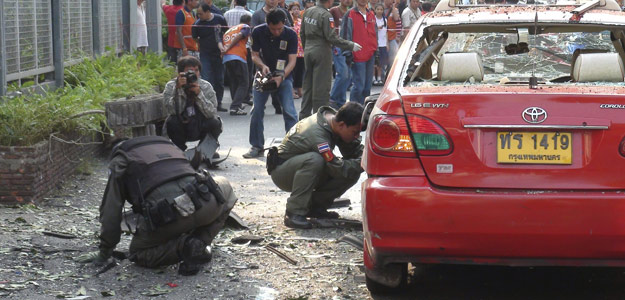
Ampliar fotoVivienda que ocupaban los supuestos terroristas iraníes detenidos en Bangkok

Vivienda que ocupaban los supuestos terroristas iraníes detenidos en Bangkok.REUTERS/Kerek Wongsa

MIGUEL CHARTEMIGUEL CHARTE 19.02.2012 – 10:00h

La tensión entre Irán y algunos países occidentales, sobre todo EE.UU. e Israel, por el programa nuclear parece haber entrado en una fase de guerra sucia y secreta, al estilo de las historias de espías de la Guerra Fría, que podría desembocar en un ataque militar israelí cuyos pros y contras se discuten ya abiertamente.

La República Islámica fue el primer blanco en esta “guerra secreta”. Al ataque cibernético de 2010 siguieron explosiones en instalaciones nucleares y los asesinatos de científicos nucleares iraníes. Esta semana se han producido atentados en Georgia, India y Tailandia que Israel imputa directamente a Teherán y que algunos comentaristas interpretan como una represalia.

Ataques terroristas

El Gobierno israelí, encabezado por Benjamín Netanyahu, no tiene ninguna duda de que Irán está detrás de los atentados contra intereses hebreos en Nueva Delhi y Tiflis y las explosiones en Bangkok, y en los últimos días ha elevado el nivel de sus descalificaciones. Estados Unidos, por su parte, guarda silencio.

Lo cierto es que en los dos primeros casos no hay pruebas que demuestren esa vinculación. Hasta ahora, la única relación es que la Policía tailandesa asegura que los artefactos encontrados tras las explosiones que el martes provocaron varios heridos en Bangkok son similares a los de India y Georgia. Y en Tailandia sí que hay tres detenidos con pasaporte iraní.

El atentado de India es aún más intrigante, ya que este país es uno de los principales clientes de crudo iraní y un gran proveedor de alimentos. Un socio comercial más valioso si cabe cuando se han endurecido las sanciones internacionales. Un atentado patrocinado por Irán, por tanto, es contraproducente porque podría dañar las relaciones bilaterales.

Este jueves, la edición digital en inglés del periódico indio The Times of India informaba que el jefe actual del Mossad (servicios secretos de Israel) Tamir Pardo, había visitado Nueva Delhi días antes de la explosión que hirió a la esposa de un diplomático. Según el periódico, esto demuestra hasta qué punto la inteligencia israelí ignoraba la amenaza.

El periódico cita además fuentes de inteligencia que mencionan una conversación entre terroristas paquistaníes sobre la posibilidad de armarse con bombas magnéticas. El atentado de Nueva Delhi es la primera ocasión en que este tipo de dispositivos se usan en el sureste asiático. Sin embargo, no ha podido ser recuperado ningún reloj o detonador, lo que lleva a los investigadores a pensar que el dispositivo era en realidad un artefacto incendiario, de fabricación sencilla.

¿Represalia por los asesinatos de científicos?

Gad Shimron, ex oficial de operaciones del Mosad, asegura que las explosiones son la respuesta a los asesinatos de científicos iraníes. “Veo lo que ha ocurrido como un mensaje de este tipo: ‘Cualquier cosa que hagas, yo lo puedo hacer también”, ha declarado a Reuters.

“Estamos viendo la voluntad de Irán de atacar objetivos extranjeros de una manera que no había sido evidente antes”, ha explicado también a Reuters Nigel Inkster, quien fue vicejefe de los servicios de inteligencia británicos, el MI6, y ahora colabora con el Instituto Internacional de Estudios Estratégicos de Londres.

Las acciones habrían podido ser llevadas a cabo por iraníes o por organizaciones con las que mantienen alianzas, como Hezbolá o Hamás. Hay indicios, además, de que Israel también estaría usando a grupos opositores locales en su campaña contra Irán, a veces haciéndose pasar por estadounidenses, según Inkster.

The New York Times da credibilidad a la pista que conduce a Teherán, y cree que los últimos acontecimientos evidencian una presión interna creciente sobre el liderazgo iraní y división en la clase dirigente de la República. El artículo especula con que sectores cercanos al líder supremo, ayatolá Alí Jamenei, estén provocando conscientemente al estado hebreo.

Dudas sobre un ataque israelí

Los atentados se han producido entre discusiones crecientes en EE.UU. e Israel sobre un ataque limitado de este último país a Irán, pese a que diversos informes indican que el acceso de la República Islámica a una bomba atómica no es inminente.

A principios de la semana, el secretario de Defensa de EE.UU., Leon Panetta, daba marcha atrás en sus declaraciones filtradas a la prensa, en las que afirmaba que Israel había decidido atacar en primavera, y expresaba por el contrario su creencia de que la decisión de una intervención militar aún no está tomada. Hasta ahora, la administración Obama ha combinado las amenazas y sanciones con la puerta abierta a una solución negociada.

“En el lado israelí hay un verdadero dilema entre los que apoyan la opción armada y los que consideran que debe ser el último recurso. No hay ningún juego de amenazas para forzar sanciones internacionales”, asegura a Efe Meir Litvak, director del Centro de Estudios Iraníes en la Universidad de Tel Aviv.

Según el académico, doctorado en Harvard y coautor de Del Imperio Persa a la Revolución Islámica, que será publicado próximamente, las dudas se originan en las especulaciones sobre los daños que sufriría Israel tras ese supuesto ataque.

El Ejército advierte de que Irán tiene en su poder cientos de cohetes de largo alcance Shihab-3, con una cabeza de combate de casi 1.000 kilos y algunos de ellos de cabeza múltiple, lo que le permite atacar varios blancos a la vez.

El sitio en internet iraní Mashreq afirmaba el jueves que el satélite Navid lanzado recientemente ya había tomado fotografías detalladas del reactor nuclear israelí en Dimona y de otros “lugares sensibles, bases aéreas y zonas de Tel Aviv”, según el diario Haaretz.

En estas circunstancias, los partidarios de una operación militar relámpago “consideran que la alternativa de sufrir ahora 500 cohetes, o 500 muertos, es preferible a un Irán con una bomba atómica que promete borrar a Israel del mapa”, explica Litvak.

En cambio, para Farid Zakaria, comentarista internacional en CNN, la Historia ofrece multitud de ejemplos negativos en los que una intervención “preventiva” ha causado un daño mayor. Israel, concluye Zakaria, es por el momento la única potencia nuclear de la región, pero tiene que empezar a acostumbrarse al juego de equilibrio atómico de la Guerra Fría: la disuasión.

« Previous Page — Next Page »

WPMU Theme pack by WPMU-DEV.