Forés @ UVPress


         Universitat de València PRESS -UVPress- weblog for research uses

October 25, 2012

06 Antiscience Beliefs Jeopardize U.S. Democracy

Scientific American

Cover Image: November 2012 Scientific American Magazine See Inside

Antiscience Beliefs Jeopardize U.S. Democracy

The United States faced down authoritarian governments on the left and right. Now it may be facing an even greater challenge from within

By Shawn Lawrence Otto  | Wednesday, October 17, 2012 | 259

It is hard to know exactly when it became acceptable for U.S. politicians to be antiscience. For some two centuries science was a preeminent force in American politics, and scientific innovation has been the leading driver of U.S. economic growth since World War II. Kids in the 1960s gathered in school cafeterias to watch moon launches and landings on televisions wheeled in on carts. Breakthroughs in the 1970s and 1980s sparked the computer revolution and a new information economy. Advances in biology, based on evolutionary theory, created the biotech industry. New research in genetics is poised to transform the understanding of disease and the practice of medicine, agriculture and other fields.

The Founding Fathers were science enthusiasts. Thomas Jefferson, a lawyer and scientist, built the primary justification for the nation’s independence on the thinking of Isaac Newton, Francis Bacon and John Locke—the creators of physics, inductive reasoning and empiricism. He called them his “trinity of three greatest men.” If anyone can discover the truth by using reason and science, Jefferson reasoned, then no one is naturally closer to the truth than anyone else. Consequently, those in positions of authority do not have the right to impose their beliefs on other people. The people themselves retain this inalienable right. Based on this foundation of science—of knowledge gained by systematic study and testing instead of by the assertions of ideology—the argument for a new, democratic form of government was self-evident.

Yet despite its history and today’s unprecedented riches from science, the U.S. has begun to slip off of its science foundation. Indeed, in this election cycle, some 236 years after Jefferson penned the Declaration of Independence, several major party contenders for political office took positions that can only be described as “antiscience”: against evolution, human-induced climate change, vaccines, stem cell research, and more. A former Republican governor even warned that his own political party was in danger of becoming “the antiscience party.”

Such positions could typically be dismissed as nothing more than election-year posturing except that they reflect an anti-intellectual conformity that is gaining strength in the U.S. at precisely the moment that most of the important opportunities for economic growth, and serious threats to the well-being of the nation, require a better grasp of scientific issues. By turning public opinion away from the antiauthoritarian principles of the nation’s founders, the new science denialism is creating an existential crisis like few the country has faced before.

In late 2007 growing concern over this trend led six of us to try to do something about it. Physicist Lawrence M. Krauss, science writer and film director Matthew Chapman (who is Charles Darwin’s great–great-grandson), science philosopher Austin Dacey, science writer Chris Mooney, marine biologist Sheril Kirshenbaum and I decided to push for a presidential science debate. We put up a Web site and began reaching out to scientists and engineers. Within weeks 38,000 had signed on, including the heads of several large corporations, a few members of Congress from both parties, dozens of Nobel laureates, many of the nation’s leading universities and almost every major science organization. Although presidential hopefuls Barack Obama and John McCain both declined a debate on scientific issues, they provided written answers to the 14 questions we asked, which were read by millions of voters.

In 2012 we developed a similar list, called “The Top American Science Questions,” that candidates for public office should be answering [see “Science in an Election Year” for a report card by Scientific American‘s editors measuring how President Obama and Governor Mitt Romney did]. The presidential candidates’ complete answers, as well as the responses provided by key congressional leaders to a subset of those questions, can be found at www.ScientificAmerican.com/nov2012/science-debate and at www.sciencedebate.org/debate12.

These efforts try to address the problem, but a larger question remains: What has turned so many Americans against science—the very tool that has transformed the quality and quantity of their lives?

A Call to Reason

Today’s denial of inconvenient science comes from partisans on both ends of the political spectrum. Science denialism among Democrats tends to be motivated by unsupported suspicions of hidden dangers to health and the environment. Common examples include the belief that cell phones cause brain cancer (high school physics shows why this is impossible) or that vaccines cause autism (science has shown no link whatsoever). Republican science denialism tends to be motivated by antiregulatory fervor and fundamentalist concerns over control of the reproductive cycle. Examples are the conviction that global warming is a hoax (billions of measurements show it is a fact) or that we should “teach the controversy” to schoolchildren over whether life on the planet was shaped by evolution over millions of years or an intelligent designer over thousands of years (scientists agree evolution is real). Of these two forms of science denialism, the Republican version is more dangerous because the party has taken to attacking the validity of science itself as a basis for public policy when science disagrees with its ideology.

It gives me no pleasure to say this. My family founded the Minnesota Republican Party. But much of the Republican Party has adopted an authoritarian approach that demands ideological conformity, even when contradicted by scientific evidence, and ostracizes those who do not conform. It may work well for uniform messaging, but in the end it drives diverse thinkers away—and thinkers are what we need to solve today’s complex problems.

This process has left a large, silent body of voters who are fiscally conservative, who believe in science and evidence-based policies, and who are socially tolerant but who have left the party. In addition, Republican attacks on settled scientific issues—such as anthropogenic climate change and evolution—have too often been met with silence or, worse, appeasement by Democrats.

Governor Romney’s path to endorsement exemplifies the problem. “I don’t speak for the scientific community, of course, but I believe the world is getting warmer,” Romney told voters in June 2011 at a town hall meeting after announcing his candidacy. “I can’t prove that, but I believe based on what I read that the world is getting warmer, and number two, I believe that humans contribute to that.” Four days later radio commentator Rush Limbaugh blasted Romney on his show, saying, “Bye-bye nomination. Bye-bye nomination, another one down. We’re in the midst here of discovering that this is all a hoax. The last year has established that the whole premise of man-made global warming is a hoax! And we still have presidential candidates who want to buy into it.

By October 2011 Romney had done an about-face. “My view is that we don’t know what’s causing climate change on this planet, and the idea of spending trillions and trillions of dollars to try and reduce CO2 emissions is not the right course for us,” he told an audience in Pittsburgh, then advocated for aggressive oil drilling. And on the day after the Republican National Convention, he tacked back toward his June 2011 position when he submitted his answers to ScienceDebate.org.

Romney is not alone in appreciating the political necessity of embracing antiscience views. House Speaker John A. Boehner, who controls the flow of much legislation through Congress, once argued for teaching creationism in science classes and asserted on national television that climate scientists are suggesting that carbon dioxide is a carcinogen. They are not. Representative Michele Bachmann of Minnesota warned in 2011 during a Florida presidential primary debate that “innocent little 12-year-old girls” were being “forced to have a government injection” to prevent infection with human papillomavirus (HPV) and later said the vaccine caused “mental retardation.” HPV vaccine prevents the main cause of cervical cancer. Religious conservatives believe this encourages promiscuity. There is no evidence of a link to mental retardation.

In a separate debate, Republican candidate Jon Huntsman was asked about comments he had made that the Republican Party is becoming the antiscience party. “All I’m saying,” he replied, “is that for the Republican Party to win, we can’t run from science.” Republican primary voters apparently disagreed. Huntsman, the lone candidate to actively embrace science, finished last in the polls.

In fact, candidates who began to lag in the GOP presidential primaries would often make antiscience statements and would subsequently rise in the polls. Herman Cain, who is well respected in business circles, told voters that “global warming is poppycock.” Newt Gingrich, who supported doubling the budget of the National Institutes of Health and who is also a supporter of ScienceDebate.org, began describing stem cell research as “killing children in order to get research material.” Candidates Rick Perry and Ron Paul both called climate change “a hoax.” In February, Rick Santorum railed that the left brands Republicans as the antiscience party. “No. No, we’re not,” he announced. “We’re the truth party.”

Antiscience reproductive politics surfaced again in August, this time in one of the most contested U.S. Senate races. Todd Akin, who is running in Missouri against Claire McCaskill, said that from what he understood from doctors, pregnancy from rape is extremely rare because “if it’s a legitimate rape, the female body has ways to try to shut that whole thing down.” Akin sits on the House Committee on Science, Space, and Technology, which is responsible for much of the U.S. federal science enterprise, so he should be aware of what science actually says about key policy issues. In fact, studies suggest that women are perhaps twice as likely to become pregnant from rape, and, in any event, there is no biological mechanism to stop pregnancy in the case of rape. Akin’s views are by no means unusual among abortion foes, who often seek to minimize what science says to politically justify a no-exception antiabortion stance, which has since become part of the 2012 national GOP platform.

A look at down-ticket races suggests that things may get worse. The large crop of antiscience state legislators elected in 2010 are likely to bring their views into mainstream politics as they eventually run for Congress. In North Carolina this year the state legislature considered House Bill No. 819, which prohibited using estimates of future sea-level rise made by most scientists when planning to protect low-lying areas. (Increasing sea level is a predicted consequence of global warming.) The proposed law would have permitted planning only for a politically correct rise of eight inches instead of the three to four feet that scientists predict for the area by 2100.

Virginia Republicans took similar action in June, banning the use of the term “sea-level rise” from a government-commissioned study and instead requiring use of the phrase “recurrent flooding” because “sea-level rise” is considered “a left-wing term,” according to one of the legislators.

The Evolution of American Science Denialism

The American Antiscience Movement did not travel from the fringe to the center of society overnight. Its roots can be traced back a century to three-time Democratic candidate for president William Jennings Bryan, who ran fundamentalist campaigns against the theory of evolution, which he argued was causing moral decay in the nation’s youth by undermining the authority of the Bible.

Bryan lost to proscience Republicans William McKinley and William Howard Taft, but he continued to campaign throughout the South, working to banish the scientific theory from American classrooms. Eventually Tennessee passed a law prohibiting the teaching of “any theory that denies the Story of the Divine Creation of man as taught in the Bible, and to teach instead that man has descended from a lower order of animals.” The coverage of the resulting Scopes “monkey trial” in 1925 turned the American public against religious fundamentalism for a generation, and the persistent campaigns against evolution drove most scientists into the Republican Party.

When World War II broke out, science gained new luster. President Franklin D. Roosevelt turned to science as an intellectual weapon to help win the war. FDR asked Vannevar Bush, who led what is now known as the Carnegie Institution for Science, to marshal the U.S. science enterprise. Bush’s efforts succeeded, leading to the development of radar, artificial rubber, the mass production of penicillin and the atomic bomb. After the war, he convinced President Harry S. Truman that continued federal investment in science could make the U.S. into a world leader.

The investment paid off, but the steady flow of federal funding had an unanticipated side effect. Scientists no longer needed to reach out to the public or participate in the civic conversation to raise money for research. They consequently began to withdraw from the national public dialogue to focus more intently on their work and private lives. University tenure systems grew up that provided strong disincentives to public outreach, and scientists came to view civics and political involvement as a professional liability.

As the voice of science fell silent, the voice of religious fundamentalism was resurging. Moral disquietude over the atomic bomb caused many to predict the world would soon end, and a new wave of fundamentalist evangelists emerged. “All across Europe, people know that time is running out,” a charismatic young preacher named Billy Graham said in 1949. “Now that Russia has the atomic bomb, the world is in an armament race driving us to destruction.”

Increasing control over the reproductive process widened the split in the following years. Religious conservatives felt that humans should not interfere in God’s plan, denouncing the growing popularity of the birth-control pill in the 1960s and debating in the 1970s whether “test-tube babies,” produced by in vitro fertilization, would have souls. They redefined pregnancy to begin at fertilization, rather than implantation in the uterine wall, and argued that abortion was murder.

Science’s black eye grew with the broader public as well. In the 1950s children played in the fog of DDT as trucks sprayed neighborhoods, but with the 1962 publication of Rachel Carson’s Silent Spring, we learned it was toxic. This pattern repeated over and over again as unforeseen health and environmental consequences of quickly commercialized science came to light. Similar scandals erupted over the effects of scores of industrial applications, ranging from sulfur dioxide and acid rain, to certain aerosols and the hole in the ozone layer, to leaded gas and cognitive impairment, to the granddaddy of them all, fossil fuels and global climate change.

Industrial mishaps led to new health and environmental regulatory science. The growing restrictions drove the older industries in the chemical, petroleum and pharmaceutical fields to protect their business interests by opposing new regulations. Proponents of this view found themselves in a natural alliance with the burgeoning religious fundamentalists who opposed the teaching of evolution. Industrial money and religious foot soldiers soon formed a new basis for the Republican Party: “In this present crisis, government is not the solution to our problem,” President Ronald Reagan argued in his 1981 inaugural address. “Government is the problem.” This antiregulatory-antiscience alliance largely defines the political parties today and helps to explain why, according to a 2009 survey, nine out of 10 scientists who identified with a major political party said they were Democrats.

This marriage of industrial money with fundamentalist values gave fundamentalism renewed power in the public debate, and efforts to oppose the teaching of evolution in public schools have returned in several states. Tennessee, South Dakota and Louisiana have all recently passed legislation that encourages unwarranted criticisms of evolution to be taught in the states’ public schools. Evangelical state legislators and school board members mounted similar efforts this year in Oklahoma, Missouri, Kansas, Texas and Alabama, and the Texas Republican Party platform opposes “the teaching of … critical thinking skills and similar programs that … have the purpose of challenging the student’s fixed beliefs and undermining parental authority.”

An Antiscience Philosophy

If both Democrats and Republicans have worn the antiscience mantle, why not just wait until the pendulum swings again and denialism loses its political potency? The case for action rests on the realization that for the first time since the beginning of the Enlightenment era in the mid-17th century, the very idea of science as a way to establish a common book of knowledge about the world is being broadly called into question by heavily financed public relations campaigns.

Ironically, the intellectual tools currently being used by the political right to such harmful effect originated on the academic left. In the 1960s and 1970s a philosophical movement called postmodernism developed among humanities professors displeased at being deposed by science, which they regarded as right-leaning. Postmodernism adopted ideas from cultural anthropology and relativity theory to argue that truth is relative and subject to the assumptions and prejudices of the observer. Science is just one of many ways of knowing, they argued, neither more nor less valid than others, like those of Aborigines, Native Americans or women. Furthermore, they defined science as the way of knowing among Western white men and a tool of cultural oppression. This argument resonated with many feminists and civil-rights activists and became widely adopted, leading to the “political correctness” justifiably hated by Rush Limbaugh and the “mental masturbation” lampooned by Woody Allen.

Acceptance of this relativistic worldview undermines democracy and leads not to tolerance but to authoritarianism. John Locke, one of Jefferson’s “trinity of three greatest men,” showed why almost three centuries ago. Locke watched the arguing factions of Protestantism, each claiming to be the one true religion, and asked: How do we know something to be true? What is the basis of knowledge? In 1689 he defined what knowledge is and how it is grounded in observations of the physical world in An Essay Concerning Human Understanding. Any claim that fails this test is “but faith, or opinion, but not knowledge.” It was this idea—that the world is knowable and that objective, empirical knowledge is the most equitable basis for public policy—that stood as Jefferson’s foundational argument for democracy.

By falsely equating knowledge with opinion, postmodernists and antiscience conservatives alike collapse our thinking back to a pre-Enlightenment era, leaving no common basis for public policy. Public discourse is reduced to endless warring opinions, none seen as more valid than another. Policy is determined by the loudest voices, reducing us to a world in which might makes right—the classic definition of authoritarianism.

Postmodernism infiltrated a generation of American education programs, as Allan Bloom first pointed out in The Closing of the American Mind. It also infected journalism, where the phrase “there is no such thing as objectivity” is often repeated like a mantra.

Reporters who agree with this statement will not dig to get to the truth and will tend to simply present “both sides” of contentious issues, especially if they cannot judge the validity of scientific evidence. This kind of false balance becomes a problem when one side is based on knowledge and the other is merely an opinion, as often occurs when policy problems intersect with science. If the press corps does not strive to report objective reality, for which scientific evidence is our only reliable guide, the ship of democracy is set adrift from its moorings in the well-informed voter and becomes vulnerable once again to the tyranny that Jefferson feared.

An Existential Crisis

“Facts,” John Adams argued, “are stubborn things; and whatever may be our wishes, our inclinations, or the dictates of our passion, they cannot alter the state of facts and evidence.” When facts become opinions, the collective policymaking process of democracy begins to break down. Gone is the common denominator—knowledge—that can bring opposing sides together. Government becomes reactive, expensive and late at solving problems, and the national dialogue becomes mired in warring opinions.

In an age when science influences every aspect of life—from the most private intimacies of sex and reproduction to the most public collective challenges of climate change and the economy—and in a time when democracy has become the dominant form of government on the planet, it is important that the voters push elected officials and candidates of all parties to explicitly state their views on the major science questions facing the nation. By elevating these issues in the public dialogue, U.S. citizens gain a fighting chance of learning whether those who would lead them have the education, wisdom and courage necessary to govern in a science-driven century and to preserve democracy for the next generation.
 

October 22, 2012

06 The inspiration for The Testament of Mary

Filed under: future,Holístico,módulo básico,politics & literature — fores @ 7:52 am

The inspiration for The Testament of Mary

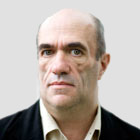
She is the most famous mother in history, yet her story is unknown. A new novel voices the grief-filled thoughts of Mary, as she pieces together the events that led to the death of her son, Jesus. Its writer, Colm Tóibín, describes the origins of the book. Read an extract here

Assumption by Titian, Frari venice View larger picture

Titian’s Assumption of the Virgin in Santa Maria Gloriosa dei Frari, Venice. Photograph: Mauro Magliani/Alinari Archives/Corbis

It is a short walk in Venice from the Frari to the Scuola Grande di San Rocco. At first, I found only the Frari. I went there some days and sat for as long as I could in front of Titian’s painting of the Assumption. I bought postcards of the painting and, once, a larger poster. Every time I left Venice, I always felt guilty that I had not seen enough, or taken enough in, so the time spent in front of the Titian was a way of trying to concentrate more than usual, trying to pull something from the experience of looking that I could keep and remember.

  1. The Testament of Mary
  2. by Colm Tóibín
  3. Buy it from the Guardian bookshop
  1. Tell us what you think: Star-rate and review this book

The painting is almost seven metres high, it hangs behind the altar of the church. There are two lovely divisions in the composition. The first division is the pale sky between the shocked mortals who stand on the ground and the cloud above them, lifted by angels, which bears the mother of God in her wonderful red robe, with a blue robe falling away. The second division is the golden sky above Mary, to which she soars with her arms outstretched towards God who is above. This is the sky of heaven.

There is something so pure about the composition that it manages to stretch powerfully beyond the story that Mary, as the mother of God, on her death could not be allowed to decompose in the earth, but was assumed body and soul into heaven. And yet the painting remains rooted also in the sheer glorious shock of such an event, were it to have taken place.

Not far away, in a room within the Scuola Grande di San Rocco, Tintoretto has a painting that came as another sort of shock when I eventually found it. This one is rooted in the real world, rather than the world of dreams where Titian’s painting lives. The painting of the crucifixion here is more than 12 metres wide. Its size means that the idea of transcendental space soaring towards the heavens above is replaced with the vast, long, busy world around. Tintoretto shows that while Jesus hung on a cross until he died, many other things happened too. If the sound of the Titian is of angels’ unearthly voices, this painting by Tintoretto is filled with the brutal noise of the world.

I think the gap between these two paintings made me wonder about how the imploring, powerless figure of Mary at the foot of the cross as her son was crucified could have become, in Catholic doctrine and Italian painting, the queen of heaven. The more time I spent looking at paintings in Venice the more I came to feel that the story of her transformation fulfilled a pictorial need, or a storyteller’s need, as much as it did anything else.

One evening at home, when I was looking at the different versions of the crucifixion in EV Rieu’s translation of The Four Gospels, I began to read his introduction. In his account of St John, he mentioned that it was possible that John had read Aeschylus. This made me sit up for a minute, since John was the one who had placed Mary at the foot of the cross and had included the story of Lazarus in his Gospel. The idea that John got some of his inspiration from a Greek source, or that he saw how powerful certain images would be from his knowledge of Greek theatre, made me wonder even more.

It is possible that John wrote his Gospel towards the end of the first century in Ephesus, which is now in Turkey but was then part of the Roman empire. There is now a house in Ephesus which many believe was the house where Mary lived out her last days, since John would have taken her there, but there is no real evidence for this.

Since the subject of Jesus, his mother and St John began to interest me, I read Marina Warner’s Alone of All Her Sex: The Myth and Cult of the Virgin Mary and also three short books by the Jesus scholar Geza Vermes.

In the meantime, there were two particular voices that were haunting me. One was the American mezzo-oprano Lorraine Hunt Lieberson and the other was the American poet Louise Glück. In the spring of 2006 and 2008, as I spent a few nights a week on my own in a house close to the Stanford campus, I listened to the voice of Hunt Lieberson over and over as she sang two religious Bach cantatas, “Ich Habe Genug” and “Mein Herz Schwimmt in Blut”. I read the work of Glück, especially her sequence “The Wild Iris” with its astonishing use of the first-person singular.

I was away from home and scared of driving on the Californian freeways, or indeed riding my bicycle on the ordinary roads. I was even scared sometimes of ordering a coffee in case they would ask me an extra question I could not answer. (To go? Or to stay? Indeed.) There were times when I felt trapped and uneasy.

Hunt Lieberson and Glück, in the tones they used, fitted in with a course I had given a few years earlier at the New School in New York. The title of the course was “Relentlessness”. It was a lot of dark fun; we looked at some of the Greek plays, including Electra, Medea and Antigone, as well as more contemporary texts with a tone that did not take prisoners by writers such as Sylvia Plath, James Baldwin, JM Coetzee, Nadine Gordimer and Joan Didion. We even screened Ingmar Bergman’s Autumn Sonata in case we needing cheering up. I enjoyed it all immensely.

I had tried to formulate something in the class but it had not made its way into the work I was doing. Now, I had at the back of my mind a woman’s voice, or a tone, the sense of a figure held against her will speaking as though there might not be another chance to speak.

I went to Ephesus and travelled up and down that coast of Turkey, which was so recently Greece, with a guide. We looked at temples and theatres as well as museums and the site where the house of Mary is, the place where some believe she may have died.

What struck me most forcefully was that this was a landscape of the goddess, that the figure of Artemis in the museums was enormously powerful, as the Temple of Diana must have been. I read books about the archaeology and about St Paul’s presence here and the presence of St John.

And soon it came to me what I had. I mentioned it to Loughlin Deegan, who was then director of the Dublin Theatre Festival, and he commissioned a version of it for the theatre. I worked on this with the director Garry Hynes and the actor Marie Mullen, reducing my original text to about one third of its length so that it would work on the stage. The quality of the silence which Mullen managed to wring from the Dublin audience by her extraordinary performance is something I will never forget.

The figure of Mary in the novel I wrote once the theatre performance had ended is traumatised; her voice is filled with terror and grief, but it is also filled with a sort of stern intelligence. She is held in this house, held by two men, who may or may not be St John and St Paul, but they are already re-creating what happened to her son so that it will become a faith. They dislike her, just as she despises them. She is also afraid, however, and she needs their protection. She is concerned with the truth of her own suffering, the truth of what she saw; they wish, by writing down a version of what happened, to build a religion.

They dream of that painting by Titian in the Frari in Venice in all its glory; she has nightmares about the Tintoretto in all its lived and untidy cruelty.

Once, only once will she get the chance to say what happened. Her guardians’ words will, on the other hand, live through the centuries. Her version of the death of Lazarus, or the wedding feast at Cana, or the crucifixion itself belong to trauma, to personal memory, to lost time, rather than myth, or indeed faith. She speaks in an eternal present, in the landscape dominated by the Greek gods, where she saw out her days. Her own Jewishness also belongs now to memory.

And so I started to work. The less I paid attention to the sources I had been studying, the more I felt I could reach, or manipulate, her voice. The book, I realised, would have to be short. It would have to reflect in its tones that there was not much time, and that every word was urgent. I remember one day when I stopped for a break. I came into a room to make myself a coffee. “What’s wrong with you?” someone asked. “You look like you have seen a ghost.” I nodded in agreement. That is what it felt like. It was as though the figure from that painting by Tintoretto in Venice had turned around and faced us. And the figure of Mary, relentless from suffering, the figure from my childhood prayers, began to speak, or had spoken, knowing that time is short but that her version of what happened needed to be recounted, if only once.

October 19, 2012

06 A tipping point in the fight against slavery?

Filed under: economía,future,Holístico,política — fores @ 8:19 am
18 October 2012 Last updated at 23:11 GMT

A tipping point in the fight against slavery?

By Melissa Hogenboom BBC News

Boy carrying water in quarry

There are more people in slavery today than at any time in human history – but campaigners think the world is close to a tipping point and that slavery may be abolished in the next 30 years.

The estimated number of people in slavery – 27 million – is more than double the total number believed to have been taken from Africa during the transatlantic slave trade.

Ship records make it possible to estimate the number of slaves transported from Africa to the Americas and the Caribbean, from the 16th Century until the trade was banned in 1808 – and the figure is about 12.5 million people.

The figure of 27 million slaves today comes from researcher Kevin Bales, of Free the Slaves – who blames the huge figure on rapid population growth, poverty and government corruption.

Continue reading the main story

“Start Quote

We know there are many more slaves than homicides in the US”

Kevin Bales Free the Slaves

Many people still think of slavery as a thing of the past, but it exists in many forms, on every continent – ranging from sex and labour trafficking, to debt bondage where people are forced to work off small loans.

“I often think about a quarry slave from North India,” says investigative journalist Ben Skinner, who has travelled all over the world documenting cases of slavery.

“I could go in at night and interview him, so I asked him why he didn’t run away. It was because he feared the extraordinary violence of the quarry contractor who held him to a miniscule debt.

“In his world, the contractor was god. He was not only the taker of life but also the giver of sustenance. When we look at why slavery has persisted we have to look at breaking those cycles of dependence.”

Continue reading the main story

Slavery in history

Slave auction

Not all slaves were from Africa. Slavery existed among some Native American groups and in some Asian countries, and Europeans were sometimes enslaved by Muslims in the Ottoman Empire.

Russian serfdom can be seen as a variant of slavery. At the time of emancipation in 1861, there were more than 22 million serfs.

Slaves were common in the ancient world – the Greeks, Romans and, Egyptians all held slaves.

Professor Peter Kolchin, historian

Skinner says that many of the slaves he met in India had never known a free life. They came from extremely isolated communities, and were not aware of their basic universal rights.

But while developing countries have the highest number of slave labourers, developed countries with strong human rights laws “fail to resource the law enforcement to deal with the problem in comparison to virtually any other law”, says Bales.

Barack Obama recently painted a portrait of contemporary slavery.

“It’s the migrant worker unable to pay off the debt to his trafficker,” he said. “The man, lured here with the promise of a job, his documents then taken, and forced to work endless hours in a kitchen. The teenage girl, beaten, forced to walk the streets.”

The US government spends billions on tackling homicide, Bales argues, but only a fraction is spent on slavery “even though we know there are many more slaves than homicides in the US”.

In Europe too, victims of slavery cannot always rely on the law to protect them. Anti-trafficking charity Stop the Traffik cites a case where a girl was returned to Hungary after being trafficked abroad. Upon her return to supposed safety, she was raped and returned to her traffickers.

Continue reading the main story

Slaves in chains
As well as being transported out of Africa during the transatlantic slave trade, slaves were also captured and sold within Africa

Continue reading the main story

1/4

But the International Labour Organization (ILO) – whose figure of 20.9 million people worldwide in forced labour does not include bonded labour – believes slavery can be completely eradicated.

The momentum has been growing for the last 10 years, says the ILO’s Beate Andreas, pointing to a “growing movement and growing leadership on the part of key countries to take action”.

Continue reading the main story

Slavery in the British Empire

  • The British Empire outlawed slavery in 1833, but it never really went away, emerging in different forms such as child labour, says Dr Richard Huzzey from the University of Liverpool’s Centre for International Slavery.
  • “In the early 1840s, the British declared slavery in India was over as part of the ‘kindness’ of British rule, but what in fact happened, was that definitions changed – people were called labourers or servants rather than slaves.”

She compares this struggle to the battle against HIV, where it took a number of years to generate the momentum and the commitment needed to overcome the epidemic.

Slavery is already illegal in every country in the world.

“We have not quite reached the tipping point, but it’s much more difficult for countries and companies to get away with forced labour nowadays,” Andreas says.

“There is reason to be optimistic. We have seen a sweeping change in recent years in terms of legislation and better regulation.

“There’s a clear sign that more companies are becoming aware, and more governments are willing to take action. If we have the critical mass of leaders ready to take action, then it can be eradicated.”

Bales says there was a time when law enforcement agencies knew how to deal with a truck full of drugs, but lacked clear procedures for dealing with a truck full of people. This is changing, he says.

The UN’s anti-trafficking protocol talks about the “three Ps” – prosecution, protection and prevention.

Continue reading the main story

How much is a human life worth?

Hands in shackles
  • An average slave today costs around $90 (£56) according to Free the Slaves
  • They calculated it would cost $11bn (£6.8bn) over a 25 – 30 year period to get everyone out of slavery and keep them “slave proof”
  • In 1850 a slave cost the equivalent of $40,000 (£25,000) of today’s money
  • In the 18th Century, metal bracelets called manilas were brought to West Africa. They were used to barter for slaves and are now only worth around $8 (£5) each

The pressure group Stop the Traffik focuses on prevention. In Kyrgyzstan for example, it works with street children to teach them to recognise the warning signs so they can avoid being recruited to beg and steal.

Businesses are also playing a role in prevention, by boycotting goods produced by forced or slave labour. A number of major retailers have stopped buying cotton produced by forced labour in Uzbekistan, and last year a trade deal with Uzbekistan was rejected by the European Parliament because of its use of child slaves.

In Brazil, a nationwide anti-slavery plan set out in in 2003 introduced changes in regulation and labour inspection laws that have resulted in the freeing of thousands of slave workers. Employers are put on an official “dirty list” if they are found to use slave labour. This currently includes nearly 300 companies and individuals. The ILO also works to help other countries also spot the “invisible signs” of forced labour.

In 2008 the state of Niger was found guilty by a West African court of failing to protect a former domestic slave, and the government ordered to pay compensation.

Dr Aidan McQuade, director of Anti-Slavery International, says that following the verdict, the news spread and large numbers who were in forced labour simply walked away from their situation, something they would have been too afraid to do before.

These are some of the factors that make slavery “a solvable problem within our generation”, Bales argues – 25 to 30 years.

“The best estimates suggest that slavery puts about $40bn (£24.9bn) in the global economy. While that’s a lot of money it’s also by far the tiniest fraction of the global economy ever represented by slave output. Twenty-seven million is a large number, but its also the tiniest fraction of the global population to ever be in slavery.

“Slavery is standing on the edge of its own extinction – if we give it a hard push. Certainly, we need governments to work together and to enforce their own laws. But that’s do-able.”

October 16, 2012

06 España encabeza el fracaso escolar en Europa, según la UNESCO

Filed under: economía,future,Holístico,política — fores @ 10:46 am

España encabeza el fracaso escolar en Europa, según la UNESCO

Más de 200 millones de niños de los países en desarrollo ni siquiera acaban la primaria

Latinoamérica retrocede respecto a 2008 pese al progreso de países como Guatemala

París 16 OCT 2012 – 06:33 CET225
Imagen de interior de un aula. / EMILIO MORENATTI (EFE)

España es el primer país de Europa en términos de fracaso escolar y de mala inserción laboral de sus jóvenes, según los datos recogidos por la Unesco en la edición 2012 del estudio anual Educación para Todos (EPT), publicado hoy. Uno de cada tres jóvenes españoles de entre 15 y 24 años dejaron sus estudios antes de acabar la secundaria, frente a la media europea, que habla de uno de cada cinco. El estudio recoge el progreso de los objetivos educativos fijados en Dakar en 2010 y cuya fecha tope de cumplimiento es 2015.

Para los responsables del informe, las cifras de abandono escolar en España son “preocupantes” habida cuenta de que se trata de un país “duramente golpeado” por la crisis y donde el paro juvenil superó el 50 % en marzo de este año. La falta de competencias profesionales de los jóvenes europeos “les aboca a desaprovechar su potencial, les hace perder oportunidades de empleo y les impide ayudar a sus respectivos países a volver a la prosperidad”, señala el estudio, donde se asevera que, en tiempos de crisis, dotarles de herramientas es “más esencial que nunca”.

Los autores del informe constataron que entre 2007 y 2009, las tasas de paro entre los jóvenes europeos que no habían completado sus estudios aumentaron ampliamente, a excepción de Alemania, aunque España fue sin duda “la más afectada” del continente. El estudio recupera además la expresión ninis (ni tienen trabajo ni lo buscan), al señalar que “al menos un cuarto de los jóvenes españoles que dejaron sus estudios al acabar el primer ciclo de enseñanza secundaria y un quinto de los que los abandonaron después del bachillerato tampoco buscan empleo”.

“Crear puestos de trabajo por sí solo no nos sacará de la crisis. Debemos formar a jóvenes con competencias profesionales adecuadas”

“Crear puestos de trabajo por si solo no va a ayudarnos a salir de la crisis”, indica el informe, porque “Europa debe formar a jóvenes con competencias profesionales adecuadas, con experiencia previa y con capacidad de adaptación a las nuevas tecnologías”. Por ello, desde el organismo se insiste en fomentar las prácticas y pasantías, y en mejorar la formación profesional como se ha hecho “con gran éxito” en Alemania, a fin de preparar a los jóvenes para el mundo laboral. El esfuerzo merece la pena, según los cálculos de la institución, que estima que cada dólar invertido en educación y en competencias supone un retorno de 10 dólares para la economía del país.

Países en desarrollo

En cuanto a los países en desarrollo, unos 200 millones de jóvenes de entre 15 y 24 años “ni siquiera” acaban sus estudios primarios, alerta la Unesco. El organismo destaca la “apremiante necesidad” de invertir más en educación para dotar a estos jóvenes de competencias que les permitan acceder a un empleo digno porque más de un 25 % de ellos “acaban aceptando puestos cuyos salarios los mantienen en el umbral de la pobreza” (1,25 dólares al día).

El informe revela además que “el ritmo de la ayuda internacional al sector educativo se está desacelerando” y de hecho, en 2011 los fondos se redujeron por primera vez. Aunque entre 1999 y 2010 el número de niños no escolarizados en el mundo descendió de 108 millones a 61, en los dos últimos años esa cifra “se ha estancado”, y en regiones como África ha vuelto a aumentar, lamentó la directora del informe, Pauline Rose.

Además, el informe destaca la urgencia de distribuir de una forma más adecuada la ayuda internacional a la educación que, en muchos casos, o bien se dedica a escolarizar a estudiantes extranjeros en los Estados desarrollados o bien se dirige a los llamados BRICS (Brasil, Rusia, India, China y Sudáfrica) y no a los países más necesitados. Los 3.100 millones de dólares asignados actualmente a la educación superior de los países pobres podrían gastarse “con mejor provecho” si se dedicaran a paliar el déficit de competencias de la juventud necesitada en sus países de origen. Por ejemplo, con el dinero que se dedica a costear universidad de un estudiante nepalí en Europa, se podría “dar acceso a 229 jóvenes compatriotas suyos a la enseñanza secundaria en Nepal”.

En este sentido, el informe hace hincapié en la meta de que todos los jóvenes puedan acabar el primer ciclo de enseñanza secundaria, ya que “es allí donde se adquieren las competencias fundamentales para encontrar un empleo apropiado”, y para ello destacaron que “tanto los gobiernos como los patrocinadores y el sector privado deben participar en este esfuerzo financiero”.

Latinoamérica

El panorama no es mucho mejor en América Latina. Pocos países de la región están “en el buen camino” para cumplir con los objetivos establecidos en 2000 para 2015. El estudio revela que, a pesar de los “importantes progresos” en la escolarización infantil en la región y especialmente en países como Guatemala, uno de cada doce jóvenes tan siquiera ha terminado sus estudios primarios en América Latina y en el Caribe.

En una región donde casi el 50 % de la población tiene menos de 25 años, ocho millones de jóvenes necesitan “vías alternativas” a fin de adquirir las competencias que les permitan encontrar un empleo digno, según el estudio, que este año se centra precisamente en la relación entre educación y acceso al trabajo. La Unesco considera que, frente a la situación de hace cuatro años, cuando América Latina y el Caribe sí estaban bien posicionados, en la actualidad muchos países de la zona se encuentran de nuevo “muy rezagados”.

Hoy en día casi 2,7 millones de niños de la región se encuentran excluidos de la enseñanza primaria, según este informe, lo cual se traduce en que en países como Nicaragua “solo el 46 % de los niños de ese grupo de edad logrará alcanzar el nivel de aprendizaje más elemental”.

October 14, 2012

06 Los licenciados se van al campo

Filed under: economía,future,Holístico,módulo básico,política — fores @ 8:03 am

Los licenciados se van al campo

La crisis económica y el deseo de una vida distinta atraen hacia la agricultura y la ganadería a jóvenes profesionales muy cualificados

Madrid 14 OCT 2012 – 01:08 CET6
La abogada Miren Belate tiene una explotación de 40 hectáreas en Navarra.

La tierra se ha convertido en el sustento de multitud de licenciados españoles. Después de años en los que muchos jóvenes veían la actividad agrícola y ganadera con desinterés, la política de austeridad extrema a la que está sometida España, y sus devastadoras consecuencias, ha propiciado que un número creciente de jóvenes con estudios superiores recurran al campo como salida profesional, en un movimiento que nunca antes se había dado en nuestro país. Ni de esta forma ni, desde luego, con esta intensidad.

Los números que maneja Asaja (Asociación Agraria de Jóvenes Agricultores), y que cita su presidente, Pedro Barato, muestran que en los últimos cinco años 2.500 jóvenes se han incorporado al campo en Castilla y León mientras que en Castilla-La Mancha, entre 2000 y 2010, fueron 8.764. Crecen con fuerza las vocaciones agrarias, en parte debido al desplome del ladrillo, en parte a la necesidad. Pero hay más razones. “La gente quiere trabajar en una actividad basada en la economía real, y además, vivir en el campo es algo más económico que en una ciudad”, reflexiona Pedro Barato. “Aunque lo que de verdad buscan es una vida diferente”. Por eso, este experto cree que “llegan aires nuevos a la agricultura”.

En un lustro, más de 2.500 jóvenes se han ido a pueblos en Castilla y León

Estos vientos proceden también de la Unión Europea, donde la tasa media de incorporaciones sobre la población agrícola es del 6,4% frente al 4% español. Así que este movimiento de retorno —que también vive Portugal— aún tiene margen para crecer más en España, evidenciando que el sector está inmerso en pleno cambio estructural. Tanto es así que ya van surgiendo algunas evidencias de esta transformación. “La superficie fresera en Huelva ha aumentado esta campaña como consecuencia de los licenciados que han vuelto al campo”, asegura Eduardo López, responsable de relaciones laborales de la Coordinadora de Organizaciones de Agricultores y Ganaderos (COAG).

De directivo a productor

Juan Luis González ha interiorizado los nuevos valores del campo. Un amago de infarto con solo 41 años le mostró que quizá estaba escogiendo el sendero equivocado. Cuando su corazón le avisó era director general de la firma de neumáticos Goodyear Dunlop, y de él se esperaba la trayectoria de quien se deja más de diez horas al día en un despacho. “Pero se acabó. Tras el gran susto, pensé: ‘Tengo que hacer algo diferente; tengo que reinventarme”. Y lo hizo en el campo. En concreto, en Palma del Río (Córdoba) y entre naranjos (200 hectáreas). Desde hace un año produce tres millones de kilos de naranjas en esas tierras, que vende sobre todo usando la Red, y de esta forma da continuidad —a través de su empresa Orange3— a la cuarta generación de agricultores en su familia. Y cuenta, con entusiasmo, que del corazón va fenómeno.

Y a la vez algunos lugares comunes van cayendo. Si el canon tradicional nos habla de un agricultor español generalmente varón, envejecido (según el INE, hay 167.000 agricultores que tienen más de 49 años) y poco identificado con las tecnologías de la información o con las nuevas técnicas agrícolas, casos como los de Miguel Minguet, Juan Luis González, María del Mar Ferral o Miren Belate avanzan que, poco a poco, otro tipo de agricultores buscan su lugar en nuestros campos.

Incluso ya hay quien le ha puesto nombre a este movimiento: “nuevo campesinado”. Así lo narra Gustavo Duch, coordinador de la revista Soberanía Alimentaria, que además traza el retrato de estos nuevos campesinos. “Estas personas que vuelven al campo creen en explotaciones pequeñas y sostenibles cuya base son los cultivos ecológicos. Además no quieren utilizar las subvenciones agrícolas europeas o depender de las grandes superficies para vender sus productos; buscan el contacto directo y la distribución por Internet”.

Miguel Minguet es un joven (37 años) ingeniero industrial formado en Inglaterra que ha encontrado en el arroz su espacio profesional. Cultiva 16 variedades diferentes en el parque nacional de la Albufera (Valencia), y “en su vida pasada” había sido consultor en tecnología; de hecho, llegó a trabajar para la compañía automovilística Ford. Pero en 2008 tuvo que tomar una decisión. O se reincorporaba a la explotación familiar, en ese privilegiado paisaje de Valencia, o cerraba. Su padre se hacía mayor y había que buscar el recambio. Cuatro años después recoge un millón y medio de kilos de arroz gourmet bajo el paraguas de Sivaris. “Hay mucha gente joven que está volviendo al campo, pero hay otra que, simplemente, no se ha ido”, afirma Minguet.

Este movimiento llega al 6% de la población agrícola en la Unión Europea

Este sentido de pertenencia o de anclaje a un entorno geográfico, pero también cultural, habita en Miren Belate. Una pamplonesa de 32 años que desde 2009 tiene en Ilarregui (Navarra) una explotación de 40 hectáreas con 75 vacas lecheras. En estos verdes y escarpados predios produce al año 340.000 litros de leche, que vende íntegramente a Danone. Para ella, “el trabajo es vida, y la ganadería es vida feliz”, resume enérgica. Atrás ha dejado cuatro años ejerciendo como abogada que ahora, con el tiempo, parecen una nube oscura en la memoria. No fue fácil. “Me tocó la fase de ‘esta chica está loca’, pero para mí la ganadería no solo era una respuesta a la crisis, sino sobre todo vocación”, comenta. “Era una forma de dar salida a las tierras y el trabajo de años en el campo de mi madre”.

En el fondo es recobrar una forma de entender la agricultura y recordar, como indica Gertjan van der Geer, gestor del fondo de inversión Pictet Agriculture, “que las buenas prácticas elevan la calidad de las tierras de labranza, disminuyen el uso de bienes de producción agrícola y reducen costes”.

Pero quizá una de las lecciones más interesantes que deja este nuevo enfoque es que no solo responde a condicionantes económicos, sino que “va acompañado de una ideología política y de un pensamiento social que defiende la vida en el campo y los valores que se asocian con él y que, por cierto, tanta falta nos hacen”, puntualiza Gustavo Duch.

Un cambio vital, que cada vez anhela más gente. De hecho, María del Mar Ferral pasea estos días entre olivos. Tiene 40 hectáreas de ellos —de la variedad arbequina— que apuran este octubre el intenso sol de Jerez de la Frontera (Cádiz). Es una finca que pertenece a la familia, y pronto empezará a producir, junto con su hermano Luis, aceite bajo su propia marca: Ferral. Diplomada en relaciones laborales, recuerda, a sus 37 años, que hubo un tiempo de mandar currículos y de pensar que quizá habría que irse al extranjero. “Pero decidí retomar la actividad familiar aquí en vez de buscar otras opciones”. Y siente que encaja bien. “En el campo hago todas las funciones, aunque en el tractor no me subo”, sentencia con una sonrisa cómplice.

Se entiende entonces que ahora, cuando la crisis es más virulenta, haya quien todavía nos recuerde algo que se escucha estos días de vendimia en Castilla y León: “Si la patria de un hombre es su infancia, la tierra es la memoria”. Hacia ella volvemos.


« Previous Page — Next Page »

WPMU Theme pack by WPMU-DEV.