Forés @ UVPress


         Universitat de València PRESS -UVPress- weblog for research uses

October 13, 2012

06 “Huyo de la realidad española”

Filed under: economía,future,Holístico,módulo básico,política — fores @ 11:12 pm


Rodrigo Carretero

Jóvenes españoles emigrantes en busca de trabajo: “Huyo de la realidad española”

Publicado: 13/10/2012 21:33 CEST Actualizado: 13/10/2012 22:45 CEST

Emigrantes
Recibir alertas:

Reacción:
Seguir:

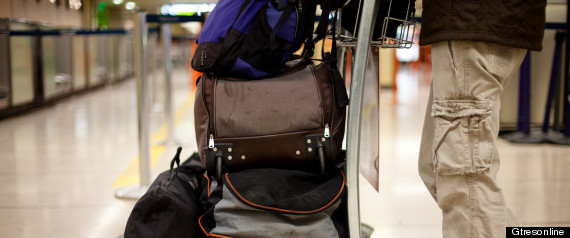
El ministro de Educación y Cultura, José Ignacio Wert, aseguró en julio que la “fuga de cerebros nunca puede considerarse un fenómeno negativo”. Las palabras de Irene Rupérez son bien distintas. Rezuman desilusión, impotencia, resignación. Con 24 años, es diplomada en relaciones laborales y licenciada en periodismo. Posee un máster oficial en comunicación y periodismo deportivo, un curso de community manager y habla bien inglés. Ha trabajado en grandes cadenas de televisión y agencias de prensa, pero en España no encuentra empleo.

Ya tiene los billetes de avión comprados: a finales de octubre se va a Berlín a probar suerte. “No voy con ninguna idea clara, realmente huyo un poco de la realidad española, del Gobierno y de la situación desastrosa por la que pasa España”, explica.

Quizá, como dice Wert, marcharse no sea una desgracia, pero Irene le da vueltas estos días a lo que va a dejar en su país. “Me da pena dejar a mi familia, mi novio, mis amigos… Pero creo que es lo mejor para mí”. Asegura, sin embargo, que en España podría trabajar. Lleva haciéndolo siete años, pero casi nunca en lo suyo. “He compaginado mis estudios con el trabajo en muchas tiendas de ropa, restaurantes y he puesto copas en todo Madrid, pero llega un momento en el que tienes que tomar la decisión de seguir haciendo eso o no… Creo que tengo la formación suficiente como para merecerme algo más, y probablemente en Madrid tenga muchas oportunidades de trabajar, ya que con mi curriculum en hostelería y en moda, y con mi edad, puedo encontrar trabajo, pero no en lo mío, no en periodismo…”.

Irene no es la única que opta por salir de España. Es prácticamente imposible saber cuántos jóvenes han emigrando en los últimos años, pero algunos datos ofrecen aproximaciones.

Según la Federación Nacional de Asociaciones de Consultoría, Servicios, Oficinas y Despachos, más de 300.000 españoles se han ido desde 2008 ante la falta de horizonte laboral. De acuerdo a datos del INE actualizados a principios de 2012, 45.000 españoles entre 16 y 34 años se han marchado desde 2010, aunque la cifra es, seguramente, mucho mayor, dado que los datos están condicionados a que la gente se registre en los consulados y embajadas, un trámite que no completa buena parte de los que emigran.

CON LA MALETA PREPARADA

Los jóvenes tienen asumido que salir de España puede ser su única opción. La frase “España tiene varias salidas: por tierra, mar y aire” es una constante, y así lo reflejan lo datos: el 83,1% de los que tienen entre 18 y 29 años estarían dispuestos a irse a trabajar al extranjero, según una encuesta encargada a Sigma Dos por el canal internacional de noticias France 24. El porcentaje decrece a medida que se cumplen años: se iría fuera el 70.7% de los españoles entre 30 y 44 años, el 69% de los que tienen entre 45 y 64 e incluso el 58,2% de los que han cumplido la edad de jubilación.

Eva Martín es una de esas jóvenes españolas que ya han pasado a la acción. En el momento de atender a El Huffington Post, le quedaban dos días para marcharse a Londres en busca de trabajo. “Los sentimientos están a flor de piel”, reconocía. Tiene 28 años y le queda una asignatura para ser licenciada en Química. Se marcha a Inglaterra, sobre todo, para aprender inglés y, de paso, intentará encontrar empleo. “Acabaré trabajando en algún hotel, restaurante o tienda de ropa. Aún así espero con el tiempo encontrar algo de lo mío”, explica.

“He sido becaria en una empresa del sector farmacéutico, trabajando como una más a tiempo completo por la módica cuantía de 588 euros. Aún así, tengo que estar agradecida de que me dieran una oportunidad laboral en un terreno relacionado con mis estudios, y que encima me pagaran, conozco varios casos en que los becarios trabajan por amor al arte. He estado un año aquí, que era lo máximo que podía estar en contrato en prácticas. Como no me contrataron, estoy desde el 10 de agosto en el paro”, añade.

Como en el caso de Irene, Eva teme que si se queda en España termine trabajando en algo que no está relacionado con sus estudios. “No dejaría de ser una chica de casi 30 años, con un sueldo precario viviendo en casa de sus padres y sin poder tener expectativas en ningún sentido, porque ni podría optar en principio a un puesto mejor ni estaría en mis posibilidades poder independizarme. Esta fuga de cerebros a la larga nos va a perjudicar como país”, pronostica.

TRABAJANDO FUERA

Un peldaño por encima de Eva y de Irene en cuanto a experiencia en el exterior se encuentra Javier Rincón, de 28 años. Nació en Madrid, ha vivido en Málaga y Murcia, estudió ingeniería de Sistemas en la universidad de Loughborough en Leicestershire (Reino Unido) y lleva un año trabajando en Berlín dentro del entorno de las startups de Internet. “Primero como Director de Marketing en 6Wunderkinder, y ahora como responsable de Analíticas y Optimización en Moviepilot.com“, explica.

Cuenta que tras acabar la carrera regresó a España y estuvo trabajando dos años y medio. “Durante esta etapa comprendí que las condiciones en España no eran las más adecuadas y decidí poner rumbo a mejor destino. Estuve a punto de ir a San Francisco, pero sólo dos semanas antes me llegó una oferta muy buena de Berlin. No podría estar más contento con mi decisión”, asegura.

¿Tanta diferencia encontró entre el mercado laboral de España y el de Alemania? Javier no tiene duda: “Hay unas grandes diferencias culturales que determinan no sólo las oportunidades en Alemania, sino cómo trabaja la gente. El ecosistema que se está creando está muy por encima de lo que viví en España. Los alemanes son puros ejecutores, no se dedican a charlar tanto como en España. Y eso se nota en los resultados”. Por eso, no titubea al asegurar que no le gustaría volver a España para trabajar: “Cada vez que vuelvo me llevo sorpresas que suelen ser muy negativas sobre el estado del país. Veo un claro declive tanto en cultura, política, economía…”.

Desde su experiencia, aconseja valentía a los jóvenes que deciden emigrar: “El mundo está lleno de oportunidades y es una gran pena que por comodidad o miedo injustificado los jóvenes se queden en un país que no les permite cumplir sus sueños. No te desesperes si no puedes hablar ingles, o alemán, o estas poco cualificado. Lo importante es crear un plan que te permita en el futuro llegar a donde quieras y luego ejecutarlo”.

Menos tiempo lleva Mario Bernal en Londres, ciudad a la que llegó hace unas semanas con la intención de aprender inglés y encontrar trabajo. “Los primeros días siempre son duros cuando se realiza un cambio tan importante en tu vida, pero me han ido bastante bien y estoy contento”, asegura.

“UN FRACASO”

Con este panorama, mucha gente empieza a preguntarse qué efectos tendrá la emigración juvenil a medio y largo plazo. “Es obvio que este proceso implicará en primer lugar una pérdida sustancial de capital humano para el país. Nos hemos formado aquí y ahora nos vemos obligados a emigrar para poder trabajar y aplicar los conocimientos adquiridos”, apunta Javier Pueyo, vicepresidente del Consejo de la Juventud de España.

“Es muy importante distinguir entre la búsqueda voluntaria de oportunidades en el extranjero, que siempre ha existido, y la emigración impuesta por unas condiciones económicas y laborales que te impiden sobrevivir y construir un proyecto de vida autónomo. Lo primero puede ser definido de muchas maneras y no tiene por qué ser malo; lo segundo es un drama para el país y para las personas que se ven forzadas a irse”, agrega.

“¿Qué de positivo puede tener que parte de la generación mejor preparada de nuestra historia se vea condenada a emigrar para ganarse la vida? Es, simplemente, la constatación de un gran fracaso”, concluye Pueyo.

Carlos M. Duarte también se refirió a la emigración juvenil en un post de El Huffington Post titulado “Ayer emigró mi hija”: “Emigra en busca de un futuro que no ha podido encontrar en su país y que la sociedad, o sus padres, no le ha sabido dar. Se trata de rebelarse contra quienes se refieren a su generación como la generación perdida. Marchar le ha costado quedarse sin pareja, por lo que el llanto, apagado, que oía por la noche desde mi cama, se me hacía aún más amargo”.

06 The quest to fly from New York to London in one hour

Filed under: economía,future,módulo básico,tecnología — fores @ 9:44 am

The Paleofuturist| 12 October 2012

The quest to fly from New York to London in one hour

Matt Novak
Concorde (Copyright: SPL)(Copyright: SPL)

A trans-Atlantic journey of just sixty minutes have been promised since the dawn of supersonic flight, but is it now closer to reality?


Hypersonic ambitions fall short


Supersonic jets ready to take off


In late September, a secretive experimental vehicle roared into the clear blue skies above a military base deep within the Arctic Circle in Norway. As the sleek, rocket approached its target altitude of 350km (218 miles), it began to arc back to earth, gradually accelerating to so-called hypersonic speeds of up to Mach 8 – about 9,800km/h (6,100 mph).

The test was the fifth of nine planned launches for the Hifire vehicle, which its backers claim  “could be a major step forward in the quest for hypersonic flight”, generally regarded as Mach 5 and above. At these speeds, headline writers like to say, we could soon be zipping from London to New York in just one hour.

It is a promise that is often repeated about Hifire and other vehicles, such as the experimental US Air Force X-51A WaveRider, that had its latest (unsuccessful) test in August. Yet, delve back in history, you find similar promises.

In the pages of popular books, magazines and newspaper comics, the hyperfast world of airline travel was predicted to be just over the horizon. There was seemingly no limit to humanity’s capability to zip about the globe with increasing speed. In his 1965 book SupersonicTransport, Irwin Stambler charts the progression of time it took to cross the Atlantic in history: from 350 hours on wooden ships to 120 hours on steam ships to 60 hours in dirigibles to 12 hours prop planes to 6 hours in planes of the very near future. The graph continues and projects forward to when the one hour barrier would be passed.

It was written at a time when air travel was emerging as a reasonably affordable option for many middle class people and there was reason to be optimistic that not only would prices continue to fall, but jets would continue to get faster.

Needle point nose

This period of optimism started on 14 October 1947, when Air Force pilot Charles “Chuck” Yeager dropped from the bomb bay of a B-29 bomber in the experimental X-1, a rocket-powered airplane that was the first to break the sound barrier.

In the following years, the prospect of supersonic – and faster – air travel was always just around the corner. On 22 January 1953, for example, the Gleaner, a paper based in Kingston, Jamaica, carried a story from the Associated Press with the headline “London to N.Y in one hour seen”. The story quoted a talk given by the then chief executive of British Overseas Airways to the Aircraft Recognition Society. “In the next 50 years our grandchildren will probably be looking at supersonic commercial aircraft carrying up to 500 passengers at fares cheaper than third class travel today,” he was quoted as saying.

The first vehicles to begin to test these claims – as with today’s hypersonic craft – were built and operated by the military. This was in part out of necessity and precedent. But, as Stambler notes in his book, building a military plane and a commercial “supersonic transport” for passengers are two completely different challenges. Providing an acceptable experience for paying customers (taking into account high temperatures, appropriate cabin pressurization, and so on) is one of the obvious and yet daunting challenges of non-military high-speed aircraft.

But that didn’t stop people trying. In Europe, the UK and French governments subsidised designs that would eventually become Concorde, while in Russia, plans were revealed form the Tupolev Tu-144, nicknamed Concordski for its similarity to the European craft.   In the US, various firms hawked competing designs. In a 1960’s Popular Mechanics article titled “Here’s a peek at tomorrow’s huge planes”, the writer describes two different designs from North American Aviation and Lockheed. The North American Aviation was designed primarily for military use, but Lockheed focused on the mass market.

“Lockheed officials, arguing that there is now no technical , operational or economic reason why a supersonic transport could not be developed in the US, suggest that its shape could be needed-pointed fore and aft, and that it have a swept back stabilizer near the front end of the fuselage,” it reads. “Passengers would sit forward of the delta wing.”

The steel plane would cost $160m to develop, it says, but the firm believed it could sell up to 200 of them at $9,240,000 each.

By the early 1960s, Concorde was given the go ahead. However, its high cost meant that the French Aerospatiale and the British Aircraft Corporation had to combine forces. Their final design was revealed in March 1969, when the sleek-nosed aircraft climbed into the sky for the first time.

‘Speeding bird’

In the run up to this 27 minute maiden flight, supersonic transport was a recurring theme in popular culture. For example, the July 11, 1965 edition of the Sunday comic strip Our New Age, written by AthelstanSpilhaus, promised readers that supersonic commercial aircraft would become a reality by 1972. The comic strip, taking its cues from Concorde, explained that these high-speed vehicles will look “just like paper darts – just one triangular wing and a vertical tail – but built of titanium alloys to withstand the heat.”

The strip explained that while the 200 passenger supersonic planes of tomorrow would travel supersonically above (45,000 feet), they would have to take off and descend slowly in order to not disturb people on the ground, and even break windows in areas around the airport.

The last frame of the strip paints a glorious picture for the wide-eyed airline passenger of tomorrow: “cruising at altitudes over 70,000 feet, you may see aurora, a dark blue sky and the curvature of the earth – while going three times the speed of sound.”

Alas, it wasn’t meant to be; at least not for long. Concorde began commercial flights in 1976, becoming one of only two supersonic passenger planes to ever fly. But in perhaps the most blatant affront to the theory of exponential technological growth (at least that the market will sustain), ceased flights 27 years later following a deadly crash and ongoing concerns about safety and cost. No commercial supersonic transport has so far replaced it, despite various designs being put forward.

Although Concorde set many records, it did not come close to the mythical one hour crossing between New York and London. Its fastest crossing occurred on 7 February 1996 when Captain Leslie Scott flew from the US to the UK in two hours 2 hours 52 minutes and 59 seconds. The Press Association reported that the Concorde “breezed into the record books – thanks to 175mph tail winds across the Atlantic.

“The aircraft averaged more than 1,250 miles an hour all the way from take-off to landing – travelling a mile every three seconds,” the report read.

Other craft have admittedly come closer. In 1974 two American Air Force officers flew their SR-71A “Blackbird” from New York to London in one hour 54 minutes 56.4 seconds. But, it seems that despite the promises of yesteryear, a one hour flight still remains firmly in the future.

If you would like to comment on this article or anything else you have seen on Future, head over to our Facebook page or message us on Twitter.

October 9, 2012

06 New York: The Police and the Protesters

Filed under: future,Holístico,módulo básico,política — fores @ 10:40 pm

New York: The Police and the Protesters

October 11, 2012

Michael Greenberg

greenberg_1-101112.jpgChristian Bobst

An Occupy Wall Street protester at Zuccotti Park before it was raided by police, New York City, November 13, 2011

1.

“The police can see the defeat in our eyes. They know they’ve beaten us,” an Occupy Wall Street organizer told me a few days after the 2012 May Day demonstration that marked the movement’s fizzled attempt to stage a spring resurgence. “They used to look at us as adversaries. There was a certain respect. Now we’re objects of contempt, an excuse for them to get paid overtime. A safe, live-action game.”

This account of Occupy’s self-image was telling. In the space of seven months a galvanizing national protest movement had dwindled to the status of a policing problem before disappearing almost entirely from public view. Part of the blame can be attributed to Occupy itself; its inviolable purity of principle (“We don’t talk to people with power, because to do so would be to acknowledge the legitimacy of their power”) eventually became its own form of corruption.

More established left-leaning organizations that sought to support Occupy Wall Street were regarded by many in the movement with suspicion, if not outright paranoia. In April, Adbusters, the anticonsumerist magazine that put out the original call to occupy a space near Wall Street in the summer of 2011, sent out an e-mail blast identifying Moveon.org, The Nation magazine, and Ben & Jerry’s ice cream as the most dangerous threats to OWS’s survival. This “cabal of old world thinkers” of “the old left,” as Adbusters put it, with its “insidious campaign of donor money,” was on a mission to defang OWS and turn it into a handmaiden for President Obama’s reelection campaign.1

Norman Siegel, a former executive director of the NYCLU, negotiated with police for Occupy on the rare occasions that organizers allowed him to do so. Siegel told me of his “frustration” with Occupy’s intransigence and naiveté, “though I love their message.” He has a great deal of experience navigating New York’s complicated legal and institutional shoals, and has been adept at making “mutually beneficial” accommodations with the police on behalf of protesters who take to the streets without an official permit. “An understanding can be struck,” Siegel said, so that the meaning of the protest isn’t drowned out by clashes with police, a battle that can’t be won. It’s a delicate process but not an impossible one. “Cops want to know what to expect, and when you offer them the courtesy of a heads up, they give you more latitude, more space.” In December 2006, for example, Siegel helped arrange an unofficial march for 18,000 people protesting the police shooting of an unarmed black man, Sean Bell. “The police ended up giving us all of Fifth Avenue,” which, in turn, amplified media attention, increasing the demonstration’s impact.

When cooperation is withdrawn, so is “discretionary good will”—police won’t bend the rules. Occupy’s general refusal to seek permits or negotiate with police has consigned their events to “sidewalk marches,” strictly legal but subject to innumerable infringements that can lead to arrests, like failing to stop at a red light or stepping off the curb and “obstructing traffic” even when there is none. Siegel believes that Occupy protesters limit their rights when they choose to march on sidewalks. “That’s a stroll, not a march,” he said. It makes them seem unserious and small. “If you don’t get a permit, you can go to court and challenge it,” he added. “It becomes a First Amendment issue. You get publicity. Sympathy.” Presumably Occupy organizers believe in the First Amendment, and to appeal to its principles would not amount to an act of ideological hypocrisy. But their idea that to play by the rules means to surrender to the rules—and to the rulers—prevented them from making their case. “There are ways to use the system to challenge the system,” said Siegel. “Unfortunately, Occupy wasn’t willing or sophisticated enough to maneuver in this manner.”2

To be sure, OWS’s no-negotiation policy wasn’t the only, or even the main, cause of the harsh police crackdown. But on the street level it did serve to exacerbate an atmosphere of escalating confrontation. Some activists regarded every officer as the representative of an enemy state, cursing in their faces across the metal barricades, hoping to provoke a violent response, it sometimes seemed, that could be digitally recorded and then broadcast on Occupy’s global Internet feed. During the movement’s early days last fall, scenes of police brutality dramatically fueled Occupy’s popular rise. But after protesters were evicted from Zuccotti Park on November 15, clashes with police followed a law of diminishing returns, isolating activists, diverting attention from the social and economic injustices the movement had set out to challenge, and scaring away less militant supporters.

During the movement’s heyday in Zuccotti Park in the autumn of 2011, I heard many blue-collar officers express sympathy for its message. In a financial district bar one night in early November, a group of six or seven off-duty cops told me they disapproved of the aggressiveness of some of their superiors and colleagues. There were always a few “sadistic types,” they said, who used the opportunity of a free-for-all demonstration to have “what to them is a good time.” In general, the group agreed that “these kids are making sense,” as one female officer put it. They all considered political demonstrations to be “a great gig. There are no guns pointed at us and we get time and a half.” Obviously, the personal political beliefs of New York’s 36,000 police officers vary widely, a fact that Occupy protesters, for the most part, seemed either to ignore or not understand.

The First Amendment right that activists fatally seemed to misinterpret is that of freedom of assembly. Their confusion is understandable. Freedom of assembly is a concept, not a fixed law, a shifting proposition that is constantly being challenged, if not entirely redefined. The confusion that perennially surrounds it derives from the fact that it is not an absolute right; it depends on circumstances and must take into account the interests of competing groups. Reasonable time, place, and manner of assembly are among several governing factors. You can’t, for example, trespass in the name of free assembly or obstruct the free movement of others or appropriate a public space in a way that excludes those who have an equal right to use it.

Enforcement of the right becomes especially obscure in the heat of a protest. Occupiers chant, “Whose streets? Our streets!” But from a civil liberties point of view, this isn’t true. The chant should be, “Whose Streets? Everyone’s streets!” Occupiers’ failure to grasp this may have cost them Zuccotti Park at a time when they were in a position to negotiate their continued presence there in a different, but no less effective, manner.

In June 2000, Norman Siegel and Chris Dunn, a fellow attorney at the NYCLU, argued a case against the city before US District Judge Kimba Wood on behalf of protesters for a tenants’ advocate group who sought to sleep on the sidewalk in front of Gracie Mansion to dramatize the plight of certain tenants as a result of rent control laws that were being overturned. Wood ruled that sleeping or lying on the sidewalk for such a purpose was a legitimate “symbolic” expression of political protest, as long as protesters took up no more than 50 percent of the sidewalk and did not block people from entering or leaving adjacent buildings. She took pains to point out that nothing prevented larger numbers of protesters from joining the vigil during nonsleeping hours.3

The 50 percent rule presented a new working guideline for freedom of assembly. If occupiers had made strategic use of Wood’s decision, agreeing to limit their occupation to half of Zuccotti Park and leaving the rest for office workers and residents of the area, they may have been able to remain there indefinitely. Overflow occupiers could have slept at nearby churches and other indoor spaces, spending days at the park.4

The strategy would have neutralized Mayor Bloomberg’s main public objection to the occupation, by following Wood’s standing court decision about the constitutionality of using public space for protest. Conceivably, occupiers could have set up additional camps, in reasonable numbers of eighteen to thirty-five people per location, in front of Bank of America’s New York headquarters, for instance, or that of Citigroup, Goldman Sachs, JPMorgan, or the New York Stock Exchange, establishing a kind of legally protected ubiquity across New York. In April about forty Occupiers began sleeping on Nassau Street near the Stock Exchange, successfully invoking, for a brief time, the 50 percent rule. When word spread and larger numbers of protesters joined them, occupying more than 50 percent of the sidewalk, the police cleared everyone away.

Still, the overwhelming policing of OWS was out of proportion to any threat to civic order that the protest posed. Many New Yorkers took anxious note of this. It seemed emblematic of psychological and cultural changes that had been taking place within the police department since September 11, 2001. It confirmed what Michael Powell of The New York Times called “the decade-long trajectory in New York toward expanded police power [in which] officers routinely…toss demonstrators and reporters around with impunity.”5

Typically, thirty or more officers in full riot gear and with vehicle support would show up at peaceful “actions” involving fifty or fewer protesters. A legal observer I spoke with recalled a Joan Baez concert in support of OWS at Federal Plaza in early November. “They had a permit for five hundred people. Three hundred showed up—children, families. I counted at least one hundred police officers there.”

By this time, Occupy’s message had been publically embraced, at least rhetorically, by President Obama and Vice President Biden; Virkam Pandit, the CEO of Citigroup; Bill Gross, founder of the PIMCO investment fund, who memorably remarked that protesters were just “fighting back after 30 years of being shot at”; and a conservative member of the Dallas Federal Reserve—to name just a few of the public figures who acknowledged Occupy as a salutatory cry against America’s growing economic imbalance.

Protesters who took part in further actions were hemmed in like invaders, barricaded, blocked, arrested, and harassed. The urban landscape was completely shut down to them, a ruinous state of affairs for a movement that relied on theatrical public displays and symbolic street actions. On the night of March 21, I saw hundreds of policemen in riot gear, with dozens of vehicles supporting them, waiting on the periphery of Union Square Park for the stroke of midnight, when Parks Department rules would allow them to swoop in and “muster,” as a ranger put it, a modest number of potential occupiers who hoped to establish an encampment there.

The siege-like atmosphere extended to casual passersby. A few days later, in the middle of the afternoon, the writer Janet Malcolm, walking past Union Square on her way home after shopping, paused near a circle of about fifty police in blue uniforms who were listening to instructions from a white-shirted officer about how to handle Occupy protesters. One of the policemen told her it was “a private conversation” and ordered her to “move on.” Malcolm pointed out that she was merely standing on a public sidewalk. “The sidewalk is for walking,” said the cop. “Take a walk or we’ll remove you.” Malcolm told me, “If I had stayed put I’ve no doubt he would have arrested me.”

greenberg_2-101112.jpgChristopher Anderson/Magnum Photos

Police arresting an Occupy Wall Street protester, New York City, November 17, 2011

The violent rousting of occupiers from Zuccotti Park on November 15 marked the start of a crackdown on credentialed journalists as well. During and after the eviction, police, in the words of Michael Powell, “arrested, punched, kicked and used metal barriers to ram reporters and photographers covering the Occupy Wall Street protests.” At a demonstration on December 17 at Duarte Park, I saw a white-shirted commander ordering his subordinates to rough up reporters. Ryan Devereaux, a reporter covering the demonstration for the TV program Democracy Now!, had an officer thrust a fist into his throat, using him as “a de facto battering ram to push back protesters.”6 The idea, apparently, was to remove reporters from the scene of action. At a New Year’s Eve celebration in Zuccotti Park an officer shoved me and threatened me with arrest after noticing that I was recording the scene in my notebook. Photographers and reporters were strong-armed away as police swarmed in on protesters. Some were arrested.

A person familiar with the inner workings of the police department told me that when political demonstrations become violent, it’s bad for commanding officers’ careers. It stands to reason, then, that when beating protesters they would try to banish reporters. Reports of journalists being mistreated and arrested, buried in a newspaper’s back pages, are preferable to photos, videos, and detailed descriptions of police brutality that embarrass the department and damage its public image. The penalty for preventing journalists from doing their job is usually little more than a judge’s reproach.

What has been most disturbing, however, is strong evidence that Occupy organizers have been infiltrated, spied upon, and aggressively harassed by the counterterrorism unit of the department’s Intelligence Division. Protesters, in effect, have been treated as part of a terrorist continuum that includes violent jihadists and sympathizers with al-Qaeda, though police well know that Occupy activists are not terrorists in any sense of the word.

2.

From 1909 until the 1980s, the NYPD’s Intelligence Division—“Intel”—functioned as a kind of extra-official Red Squad. By 1970, it had compiled dossiers on more than 1.2 million New Yorkers, a “master intelligence index” that it shared with private investigators, academic officials, prospective employers, and civic licensing agencies such as the New York Bar Association, where an applicant for admission might be “questioned extensively about his membership in an anti-war organization.” In 1973, the police department announced the deletion of 980,000 people from the index, many of them no longer alive.7

In 1971, sixteen political organizations brought a class-action suit against the city, arguing that Intel’s unprovoked surveillance, searches, seizures, and interrogations, as well as its use of infiltrators and informants, had a “chilling effect” on the plaintiffs’ ability to exercise their rights to freedom of speech and assembly. It took fourteen years to arrive at a ruling, a set of guidelines, really, called the Handschu Decree, named after the lawyer for several of the plaintiffs. These restricted police from investigating members of political groups without first having “specific information” of their being involved (or preparing to be involved) in criminal activity.

Martin Stolar, one of the attorneys who argued the case, explained the Handschu guidelines to me like this: “If it’s purely political activity, you can’t investigate. If it’s purely criminal activity, go ahead, it’s your job. Where there’s a mix of political and criminal activity, get a warrant with specific information and present it to the Handschu Authority.”

The authority consisted of two NYPD officials and a civilian appointed by the mayor. It fell to them to approve a warrant, and this was the main safeguard against abuse—a bureaucrat had to sign off, there would be a paper trail, and officials could be deposed and held accountable for illegal actions. With investigations no longer protected by secrecy, the Intelligence Division became relatively dormant; after 1985, it existed largely to chauffeur around visiting diplomats and dignitaries.8

After the attacks on the World Trade Center, the legal safeguards that protected certain civil rights were deemed by many to be one of the main causes of America’s vulnerability. Circumstances had changed and so, it was argued, should the rules. In January 2002, Police Commissioner Raymond Kelly hired David Cohen, the CIA’s former head of covert operations—the agency’s so-called “top spy”—to rebuild Intel. One of Cohen’s first moves was to challenge the Handschu Decree in court, arguing that it impeded the NYPD’s counterterrorism efforts. “To wait for an indication of crime before investigating is to wait for too long,” Cohen told the court.9 In February 2003, Charles S. Haight Jr., the district judge who presided over Handschu, agreed. The Handschu authority was abolished and the standard to initiate investigations went from the requirement for specific evidence of criminal activity to “information which indicated the possibility of criminal activity” (italics mine)—a much vaguer guideline that effectively removed prior restrictions.

Although the judge expressly intended the modifications to ease the way for the investigation of suspected terrorists, they were immediately employed to target lawful political protesters as well. With the new guidelines every New Yorker was fair game. Four days after the ruling, 350 protesters were arrested during a large-scale demonstration against the then-imminent invasion of Iraq. Many of those arrested were interrogated about where they went to school, their views on Israel, and what they had been doing on September 11, 2001 (almost all were charged with disorderly conduct, which normally involves no more than a summons to appear in court). Their answers, as the New York ACLU found, were recorded in a “Demonstration Debriefing Form” and later entered into a data bank.10

Similar practices were used on hundreds of demonstrators arrested during the Republican National Convention in 2004. A case currently before US District Judge Richard Sullivan claims that the police illegally trapped and mass-arrested protesters, then held them for long detentions “in miserable conditions on a West Side pier.”11 Separately, the courts have reprimanded police for videotaping protesters at the 2004 convention. But no judge has provided a ruling that would prevent such electronic surveillance from taking place in the future.

The surveillance by Intel stretches beyond the five boroughs of New York. In April 2008, Intel sent an undercover officer to New Orleans to monitor a gathering of liberal groups known as the People’s Summit. The summit included environmental groups, gay activists, and advocates of the rights of immigrants. Their main concern was to repeal NAFTA. Participants were flagged in a memo addressed to Intel’s chief, David Cohen. Among those whose names were put on file was a labor organizer for nannies.12

It is impossible to know the extent of Intel’s database or how it is being used. The Intelligence Division is so covert that, according to a police source, “even its organizational chart is too sensitive to publish.”13 Leaked documents are scarce—the one about the People’s Summit was obtained by reporters from the Associated Press and published as part of its excellent series of articles about NYPD’s spying program. (The series won the 2012 Pulitzer Prize for investigative reporting.) The very existence of the spying program had been unknown outside the department before the Associated Press articles appeared. Full discovery will probably require a class-action suit similar to the suit of 1971 that resulted in the original Handschu Decree, something that could take decades to occur, if it happens at all.

In any event, it isn’t a simple matter. New York needs a competent counterterrorist unit. The city is the nation’s primary terrorist target: police have reasonably identified about two hundred potential targets that include the United Nations, tunnels, bridges, airports, museums, sports stadiums, places of worship, a variety of corporate headquarters and towers, and the city’s vast subway system. The cost in civil liberties of large-scale spying has to be measured against the city’s need to protect itself. And as with all public policy, the central question is—or should be—whether, collectively, we lose more than we gain. What limits do we wish to establish for the reasonable suppression of suspected terrorists? And who should have the power to define what a suspected terrorist is?

As of now, the definition appears to reside entirely with Ray Kelly and David Cohen. Intel operates in what policymakers call an oversight void, accountable to no elected officials (not even behind closed committee room doors) with the exception of Mayor Bloomberg, who thus far has lent the spying program his steadfast support. “Everything the New York City Police Department has done is appropriate,” said the mayor after the Associated Press’s exposé was published. “It is legal. It is constitutional. We cannot let our guard down.”14

To remedy this (and other controversial practices, such as the stop-and-frisk policy, whose constitutionality has been challenged and certified as a class-action suit in federal court), two dozen New York City Council members proposed, in June, the creation of an inspector general’s office to “conduct independent reviews of the department’s policies, practices, programs and operations.”15 If approved, the proposal would not handcuff the department’s activities. The FBI has an inspector general and, furthermore, must report to eight separate Senate and House committees that oversee its funding and operations. This doesn’t eradicate civil rights abuses, but it puts something of a check on them. The FBI is prohibited, for instance, from assigning undercover agents to cases where there’s no evidence of a crime.

The current situation is that one of the country’s most active and extensive spying agencies, with, according to Kelly, “2,000 officers, including about a dozen overseas, assigned to counterterrorism,”16 operates without any objective outside mechanism of constraint.

3.

An interesting paradox arose after the attacks of September 11, 2001. New York, which had long seemed to represent America to the outside world and a foreign country to the rest of America, now was embraced by the hinterland as its emblem of patriotism, its front line. But along with many others I was struck by the ways that the city itself, with some of its civil service departments battered and its skittish disaster-expecting populace, turned uncharacteristically inward—a kind of closing of ranks that made longtime New Yorkers feel more separate from the rest of the country than ever. New York’s firemen and police died in the rescue, not agents from the FBI. The city’s citizens were the targets; the economic and psychological aftershocks were borne locally, for the most part. When it came to defending itself against future attacks, New York appeared to regard itself as a sovereign state, reluctant to share responsibility for its security with any outside partner or force.

Complaints about Intel’s disinclination to cooperate with the Joint Terrorist Task Force (JTTF), staffed by both NYPD detectives and FBI agents, have been numerous. Tensions with the FBI are often more territorial than philosophical—rival agencies stepping on each other’s toes—but there have also been misgivings among federal agents about the aggressiveness and legality of Intel’s tactics.

In 2008, officers from Intel’s Strategic Intelligence Unit unilaterally planted themselves in Buffalo to infiltrate the small Somali community there, though there was no inkling that any of its members were involved in wrongdoing (and none, to my knowledge, has emerged). Peter Ahearn, who headed the FBI office in Buffalo from 2001 to 2006, said, “If I had still been up there that would have bothered me a lot. With the reputation the NYPD does have, and I know this factually, they will do different things in cities around the country and not even let law enforcement know they are there.”17

When it came to light, in February, that Intel had extended its spying to New Jersey—renting safe houses replete with computers, jihadist propaganda, and surveillance equipment—Governor Chris Christie wondered sarcastically if

this NYPD action was born out of arrogance, or out of paranoia, or out of both…. Well, because he’s Ray Kelly what are you going to do. He’s all knowing, all seeing.

Christie added:

They think their jurisdiction is the world. Their jurisdiction is New York City. My concern is this kind of obsession the NYPD seems to have that they’re the masters of the universe.18

Christie backed off after a poll taken in April found that 70 percent of New Jersey voters believe that in crossing the Hudson the NYPD was doing “what is necessary to combat terrorism.”19 In May, an investigation by New Jersey’s attorney general concluded that the cross-border surveillance did not break New Jersey law.20

4.

In the span of only a few years, beginning in 2002, David Cohen managed the remarkable feat of assembling the Intelligence Division from scratch. To help him do so, he persuaded George Tenet, head of the CIA at the time, to take the highly unusual step of assigning him an active senior agent. According to the police department, the agent, Lawrence Sanchez, “instructed officers in the art of collecting information without attracting attention”21—a violation of the law that prohibits the CIA from engaging in domestic spying. The Associated Press reported that Sanchez kept offices both at the NYPD and at the CIA’s station in New York, operating “on both sides of the wall that is supposed to keep the CIA out of the domestic intelligence business.”22

Commissioner Kelly has said that the agent’s presence in the department adhered to a 1981 presidential order that allows the CIA to place officers in local government agencies “for technical knowledge or assistance of expert personnel,”23 if the assignment is approved by the CIA’s top lawyer. In the case of agents working for the NYPD, however, no approval was obtained. The CIA’s internal investigation of the partnership concluded that the executive order was not violated because “the CIA never instructed Sanchez to set up the NYPD spying programs.”24 Sanchez left the department in 2010.

Shortly after, he was replaced by an unnamed “senior clandestine operative,” also an active agent, whose official title was “special assistant to David Cohen.” The second agent, a former station chief in Pakistan and Jordan, was recalled after his presence (though not his identity) became known.25

Whatever one makes of this, Intel’s partnership with the CIA is indicative of the seriousness—and sophistication—of its mission. The unit describes itself as an “elite agency,” employing analysts who have worked for the Department of Defense Intelligence Agency, the Council on Foreign Relations, the United Nations, the OECD, the CIA, and, in at least one case, the Foreign Ministry of Azerbaijan. A partial list of graduate programs its analysts have attended includes Harvard Law School, Cambridge University, Georgetown, and schools of international affairs at Columbia, Johns Hopkins, and Tufts.26

It’s an expensive proposition, no doubt, though exactly how much of the NYPD’s $4.9 billion annual budget goes to Intel would be difficult to puzzle out. Since September 2001, the federal government has given the NYPD nearly $2 billion.27 For 2012, the Department of Homeland Security granted the NYPD $151.6 million, with no strings attached other than the general directive that it be used for counterterrorism activities.28 We can assume that the counterterrorism program’s actual budget is much higher—a conservative estimate for 2010 in The Wall Street Journal, apparently meant to play down the extent of Intel’s activities, put the amount at $330 million, not including the annual DHS grants.29

To fund some of its operations Intel has solicited the help of private unnamed donors—money that would not be subject to budgetary approval or, more to the point perhaps, to scrutiny from members of the City Council.30 On the surface these measures may seem laudable: a vulnerable city devotes significant resources to protecting its citizens from the possibility of another act of mass murder. But questions about Intel’s activity continue to arise.

Its main focus is on the so-called “home-grown” terrorist, the “lone wolf” who nurses private resentments and jihadi fantasies and who is unaffiliated with international terrorist organizations. Commissioner Kelly has said, “We have an overarching concern about the lone wolf, the unaffiliated terrorist,” and in 2005, David Cohen explained to New York magazine, “Lone-wolf incidents start way below the level the federal government would focus on. If we weren’t doing it, nobody would be.” Cohen added, “All it takes is an AK-47 and the desire to become a martyr.”31 In May 2008, Intel hired, with money from private donors, a former CIA man, Marc Sageman, to lecture and instruct officers about the home-grown threat.32

To ferret out the lone wolves, Intel created a “demographics unit” whose mission is to identify and map “ethnic residential concentrations.”33 “Ethnic” in this case means Arab and Pakistani Muslims. Concerned most likely with the implications of the word “demographic,” which could be interpreted as an admission that they were targeting a specific group, police denied the unit existed. When irrefutable evidence emerged to the contrary in the form of an internal Intel document, the NYPD changed its name to the “zone assessment unit.”

Whatever it is called, it’s clear that a vast number of New York City’s approximately 800,000 Muslims are potential subjects for investigation. Among the criteria for earning a file is having an Arab name or family history, for which Intel has compiled “ancestry lists” from public records.

For this “human mapping program” (another name for the effort), hundreds of informants are employed—Arab-American men, for the most part, recruited from the police academy or, more commonly, from outside the department. The Associated Press reported that when Cohen and Sanchez were in the initial phase of assembling the program, they came up with a makeshift solution for hiring informants quickly:

They dispatched more officers to Pakistani neighborhoods and…instructed them to look for reasons to stop cars: speeding, broken tail lights, running stop signs, whatever. The traffic stop gave police an opportunity to search for outstanding warrants or look for suspicious behavior. An arrest could be the leverage the police needed to persuade someone to become an informant.34

This is strikingly similar to the traditional methods of recruitment that the CIA uses in foreign countries, trawling for informants among those who have problems with the law themselves. A former NYPD official told the Associated Press that “the program was modeled in part on how Israeli authorities operate in the West Bank.”35

Despite Kelly’s assertion that the Intelligence Division “only follows leads,” a leaked Intel document from 2006 explicitly instructs spies that “emphasis is on intelligence collection, not criminal investigation.”36 New Yorkers with no intention of breaking the law would be flagged, investigated, and placed, in some cases, on secret watch lists. One so-called raker in Brooklyn described his job as being a “walking camera” for police.37 Two retired FBI agents told the Associated Press that agents were ordered to reject reports from Intel’s “mosque crawlers,” as they are known, because, in the words of Valerie Caproni, the FBI’s general counsel, “You’re running up against core constitutional rights. You’re talking about freedom of religion.”38 The Privacy Act says the federal government may not gather intelligence on strictly First Amendment activities. In its current state of impunity, the NYPD’s Intelligence Division faces no such restrictions.

One would think that, at the very least, this would put the city in violation of a New York law that makes it a crime for police to “profile”—i.e., to use a person’s race, ethnicity, or religion as a key factor in deciding whether to engage in law enforcement. In fact, while the law has all the appearances of being an enlightened piece of legislation aimed at protecting citizens against frivolous encroachments of their most basic civil rights, it is almost impossible to prove violations of it in court. As the law is written, an action is forbidden if profiling is the determining factor; police invariably argue that it is just one of several factors.39

The principal legal recourse that remains is the long slog of challenging the spying program on constitutional grounds—the same grounds upon which the original Handschu Decree was decided. Alternatively, the federal court that handled Handschu could reinstate its original guidelines, though the court has given no clear signs that it is inclined to do so.40

Omar Mohammedi, president of the Association of Muslim American Lawyers, says that he can show some Muslims have stopped going to prayer for fear of landing on a watch list, and he has asked New York’s attorney general, Eric Schneiderman, to open an investigation. On February 20 Mohammedi sent a twelve page letter to Schneiderman detailing what he believes to be the NYPD’s “blatant violations of American Muslims’ civil liberties,” through the “use of anti-Muslim training materials.” As examples, he cites the showing of the film The Third Jihad to 1,489 officers, “a one-sided depiction of all Muslims as warmongers seeking to dominate and cause destruction to the world,” and a 2007 NYPD report entitled Radicalization in the West: The Home Grown Threat, which according to Mohammedi “labels every Muslim American as a potential threat” and “specifically targeted Muslim New Yokers.” Mohammedi serves on New York City’s Commission of Human Rights and is a professor at Fordham Law School. Schneiderman has not responded to the letter or to follow up phone calls.

At the behest of another Muslim association, US Attorney General Eric Holder said in March that the Justice Department’s Civil Rights Division was “reviewing” aspects of the NYPD’s information-gathering program.41 Since then, there has been no word from the Justice Department on the subject and it seems unlikely that a federal investigation will take place anytime soon.

The reality is that Intel has been uniquely protected by New Yorkers’ widespread fears about another attack. In Lawrence Sanchez’s words, “We’ve been given the public tolerance and the luxury to be very aggressive.”42 In a Quinnipiac poll taken in March, shortly after the Associated Press series was published, 58 percent of New York City’s voters supported the NYPD’s “targeting of Muslims in its anti-terrorist campaign.” Kelly’s job approval rating stood at 64 percent, where it continues to hold steady today.43

Dramatic press conferences announcing the arrests of alleged terrorists—with Mayor Bloomberg, Manhattan District Attorney Cyrus Vance, and Commissioner Kelly in attendance—have contributed to a general perception of the department’s spying unit successfully penetrating home-grown terrorist cells as they prepare to strike at any moment. Just how strongly these claims hold up will be the subject of an article in the next issue.

—This is the first of two articles.

  1. 1“ Battle for the Soul of Occupy,” adbusters.org, April 12, 2012. ↩
  2. 2OWS has spawned a few offshoot “working groups” that do believe in pragmatic legislative solutions. The Alternative Banking Group, consisting of former and current bankers, mutual fund associates, and corporate lawyers, is energetically pushing the SEC and Congress to enact stricter investment regulations, stiffer penalties for financial malfeasance, and implementation of the Volcker Rule. See Le Monde, July 16, 2012, and The Washington Spectator, July 15, 2012. ↩
  3. 3Metropolitan Council, Inc. v. Safir, 2000. ↩
  4. 4Since Zuccotti Park is owned by Brookfield Properties, the corporation that owns a building facing the park, its status with respect to the 50 percent rule remains undefined; but Norman Siegel believes it would probably be treated in court as a public space. ↩
  5. 5Michael Powell, “ The Rules on News Coverage Are Clear, But the Police Keep Pushing,” The New York Times, January 2, 2012 ↩
  6. 6Powell, “The Rules on News Coverage Are Clear, But The Police Keep Pushing.” ↩
  7. 7“ Testimony: Police Surveillance of Political Activity—The History and Current State of the Handschu Decree,” nyclu.org. ↩
  8. 8“ NYPD CIA Anti-Terror Operations Conducted in Secret for Years,” The Huffington Post, August 24, 2011. ↩
  9. 9“ NYPD CIA Anti-Terror Operations Conducted in Secret for Years.” ↩
  10. 10“ Intelligence Division: Yet Again, Bending the Rules,” NYPD Confidential, May 7, 2012; see also “Testimony: Police Surveillance of Political Activity—The History and Current State of the Handschu Decree.” ↩
  11. 11Colin Moynihan, “ City Seeks to Dismiss False-Arrest Suits Stemming from 2004 Republican Convention,” The New York Times, May 31, 2012. ↩
  12. 12“ New Orleans ‘Summit’ Among Liberal Gathering Infiltrated by New York Police,” The Times-Picayune, March 23, 2012. ↩
  13. 13“New Orleans ‘Summit’ Among Liberal Gathering Infiltrated by New York Police.” ↩
  14. 14Nick Pinto, “ Mayor Says NYPD’s Muslim Surveillance Complies with Handschu Decree,” The Village Voice, February 24, 2012. ↩
  15. 15David W. Chen, “ An Independent Monitor for the Police Is Proposed,” The New York Times, June 12, 2012. ↩
  16. 16Henry Goldman, “ New York City Retains $151.6 Million in Homeland Security Terror Funding,” Bloomberg, February 17, 2012. ↩
  17. 17“ Lone Wolves or Sheep,” NYPD Confidential, March 19, 2012. ↩
  18. 18Jenna Portnoy, “ Christie Slams NYPD Over Muslim Spying Program in NJ,” nj.com, February 29, 2012 ↩
  19. 19James Queally, “ Poll: Most NJ Voters Support NYPD Surveillance of Muslim Activities in Garden State,” nj.com, April 11, 2012. ↩
  20. 20“ Christie Accepts Monitoring of Muslims,” The New York Times, May 24, 2012. ↩
  21. 21Adam Goldman and Matt Apuzzo, “ Top CIA Lawyer Never Approved NYPD Collaboration,” The Huffington Post, January 20, 2012. ↩
  22. 22“ NYPD CIA Anti-Terror Operations Conducted in Secret for Years.” ↩
  23. 23“Top CIA Lawyer Never Approved NYPD Collaboration.” ↩
  24. 24“Top CIA Lawyer Never Approved NYPD Collaboration.” ↩
  25. 25Adam Goldman and Matt Apuzzo, “ CIA to Pull Officer from NYPD After Internal Probe,” The Huffington Post, January 26, 2012. ↩
  26. 26nypdintelligence.com. ↩
  27. 27“ NYPD CIA Anti-Terror Operations Conducted in Secret for Years.” ↩
  28. 28Goldman, “New York City Retains $151.6 Million in Homeland Security Terror Funding.” ↩
  29. 29Judith Miller, “ How the NYPD Foiled the Post-9/11 Terror Plots,” The Wall Street Journal, September 10, 2011. ↩
  30. 30“ The NYPD’s ‘Privately’ Funded War on Terrorism,” NYPD Confidential, November 7, 2011; ” The Case for an Inspector General,” NYPD Confidential, June 18, 2012. ↩
  31. 31Craig Horowitz, “Anatomy of a Foiled Plot,” New York May 21, 2005. ↩
  32. 32“ The Spoils of Spying,” NYPD Confidential, January 8, 2012. ↩
  33. 33“The NYPD ’s ‘Privately’ Funded War on Terrorism” ↩
  34. 34“ NYPD CIA Anti-Terror Operations Conducted in Secret for Years.” ↩
  35. 35“ NYPD CIA Anti-Terror Operations Conducted in Secret for Years.” ↩
  36. 36“The Spoils of Spying.” ↩
  37. 37“ NYPD CIA Anti-Terror Operations Conducted in Secret for Years.” Rakers hang around restaurants, cafés, nightclubs, and such places in Muslim neighborhoods, identifying “hot spots,” raking the coals for people who express opinions critical of the US. ↩
  38. 38“ NYPD CIA Anti-Terror Operations Conducted in Secret for Years.” Mosque crawlers attend religious services, monitor sermons, videotape worshipers, and record their license plate numbers. ↩
  39. 39“ Is NYPD’s Monitoring of Muslims Legal?,” Reuters, March 12, 2012. ↩
  40. 40On June 28, Intel’s commanding officer, Thomas Galati, testified, in a deposition regarding Handschu guidelines, that he did not “recall” that any conversations undercover officers overheard while working for the demographics unit ever led to an investigation. See “ NYPD Secret Police Spying on Muslims Led to No Terrorism Leads or Cases,” The Guardian, August 21, 2012. ↩
  41. 41“Is NYPD ’s Monitoring of Muslims Legal?” ↩
  42. 42“ NYPD CIA Anti-Terror Operations Conducted in Secret for Years.” ↩
  43. 43Joseph Goldstein, “ Most of City’s Voters Back Police’s Surveillance of Muslims, Poll Finds,” The New York Times, March 13, 2012. ↩

06 Ban under-threes from watching television, says study

Filed under: economía,future,Holístico,módulo básico — fores @ 9:02 am

Ban under-threes from watching television, says study

Doctors should curb amount of time children spend watching television to prevent long-term harm, say paediatricians

Sarah Boseley, health editor
The Guardian, Tuesday 9 October 2012

Baby watching television on a laptop
Children’s obsession with the television, computers and screen games is causing developmental damage, warn experts. Photograph: Rob Watkins/Alamy

Doctors and government health officials should set limits, as they do for alcohol, on the amount of time children spend watching screens – and under-threes should be kept away from the television altogether, according to a paper in an influential medical journal published on Tuesday.

A review of the evidence in the Archives Of Disease in Childhood says children’s obsession with TV, computers and screen games is causing developmental damage as well as long-term physical harm. Doctors at the Royal College of Paediatrics and Child Health, which co-owns the journal with the British Medical Journal group, say they are concerned. Guidelines in the US, Canada and Australia already urge limits on children’s screen time, but there are none yet in Britain.

The review was written by psychologist Dr Aric Sigman, author of a book on the subject, following a speech he gave to the RCPCH’s annual conference. On average, he says, a British teenager spends six hours a day looking at screens at home – not including any time at school. In North America, it is nearer eight hours. But, says Sigman, negative effects on health kick in after about two hours of sitting still, with increased long-term risks of obesity and heart problems.

The critical time for brain growth is the first three years of life, he says. That is when babies and small children need to interact with their parents, eye to eye, and not with a screen.

Prof Mitch Blair, officer for health promotion at the college, said: “Whether it’s mobile phones, games consoles, TVs or laptops, advances in technology mean children are exposed to screens for longer amounts of time than ever before. We are becoming increasingly concerned, as are paediatricians in several other countries, as to how this affects the rapidly developing brain in children and young people.”

The US department of health and human services now specifically cites the reduction of screen time as a health priority, aiming “to increase the proportion of children aged 0 to two years who view no television or videos on an average weekday” and increase the proportion of older children up to 18 who have no more than two hours’ screen time a day.

The American Academy of Pediatrics has also issued guidance, saying “media – both foreground and background – have potentially negative effects and no known positive effects for children younger than 2 years”. The Canadian Paediatric Society says no child should be allowed to have a television, computer or video game equipment in his or her bedroom.

Sigman goes further, suggesting no screen time for the under-threes, rising gradually to a maximum of two hours for the over-16s. Parents should “encourage” no screens in the bedroom, he says, and be aware that their own viewing habits will influence their children.

But the issue is controversial and his opinions and standing are questioned by Dorothy Bishop, professor of developmental neuropsychology at Oxford University who says that although this is an important topic, Sigman’s paper is not “an impartial expert review of evidence for effects on health and child development”. “Aric Sigman does not appear to have any academic or clinical position, or to have done any original research on this topic,” she said. “His comments about impact of screen time on brain development and empathy seem speculative in my opinion, and the arguments that he makes could equally well be used to conclude that children should not read books.”

Sigman says he chooses not to have a job at a university and works in health education. “I go into schools and talk to children, usually about alcohol – trying to delay the age at which they start drinking,” he said. Limiting the use of electronic media, he said, was a similar public health issue.

Dr Louise Arsenault, senior lecturer at the Institute of Psychiatry, said: “The findings from this study are intriguing and add to an increasing body of evidence suggesting that a sedentary lifestyle is not optimal for the future of young children.” It was “crucial to keep this activity in context with the rest of children’s lives”. Screen media could be a marker of a more generally unhealthy lifestyle that needed to be talked about by health practitioners, she said.

Professor Lynne Murray, research professor in developmental psychopathology at the University of Reading, said there is “a well-established literature showing the adverse effects of screen experience on the cognitive development of children under three”, but the adverse effects could be mitigated if the child was watching and interacting with “a supportive partner – usually adult”.

The RCPH’s Professor Blair said there were some simple steps parents could take, “such as limiting toddler exposure as much as possible, keeping TVs and computers out of children’s bedrooms, restricting prolonged periods of screen time (we would recommend less than two hours a day) and choosing programmes that have an educational element.”

But Justine Roberts, co-founder of Mumsnet, said it was hard for parents to compete with technology. “It would be great if someone could invent a lock that could automatically ensure a daily shut down of all the different devices in and around the home after a designated period. Until such a thing is invented, it’s going to be an ongoing battle to keep on top of everything,” she said.

October 2, 2012

06 The Last Romantic (2003) an homage to Eric Hobsbawm

The Last Romantic

November 20, 2003

Tony Judt

Interesting Times: A Twentieth-Century Life
by Eric Hobsbawm
Pantheon, 448 pp., $30.00

1.

At the age of eighty-six, Eric Hobsbawm is the best-known historian in the world. His most recent book, The Age of Extremes, was translated into dozens of languages, from Chinese to Czech. His memoirs, first published last year, were a best seller in New Delhi; in parts of South America—Brazil especially—he is a cultural folk hero. His fame is well deserved. He controls vast continents of information with confident ease—his Cambridge college supervisor, after telling me once that Eric Hobsbawm was the cleverest undergraduate he had ever taught, added: “Of course, you couldn’t say I taught him—he was unteachable. Eric already knew everything.”

Hobsbawm doesn’t just know more than other historians. He writes better, too: there is none of the fussy “theorizing” or grandiloquent rhetorical narcissism of some of his younger British colleagues (none of the busy teams of graduate researchers, either—he does his own reading). His style is clean and clear. Like E.P. Thompson, Raymond Williams, and Christopher Hill, his erstwhile companions in the British Communist Historians’ Group, Hobsbawm is a master of English prose. He writes intelligible history for literate readers.

The early pages of his autobiography are perhaps the finest Hobsbawm has ever written. They are certainly the most intensely personal. His Jewish parents—he from the East End of London, she from Habsburg Austria—met and married in neutral Zurich during World War I. Eric, the older of their two children, was born in Alexandria in 1917—though his recollections begin in Vienna, where the family settled after the war. They struggled with little success to make ends meet in impoverished, truncated post-Habsburg Austria. When Eric was eleven, his father, returning “from another of his increasingly desperate visits to town in search of money to earn or borrow,” collapsed and died on their doorstep one frozen February night in 1929. Within a year his mother was diagnosed with lung disease; after months of unsuccessful treatment in hospitals and sanatoria she died, in July 1931. Her son was just fourteen.

Eric was sent to Berlin to live with an aunt. His account of the death throes of German democracy is fascinating—”We were on the Titanic, and everyone knew it was hitting the iceberg.” A Jewish orphan swept up in the desperate politics of the Weimar Republic, the young Hobsbawm joined the German Communist Party (KPD) at his Gymnasium (high school). He experienced at close quarters the suicidal, divisive strategy imposed by Stalin on the KPD, which was ordered to attack the Social Democrats, not the Nazis; he took part in the courageous illusions and hopeless marches of Berlin’s Communists. In January 1933 he learned of Hitler’s appointment to chancellor from the newsstands as he walked his sister home from school. Like the narrative of his Viennese childhood, his Berlin stories seamlessly interweave moving personal recollections with a historian’s reflections upon life in interwar Central Europe:

It is difficult for those who have not experienced the “Age of Catastrophe” of the twentieth century in central Europe to see what it meant to live in a world that was simply not expected to last, in something that could not really even be described as a world, but merely as a provisional way-station between a dead past and a future not yet born.

These first hundred pages alone are worth the price of the book.

The Hobsbawm children were moved to England (they had British passports and relatives in London). Within two years the precociously gifted Eric had mastered the transition to English-language education and won an Open Scholarship to read history at King’s College, Cambridge. There he began his lifelong ascent into the British elite, beginning with remarkable performances in his undergraduate examinations and election to the Apostles, the self-selecting “secret society” of Cambridge (whose members before him included Wittgenstein, Moore, Whitehead, Russell, Keynes, E.M. Forster, and the “Cambridge spies” Guy Burgess and Anthony Blunt). Noel Annan, his King’s contemporary, described the undergraduate Hobsbawm as

astonishingly mature, armed cap-a-pie with the Party’s interpretation of current politics, as erudite as he was fluent, and equipped to have a view on whatever obscure topic one of his contemporaries might have chosen to write a paper.1

After the war, Hobsbawm’s politics slowed his formal progress up the English academic career ladder; but for his Communist Party membership he would probably have held distinguished chairs at a young age. Nevertheless, with each new book—from Primitive Rebels to The Age of Capital, from Industry and Empire to The Invention of Tradition—his national and international celebrity steadily grew. In retirement, Hobsbawm’s career has been capped with all manner of glories: he has lectured everywhere, holds a multitude of honorary degrees, and is a Companion of Honor to the Queen of England.

His travels over the years have placed Hobsbawm in some intriguing circumstances: he rode on a Socialist Party newsreel truck during the 1936 Bastille Day celebrations in Paris at the height of the Popular Front (there is a photograph of him there, uncannily recognizable across a span of nearly seven decades); he crossed briefly into Catalonia during the early stages of the Spanish Civil War. In Havana he once translated—ad lib—for Che Guevara. In his autobiography he writes with unforced enthusiasm of journeys and friendships in Latin America, Spain, France, and—especially—Italy. Unlike most other British historians—and historians of Britain, which was his first calling—he is not only polylingual but also instinctively cosmopolitan in his references. His memoirs are refreshingly reticent about immediate family and loves; they are filled instead with the men and women who composed his public world. They record a long and fruitful twentieth-century life.

But something is missing. Eric Hobsbawm was not just a Communist—there have been quite a lot of those, even in Britain. He stayed a Communist, for sixty years. He let his membership in Britain’s tiny Communist Party lapse only when the cause for which it stood had been definitively buried by History. And unlike almost every other intellectual to fall under the Communist spell, Hobsbawm evinces no regrets. Indeed, though he concedes the utter defeat of everything communism stood for, he unblinkingly insists that, halfway through his ninth decade, “The dream of the October Revolution is still there somewhere inside me.”

Predictably, it is this unrelenting refusal to “renege” on a lifelong commitment to communism that has attracted public comment. Why, Hobsbawm has been asked in countless interviews, did you not leave the Party in 1956, like most of your friends, when Soviet tanks crushed the Hungarian uprisings? Why not in 1968, after the Red Army invaded Prague? Why do you still appear to believe—as Hobsbawm has suggested on more than one occasion in recent years—that the price in human lives and suffering under Stalin would have been worth paying if the outcomes had been better?

Hobsbawm responds dutifully if a little wearily to all such interrogations, sometimes conveying a touch of disdainful impatience at this obsession with his Communist past; he has, after all, done a lot of other things too. But he invites the question. By his own account, communism has absorbed most of his life. Many of the people he writes about so engagingly in his autobiography were Communists. For many decades he wrote for Communist publications and attended Party functions. When others left the Party, he stayed. He devotes a lot of time to describing his loyalties; but he never really explains them.

Hobsbawm’s attachment to communism has very little to do with Marxism. For him, being a “Marxist historian” just means having what he calls a “historical” or interpretative approach. When Hobsbawm was young, the movement to favor broad explanations over political narrative, to emphasize economic causation and social consequences, was radical and iconoclastic—Marc Bloch’s Annales group was pressing similar changes upon the French historical profession. In today’s historiographical landscape these concerns appear self-evident, even conservative. Moreover—unlike the Gramscian epigones at the New Left Review —Hobsbawm has a very English unconcern with continental-style, intra-Marxist debates and theory, to which he pays little attention in all of his writings.

In Hobsbawm’s version, even communism itself is hard to pin down. There is little in his account about what it felt like to be a Communist. Communists, in Britain as elsewhere, spent most of their time in agitprop—selling the Party publications, canvassing for the Party candidates at elections, spreading the “general line” at cell meetings and in public debates, organizing meetings, planning demonstrations, fomenting (or preventing) strikes, manipulating front organizations, and so on: mundane, routine, often grindingly tedious work undertaken out of faith or duty. Virtually every Communist or ex-Communist memoir I can recall devotes considerable space to such matters—indeed, this is often the most interesting part of such books, because these routines took up so much time and because, in the end, they were the very life of the Party.2

But as Eric Hobsbawm makes clear, he had no taste for such local branch work—except as a high school student, when he braved SA brownshirts and undertook the truly dangerous job of canvassing for the doomed KPD in the March 1933 elections. In later years, however, he devoted himself entirely to working in “academic or intellectual groups.” After 1956, “convinced that, since the Party had not reformed itself, it had no long-term political future in the country,” Hobsbawm dropped out of Communist activism (though not out of the Party itself). So we learn nothing from his memoir about communism as a way of life, or even as a politics.

This detachment from the Party as a micro-society is entirely in character, however. It would be idle to speculate on the link between the traumas of Hobsbawm’s youth and the affinities of the man, though he himself concedes that “I have no doubt at all that I must also bear the emotional scars of those sombre years somewhere on me.” But it is clear that he always kept the world at a certain distance, shielding himself against tragedy, as he explains, by “my intellectualism and lack of interest in the world of people.” This has not prevented Eric Hobsbawm from being very good company and enjoying it too. But it may account for a certain deficiency in empathy: he is not much moved either by his former comrades’ enthusiasms or by their crimes. Others left the Party in despair because it had meant so much to them; Hobsbawm was able to remain because, in his daily life at least, it meant so little.

In a rather different key, however, Eric Hobsbawm fitted much better into the Communist mold than many of his more wholeheartedly engaged contemporaries. There have been numerous all-consuming micro-societies in the history of the modern European left. In Britain alone there were the Socialist Party of Great Britain, the Independent Labour Party, the Fabians, assorted Social Democratic and anarchist federations, not to speak of Trotskyists and other latter-day Old Believers.3 But what distinguished the Communist Party, in Britain as elsewhere, was the principle of authority, the acceptance of hierarchy, and the addiction to order.

  1. 1Noel Annan, Our Age: English Intellectuals Between the World Wars—A Group Portrait (Random House, 1991), p. 189. ↩
  2. 2See, for example, Raphael Samuel, “The Lost World of British Communism” (Part I), New Left Review, No. 154 (November/December 1985), pp. 3–53, where he sketches a marvelous portrait of “an organization under siege,…[maintaining] the simulacrum of a complete society, insulated from alien influences, belligerent towards outsiders, protective of those within”; “a visible church,” as Samuel tells it, tracing “an unbroken line of descent from the founding fathers, claiming scriptural precedent for our policies, adopting patristic labels for our anathemas.”↩
  3. 3For an illustration of life in a hundred-year-old party sustained by a happy marriage of doctrinal purity and political irrelevance, see Robert Barltrop, The Monument: The Story of the Socialist Party of Great Britain (London: Pluto, 1975).↩
« Previous Page — Next Page »

WPMU Theme pack by WPMU-DEV.