Forés @ UVPress


         Universitat de València PRESS -UVPress- weblog for research uses

October 20, 2011

04 Radical revolcón al mapamundi

Filed under: future,Holístico,módulo básico,política — fores @ 10:14 am
 

XAVIER VIDAL-FOLCH

Radical revolcón al mapamundi

XAVIER VIDAL-FOLCH  20/10/2011

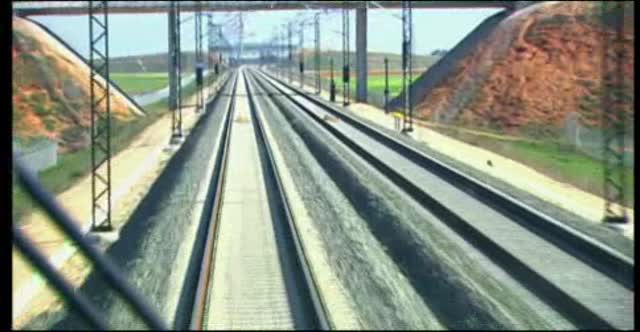
Con la aprobación del corredor ferroviario mediterráneo (el último tramo del trayecto Algeciras/Estocolmo), España y Europa se apuntan finalmente al nuevo mapamundi de los flujos comerciales.

¿Nuevo mapamundi? Nuevo de nueva planta, porque supone un radical revolcón al establecido desde 1492 con el descubrimiento de América. Vamos por partes.

Contra lo que muchos aún piensan, la decisión no versaba sobre el ferrocarril más que como consecuencia. Derivaba sobre todo de las rutas de transporte marítimo: las del Pacífico y el Mediterráneo han desbancado a las del Atlántico. Las del Pacífico alcanzaron en 2008, entre ida y vuelta, 20 millones de TEU (contenedores de 20 pies, la unidad de medida en ese negocio), por 18,4 millones las del Mediterráneo y 6,2 las del Atlántico (cifras de Drewry Shipping Consultants/Port de Barcelona).

Eso se debe a la emergencia del sudeste asiático y a la conversión de China en la fábrica del mundo, reivindicando un papel como el que tuvo antes del siglo XVI, cuando ayudó a prender el Renacimiento europeo (véase el texto medio histórico, medio de aventuras, de Gavin Menzies 1434: the year a magnificent fleet sailed to Italy, HarperCollins, 2008). El comercio marítimo supone un 90% del comercio internacional de mercancías (del cual, un 75% se realiza mediante contenedores, artilugios inventados en 1956), con un movimiento en 2008 de 500 millones de unidades, el doble que en 2000. Pues bien, China es ya la primera potencia. Representó en 2010 el 50,1% del total. De los nueve primeros puertos comerciales, seis son chinos y el resto, el coreano Busan, Singapur y Los Ángeles. Y el tráfico de los ocho sudasiáticos creció a un ritmo frenético, el 16,7% anual (datos de Alphaliner).

El grueso de ese tráfico desestiba en los puertos noreuropeos, Amberes, Hamburgo, y sobre todo Rotterdam, que es el líder local porque por él pasa un tercio de los fletes marítimos procedentes y con destino a la UE, a través de las barcazas del Mosa y el Rin y… de los ferrocarriles. Cuando la España oriental disponga de ellos -el famoso corredor mediterráneo-, los envíos sudasiáticos se ahorrarán respecto a Rotterdam entre tres y cuatro días. Y hasta un 47% del tiempo de cruzar el Pacífico y el Atlántico por Panamá, según el experto Santiago García-Milà.

1492 derrumbó el mundo mediterráneo (las repúblicas italianas, la confederación catalano-aragonesa) como centro gravitacional del comercio mundial. Lo hizo en favor del Atlántico (la España occidental, Portugal, la costa de Flandes), luego reafirmado por las revoluciones mercantil/industriales anglosajonas (Londres, los puertos hanseáticos). Ahora se operará un reequilibrio. Sin drama, porque entonces no solo hubo una radical desviación de comercio de materias primas y manufacturas, sino la aún más decisiva aparición del oro y la plata que encarnaron la primera globalización financiera, lo que densificó el cambio. No es hoy el caso.

La tendencia del reequilibrio será desde el Atlántico al Mediterráneo y desde el Norte hacia el Sur de Europa. Claro que el mercado doméstico español y la salida de sus productos al exterior son objetivos esenciales. Como lo será también la canalización del futuro comercio con el Magreb.

Pero en términos de geoestrategia económica no ocupan el primer pedestal en este asunto, sino el comercio mundial, donde ahora España se reabrirá una oportunidad de oro. Gracias a la intermodalidad barco-tren: porque se trataba de eso, y no de simples tendidos de vías férreas. El tramo interior (Algeciras-Madrid) del nuevo corredor litoral será de empaque relativo, porque el puerto andaluz es, al 99%, un puerto de transbordo (de parking, para entendernos) y carece de conectividad (hacia el hinterland).

La decisión propuesta por España y adoptada por Bruselas conlleva otras lecturas: es la primera apuesta de transporte no radial; es la ocasión para que el ferrocarril español de mercancías aumente desde su raquítico 4% sobre todos los medios de transporte, hacia el 18%-20% de la media europea; es la última barrena a la barrera de los Pirineos.

Y es, además, por fin, una decisión basada en la racionalidad económica, buscando la eficiencia. Porque concuerda con el nuevo mapa del comercio mundial; porque engarza el 55% de la producción industrial española con el 66% del PIB europeo; porque ya existe en parte, y en 2012 estarán tendidos 610 de sus 1.838 kilómetros, e invertidos 10.000 de los 51.300 millones previstos. Aplicando criterios de no-mercado, la era Aznar rechazó en 2003 los corredores a Europa a través de Cataluña y del País Vasco, comunidades, ay, sospechosas. Ahora, pasillos evidentes.

Enviar vídeo
//

© EDICIONES EL PAÍS S.L. – Miguel Yuste 40 – 28037 Madrid [España] – Tel. 91 337 8200

October 18, 2011

04 Mil millones de hambrientos no son noticia

Filed under: economía,future,módulo básico,política — fores @ 7:42 pm

Mil millones de hambrientos no son noticia

Por: Ramón Lobo | 17 de octubre de 2011


Ayer fue el Día Mundial del Hambre, que oficialmente se denomina Día Mundial de la Alimentación. Pese a la gravedad del problema apenas se encuentran noticias en los medios de comunicación internacionales. The New York Times publicó este fin de semana un artículo de Holly Epstein Ojalvo junto a un dibujo demoledor de Matt Rota y The Independent títula: “Viven en un mundo de abundancia pero uno de cada siete se irá esta noche a la cama con hambre“. En Twitter (#WorldFoodDay) solo fluyen mensajes de ONG, organizaciones humanitarias y algunos blogs.


Los datos de 2011, que ofrece la FAO, no son trending topic: cerca de mil millones de personas pasan hambre cada día. El aumento de los precios de los alimentos, debido a la crisis económica y a la especulación, condena a millones a la pobreza extrema. UNICEF recuerda que 22.000 personas mueren diariamente de hambre o de enfermedades relacionadas con él. En cuatro días los muertos podrían llenar un estadio de fútbol. En 10 días habrán muerto casi tantos como en el tsunami de 2004.

Pese a la magnitud de la catástrofe son invisibles. Médicos Sin Fronteras ha lanzado una campaña de firmas bajo un título contundente: “Hambrientos de atención“.

Captura de pantalla 2011-10-16 a la(s) 16.56.48

La ONU asegura que en los países donde el hambre es mayor, peor resulta el trato a la mujer. En el blog La pobreza importa, del diario The Guardian, se informa de los efectos en la población: descontento y estrés. Según Oxfam, los precios alimentarios se duplicarán en 2030. Un tercio de los alimentos que se producen cada año en el planeta acaban en la basura, cerca de 1.300 millones de toneladas. En el mundo desarrollado se desperdicia el 40% de la comida después de la cosecha, es decir, en nuestras neveras.

Captura de pantalla 2011-10-17 a la(s) 05.21.15


04 Cada cinco horas muere un niño en EEUU por malos tratos

Filed under: archivo personal,future,módulo básico,política — fores @ 7:16 pm

Cada cinco horas muere un niño en EEUU por malos tratos

Por: Ramón Lobo | 18 de octubre de 2011

Cada cinco horas muere un niño en Estados Unidos debido a malos tratos o negligencia. No son cifras del Tercer Mundo, tampoco de África, los grandes olvidados; son estadísticas de la principal superpotencia mundial, según denuncia un reportaje de investigación de BBC. Los datos gubernamentales sobre malos tratos infantiles reconocían 1.700 muertos en 2009: el reportaje cita un informe del Congreso que indica que el número real alcanza 2.500.

Presentado de forma original y práctica en la web, el reportaje ofrece más sorpresas: sesenta y seis niños menores de 15 años sufren abuso psicológico cada semana en el mundo industrializado. Veintisiete de esos niños maltratados mueren en EEUU, el número más elevado comparado con otros países. Un informe de Unicef de 2001 emparejaba a EEUU con México en el maltrato infantil. La situación apenas ha mejorado. Dentro de Estados Unidos, el peor es Texas, el que realiza más ejecuciones.

Captura de pantalla 2011-10-17 a la(s) 21.34.27

Captura de pantalla 2011-10-18 a la(s) 05.15.58
Más información y estadísticas en Child Help, la hemeroteca del diario The New York Times y en Unicef.

October 12, 2011

04 ‘Austin Powers’ actor allegedly kills sex offender in prison

Filed under: archivo personal,future,Holístico,módulo básico — fores @ 12:56 pm

L.A. NOW

Southern California — this just in

« Previous Post | L.A. NOW Home | Next Post »

‘Austin Powers’ actor allegedly kills sex offender in prison

October 11, 2011 |  2:29 pm

Joseph Hyungmin Son

An “Austin Powers” actor convicted of torturing a woman in Orange County is suspected of killing his cellmate in a Central Valley prison, authorities said Tuesday.

Joseph Hyungmin Son, 40, allegedly killed his 50-year-old cellmate, who was found dead Monday afternoon at Wasco State Prison Reception Center in Kern County.

The cellmate was a parole violator who had been sentenced to two years in prison for failing  to register as a sex offender, according to a prison report. A cause of death was pending.

Prison officials have named Son as the suspect, but officials said charges against him will await the completion of the investigation.

Son, who played henchman Random Task in “Austin Powers: International Man of Mystery,” was also briefly a mixed martial arts fighter who used the name Joe Son.


He had arrived at the prison reception center Sept. 16 after having been convicted of torture and sentenced to life in prison without parole in connection with the 1990 Christmas Eve rape of a woman out walking her dog.

Prosecutors in the torture case said the woman was walking back to her apartment alone with her dog after going to look at Christmas lights with a relative and friend and was stopped by Son about 12:30 a.m. on Christmas Eve 1990.

Son asked her for directions and then, with another man, dragged her to a car, threw her in the back and drove away.

Son and the other man told her they were driving to Compton, pistol-whipped her and repeatedly threatened to kill her.

Son’s cohort, Santiago Lopez Gaitan, 40, of San Antonio, raped the woman, prosecutors said.

Afterward, Son threatened to kill the victim and counted the bullets in the gun out loud as she pleaded for her life.

Son and Gaitan finally allowed the woman, identified only as Jane Doe, to leave, naked and with her pants tied around her eyes. The woman went to a nearby Huntington Beach home, where the residents called police.

While physical evidence was gathered in the case from the sexual assault, the case went cold. Son, however, was convicted in May 2008 of felony vandalism in an unrelated case and was forced to give a DNA sample.

That sample was then linked to DNA collected in the 1990 case, prosecutors said.

Gaitan pleaded guilty in January to kidnapping, sodomy, rape, forcible oral copulation and forcible rape with a sentencing enhancement for committing rape while armed with a firearm. He was sentenced to 17 years and four months in state prison.

— Sam Quinones
twitter.com/samquinones7

Photos: (left) Joseph Hyungmin Son. Credit: Orange County Sheriff’s Department

(right) Son as henchman Random Task in “Austin Powers: International Man of Mystery.” Credit: New Line Cinema

04 Occupying Wall Street

Filed under: archivo personal,economía,future,módulo básico — fores @ 9:55 am
SPIEGEL ONLINE


SPIEGEL ONLINE


10/11/2011 04:55 PM

Occupying Wall Street

The Start of a New American Movement

By Ullrich Fichtner


Zoom
AFP Protesters march in New York on Oct. 5, protesting bank bailouts and high unemployment.

Protesters march in New York on Oct. 5, protesting bank bailouts and high unemployment.

For weeks, the Occupy Wall Street movement has protested the greed of bankers and the growing disparity of wealth. In the past criticizing the capitalist system may have been viewed as un-American, but chronic social problems and deep-rooted frustrations may be changing this.

Last week, crowds of 300 to 400 protesters gathered to camp out in New York City’s Zuccotti Park, between Wall Street and Ground Zero. Even at night they were surrounded by police and TV broadcast vans. During the day, they played drums and tweeted. Mobile offices sprang up, laptops glowing from atop boxes and folding tables. Mobile kitchens arrived to feed the tired activists, who organized discussion sessions and took part in Tibetan meditation. Demonstrators wore amusing masks and carried signs bearing pointed messages: “Jail time for financial criminals,” “Nationalize banks now,” “The American Dream is dead” and “The Wall must fall.” Something is happening on the southern tip of Manhattan.

Protesters have been meeting since September 17 on the canyon-like streets of the financial district, darkened by skyscrapers even during the day. They are students and bankrupt homeowners, small business owners and union members, along with a few colorful urban characters and nutcases. At first, only a few people heeded the call from various websites, foremost among them adbusters.org. Then the group made a splash with its occupation of the Brooklyn Bridge, and last week a steady flow of people came to join the group in Zuccotti Park.

Their slogan is “Occupy Wall Street” and the movement is varied but vocal. It’s directed at the greed of the financial markets, at the power of the banks and at the “fat cats” in the boardrooms who line their pockets while the majority of Americans grow measurably poorer.

Less than three blocks away from the stock market and the headquarters of banks that drive global commerce, these are poisonous messages, and unusual for the United States. Here, unlike in Europe, fundamental criticism of the system remains rare. Those who do raise critical voices have long been dismissed as naïve or even “un-American,” but this mindset could be changing.

Living in Fear

In these times of chronic crisis, and after the intense experiences of the Arab Spring, it remains uncertain whether scenes like this represent part of a short comedy or a long drama, a snippet from a familiar old film or perhaps the start of an American revolution.

After the right-wing Tea Party movement has long since forgotten its initial rage against America’s bankers, and is now battling only the chimeras of a supposed socialist threat, it seems a left-wing populist movement is forming.

“Turn Wall Street into Tahrir Square” read one sign last Thursday, and the slogan was only half joking. This small band of activists in New York could now call itself the vanguard of a mass of discontented Americans, people who have been growing angrier since, at the latest, the 2008 financial crash and the billions of dollars in bailouts given to banks and insurance companies.

Many Americans have come to suspect politics in Washington of complicity with the markets, a problem Barack Obama’s arrival in the White House failed to fix. The president even expressed sympathy with the protests on Thursday, describing the people as “frustrated.” The president’s public mention of the small, new movement is their biggest success yet.

But the country’s chronic social problems have grown even worse during Obama’s term. Left-wing magazine The Nation sums up the facts and figures in its current issue: The average American salary in some areas has dropped considerably in the last 40 years; more than 46 million citizens are officially categorized as poor, the highest figure since data collection began 52 years ago; one in four homeowners can no longer pay off loans; the cost of health care has risen drastically, a problem only exacerbated by the fact that 50 million Americans are still without health care; and half of all Americans don’t have any kind of pension plan. On top of that, there are still 25 million unemployed — in a country that lives in fear of entering a new recession with each new month.

Targeting Capitalism

In their live television interviews the Wall Street occupiers often say that the moment has come for “the 99 percent to rise up against the 1 percent.”

“We are the 99 percent” is also the name of a blog on which thousands of Americans describe their desperate financial straits. “I couldn’t pay back my student loans,” it reads, “I’m not getting unemployment benefits anymore,” and “I have to choose between college and a knee operation.” The blog has contributed significantly to spreading the protest movement beyond New York, because its messages are ones easily understood all across a country in which the wealthiest 1 percent of the population controls 40 percent of available assets.

Such figures are no longer statistics bandied about only within left-wing circles. Even former Federal Reserve Chairman Alan Greenspan has said: “This is not the type of thing which a democratic society — a capitalist democratic society — can really accept without addressing.” Social inequality also informed last week’s cover story for Time Magazine, whose authors wrote that America had become a society “divided between rich and poor,” in which “the poor and working classes are squeezed.”

The idea of these weary working classes now rising up and taking down the entire system is the dream of many in Zuccotti Park. An informational board in the middle of the park announces that 291 cities so far have joined in the movement.

That may sound impressive, but in all likelihood most of these 291 cities have hardly noticed the demonstrations taking place. Still, pictures of protests emerged from many major North American cities last week, from Miami to Anchorage and from Los Angeles to Chicago.

One particularly striking feature of the outrage expressed by this new generation of demonstrators is their target. In the not too distant past, American protests were often directed at Washington, in the hope that the president and Congress would put demonstrators’ desires into practice. This time around, demonstrators gathered in front of the White House as well, but far more came together in Zuccotti Park in Manhattan, in the park in front of City Hall in Los Angeles, in the Rose Kennedy Greenway in Boston and in tents in front of the Federal Reserve Bank branch in Chicago.

At all of these sites, politicians are not the main target of the angry demonstrations. Far more, in the shadow of skyscrapers all across the country, the target is capitalism itself.


© SPIEGEL ONLINE 2011
All Rights Reserved
Reproduction only allowed with the permission of SPIEGELnet GmbH

« Previous Page — Next Page »

WPMU Theme pack by WPMU-DEV.