Forés @ UVPress


         Universitat de València PRESS -UVPress- weblog for research uses

October 11, 2011

04 #OWS Stands In Solidarity With 100 Arrested At Occupy Boston

Filed under: archivo personal,economía,future,módulo básico — fores @ 7:00 pm

OccupyWallStreet

The resistance continues at Liberty Square and worldwide!

#OWS Stands In Solidarity With 100 Arrested At Occupy Boston

Posted Oct. 11, 2011, 11:52 a.m. EST by

Occupy Wall Street would like to express our support and solidarity with both the people of Boston and the 100+ arrested at Occupy Boston last night. We commend them for their bravery in standing their ground at great personal cost to assert the right of the people to peaceful assembly in public spaces.

http://occupyboston.com/2011/10/11/boston-police-brutally-assault-occupy-boston/

We condemn the Boston Police Department for their brutality in ordering their officers to descend upon the Occupy Boston tent city in the in full riot gear to assault, mass arrest, and destroy the possessions of these peaceful women and men. We condemn them for ordering this attack in the middle of the night. These people were not simply protesters holding a rally, it was their home, it was their community and it was violated in the worst possible way by the brutal actions of the BPD. Furthermore:

The Boston Police Department made no distinction between protesters, medics, or legal observers, arresting legal observer Urszula Masny-Latos, who serves as the Executive Director for the National Lawyers Guild, as well as four medics attempting to care for the injured. [emphasis mine]

These actions go beyond unconscionable, they’re unthinkable. If this was war, the BPD could be guilty of war crimes:

Chapter IV, Article 25 of the Geneva Convention states that “Members of the armed forces specially trained for employment, should the need arise, as hospital orderlies, nurses or auxiliary stretcher-bearers, in the search for or the collection, transport or treatment of the wounded and sick shall likewise be respected and protected if they are carrying out these duties at the time when they come into contact with the enemy or fall into his hands.

Every day the actions of the BPD, NYPD, etc. continue to remind us that the police no longer fight to “protect and serve” the American people, but rather the wealth and power of the 1%. With each passing day, as the violence of the state continues to escalate, the myth of American “democracy” becomes further shattered.

THIS IS WHAT A POLICE STATE LOOKS LIKE

And we are what democracy looks like. We do not fear your power and we will continue to fight for a better world. We will never stop growing and each day we’ll continue to expand, block by block and city by city. We call upon others to join us, to take a stand against these ever encroaching threats to our liberty. We commend the brave actions of our sisters and brothers in Boston and condemn the BPD leadership. We call upon the rank-and-file police officers of this country to disobey such orders and continue to protect and serve the people. You are one of us, the 99% and we’re too big to fail.

Sign Language

Posted Oct. 9, 2011, 10:38 p.m. EST by

473 Comments


Published: Monday, 10 Oct 2011 | 4:46 PM ET
Text Size
By: CNBC and Wire Services
  • Twitter
    139
    LinkedIn
    Share

This is a live blog of CNBC’s “Speaker’s Corner” hosted in New York City where the group, Occupy Wall Street has set up camp.

Photo: Jeff Cox for CNBC.com

On September 17, 2011 a loosely organized group calling themselves Occupy Wall Street gathered in NYC to protest corporate greed, social inequality and other divisions between the rich and the poor.

On the group’s Web site, Occupywallstreet, they describe themselves as a “leaderless resistance movement with people of many colors, genders and political persuasions.

The movement has spread from a few dozens to hundreds and has spread from New York to many cities including, Los Angeles, Tampa and Portland, Oregon.

There are many questions about the group and about the group’s goals. It is our goal here at CNBC to give them a chance to share their voices and for those who want to learn more about the group, to hear what they have to say and what they’re hoping to do in this live blog.

This post will be updated frequently so please refresh and check-in regularly. All times are Eastern. The most recent post is here at the top.

October 9, 2011

04 A Tribute to a Great Artist: Steve Jobs

Filed under: archivo personal,future,Holístico,módulo básico — fores @ 9:56 pm

A Tribute to a Great Artist: Steve Jobs

Through mastering calligraphy in college, Jobs learned to think like an artist

  • By Henry Adams
  • Smithsonian.com, October 06, 2011, Subscribe


Steve Jobs, who died October 5 after resigning in August as CEO of Apple, the company he co-founded, had many talents. But what set him apart from other computer wizards was his artistic sense. He continually used the word “taste” in explaining what was ready to be manufactured at Apple, and what wasn’t ready yet—what he had to reject. The Apple computer, the iPhone, the iPad and the iPod are all strikingly beautiful objects; the clarity of their visual design matches the way they function. It’s clear that Steve Jobs was an artist and that his artistry worked at many levels: it was a visual sensitivity that extended outward to a way of thinking about how things worked and how different variables could interact with each other in a pleasing harmony. Where did this ability come from?

Jobs gave some credit for his success to a seemingly unlikely source—a course on calligraphy that he took as an undergraduate at Reed College, a course established by a maverick professor named Lloyd Reynolds and continued by Father Robert Palladino. In fact, Jobs was not the only “genius” to benefit from Reynolds’ teaching. Other notable students have included the poet Gary Snyder, the poet and Zen master Philip Whalen and the entrepreneur Peter Norton of Norton Utilities, who became a major patron of contemporary art.

Reynolds began teaching calligraphy at Reed College in 1938 as a no-credit course (it became full-credit in 1948) on the third floor of a building that had just been vacated by the chemistry department. Reynolds’ art credentials were almost nonexistent; he had actually gone to Reed to teach in the English department. His interest in calligraphy went back to 1924, when he had worked briefly for a greeting card and sign company, and largely through self-teaching he had become one of the masters of the art. Reynolds’ calligraphy class eluded simple description. It focused on mastering a hand skill—writing letters—and for that reason was always viewed with suspicion by the rest of the college faculty, since it seemed to them more like calisthenics or lessons in ballroom dancing than a college-level course that involved thinking. But for Reynolds, the skill of writing letters was all-embracing and mystical, and it took thought. To do it properly required a total understanding of the art and culture that gave rise to particular modes of writing. As one of his students, the type-designer Chuck Bigelow, has explained, in summarizing Reynolds’ teachings:

“When you write in an italic hand, you are making the same kinds of motions that Queen Elizabeth I made when she practiced Chancery Cursive as a teenager; the same motions as Poggio Bracciolini, a fifteenth-century chancellor of Florence; the same motions as Michelangelo. And if you write in a Carolingian hand, you are making the same moves as the notable scribes that Charlemagne assembled in his court in the late eighth century: Alcuin of York, Peter of Pisa, Theodulf the Visigoth, Paul the deacon, and Dungal the Irishman.”

Consequently, as Todd Schwartz has commented, in an excellent article about Reynolds in the Reed Alumni Magazine: “Reynolds’s classes were never simply about the thing—they were about everything.” Reynolds’ three greatest enthusiasms were the “Three Bills”: William Blake, the poet and painter of mystical visions; William Morris, the master of Arts and Crafts; and William Shakespeare. But his enthusiasm for “The Big Three” was mixed in with religious interests—he was fascinated by Zen Buddhism—and also tied into leftist politics of some sort: he was once called up in front of the Committee for the Investigation of Un-American Activities.

Learning to write well, for Reynolds, was a key to achieving a mystical, spiritual harmony with the universe as well as to attaining such social goals as ending poverty and racism and achieving world peace. As the graphic designer Michael McPherson, who studied with him, recalls: “He’d jump from Michelangelo to William Blake to Zen Buddhism effortlessly, and it all made sense.” In essence, Reynolds was encouraging his students to think about what’s good and significant and why, in a way that cut across the traditional boundaries between academic fields: to learn to exercise good taste. It was a mode of thinking that would profoundly influence Jobs, who provided us with an interesting definition of taste: “Taste is trying to expose yourself to the best things humans have done and then trying to bring those things into what you are doing.”

But Reynolds’ very successes—huge student attendance, teaching and art awards, even a television show—also attracted enemies, who viewed all this hoopla as proof that what he was doing wasn’t academically rigorous. Each year he had to do battle for the survival of his class against an ever-growing coalition of enemies. Reynolds bowed out when his wife became terminally ill. To continue his legacy he chose a singularly spiritual figure, a former Trappist monk and monastery scribe, Father Robert Palladino, under whose benevolent care calligraphy remained the most popular elective offering at Reed. But Palladino, who had spent much of his life under a vow of silence, had no grasp of how to handle faculty politics and faculty arguments. In 1984, six years after Reynolds’ death, the art department pulled the plug on the calligraphy class, ostensibly because it didn’t fit with the new mission of focusing entirely on “modern art.”

Though seemingly irrational, this pattern of faculty politics is familiar to anyone who has worked in a university. It comes from a love of following the regulations, and inventing new regulations if old ones aren’t already in place, to make teaching tidy, measurable and predictable. The philosopher Plato, who viewed artists as dangerous renegades, wanted to banish them from his ideal Republic, and real artists seem to always exist with the threat of banishment hovering over them—or worse. When the course on calligraphy was eliminated, Reed College was diminished. “There was never another course quite like that,” one of Reynolds’ former students, Georgianna Greenwood, has commented.

Jobs and Calligraphy

Jobs entered Reed in 1972 and dropped out after six months. But he continued to audit classes for another year, while sleeping on the floor of friends’ rooms, collecting Coke bottles for survival money and getting free meals at the local Hare Krishna temple. The most inspiring classes were calligraphy. As Jobs recalled in his 2005 Stanford commencement address:

“Reed College at that time offered perhaps the best calligraphy instruction in the country. … I learned about serif and san serif typefaces, about varying the amount of space between different letter combinations, about what makes great typography great. It was beautiful, historical, artistically subtle in a way that science can’t capture, and I found it fascinating.”

“None of this had even a hope of any practical application in my life. But ten years later, when we were designing the first Macintosh computer, it all came back to me. And we designed it all into the Mac. It was the first computer with beautiful typography.”

From this statement, it’s clear that the stylish graphics we now take for granted on computers might never have taken hold without the calligraphy class. Indeed, Jobs made comments about this many times. For some reason, it’s a thing in which he took particular pride. But I’d like to propose that what Jobs learned from studying calligraphy went deeper than nice typography.

Typography is a peculiar art, which operates with unusually tight restraints, but is also amazingly free. The basic forms of the letters have stayed pretty much the same for centuries, and the order in which they go is generally fixed by the text. But within those seemingly rigid parameters there’s room for seemingly endless variations of shape and spacing, of shifts from delicate to bold, and of many other things. Seemingly modest changes can completely change the overall effect for good or ill, and can make the letters trigger entirely different emotions. There’s even a bit of time travel involved, since different letter forms evoke different historical periods. Most of all a great piece of typography needs to work as an ensemble. One wrong mark can throw off the entire effect. And a little accent can sometimes lift something that’s harmonious but dull to the level of a masterpiece.

Visual thinking has properties that are a little different from thinking in language. One of its most attractive qualities is that it encourages us to move out of a strictly linear sequence and to take in many variables at once, including variables that are mobile and that exist in shifting configurations. By developing mastery of typography, Jobs developed mastery of design: the ability to think about how hundreds of different variables can coalesce to create a harmonious effect that seems “perfect.” This is the skill that he practiced at Apple, transposing it from the realm of letter forms to that of product design. Jobs explained in an interview with Businessweek in 2004: “Lots of companies have tons of great engineers and smart people. But ultimately, there needs to be some gravitational force that pulls it all together. Otherwise you can get great pieces of technology all floating around the universe.”

What pulls it all together, of course, is art. As the great architect Alvar Aalto once stated: “Nearly every design task involves tens, often hundreds, sometimes thousands of different contradictory elements, which are forced into a functional harmony only by man’s will. This harmony cannot be achieved by any other means than those of art.”

Significantly, Jobs always thought of himself not as a manager but as a leader—an artistic visionary. After the fashion of a great artist, Jobs ultimately based his decisions not on the recommendations of committees or focus groups but on his own intuition—often on factors not easily expressed or analyzed in words. Perhaps most important, at some level, his mastery of visual skills was transposed to another level as well. Visual harmony became a sort of metaphor for what happens when everything works well together: when at a glance we can instantly understand a large field of variables, and see that everything coordinates with everything else and they all work together with a unified purpose.

In short, through mastering calligraphy, Jobs learned to think like an artist. It became the skill that separated him from other computer geniuses and business leaders. It enabled him to move out ahead of the pack, to build out of almost nothing one of the world’s largest corporations and to revolutionize modern life. We usually think of art as essentially a recreational activity: as something that stands apart from the serious business of life. But art does matter. When all is said and done, it’s the thing that makes it possible to have a world that holds together and is beautiful and makes sense.

Genius can never be reduced to a single trick. But let’s take note of the fact that one of the keys to Jobs’ success, to all that he achieved, is that, years ago, at the outset of his amazing career, he took a controversial and inspiring art class.

(Editor’s Note, October 7, 2011: We have changed this article from its original version to clarify two errors in the description of Reynolds’ and Palladino’s careers at Reed College.)

Find this article at:
http://www.smithsonianmag.com/arts-culture/A-Tribute-to-a-Great-Artist–Steve-Jobs.html?c=y&page=1
© Smithsonian Institution

October 6, 2011

04 Entrepreneurs, innovation and growth

Filed under: economía,future,módulo básico,recomendaciones — fores @ 7:32 pm

http://www2.lse.ac.uk/newsAndMedia/videoAndAudio/channels/publicLecturesAndEvents/player.aspx?id=1157


Entrepreneurs, innovation and growth


Download: Audio, Video

Speaker(s): Luke Johnson
Chair: Dr Linda Hickman

Recorded on 3 October 2011 in Old Theatre, Old Building.

Luke Johnson will talk about how new firms and their founders create jobs and wealth, and what we can do to stimulate an enterprise economy.

This event marks the publication of Luke’s new book Start It Up.

Luke Johnson is the Chairman of Risk Capital Partners, a private equity firm he founded in 2001. For six years until 2010 he served as Chairman of Channel 4 Television, a major British broadcaster. He is Chairman/part owner of the restaurant business Giraffe with 40 branches, and Chairman/owner of Patisserie Valerie, Druckers and Baker & Spice, three chains of over 70 retail patisseries. He recently took control of Bread Ltd, Britain’s largest artisan baker, including the retail bakery Gail’s.

As Chairman and majority shareholder of Signature Restaurants he built up the Strada 75 branch restaurant chain and owned various classic London restaurants including The Ivy, Le Caprice and J Sheekey. Previously he was Chairman of PizzaExpress PLC. During his involvement the share price rose from 40p to over 800p. In the 1980s he worked as a stockbroking analyst for Kleinworts. He co-founded the largest UK chain of dental surgeries, Integrated Dental Holdings, which was sold for over £100m after ten years of ownership.

He wrote a business column in The Sunday Telegraph between 1998 and 2006, and now writes a weekly essay in The Financial Times. In 2009 he became the Chairman of The Royal Society of Arts. He graduated in medicine from Magdalen College, Oxford University.

Event posting

LSE YouTube channel

Event organiser

Books

04 Steve Jobs, requiescat in pace – for ever.

Filed under: archivo personal,Holístico,módulo básico,tecnología — fores @ 3:01 pm

Apple Press Info

Steve Jobs

Apple CEO

Steve Jobs is the Chairman of the Board of Apple, which he co-founded in 1976. Apple is leading the consumer technology world with its revolutionary iPhone and App Store, its family of iPod media players and iTunes media store, and its Mac computers and iLife and iWork application suites. Apple recently introduced iPad 2 which is defining the future of mobile media and computing devices.


Steve also co-founded and was the CEO of Pixar Animation Studios, which created some of the most successful and beloved animated films of all time including Toy Story, A Bug’s Life, Monsters, Inc., Finding Nemo, The Incredibles, Cars and Ratatouille. Pixar merged with The Walt Disney Company in 2006 and Steve now serves on Disney’s board of directors.

Steve grew up in the apricot orchards which later became known as Silicon Valley, and still lives there with his family.

October 4, 2011

04 A War on Voting

Filed under: economía,future,módulo básico,política — fores @ 8:23 pm
Democracy Now!


A daily TV/radio news program, hosted by Amy Goodman and Juan Gonzalez, airing on over 900 stations, pioneering the largest community media collaboration in the United States.

October 04, 2011

A War on Voting: Could Redistricting and Voting Law Changes Help Republicans Win in 2012?

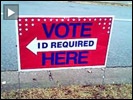
Voter_id_web

A new report by the Brennan Center for Justice warns changes to voting laws could strip the voting rights of more than 5 million people — a higher number than the margin of victory in two of the last three presidential elections. Its findings reveal some 3.2 million people in Kansas, South Carolina, Tennessee, Texas and Wisconsin do not have the state identification they will now need to vote. Others will be kept from the voting booth by tougher restrictions for convicted prisoners and laws requiring proof of U.S. citizenship. In 2012, states that have cracked down on voting rights will account for 63 percent of the 270 Electoral College votes needed for a presidential victory. We speak with Ari Berman, author of the new article in Rolling Stone magazine, “The GOP War on Voting,” and with ProPublica reporter Lois Beckett, who co-wrote, “The Hidden Hands in Redistricting: Corporations and Other Powerful Interests,” about how money is helping re-shape Congressional districts along partisan lines, a practice known as gerrymandering. [Includes rush transcript]


<script type=”text/javascript” src=”http://www.democracynow.org/embed_show_v1/300/2011/10/4″></script>
Ari Berman, contributing writer for The Nation magazine and author of the book, “Herding Donkeys: The Fight to Rebuild the Democratic Party and Reshape American Politics.” His latest article for Rolling Stone magazine is called, “The GOP War on Voting.”
Lois Beckett, reporter for ProPublica. She co-wrote, “The Hidden Hands in Redistricting: Corporations and Other Powerful Interests.”
Related stories

Rush Transcript

This transcript is available free of charge. However, donations help us provide closed captioning for the deaf and hard of hearing on our TV broadcast. Thank you for your generous contribution.
Donate


Related Links

AMY GOODMAN: With election season on the horizon, a new report is warning the disenfranchisement of voters threatens to play a decisive role in next year’s vote. According to the Brennan Center for Justice, a nonpartisan public policy institute, changes to voting laws could strip the voting rights of more than 5 million people, a higher number than the margin of victory in two of the last three presidential elections. Its findings show some 3.2 million people in Kansas, South Carolina, Tennessee, Texas and Wisconsin do not have the state identification they’ll now need to vote. Others will be kept from the voting booth by tougher restrictions for convicted prisoners and laws requiring proof of U.S. citizenship. The Brennan Center predicts the new curbs will have a major impact on those inclined to vote for Democratic candidates, saying, quote, “These new restrictions fall most heavily on young, minority and low income voters, as well as on voters with disabilities.” In 2012, states that have cracked down on voting rights will account for 63% of 270 electoral college votes needed for a presidential victory.

For more, I’m joined now by two journalists who have been closely following issues of voting rights in the United States ahead of the 2012 elections. We’re joined to by Ari Berman who wrote about the Republican backed laws that stand to disenfranchise voters in a recent piece for Rolling Stone Magazine called, “The GOP War on Voting.” He is the contributing editor also for The Nation Magazine and author of, “Herding Donkeys: The Fight to Rebuild the Democratic Party and Reshape American Politics.” We’re also joined by Lois Beckett, a reporter for ProPublica, her most recent piece, “The Hidden Hands of Redistricting: Corporations and Other Powerful Interests,” which she co-wrote. The article investigates how money is helping reshape congressional districts along partisan lines, a practice known as gerrymandering. Ari Berman, lay out your piece and what you found.

ARI BERMAN: Sure Amy. So, since the 2010 election, 34 states introduced legislation and 12 states passed legislation—-implemented legislation—-that’s basically designed to impede voters at every step of the electoral process, pushed overwhelmingly by Republicans. So, what we’re seeing across the country, it’s now harder to register to vote. You have states like Alabama, Tennessee and Kansas requiring proof of citizenship.

It’s harder for outside groups to register groups to register new voters in states like Texas and Florida. Groups like the League of Women Voters have had to suspend their voter registration drives. Maine repealed, for example, same-day election day voter registration. Then we’re seeing a scaling back of early voting. So, states like Florida and Ohio, critical battleground states, have shrunk their early voting periods and actually eliminated voting on Sunday before the election went black churches historically mobilize their constituents. Then we have six states requiring government or state issued photo IDs. What people don’t realize about these photo IDs, is that 10% of American citizens do not have them, including 18% of young people and 25% of African-Americans. It’s a very high percentage. Finally, two states, Iowa and Florida, are disenfranchising ex-felons who have served their time and would have been able to vote previously. Those four steps are really the pillars of what I termed, The GOP War on Voting.

AMY GOODMAN: Who is behind all of this, Ari Berman?

ARI BERMAN: Sure, well, a few different people. Number one, Republican officials all across the country are behind it. And then you have certain corporate groups that have been pushing it. One of the main players in the photo ID component has been the American Legislative Exchange Council, otherwise known as ALEC, who, as you know, is funded in part by the Koch brothers, the billionaire brothers from Kansas. And what ALEC did, was after the 2008 election, they drafted mock legislation for states to then pass, and what happened is, in five of these states that passed photo ID laws, the legislation was cosponsored by members of ALEC and in three states, Texas, Pennsylvania, and Wisconsin, the draft legislation that ALEC gave them was basically almost identical to the legislation introduced. We see ALEC playing a major role.

The founder ALEC, Paul Weyrich, back in 1980, told a group of Christian-right ministers, he said, “I don’t want everyone to vote.” He said, “Quite frankly, our leverage in the election goes up as the voting populace goes down.” And I believe those words is really the mantra for all this legislation we’ve seen introduced this year.

AMY GOODMAN: If you, Lois Beckett, could talk more about the corporate money behind what we’re seeing taking place.

LOIS BECKETT: I think it’s so interesting, when you talk to these redistricting groups, they’ll tell you that dollar for dollar, campaign contributions are not as effective as redistricting because redistricting shapes who can win an election in a state for 10 years, for a full decade. And so, what we’ve seen in states across the nation is companies like CSX Railways, like Honeywell, others like ExxonMobil in California, really paying to sort of non-nonprofit advocacy groups with innocent names like, Protect Your Vote, to shape elections in ways that are partisan and ways that are often often personal; paying for particular legislators that have supported them in the past, the least democratic process you can imagine.

AMY GOODMAN: Name some names of who is behind the money.

LOIS BECKETT: In Florida, what we found was a particular African-American congresswoman, Corinne Brown, ended up opposing two amendments that would make redistricting more fair in Florida, and she was backed by—-her two big donors were CSX Railways and Honeywell International, both donated to this Protect Your Vote campaign which said it was protecting minority rights, but was in fact just trying to protect Corinne Brown’s district.

AMY GOODMAN: Can you talk about the power of the Koch brothers and what you found and who exactly they are, their significance?

LOIS BECKETT: I think the real challenge is that, what we found is that redistricting groups aren’t required to disclose their donors by campaign laws, even though they’re so essential to the election process. And so that in most cases, we know there are these groups. We know that they’re having a big impact, but we don’t know for sure who their donors are. So, in Minnesota, for instance, the Republican redistricting strategy and their lawsuits are being financed by Minnesotans for a Fair Redistricting. As a redistricting group they don’t have to disclose who their donors are. We know that they share a lot of leadership with The Freedom Foundation and Minnesota. We know The Freedom Foundation and Minnesota has ties to the Koch brothers, but because they don’t have to disclose where they get their money from, we don’t know what they’re getting, we don’t know how much they’re getting, we don’t know who is giving to them. There’s no way for citizens to tell who is really influencing this.

AMY GOODMAN: Sometimes, though, as you you point out, you can look at addresses of where organizations are—-you know, when they have to show where they’re based.

LOIS BECKETT: And exactly that’s what we did in Minnesota is merely say that Annette Meeks, who’s associate with Minnesotans for a Fair Redistricting and her husband are both associated with The Freedom Foundation and Minnesota. The organizations are registered at the same address, but Annette Meeks merely said that there was no association, and said that they said they comply with all legal requirements in terms of disclosure. But, the legal requirements are very minimal. They don’t have to disclose almost anything.

AMY GOODMAN: Can you talk about the effects of the midterm elections and the shift to Republicans in Congress; how they have affected all of this?

LOIS BECKETT: I think one thing that is really interesting is that when we looked in Florida, what we saw that even the strongly Republican electorate, really, they believed in making voting more fair; the voters themselves. In Florida that strong Republican turnout, 63% pushed for a fair voting laws. So, I think what we have to remember is that people on the ground, whether they’re Democrats or Republicans, often want a fair redistricting, and it’s the people in the back rooms and it’s the corporations who have their own interests in mind and don’t have the interest of the voters, whether they’re Democrats or Republicans.

AMY GOODMAN: Ari, can you elaborate on that?

ARI BERMAN: Sure, well, Republicans in Florida definitely weren’t interested in making voting easier because Governor Rick Scott and the Republican Legislature down there—-they did three major things the are going to affect the 2012 election. Remember, this is Florida, the state that had the 2000 election fiasco. So number one, now it’s harder to register to vote in Florida, as I mentioned earlier. Groups like the League of Women voters, nonpartisan groups have had to shut down because of all these bureaucratic requirements and fines they’re going to face. Number two, early voting in Florida…

AMY GOODMAN: Fines they’re going to face?

ARI BERMAN: Up to $1000 fines, and, for a volunteer group that’s registering voters that’s just way too much for them to deal with. Number two, cutting back on early voting. As I said, it was two weeks, now it’s eight days, no voting on Sundays before the election when black voters have historically mobilized their constituents. Number three, ex-felons who were going to have the right to vote under previous Republican Governor Charlie Crist now do not have the right to vote under the current Republican governor. That’s 100,000 ex-felons, non-violent ex-felons, who serve their time and are now permanently disenfranchised from the electoral process. So, we’re facing a situation in Florida right now where, instead of one problem like we faced in 2000, we could be facing three different issues heading to the polls in that one state.

AMY GOODMAN: The Brennan Center says these laws could make it significantly harder for more than 5 million eligible voters to vote in 2012.

ARI BERMAN: It’s a staggering number and it’s the first time we actually have a number that can quantify just how big a deal that is. And you take the states, look at a state like Florida, you look at state like Ohio, you look at a state like Wisconsin, these are pivotal battle grounds, not only in the presidential level but on the state level. We’ve seen all these state level upheavals in places like Ohio, in places like Wisconsin, and the most disturbing thing to me, is that, basically what’s happening is Republicans are trying to shape and electorate in their own favor, and basically saying to people, even if you disagree with us, now you can’t exercise your democratic right to vote us out of office because you won’t have the right ID to vote. You won’t be allowed to register to vote. You won’t be able to exercise what should be, in my opinion, the most basic of democratic rights. And that’s a very chilling prospect, whether you’re a Democrat or a Republican.

AMY GOODMAN: Talk more about the Koch brothers.

ARI BERMAN: Sure, well, the Koch brothers, as you know, their money is all over the place here. It’s in redistricting, it’s in voting, it’s in a larger campaign, basically, to make Republicans the dominant party. And so, what we saw is the Koch Brothers bank-rolled so much of the victories of Republicans in the 2010 election. And now what’s happening is, now that the Republicans have power, they’re trying to keep it and they’re trying to keep it by, for example, writing congressional maps to their favor and writing election laws to their favor. These are two ways, two huge sleeper issues in which the Koch brothers and other aligned groups are, basically, undermining the very fabric of our democratic process.

AMY GOODMAN: Lois Beckett, explain exactly how this redistricting works in terms of rewriting the map. How do you even figure out what would be in your favor, or what wouldn’t be?

LOIS BECKETT: So what’s really interesting right now, is that there’s very sophisticated technology that allows you to look at maps down to the single census block and understand not only registered Democrats and Republicans, but also voting history for those individual people. So, it’s possible, with this technology, for you to draw very particular maps. And you have to understand with redistricting, there’s no fixed priority for how you draw the lines on the map. There are a lot of different conflicting parties who want to represent communities’ interest. You want districts to be, really compact and not spread out all over the map. Often, state legislatures, which have the power over this in 37 of the states, have a lot of discretion in how they draw the lines and do it very cynically just based on who they can elect and often on protecting incumbents. So, what we see is not only partisan politics, but really, people in power drawing lines that will keep them in power, drawing people out of in their districts, and drawing voters in that will vote for them.

AMY GOODMAN: Why is money so important here?

LOIS BECKETT: Money is important for two reasons: one, because this redistricting software is pretty expensive and hiring the people to do the research to find those perfect lines that work for you isn’t cheap; but, the second thing is that redistricting is often decided then through lawsuits after the maps are drawn. And it’s these lawsuits that happen in almost every state, that really cost a lot of money, and that’s what these corporate donors are often paying for.

AMY GOODMAN: “The Justice Department said late Friday that based on their preliminary investigation, a congressional redistricting map signed into law by Republican presidential candidate Rick Perry appears to have been “adopted, at least in part, for the purpose of diminishing the ability of citizens of the United States, on account of race, color, or membership in a language minority group, to elect their preferred candidates of choice to Congress.” That language is from a Talking Points Memo that came out a couple of weeks ago, Ari Berman.

ARI BERMAN: What happened in Texas is, the population growth was attributable to Hispanic growth, but Hispanics didn’t gain any congressional districts under the map. It was all going to go to white Anglo-Republicans, and the problem there is that The Justice Department has the authority under The Voting Rights Act to look at all of those states under the jurisdiction of The Voting Rights Act, which is basically every state in the south, through redistricting and through these new voting laws. So, they have the power whether to say that these maps and these voting laws are illegal or they violate The Voting Rights Act. Based on what they saw in Texas, they found at least for, I believe it’s the state House and also for Congress, that those maps violated The Voting Rights Act.

On the voting piece, a lot of groups are asking the Justice Department to look at all these different states and find whether they violate The Voting Rights Act. The Justice Department has already sent pointed letters to both Texas and South Carolina, asking about how these new voting laws will affect minority citizens. So, they are looking at this right now. It’s a good first step based on what we have seen in Texas, but groups are asking them to stay aggressive and use the enforcement power they have. They really are the last check, in some cases, on these states.

AMY GOODMAN: Could either of you comment on the changing caucuses and primaries of States, and does this play in at all?

ARI BERMAN: Lois?

LOIS BECKETT: I think the biggest change that we’re looking at in terms of redistricting, is that many states are pushing for fair and more transparent redistricting processes. California, for instance, now has an independent commission that’s going to be drawing the district lines . And what our investigation’s about, continuing this year, is looking to see how much making the commissions more independent really gets money out of politics. What we’ve seen initially in California, is that even when you make a commission independent, corporate money will go underground, again coming up as these advocacy groups with these innocent names, and will find new ways to push their money to influence this process.

AMY GOODMAN: Your next piece?

LOIS BECKETT: We’ll be looking at California in more depth.

AMY GOODMAN: Any last comments, Ari Berman?

ARI BERMAN: I just think in this discussion of voting, it shouldn’t be a left or right issue. It really should be a should be a core issue that both parties work to uphold. On redistricting, both parties are complicit. On the voting that I am talking about—-all these voting laws—-they are passed overwhelmingly by Republicans, and so I find it very disturbing that one party is going out of their way to make it so difficult for so many people, 5 million voters, to exercise, which I said, should be a basic constitutional right.

AMY GOODMAN: Well, I want to thank you for being with us, Lois Beckett is a reporter for ProPublica, and Ari Berman is contributing writer for The Nation magazine. His latest piece is in Rolling Stone magazine it’s called, “The GOP War on Voting: In a campaign supported by the Koch brothers, Republicans are working to prevent millions of Democrats from voting next year.” We’ll link to both at our website at democracynow.org. When we come back, a landmark settlement involving DEMOCRACY NOW! producers Nicole Salazar, Sharif Abdel Kouddous as well as me. We held a news conference yesterday down at the Occupy Wall Street encampment. We’ll play excerpts of that and then we’ll speak with Sharif Abdel Kouddous, who’s returning to Egypt today, about what’s happening in his country.


Creative Commons License The original content of this program is licensed under a Creative Commons Attribution-Noncommercial-No Derivative Works 3.0 United States License. Please attribute legal copies of this work to democracynow.org. Some of the work(s) that this program incorporates, however, may be separately licensed. For further information or additional permissions, contact us.

« Previous Page — Next Page »

WPMU Theme pack by WPMU-DEV.