Forés @ UVPress


         Universitat de València PRESS -UVPress- weblog for research uses

May 24, 2011

03 Dos muertos en Alemania por el brote de la bacteria intestinal ‘e.coli’

Filed under: future,interesting news,política — fores @ 3:31 pm

Sociedad / alerta sanitaria

Dos muertos en Alemania por el brote de la bacteria intestinal ‘e.coli’

También hay confirmados 140 casos y habría decenas más sospechosos de sufrir esta variante que sería resistente a los antibióticos

EUROPA PRESS / BERLÍN
Día 24/05/2011 – 14.57h

Un brote de la mortífera bacteria ‘escherichia coli’ se ha cobrado la vida en los últimos días de al menos dos personas en el norte de Alemania, donde también hay confirmados 140 casos y habría decenas más sospechosos, lo que ha hecho saltar todas las alarmas, ya que al parecer la variante sería resistente a los antibióticos.

Las autoridades alemanas han confirmado que una mujer de 83 años falleció el sábado en Diepholz, en Baja Sajonia, como consecuencia de la bacteria. La mujer había ingresado en el hospital el 15 de mayo debido a una diarrea sangrante. A ella se suma una joven que ha fallecido esta madrugada en Bremen, tras haber ingresado con los síntomas típicos de un contagio por ‘e.coli’, si bien aún no se conocen los resultados de los análisis que confirmen que efectivamente se trata de esta bacteria.

Las autoridades sanitarias tienen confirmados unos 140 casos de personas que habrían enfermado a consecuencia de la bacteria en las últimas semanas, entre ellos dos en Frankfurt que están conectados a máquinas de respiración asistida. En Hamburgo, segunda ciudad del país, hay unos 40 casos. Del total de casos, según datos del lunes por la noche, unos 40 se encontraban en estado grave. La ‘e.coli’ puede llevar a provocar fallos renales o anemia y sus síntomas incluyen retortijones y diarrea. Además, según las autoridades, se están realizando análisis a otras 160 personas que presentan síntomas con el fin de determinar si efectivamente han contraído la ‘e.coli’.

¿La causa del contagio?

Los medios apuntan a que el brote de la bacteria podría haberse propagado a través de verduras contaminadas y es inusual dado que está afectando predominantemente a adultos, mientras que normalmente la ‘e.coli’ suele afectar mayoritariamente a niños. No obstante, desde el Instituto Robert Koch (RKI) se ha subrayado que por el momento no está clara la causa del contagio y no hay pruebas que confirmen que las personas infectadas contrajeron la bacteria por el consumo de verduras fertilizadas con estiércol. En este sentido, un portavoz ha subrayado que podría haber otras vías de contagio como el agua.

03 Darmkeim Ehec Durchfall-Erreger breitet sich rasant aus

Filed under: future,Holístico,interesting news,política — fores @ 3:19 pm
  • Datum 24.5.2011 – 14:22 Uhr
  • Quelle ZEIT ONLINE, AFP, dpa

Darmkeim Ehec Durchfall-Erreger breitet sich rasant aus

In Norddeutschland haben sich die Ehec-Verdachtsfälle innerhalb eines Tages verdoppelt. Zwei infizierte Rentnerinnen starben, der Tod einer jungen Frau wird untersucht.

© Julian Stratenschulte/dpa

Ein Blick durchs Mikroskop: EHEC-Kolonien auf Nährboden

Ein Blick durchs Mikroskop: EHEC-Kolonien auf Nährboden

An dem gefährlichen Durchfallkeim Ehec sind offenbar bislang drei Menschen gestorben. Eines der Opfer, eine 83-jährige Frau aus Niedersachsen, sei seit Mitte Mai wegen eines blutigen Durchfalls stationär behandelt worden, teilte das Gesundheitsministerium in Hannover mit. Der Labornachweis habe eine Ehec-Infektion ergeben. In Bremen starb nach Angaben der Gesundheitsbehörde eine junge Frau, die blutigen Durchfall hatte – ein typisches Symptom nach einer solchen Infektion. Der Befund einer Laboruntersuchung stehe hier aber noch aus, hieß es.

Anzeige


Im Kreis Stormarn starb laut schleswig-holsteinischem Gesundheitsministerium am Sonntag eine mehr als 80 Jahre alte Frau, die mit Ehec infiziert war. Ob die Infektion die Todesursache gewesen sei, stehe aber noch nicht fest, erklärte das Ministerium. Die Frau lag demnach wegen einer Operation im Krankenhaus.

Von den Infektionen betroffen sind bisher vor allem Menschen in norddeutschen Bundesländern und in Hessen. Aber auch in Bayern sind nach Behördenangaben zwei Menschen mit dem Keim infiziert.

Bundesweit zählten die zuständigen Ämter bisher mehr als 400 Verdachts- und Krankheitsfälle. Allein in Schleswig-Holstein hatte sich die Zahl nach Angaben des Landesgesundheitsministeriums innerhalb eines Tages auf mehr als 200 verdoppelt. “Diese Entwicklung übersteigt jedes historische Maß”, sagte der Mikrobiologe Werner Solbach vom Universitätsklinikum Schleswig-Holstein.

Die durch den Darmkeim verursachte Krankheit verlaufe häufig schwer und sei von Nierenversagen begleitet, hieß es. Viele Patienten mussten auf Intensivstationen. Fachleute der Gesundheitsbehörden und Forscher suchen noch nach dem Auslöser für die Infektionskrankheit.

  • EHEC-Bakterien
  • Erkrankung
  • Ansteckung
  • Behandlung
  • Vorbeugung

Im menschlichen Darm wimmelt es von Mikroorganismen und Bakterien. Das ist nicht ungewöhnlich. Viele Keime unterstützen möglicherweise etwa die Verdauung von Nahrung oder auch die Abwehr von Krankheitserregern. Sehr häufig sind Escherichia coli im Darm zu finden.

Ehec-Bakterien (enterohämorrhagische Escherichia coli) hingegen bilden einen mitunter gefährlichen Stamm von E.coli. Sie können Giftstoffe, vor allem das Shigatoxin, produzieren. Nisten sich Ehec-Keime im Darm ein, etwa in der Schleimhaut, dringt das Gift in die Zellen der inneren Darmwand ein und zerstört Gefäße. In Deutschland sind derzeit 42 Stämme des Ehec-Erregers bekannt.

Der aktuelle Ehec-Ausbruch ist sehr ungewöhnlich. Normalerweise erkranken vor allem Kleinkinder im Alter von durchschnittlich 3 Jahren. Schwere Krankheitsverläufe sind sehr selten. Derzeit sind aber vor allem Erwachsene betroffen, darunter überwiegend Frauen. “Hinzu kommt der rasche Anstieg der Zahl der Erkrankten und die Schwere“, sagte der Hygieniker und Leiter des Referenzlabors für HUS, Helge Karch, ZEIT ONLINE. Das Ausmaß mache ihm Sorgen. Daher schließt er einen neuen Erregertyp nicht aus: “Die Krankheitsverläufe sind so aggressiv, dass der Erreger wohl einen besonderen Giftcocktail mitbringt.” (sst)

In Hamburg stieg die Zahl der bestätigten Fälle am Dienstag auf mindestens 67. Hessen meldet mindestens 26 Verdachts- und bestätigte Fälle. In Mecklenburg-Vorpommern werden derzeit mindestens vier Ehec-Patienten behandelt. In Niedersachsen und Bremen waren es bis Montagabend fast 70 bestätigte Fälle gewesen, in Hamburg 40. Auch in Mecklenburg-Vorpommern, Nordrhein-Westfalen, Berlin und im Saarland gibt es Erkrankte und Verdachtsfälle.

Nach Angaben der ärztlichen Leiterin des Hamburger Großlabors Medilys, Susanne Huggett, dauert es etwa 36 Stunden, bis ein eindeutiger Befund vorliegt. “Deshalb gibt es gegenwärtig viele Verdachtsfälle, aber noch kein verlässliches Bild der tatsächlichen Gesamtlage.” Untersuchungen von Proben hätten ergeben, dass es sich um einen teils antibiotikaresistenten Bakterienstamm handele. Solche Ehec-Stämme seien bislang unbekannt.

Mehr zum Thema
Schlagworte

Der Leiter des Hiygiene-Instituts des Universitätsklinikums in Münster, Helge Katch, vermutet, dass es sich um einen neuen Erregertyp handeln könnte. Im Gespräch mit ZEIT ONLINE sagte er, dass die Krankheitverläufe ungewohnt aggressiv seien. Zudem sei Antibiotika gegen Ehec-Bakterien ohnehin oft nicht ratsam. “Antibiotika helfen gegen Ehec-Bakterien wenig, wenn sich die Erreger in einer losen Schleimschicht im Darm eingenistet haben. Im Gegenteil kann die Gabe von Antibiotika mitunter die Giftstoffproduktion der Keime sogar erhöhen.”

Die Ehec-Erreger gehören zu den Escherichia coli-Bakterien. Sie leben vor allem im Darm von Wiederkäuern und können über unerhitzte Lebensmittel übertragen werden. Auch eine Weitergabe über Menschen bei mangelnder Hygiene ist möglich.

Bislang vermuten Experten des Robert-Koch-Institutes, dass der Erreger vorwiegend durch ungewaschenes Gemüse übertragen wird. Durch die Angaben der Betroffenen schließen das Hamburger Institut für Hygiene und Umwelt Produkte wie Rohmilch, Frischkäse und Rindfleisch aus. Der Erreger könnte auch durch das Düngen von Obst und Gemüse mit Gülle in den Nahrungskreislauf gelangt sein.

Infiziert oder erkrankt sind überwiegend erwachsene Frauen. “Das legt nahe, dass vor allem Frauen Zugang zur Infektionsquelle haben”, sagte der Präsident des niedersächsischen Landesgesundheitsamtes, Matthias Pulz. Laut Koch-Institut ist die Infektionsquelle möglicherweise noch aktiv.

Lesen Sie hier mehr aus dem Ressort Gesundheit.


Durchfallerkrankungen Gefährliches Darmbakterium aggressiver als sonst

Datum 23.5.2011 – 15:28 Uhr

Dutzende Menschen in Deutschland sind mit dem Darmkeim Ehec infiziert. Der Erreger löst ungewohnt starke Durchfallerkrankungen aus. Viele Betroffene mussten in Kliniken.

Der Darmkeim Ehec (Enterohämorrhagische Escherichia coli) hat binnen Tagen in mehreren Bundesländern Menschen infiziert. Der Erreger breitet sich rasch aus und ruft in manchen Fällen außergewöhnlich schwere Erkrankungen mit Nierenleiden hervor, so dass viele Patienten intensivmedizinisch betreut werden müssen.

Darmerkrankungen “Einen so schweren Ehec-Ausbruch hat es noch nicht gegeben”

In Deutschland grassiert eine mitunter lebensgefährliche Darmerkrankung. Das Team des Hygienikers Helge Karch versucht derzeit, den Erreger zu identifizieren.

© Christian Charisius/dpa

Eine Mitarbeiterin des Hamburger Instituts für Hygiene und Umwelt verschließt Petrischalen mit einem speziellen Nährboden auf dem EHEC-Bakterienstämme zu sehen sind.

Eine Mitarbeiterin des Hamburger Instituts für Hygiene und Umwelt verschließt Petrischalen mit einem speziellen Nährboden auf dem EHEC-Bakterienstämme zu sehen sind.

ZEIT ONLINE: Herr Karch, seit vergangenem Freitag mehren sich rasant Meldungen über Menschen, die sich mit dem Darmbakterium Enterohämorrhagische Escherichia coli (Ehec) infiziert haben. Zudem nehmen die Erkrankungen einen besonders schweren Verlauf, derzeit leiden mehr als 40 Personen am hämolytisch-urämischen Syndrom (HUS), das zu Blutarmut und Nierenversagen führt und in Einzelfällen sogar tödlich enden kann. Wie schätzen Sie die Lage ein?

Helge Karch: Ich erforsche das Krankheitsbild seit fast 30 Jahren, aber so etwas habe ich noch nie erlebt. Normalerweise sind solch schwere Verläufe extrem selten. Das Ausmaß hat mich schon erschüttert.

ZEIT ONLINE: Was ist an diesem Ehec-Ausbruch so besonders? In den vergangen Jahren sind immer wieder Menschen nach einer Infektion an dem Erreger erkrankt, jährlich schwanken die gemeldeten Fälle zwischen 900 und 1200.

Helge Karch

Helge Karch

© privat

Der Mikrobiologe und Hygieniker Helge Karch leitet das Institut für Hygiene am Universitätsklinikum in Münster. Das Institut ist zugleich Konsiliarlabor für das Hämolytisch-urämische Syndrom (HUS). Hier werden die Erreger des EHEC-Ausbruchs derzeit analysiert und identifiziert. Karch forscht seit rund 30 Jahren an EHEC-Bakterien und hat zusammen mit Kollegen einige Stämme des Erregers als erster beschrieben.

Karch: In Deutschland hatten wir bisher zahlreiche Ausbrüche vor allem bei Kindern mit einem Durchschnittsalter von etwa drei Jahren. Nun sind vor allem Erwachsene erkrankt, darunter überwiegend Frauen. Das allein ist schon sehr ungewöhnlich. Hinzu kommt der rasche Anstieg der Zahl der Erkrankten und die Schwere. Bereits bei mehreren Patienten kam es zu blutigen Entzündungen, und es mussten Teile des Dickdarms entfernt werden. Die Menschen, die derzeit akut erkrankt sind, werden mit Dialyse und Blutreinigung behandelt. Folgeschäden der Nieren und Bluthochdruck durch zum Teil zerstörte Gefäße sind wahrscheinlich.

ZEIT ONLINE: Wie löst der Keim derartige Erkrankungen aus?

Karch: Das Besondere an Ehec-Erregern ist, dass sie Giftstoffe produzieren, die die innere Wand von Gefäßzellen angreifen. Diese Shigatoxine allein können einen derart schweren Ausbruch jedoch nicht verursachen. Bislang kennen wir in Deutschland 42 Stämme. Ich vermute, dass wir es mit einem neuen Typ Ehec-Bakterien zu tun haben. Die aktuellen Krankheitsverläufe sind so aggressiv, mit zerstörten Darmschleimhäuten und Blutgerinnseln in Nieren- und Hirngefäßen, dass der Erreger wohl einen besonderen Giftcocktail mitbringt. Antibiotika helfen gegen Ehec-Bakterien wenig, wenn sich die Erreger in einer losen Schleimschicht im Darm eingenistet haben. Im Gegenteil kann die Gabe von Antibiotika mitunter die Toxinproduktion sogar erhöhen.

Nach der Zunahme von Ehec-Erkrankungen mahnt das Robert-Koch-Institut zu verstärkter Vorsicht beim Umgang mit Lebensmitteln. [Video kommentieren]

ZEIT ONLINE: Woran merke ich, ob ich mich infiziert habe?

Karch: Sobald sich der Erreger im Körper befindet, kommt es nach etwa zwei bis drei Tagen zu wässrigen Durchfällen. Nach weiteren zwei bis drei Tagen scheiden etwa 60 Prozent der Erkrankten blutigen Stuhl aus. Zudem leiden sie an Unterleibsschmerzen. Erst eine Woche nach Beginn der Durchfälle beginnt das eigentliche hämolytisch-urämische Syndrom. Dann folgt Nierenversagen, wenn Patienten kein Wasser mehr lassen können.

Übersicht zu diesem Artikel:
  1. Seite 1 “Einen so schweren Ehec-Ausbruch hat es noch nicht gegeben”
  2. Seite 2 “Um uns zu schützen, müssen wir auf peinliche Hygiene achten”

May 13, 2011

03 Spanish Judge Baltasar Garzón on Holding Torturers Accountable, etc.

Filed under: archivo personal,future,Holístico,política — fores @ 8:10 am

May 12, 2011

Spanish Judge Baltasar Garzón on Holding Torturers Accountable, Why He Opposes the Killing of Osama bin Laden, and His Threatened Ouster from the Bench

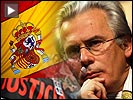
Garzon_button

Citing the doctrine of universal jurisdiction, Spanish judge Baltasar Garzón has used the Spanish courts to investigate cases of torture, war crimes and other offenses around the world. In 1998, he ordered the arrest of former Chilean dictator Augusto Pinochet, a move that led to Pinochet’s arrest and detention in Britain. In 2003, Garzón indicted Osama bin Laden and dozens of other members of al-Qaeda. Garzón later attempted to indict six high-ranking members of the Bush administration for their role in authorizing torture at the U.S. military prison at Guantánamo Bay and overseas, before the case was eventually dropped under U.S. pressure. While Garzón has long been one of the world’s most feared judges, he is now facing his own legal battle. Last year he was indicted for exceeding his authority for launching an investigation into the disappearance of more than 100,000 civilians at the hands of supporters of Gen. Francisco Franco during the Spanish Civil War. Garzón was suspended as a judge in May 2010 and is facing three separate trials. [includes rush transcript]

Guest:

Baltasar Garzon, Spanish judge who has indicted Augusto Pinochet, Osama bin Laden, Bush administration officials and many others on human rights grounds. He will receive the first
Abraham Lincoln Brigade Archives/Puffin Award for Human Rights Activism on May 14 at a ceremony in New York City.

Rush Transcript

This transcript is available free of charge. However, donations help us provide closed captioning for the deaf and hard of hearing on our TV broadcast. Thank you for your generous contribution.
Donate – $25, $50, $100, More…


Related Links


Related Democracy Now! Stories

JUAN GONZALEZ: We’re joined now by the Spanish judge Baltasar Garzón, perhaps one of the world’s most famous judges. Citing the doctrine of universal jurisdiction, Garzón has used the Spanish courts to investigate cases of torture, war crimes and other offenses around the world.

In 1998, he ordered the arrest of former Chilean dictator Augusto Pinochet, a move that had led to Pinochet’s arrest and detention in Britain for 18 months.

In 2003, Garzón indicted Osama bin Laden and dozens of other members of al-Qaeda. The indictment led to Europe’s biggest trial of alleged al-Qaeda operatives. Eighteen were eventually found guilty.

Garzón also led the case against Argentine ex-naval officer Adolfo Scilingo for crimes committed during Argentina’s Dirty War. Scilingo is now serving a 640-year sentence.

Garzón attempted to indict six high-ranking members of the Bush administration, including former Attorney General Alberto Gonzales, for their role in authorizing torture at Guantánamo and overseas. The case was eventually dropped. We now know, thanks to WikiLeaks, that the Bush administration privately pressured the Spanish government to drop the prosecution.

AMY GOODMAN: While Judge Garzón has long been one of the world’s most feared judges, he is now facing his own legal battle. Thirteen months ago, he was indicted for exceeding his authority for launching an investigation into the disappearance of more than 100,000 Spanish civilians at the hands of supporters of General Francisco Franco during the Spanish Civil War. Garzón was suspended as a judge in May 2010 and is facing three separate trials.

The attack on Garzón has been widely criticized by human rights defenders. Lotte Leicht of Human Rights Watch said, quote, “Garzón sought justice for victims of human rights abuses abroad and now he’s being punished for trying to do the same at home. The decision leaves Spain and Europe open to the charge of double standard.”

Judge Baltasar Garzón is here in New York this week to receive the first Abraham Lincoln Brigade Archives/Puffin Foundation Award for Human Rights Activism. He flew in from Spain last night, joins us in the studio today.

Welcome to Democracy Now!

JUDGE BALTASAR GARZÓN: Good Morning. Thank you.

AMY GOODMAN: And thank you to Tony Geist for translating.

Judge Garzón, let’s start with the latest news: the assassination of Osama bin Laden. You have condemned this. Why?

JUDGE BALTASAR GARZÓN: [translated] Any person who leads a terrorist organization like al-Qaeda is obviously a target. Under the rule of law, justice should be sought by legal means. According to the information we have, he could well have been arrested and brought to trial for his crimes.

AMY GOODMAN: Yet he was assassinated. Talk about the example you believe this sets.

JUDGE BALTASAR GARZÓN: [translated] According to international law, the murder or the assassination of bin Laden was not the appropriate solution. Clearly, from the information we have, it’s an undefined situation, given the state of conflict between the United States and al-Qaeda.

JUAN GONZALEZ: I wanted to ask you about the case, particular case, that you have been now indicted for, specifically overreaching your authority, supposedly, in terms of the investigation into the civilian deaths under the Franco regime. You prosecuted similar cases, where amnesties had been declared, in Argentina and Chile, and your government had no problem with that. But now, when you challenge the amnesty that was supposedly granted to the perpetrators of the Franco atrocities, suddenly the government has problems with your methods?

JUDGE BALTASAR GARZÓN: Yeah. [translated] This is the paradox and the irony of a situation in which Spain has been a pioneer in the application of universal jurisdiction. Yet, when it actually comes to investigating the case and the facts of the case in Spain, the country denies access to the facts and puts the judge himself on trial. It is the obligation of a judge to investigate the cases and to search for truth, justice and reparation for the victims of these crimes.

JUAN GONZALEZ: And in terms of the particular powers of a judge in Spain that may differ from what we here in the United States understand as a judge’s power, that the judges in Spain have both a sort of prosecutorial as well as a judgment aspect to their responsibilities, could you explain that?

JUDGE BALTASAR GARZÓN: Yes. [translated] Judges in Spain are a combination of prosecutor, investigator and judge.

AMY GOODMAN: I wanted to ask you about the WikiLeaks revelations. In Spain, there’s a lot of attention, of the documents, the U.S. government cables that have come out, about U.S. interference with the judiciary in Spain. One of the WikiLeaks cables was signed by Edward Aguirre, who is the—President Bush’s ambassador to Spain, who met with you. And he was concerned about a number of issues, and the U.S. has been concerned about the case in which—you opened against six former Bush administration officials, including Attorney General Alberto Gonzales, for torture at Guantánamo. Explain this case and why it has now been dropped.

JUDGE BALTASAR GARZÓN: [translated] In Spain, opened two procedures against—in the Guantánamo case: a general case against—regarding those six people and another specific case in four cases of torture. They were each in separate courts. The case of the four specific cases of torture is in his court, and it’s gone forward, although without specific indictments against particular individuals. Under the principle of universal jurisdiction, they have requested that the United States answer whether they are following up, investigating that case, or not. And if not, we’ll take it to the next step. It’s quite clear that they’re crimes against humanity, cases of torture, and therefore the government is obliged, under universal jurisdiction, to investigate them.

AMY GOODMAN: The ambassador in the document, in the WikiLeaks cable, said you have an anti-American streak. Your response?

JUDGE BALTASAR GARZÓN: No, you know, no, I don’t. Enemy against the United States, no. I think that is the justice, only justice, as the torture is a universal crime, is necessary to investigate. Only this.

JUAN GONZALEZ: I’d like to ask you about—to go back to the case of the Franco era. The New York Times, in an editorial in support of you, said recently, “The real crime[s] in this case are the disappearances, not Mr. Garzón’s investigation. If, as seems likely, these were crimes against humanity under international law, Spain’s 1977 amnesty could not legally absolve them.” Interestingly, the charges were brought against you initially by right-wing, pro-Franco groups in the country. So, in essence, some claim that the only one to be prosecuted for the crimes of the Franco era are the judge that has tried to investigate the cases. Could you—for Americans who are not familiar with what happened during the Franco era, could you talk a little bit about that?

JUDGE BALTASAR GARZÓN: [translated] The paradox again is that the government refuses to investigate the crimes against humanity and at the same time is prosecuting the judge who wants to uncover them. There were between 150,000 and 200,000 people disappeared under the Franco regime, as part of the civil population. It’s still not known where the victims lie buried. It’s a permanent crime, and therefore it cannot be absolved by an amnesty law.

AMY GOODMAN: Judge Baltasar Garzón, you have called for the exhumation of 19 unmarked graves, among them the one believed to contain the remains of the great poet, Federico García Lorca. Why?

JUDGE BALTASAR GARZÓN: [translated] He ordered specifically the opening, the exhumation of Lorca’s grave, because it was requested by the families of the other people who apparently are buried with him. And the request was made specifically to the judge of Granada, the area where the burial is.

AMY GOODMAN: And what do you hope to find?

JUDGE BALTASAR GARZÓN: [translated] So, the process is paralyzed right now because the judge of the location where Lorca is buried is one of those who objected and brought the case against Garzón. And the Supreme Court has suspended his decision to exhume the grave.

AMY GOODMAN: So, we’re going to go to break, but when we come back, we want to talk to Judge Baltasar Garzón about what this means that he now has been indicted, he has been suspended, he can’t practice law right now in Spain, what it means for all of these cases. This is Democracy Now!, democracynow.org, The War and Peace Report. Back in a minute.

[break]

AMY GOODMAN: Víctor Jara. This is Democracy Now!, democracynow.org. Víctor Jara, the great Chilean singer who was killed when the Augusto Pinochet forces rose to power and Allended died in the palace, September 11th, another September 11th, remarkably enough, 1973, who died among so many thousands of Chileans. It’s our guest today, Judge Baltasar Garzón, who first held Augusto Pinochet accountable, after his 17 years of brutal rule in Chile. When Augusto Pinochet went to Britain in the late ’90s for a doctor’s appointment, Judge Baltasar Garzón, from Spain, had him indicted. And it was because of that indictment that Augusto Pinochet was held in Britain for a year, until eventually allowed to go home.

Now Baltasar Garzón, Judge Garzón, faces his own trial, as he has been taken off the bench after crusading on many different issues, including the indictment of Osama bin Laden and other al-Qaeda operatives in 2003.

I’m Amy Goodman, with Juan Gonzalez.

JUAN GONZALEZ: Well, Judge Garzón, I’d like to ask you about another case that you were involved with, which was the investigation of the “dirty war” that occurred against Basque separatists under a Socialist government, the government of Felipe Gonzalez, in Spain. And you—many say that you were responsible for the fall of that government as a result of what you uncovered. Could you talk about what you found? And interestingly now, Felipe Gonzalez is supporting you and saying that what is happening to you is unjust.

JUDGE BALTASAR GARZÓN: [translated] I would never be responsible for an electoral loss that is due to the citizens who voted. What I did was simply investigate accusations of persecution against people accused of terrorism. The state of law is equal for all people. It cannot depend on electoral politics. A number of highly placed officials in the Socialist party, ruling party, government were accused and found guilty and removed. I believe that the democracy and the rule of law was strengthened by this action.

AMY GOODMAN: I wanted to go back to Chile. The family of the former Chilean president, Salvador Allende, asked last month for his body to be exhumed to help determine the cause of his 1973 death. President Allende was overthrown in a U.S.-backed coup, September 11th, 1973. The official cause of death on that day in the palace was listed as suicide, but it’s long been speculated he was assassinated by the forces of General Augusto Pinochet. Allende’s daughter, Isabel Allende, spoke to the media.

ISABEL ALLENDE: [translated] We requested the exhumation and autopsy. I think it’s the most rigorous and definitive proof to clear up the causes of his death, and we think this is going to be tremendously important.

AMY GOODMAN: That was the daughter of Salvador Allende, Isabel Allende, not to be confused with the great writer who is his niece. What do you say about the calling for the exhumation and the investigation of whether this was assassination or whether he took his own life as the Augusto Pinochet forces moved into the palace?

JUDGE BALTASAR GARZÓN: [translated] In the first instance, they investigated the criminal actions of those who rose up against a democratically elected government. The actual cause of death is less important than recognizing the fact that this was an illegal action, a coup against a legally elected government. And for those crimes, Pinochet was investigated and indicted in London.

AMY GOODMAN: So where do you stand right now, Judge Garzón? You’ve been suspended. You face trial. You face prison for many years.

JUDGE BALTASAR GARZÓN: I am provisionally suspended in my function, jurisdictional function. But I hope the trial against me, that we will, in the next month, I think—but it’s very complicated for me, my actual situation, because I cannot to investigate, to work in Spain. But I work right now in La Haya, in the International Criminal Court, with the prosecutor. But it’s not my destination. I hope the resolution, it will be proximally.

JUAN GONZALEZ: Some of your—you have many people who are passionately supporters of yours, as well as very strong critics, including among your colleagues on the bench. Several major judges in Spain have accused you of basically being a media personality trying to grab attention and really overstepping your responsibilities as a judge. How do you answer those in the judicial community who have criticized you in the past?

JUDGE BALTASAR GARZÓN: [translated] What’s most important are the cases in which I have participated. Any judge who had done what I did would be well known. That’s not, in principle, a bad thing. What’s wrong is to impede those investigations and that the victims should not be aided. It’s true that my personality gives an additional passion to it. But that should be appropriate for any judge. All I’ve done is my job, and I intend to continue doing it. And I’m not especially worried about the criticism that comes from the bench.

JUAN GONZALEZ: And even if you’re absolved of the charges, do you think you will be able to continue to function as a judge in Spain?

JUDGE BALTASAR GARZÓN: [translated] It’s possible that I could continue, but right now I’m involved in a very interesting project in Colombia. For a certain amount of time, I’m going to be working with the OAS in Colombia on furthering the peace process and mediating, to work on a means of transitional justice.

JUAN GONZALEZ: In terms of having—achieving a peace between the FARC and the government?

JUDGE BALTASAR GARZÓN: [translated] To be able to mobilize and put into practice the law which came after the demobilization, so cases can go to trial and victims can receive justice.

AMY GOODMAN: I wanted to, as we wrap up, talk again about universal jurisdiction, what this means, using the Spanish courts to hold tyrants accountable, wherever they may be. The Spanish government is now curtailing this, saying they don’t want to use universal jurisdiction. You have been a crusader for this. Lawyers around the world have looked at what you’re doing, seeing if it’s possible in their own countries. Yet your own government is cracking down on this. Will you be able, if you are cleared of all the charges and can go back to work, to continue to hold international torturers, tyrants, accountable?

JUDGE BALTASAR GARZÓN: [translated] Yes, indeed. Not just me, but any judge should be able to and will be able to do so. No government in the world is easy with the application of the principle of universal jurisdiction. It’s a mistake. I believe it’s a mistake, because the principle of universal jurisdiction allows the fight against impunity to move forward. It’s the final scenario when the country itself is not willing to investigate these crimes, any government.

JUAN GONZALEZ: Were you surprised by some of the WikiLeaks revelations that indicated an extraordinary degree of pressure by the United States government on the judiciary and the government of Spain on cases affecting the United States?

JUDGE BALTASAR GARZÓN: [translated] Yes, it did surprise me. Those who are susceptible to being pressured will be pressured. And if not, the pressure is meaningless. In this case, the justice system in Spain, specifically in regard to Guantánamo, steadfast, stood fast.

AMY GOODMAN: We have just 10 seconds. Short answer. Your assessment of the wars in Iraq and Afghanistan?

JUDGE BALTASAR GARZÓN: [translated] The war in Iraq was an unjust and illegal war. And the war in Afghanistan, which has been conducted properly until now, there are many other things that still need to be revealed.

AMY GOODMAN: Judge Baltasar Garzón, thank you so much for being with us.


Creative Commons License The original content of this program is licensed under a Creative Commons Attribution-Noncommercial-No Derivative Works 3.0 United States License. Please attribute legal copies of this work to democracynow.org. Some of the work(s) that this program incorporates, however, may be separately licensed. For further information or additional permissions, contact us.

« Previous Story | Next Story »

May 10, 2011

03 Tuesday, May 10, 2011 – WES-TERDAY HERE’S HOW WES SAW THINGS ON May 7, 2010

Filed under: archivo personal,future,interesting news,política — fores @ 8:36 am
Wes Pruden’s commentary on the news of the day

Tuesday, May 10, 2011


WES’ LAST THREE COLUMNS
1 The insult to the American soldier
2 A needed triumph of American arms
3 The conspiracy of ridicule and raillery
FIVE STORIES WES WANTS YOU
TO KNOW ABOUT
1 United States struggles to manage—and cope with—historic flooding
2 Boehner takes hard line on debt ceiling
3 US hits China on human rights as high-level talks begin
4 Al-Zawahri gets vote of support from al-Qaida in Iraq
5 Airlines on post-bin Laden alert looking harder, seeing more

WES-TERDAY

HERE’S HOW WES SAW THINGS ON

May 7, 2010

Oil spreads across the Atlantic

Buyer’s remorse has become a chronic disease of the democracies. Candidates who look good in winter turn out not to taste so good in summer. We can expect to see a new outbreak in Britain sometime after this weekend.

HOT TOPIC

Got a hot topic and you’d like to know where Wes stands on it? Tell him about it!

Send Wes a note about it. The address is topic@prudenpolitics.com. We can’t guarantee Wes will write about every topic suggested, but he wants to know what issues are foremost on your mind.

Oil spreads across the Atlantic

By Wesley Pruden on May 7, 2010

Buyer’s remorse has become a chronic disease of the democracies. Candidates who look good in winter turn out not to taste so good in summer. We can expect to see a new outbreak in Britain sometime after this weekend.

The oily goo of Barack Obama’s hopey-changey slick has inevitably spread across the Atlantic, like the spill off Louisiana, only writ larger. David Cameron, who expects to become the prime minister despite falling just short of an indecisive parliamentary majority, had tried to tie himself to Mr. Obama’s game of bait-and-switch, of extravagant promises made and never redeemed. The Sun, one of London’s irreverent tabloids, even appropriated the famous Obama campaign poster for its election-day front page, emblazoned “Our Only Hope.” This was presumably not meant as irony. Alas, we knew Britain was in sad shape, but nobody knew things were that bad.

Mr. Cameron hit it off with the president — “bonded,” in the ripe wet cliche of current fashion — months ago when he braved the briny to take his own measure of Washington. He quickly adopted the president’s campaign mantra of hopey-changey, and hired Anita Dunn, who was Mr. Obama’s communications director before she left the White House to become a political consultant, to give him advice on how to copy the Obama presidential campaign. Some of his friends in London now worry that once he actually becomes the prime minister Mr. Cameron will try to emulate the messiah of South Side Chicago rather than channel the robust ghosts of Churchill, Thatcher and Reagan as he settles in as prime minister.

This is the source of the buyer’s remorse that inevitably followed recent elections in various places. The lightweight emulate the lightweight, weakness and irresolution is relentlessly pursued, and trustful voters are left with only regrets, rue and remorse.

Despite the reassuring similarity in name, the Conservatives of Britain are only superficially similar to small-c American conservatives. Though more appealing to Americans than Gordon Brown and the Labor party, Mr. Cameron and the Conservatives aren’t expected to cultivate an appetite to curtail the growth, or even correct the fundamental weakness, of the welfare state that Britain adopted decades ago. Britain’s national health care, with its filthy hospitals, long waits for critical surgery and impersonal physicians, long ago became sacrosanct to the British public. Mr. Cameron, no passionate fan of Maggie Thatcher, isn’t expected to pursue her agenda of limited government, low taxes, reduced spending and the job-making economy that Britain needs.

Mr. Obama’s determined effort to remake America in the image of the European welfare state, on the other hand, naturally strikes Europeans and many Britons as nothing much out of the ordinary. Mr. Obama’s runaway public spending, appeasement of Islamist enemies bent on destroying the West, weakening of the military, and a sagging economy that spiked his popularity at home, is a puzzle to many in Britain.

But Britons who haven’t yet given up dream of Mr. Cameron learning from the president’s mistakes, even if they understand that Mr. Obama doesn’t regard the consequences of striking leftward as “mistakes.” Nile Gardiner, a columnist for the London Telegraph, observes that Mr. Obama’s America may be declining as a world power, but has lessons for Britain: “David Cameron must learn from [Mr.] Obama’s mistakes, and take Britain down a completely different path based on clearly defined conservative principles, which advance rather than constrain British leadership.”

This would be a tall order any time, but rarely more so than now. The new prime minister will inherit a dreary legacy of economic decline that threatens all of Europe. Greece is bankrupt and its European benefactors are determined to impose stark correctives to its spendthrift ways. Some economists warn that Britain may be next. Worst of all, nobody is looking to London and what used to be the British empire for a rescue. The disciplinarian in boots, armed with a whip of braided currency, is the German lady.

“Nothing less than the future of Europe is at stake,” Angela Merkel said on Thursday. “The happy tale of German history since World War II and our emergence as a free, united and strong country cannot be separated from the European Union. Europe today is looking to Germany . . . Immediate help is needed to ensure the financial stability of the eurozone. This must be done to avoid a chain-reaction to the European and international financial system.”

Reality not-so-warmly welcomes the new PM. In London. Happy days are not necessarily here again.

Categories for this column: Politics


Go to home page

About Wes Pruden

May 9, 2011

03 Los diarios belgas derrotan por segunda vez a Google News

Filed under: future,política,tecnología — fores @ 7:35 pm

Los diarios belgas derrotan por segunda vez a Google News

Un tribunal de apelación considera que el servicio vulnera los derechos de autor

EL PAÍS – Barcelona – 09/05/2011

Segunda batalla perdida por Google News en su enfrentamiento con los editores de periódicos belgas. Un tribunal de apelación de aquel país ha confirmado las líneas generales de un sentencia pronunciada en primera instancia en febrero de 2007 por la que este servicio vulneraba los derechos de autor al recoger sin permiso de los editores noticias publicadas por los diarios. Google News recoge unas pocas líneas de la noticia y suministra el enlace a la publicación que la suministra. La demanda fue presentada por la asociación que agrupa a un sector de los diarios belgas, los de expresión francófona entre ellos.

En 2007, Google ya fue condenada a retirar del citado servicio las referencias de cualquier publicación asociada a Copiepreese, como Le Soir o La Libre Belgique. La citada entidad ha manifestado su satisfacción por la sentencia y espera que Google ofrezca una “solución inteligente” y equitativa para poner fin a esta situación de conflicto.

Google, por su parte, sostiene que referenciar con unas pocas líneas y dar el enlace con el origen de las noticias no solo es una práctica corriente de los motores de búsqueda si no que anima a los internautas a leer las ediciones digitales de los diarios. Google no descarta acudir al tribunal de casación.

« Previous Page — Next Page »

WPMU Theme pack by WPMU-DEV.