Forés @ UVPress


         Universitat de València PRESS -UVPress- weblog for research uses

December 23, 2013

08 Former BP geologist: peak oil is here and it will ‘break economies’

Filed under: economía,future,Holístico,política,tecnología — fores @ 1:38 pm

Former BP geologist: peak oil is here and it will ‘break economies’

Industry expert warns of grim future of ‘recession’ driven ‘resource wars’ at University College London lecture
BP

A former BP geologist speaks out on the danger of peak oil. Photograph: Ben Stansall/AFP/Getty Images

A former British Petroleum (BP) geologist has warned that the age of cheap oil is long gone, bringing with it the danger of “continuous recession” and increased risk of conflict and hunger.

At a lecture on ‘Geohazards’ earlier this month as part of the postgraduate Natural Hazards for Insurers course at University College London (UCL), Dr. Richard G. Miller, who worked for BP from 1985 before retiring in 2008, said that official data from the International Energy Agency (IEA), US Energy Information Administration (EIA), International Monetary Fund (IMF), among other sources, showed that conventional oil had most likely peaked around 2008.

Dr. Miller critiqued the official industry line that global reserves will last 53 years at current rates of consumption, pointing out that “peaking is the result of declining production rates, not declining reserves.” Despite new discoveries and increasing reliance on unconventional oil and gas, 37 countries are already post-peak, and global oil production is declining at about 4.1% per year, or 3.5 million barrels a day (b/d) per year:

“We need new production equal to a new Saudi Arabia every 3 to 4 years to maintain and grow supply… New discoveries have not matched consumption since 1986. We are drawing down on our reserves, even though reserves are apparently climbing every year. Reserves are growing due to better technology in old fields, raising the amount we can recover – but production is still falling at 4.1% p.a. [per annum].”

Dr. Miller, who prepared annual in-house projections of future oil supply for BP from 2000 to 2007, refers to this as the “ATM problem” – “more money, but still limited daily withdrawals.” As a consequence: “Production of conventional liquid oil has been flat since 2008. Growth in liquid supply since then has been largely of natural gas liquids [NGL]- ethane, propane, butane, pentane – and oil-sand bitumen.”

Dr. Miller is co-editor of a special edition of the prestigious journal, Philosophical Transactions of the Royal Society A, published this month on the future of oil supply. In an introductory paper co-authored with Dr. Steve R. Sorrel, co-director of the Sussex Energy Group at the University of Sussex in Brighton, they argue that among oil industry experts “there is a growing consensus that the era of cheap oil has passed and that we are entering a new and very different phase.” They endorse the conservative conclusions of an extensive earlier study by the government-funded UK Energy Research Centre (UKERC):

“… a sustained decline in global conventional production appears probable before 2030 and there is significant risk of this beginning before 2020… on current evidence the inclusion of tight oil [shale oil] resources appears unlikely to significantly affect this conclusion, partly because the resource base appears relatively modest.”

In fact, increasing dependence on shale could worsen decline rates in the long run:

“Greater reliance upon tight oil resources produced using hydraulic fracturing will exacerbate any rising trend in global average decline rates, since these wells have no plateau and decline extremely fast – for example, by 90% or more in the first 5 years.”

Tar sands will fare similarly, they conclude, noting that “the Canadian oil sands will deliver only 5 mb per day by 2030, which represents less than 6% of the IEA projection of all-liquids production by that date.”

Despite the cautious projection of global peak oil “before 2020”, they also point out that:

“Crude oil production grew at approximately 1.5% per year between 1995 and 2005, but then plateaued with more recent increases in liquids supply largely deriving from NGLs, oil sands and tight oil. These trends are expected to continue… Crude oil production is heavily concentrated in a small number of countries and a small number of giant fields, with approximately 100 fields producing one half of global supply, 25 producing one quarter and a single field (Ghawar in Saudi Arabia) producing approximately 7%. Most of these giant fields are relatively old, many are well past their peak of production, most of the rest seem likely to enter decline within the next decade or so and few new giant fields are expected to be found.”

“The final peak is going to be decided by the price – how much can we afford to pay?”, Dr. Miller told me in an interview about his work. “If we can afford to pay $150 per barrel, we could certainly produce more given a few years of lead time for new developments, but it would break economies again.”

Miller argues that for all intents and purposes, peak oil has arrived as conditions are such that despite volatility, prices can never return to pre-2004 levels:

“The oil price has risen almost continuously since 2004 to date, starting at $30. There was a great spike to $150 and then a collapse in 2008/2009, but it has since climbed to $110 and held there. The price rise brought a lot of new exploration and development, but these new fields have not actually increased production by very much, due to the decline of older fields. This is compatible with the idea that we are pretty much at peak today. This recession is what peak feels like.”

Although he is dismissive of shale oil and gas’ capacity to prevent a peak and subsequent long decline in global oil production, Miller recognises that there is still some leeway that could bring significant, if temporary dividends for US economic growth – though only as “a relatively short-lived phenomenon”:

“We’re like a cage of lab rats that have eaten all the cornflakes and discovered that you can eat the cardboard packets too. Yes, we can, but… Tight oil may reach 5 or even 6 million b/d in the US, which will hugely help the US economy, along with shale gas. Shale resources, though, are inappropriate for more densely populated countries like the UK, because the industrialisation of the countryside affects far more people (with far less access to alternative natural space), and the economic benefits are spread more thinly across more people. Tight oil production in the US is likely to peak before 2020. There absolutely will not be enough tight oil production to replace the US’ current 9 million b/d of imports.”

In turn, by prolonging global economic recession, high oil prices may reduce demand. Peak demand in turn may maintain a longer undulating oil production plateau:

“We are probably in peak oil today, or at least in the foot-hills. Production could rise a little for a few years yet, but not sufficiently to bring the price down; alternatively, continuous recession in much of the world may keep demand essentially flat for years at the $110/bbl price we have today. But we can’t grow the supply at average past rates of about 1.5% per year at today’s prices.”

The fundamental dependence of global economic growth on cheap oil supplies suggests that as we continue into the age of expensive oil and gas, without appropriate efforts to mitigate the impacts and transition to a new energy system, the world faces a future of economic and geopolitical turbulence:

“In the US, high oil prices correlate with recessions, although not all recessions correlate with high oil prices. It does not prove causation, but it is highly likely that when the US pays more than 4% of its GDP for oil, or more than 10% of GDP for primary energy, the economy declines as money is sucked into buying fuel instead of other goods and services… A shortage of oil will affect everything in the economy. I expect more famine, more drought, more resource wars and a steady inflation in the energy cost of all commodities.”

According to another study in the Royal Society journal special edition by professor David J. Murphy of Northern Illinois University, an expert in the role of energy in economic growth, the energy return on investment (EROI) for global oil and gas production – the amount of energy produced compared to the amount of energy invested to get, deliver and use that energy – is roughly 15 and declining. For the US, EROI of oil and gas production is 11 and declining; and for unconventional oil and biofuels is largely less than 10. The problem is that as EROI decreases, energy prices increase. Thus, Murphy concludes:

“… the minimum oil price needed to increase the oil supply in the near term is at levels consistent with levels that have induced past economic recessions. From these points, I conclude that, as the EROI of the average barrel of oil declines, long-term economic growth will become harder to achieve and come at an increasingly higher financial, energetic and environmental cost.”

Current EROI in the US, Miller said, is simply “not enough to support the US infrastructure, even if America was self-sufficient, without raising production even further than current consumption.”

In their introduction to their collection of papers in the Royal Society journal, Miller and Sorrell point out that “most authors” in the special edition “accept that conventional oil resources are at an advanced stage of depletion and that liquid fuels will become more expensive and increasingly scarce.” The shale revolution can provide only “short-term relief”, but is otherwise “unlikely to make a significant difference in the longer term.”

They call for a “coordinated response” to this challenge to mitigate the impact, including “far-reaching changes in global transport systems.” While “climate-friendly solutions to ‘peak oil’ are available” they caution, these will be neither “easy” nor “quick”, and imply a model of economic development that accepts lower levels of consumption and mobility.

In his interview with me, Richard Miller was particularly critical of the UK government’s policies, including abandoning large-scale wind farm projects, the reduction of feed-in tariffs for renewable energy, and support for shale gas. “The government will do anything for the short-term economic bounce,” he said, “but the consequence will be that the UK is tied more tightly to an oil-based future, and we will pay dearly for it.”

Dr Nafeez Ahmed is executive director of the Institute for Policy Research & Development and author of A User’s Guide to the Crisis of Civilisation: And How to Save It among other books. Follow him on Twitter @nafeezahmed

December 12, 2013

08 expatriados por la crisis

Filed under: economía,future,política,tecnología — fores @ 8:53 am

El acero solo ofrece un futuro a 1.500 kilómetros

Más de 50 empleados de ThyssenKrupp emigran a Alemania tras el cierre de la planta de Galmed en Sagunto para poder mantener su puesto de trabajo

Berlín 12 DIC 2013 – 00:00 CET11
Un grupo de trabajadores españoles emigrados a Duisburgo / ThyssenKrupp

Cuando era un niño, el padre de Juan Ramón Merlos tuvo que emigrar de Almería a Sagunto andando por la costa. El operador de maquinaria de 46 años lo cuenta con una sonrisa que desafía a la inclemente sintaxis alemana, la niebla helada del Ruhr y los rigores de su nuevo empleo como fundidor en un alto horno en Duisburgo: su padre perdió varias uñas de los pies en aquella caminata brutal. Eran años de miseria. Este verano, la planta ThyssenKrupp-Galmed en Sagunto, donde Juan Ramón Merlos trabajaba de operador de maquinaria, anunció su cierre total y la liquidación de 165 empleos. Los sindicatos y el gigante industrial alemán negociaron un acuerdo sin precedentes para facilitar su recolocación en fábricas de la empresa en Alemania. Unos 40 se prejubilaron, cinco pudieron recolocarse en España, unos pocos siguen sopesando la oferta y más de 50 se quedaron a engordar la abultada lista de parados. Nada menos que 55 aceptaron y están llegando escalonadamente desde hace un mes con sus familias desde Levante a Duisburgo, una de las mayores ciudades de la gran conurbación industrial del Ruhr. Suman más de 120 inmigrantes huyendo del paro español.

“Al menos tenemos un trabajo digno”, dice un afectado por el cese en Valencia

César Pérez, asturiano de 32 años, se vino con su coche, su perro, su gato y su novia. Hay cosas, decía el miércoles al salir de la clase de “integración cultural” en la enorme sede educativa de ThyssenKrupp en las afueras de Duisburgo, “que no son del todo como esperábamos”. Lo acompañaban Antonio Martínez y Jacobo Tarancón, de edades similares y, como él, técnicos con formación profesional. La clase de integración dura una semana y es el primer paso antes de las clases de alemán, 100 horas intensivas que ocuparán un mes entero. Los tres llevan un par de semanas en Alemania y empiezan a acusar algún desgaste por la adaptación. “No es que nos disguste”, explican, “pero de pronto todo parece más farragoso y más lento de lo que esperábamos”. El eufemismo de la “movilidad exterior” —acuñado por la ministra de Empleo, Fátima Báñez, y tan apreciado por políticos apenas chapurrean el inglés— ignora el esfuerzo de aprender un idioma cuando se tienen más de treinta años y ninguna experiencia previa. También el de adaptarse a las costumbres de una región extranjera con sus equipos de futbol, que en la Renania industrial son una especie de religión, su clima o su comida.

Vanesa Martín, de 37 años, echa ya de menos el pescado saguntino. Es licenciada en Empresariales y estuvo en de Erasmus en Braunschweig. Parte con una ventaja para su adaptación que también podría estar a punto de verse suprimida por la crisis española. El ingeniero eléctrico Oscar Larrey es su pareja y se sentaba junto a ella en una de las aulas del centro educativo, bajo la mirada atenta del ejecutivo del Grupo ThyssenKrupp Miguel Martin-Pelegrina. Contaban que “la decisión fue más fácil de tomar”, porque no tienen hijos y los dos trabajan para la empresa. El acuerdo, explicó ella, “es que todos mantendremos por cuatro años puestos y sueldos equivalentes a los que teníamos en Sagunto”. El primer año, la empresa asume los gastos de alquiler. También las mudanzas, los cursos y las tutorías para toda la familia.

El ejecutivo Martin-Pelegrina es hijo de dos gastarbeiter —inmigrantes en alemán— llegados en los 60 “con una maleta” a trabajar. Cuando la pareja de Vanesa Martín y Oscar Larrey marchó al mercadillo navideño para atender a un equipo de la televisión pública regional WDR, Martin-Pelegrina y el recién llegado Juan Ramón Merlos hablaron de su nuevo empleo en el alto horno, físicamente mucho más duro que sus labores de mantenimiento en Sagunto. “No creo que sea un problema, porque trabajé antes en algo un poco similar”, dijo Merlos. Ya se ha traído a sus dos hijas, de 13 y 16 años. Su esposa Marisol, de 42, aceptó “en seguida” la propuesta de venir. Una de las hijas, “la mayor, Tania”, fue más reticente. La pequeña reaccionó pidiendo “el asiento de ventanilla” en el avión. Cree su padre que “perderán un año de colegio, por el idioma”.

“Las niñas perderán un año de colegio por el idioma”, señala un emigrado

Esa es también su mayor preocupación. “No puedo descartar que un día diga ya está, no puedo”, ríe, “quién me iba a decir a mí que a los 46 años me vería estudiando alemán. Pero su plan es quedarse “hasta la jubilación”. Cree que el futuro de sus hijas “será mejor en Alemania”. La empresa da cuatro años para regresar y poder acogerse parcialmente a las indemnizaciones, superiores a lo fijado por la reforma laboral de Mariano Rajoy. 25 de los inmigrantes de ThsyssenKrupp vienen con familia, unas catorce de ellas con hijos.

Cuando cerró Galmed, se dijo que fue una “decisión política” para repatriar puestos de trabajo. Desde que empezó la crisis arrecia el recelo hacia Alemania y la personificación de los males españoles en la canciller Angela Merkel. Juan Carlos García Muñoz negoció con la empresa como miembro de Comisiones Obreras y cree, sin embargo, que fue “una decisión estratégica empresarial, que también ha afectado a plantas francesas y a dos fábricas históricas en el corazón industrial de Alemania”. Lamenta García que “en Sagunto perdamos puestos de trabajo y hayamos cerrado”. Por eso “no es un éxito para los sindicatos, ni una victoria”, aunque haya “aspectos muy positivos” en la recolocación y en las indemnizaciones negociadas.

Los primeros problemas solo se desgranan con cautela entre los recién llegados, que se llevaron un disgusto cuando percibieron menos dinero de lo que esperaban en su primera paga alemana. La lentitud burocrática también exaspera a algunos, que lamentan además que no empezarán a trabajar “hasta enero o febrero”. Pero a fin de cuentas, “al menos tenemos un trabajo digno. Porque en España, ¿qué hay? ¿qué haces allí?”.

December 9, 2013

08 If Nelson Mandela really had won by Slavoj Žižek

Filed under: archivo personal,economía,future,interesting news — fores @ 8:38 pm

If Nelson Mandela really had won, he wouldn’t be seen as a universal hero

Mandela must have died a bitter man. To honour his legacy, we should focus on the unfulfilled promises his leadership gave rise to
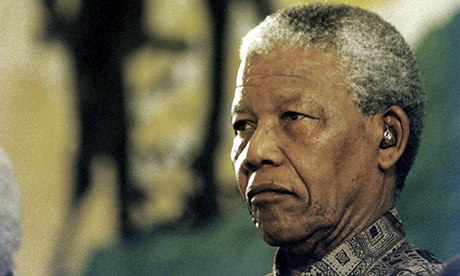
South African President Nelson Mandela

‘It is all too simple to criticise Mandela for abandoning the socialist perspective after the end of apartheid: did he really have a choice? Was the move towards socialism a real option?’ Photograph: Media24/Gallo Images/Getty Images

In the last two decades of his life, Nelson Mandela was celebrated as a model of how to liberate a country from the colonial yoke without succumbing to the temptation of dictatorial power and anti-capitalist posturing. In short, Mandela was not Robert Mugabe, and South Africa remained a multiparty democracy with a free press and a vibrant economy well-integrated into the global market and immune to hasty socialist experiments. Now, with his death, his stature as a saintly wise man seems confirmed for eternity: there are Hollywood movies about him – he was impersonated by Morgan Freeman, who also, by the way, played the role of God in another film; rock stars and religious leaders, sportsmen and politicians from Bill Clinton to Fidel Castro are all united in his beatification.

Is this, however, the whole story? Two key facts remain obliterated by this celebratory vision. In South Africa, the miserable life of the poor majority broadly remains the same as under apartheid, and the rise of political and civil rights is counterbalanced by the growing insecurity, violence and crime. The main change is that the old white ruling class is joined by the new black elite. Second, people remember the old African National Congress that promised not only the end of apartheid, but also more social justice, even a kind of socialism. This much more radical ANC past is gradually obliterated from our memory. No wonder that anger is growing among poor, black South Africans.

South Africa in this respect is just one version of the recurrent story of the contemporary left. A leader or party is elected with universal enthusiasm, promising a “new world” – but, then, sooner or later, they stumble upon the key dilemma: does one dare to touch the capitalist mechanisms, or does one decide to “play the game”? If one disturbs these mechanisms, one is very swiftly “punished” by market perturbations, economic chaos and the rest. This is why it is all too simple to criticise Mandela for abandoning the socialist perspective after the end of apartheid: did he really have a choice? Was the move towards socialism a real option?

It is easy to ridicule Ayn Rand, but there is a grain of truth in the famous “hymn to money” from her novel Atlas Shrugged: “Until and unless you discover that money is the root of all good, you ask for your own destruction. When money ceases to become the means by which men deal with one another, then men become the tools of other men. Blood, whips and guns or dollars. Take your choice – there is no other.” Did Marx not say something similar in his well-known formula of how, in the universe of commodities, “relations between people assume the guise of relations among things”?

In the market economy, relations between people can appear as relations of mutually recognised freedom and equality: domination is no longer directly enacted and visible as such. What is problematic is Rand’s underlying premise: that the only choice is between direct and indirect relations of domination and exploitation, with any alternative dismissed as utopian. However, one should nonetheless bear in mind the moment of truth in Rand’s otherwise ridiculously ideological claim: the great lesson of state socialism was effectively that a direct abolition of private property and market-regulated exchange, lacking concrete forms of social regulation of the process of production, necessarily resuscitates direct relations of servitude and domination. If we merely abolish the market (inclusive of market exploitation) without replacing it with a proper form of the communist organisation of production and exchange, domination returns with a vengeance, and with it direct exploitation.

The general rule is that when a revolt begins against an oppressive half-democratic regime, as was the case in the Middle East in 2011, it is easy to mobilise large crowds with slogans that one cannot but characterise as crowd pleasers – for democracy, against corruption, for instance. But then we gradually approach more difficult choices, when our revolt succeeds in its direct goal, we come to realise that what really bothered us (our un-freedom, humiliation, social corruption, lack of prospect of a decent life) goes on in a new guise. The ruling ideology mobilises here its entire arsenal to prevent us from reaching this radical conclusion. They start to tell us that democratic freedom brings its own responsibility, that it comes at a price, that we are not yet mature if we expect too much from democracy. In this way, they blame us for our failure: in a free society, so we are told, we are all capitalist investing in our lives, deciding to put more into our education than into having fun if we want to succeed.

At a more directly political level, United States foreign policy elaborated a detailed strategy of how to exert damage control by way of rechanneling a popular uprising into acceptable parliamentary-capitalist constraints – as was done successfully in South Africa after the fall of apartheid regime, in Philippines after the fall of Marcos, in Indonesia after the fall of Suharto and elsewhere. At this precise conjuncture, radical emancipatory politics faces its greatest challenge: how to push things further after the first enthusiastic stage is over, how to make the next step without succumbing to the catastrophe of the “totalitarian” temptation – in short, how to move further from Mandela without becoming Mugabe.

If we want to remain faithful to Mandela’s legacy, we should thus forget about celebratory crocodile tears and focus on the unfulfilled promises his leadership gave rise to. We can safely surmise that, on account of his doubtless moral and political greatness, he was at the end of his life also a bitter old man, well aware how his very political triumph and his elevation into a universal hero was the mask of a bitter defeat. His universal glory is also a sign that he really didn’t disturb the global order of power.

December 3, 2013

08 Male and female brains wired differently, scans reveal

Filed under: archivo personal,future,Holístico,interesting news — fores @ 10:17 pm

Male and female brains wired differently, scans reveal

Maps of neural circuitry show women’s brains are suited to social skills and memory, men’s perception and co-ordination
Men women brains

Neural map of a typical man’s brain. Photograph: National Academy of Sciences/PA

Scientists have drawn on nearly 1,000 brain scans to confirm what many had surely concluded long ago: that stark differences exist in the wiring of male and female brains.

Maps of neural circuitry showed that on average women’s brains were highly connected across the left and right hemispheres, in contrast to men’s brains, where the connections were typically stronger between the front and back regions.

Ragini Verma, a researcher at the University of Pennsylvania, said the greatest surprise was how much the findings supported old stereotypes, with men’s brains apparently wired more for perception and co-ordinated actions, and women’s for social skills and memory, making them better equipped for multitasking.

“If you look at functional studies, the left of the brain is more for logical thinking, the right of the brain is for more intuitive thinking. So if there’s a task that involves doing both of those things, it would seem that women are hardwired to do those better,” Verma said. “Women are better at intuitive thinking. Women are better at remembering things. When you talk, women are more emotionally involved – they will listen more.”

She added: “I was surprised that it matched a lot of the stereotypes that we think we have in our heads. If I wanted to go to a chef or a hairstylist, they are mainly men.”

Female brain
Neural map of a typical woman’s brain. Photograph: National Academy of Sciences/PA

The findings come from one of the largest studies to look at how brains are wired in healthy males and females. The maps give scientists a more complete picture of what counts as normal for each sex at various ages. Armed with the maps, they hope to learn more about whether abnormalities in brain connectivity affect brain disorders such as schizophrenia and depression.

Verma’s team used a technique called diffusion tensor imaging to map neural connections in the brains of 428 males and 521 females aged eight to 22. The neural connections are much like a road system over which the brain’s traffic travels.

The scans showed greater connectivity between the left and right sides of the brain in women, while the connections in men were mostly confined to individual hemispheres. The only region where men had more connections between the left and right sides of the brain was in the cerebellum, which plays a vital role in motor control. “If you want to learn how to ski, it’s the cerebellum that has to be strong,” Verma said. Details of the study are published in the journal Proceedings of the National Academy of Sciences.

Male and female brains showed few differences in connectivity up to the age of 13, but became more differentiated in 14- to 17-year-olds.

“It’s quite striking how complementary the brains of women and men really are,” Ruben Gur, a co-author on the study, said in a statement. “Detailed connectome maps of the brain will not only help us better understand the differences between how men and women think, but it will also give us more insight into the roots of neurological disorders, which are often sex-related.”

December 2, 2013

08 Why is Sweden closing its prisons?

Filed under: archivo personal,economía,future,interesting news — fores @ 8:28 am

Why is Sweden closing its prisons?

Sweden’s prison population has dropped so dramatically that the country plans to close four of its prisons. What lessons can the UK learn?
Kumla prison in Sweden

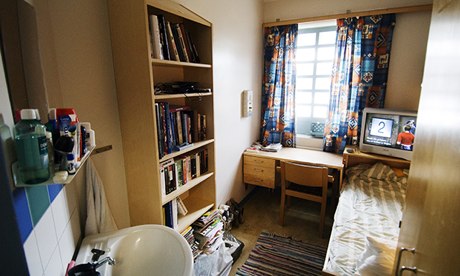
A cell in Kumla prison, Sweden’s most secure institution. Photograph: Henrik Witt/Press Association Images

Swedish prisons have long had a reputation around the world as being liberal and progressive. So much so that in 2005 even Saddam Hussein requested to be transferred to a Swedish prison to await his trial – a request that was rejected by the Swedish authorities. But are the country’s prisons a soft option?

The head of Sweden‘s prison and probation service, Nils Oberg, announced in November that four Swedish prisons are to be closed due to an “out of the ordinary” decline in prisoner numbers.

Although there has been no fall in crime rates, between 2011 and 2012 there was a 6% drop in Sweden’s prisoner population, now a little over 4,500. A similar decrease is expected this year and the next. Oberg admitted to being puzzled by the unexpected dip, but expressed optimism that the reason was to do with how his prisons are run. “We certainly hope that the efforts we invest in rehabilitation and preventing relapse of crime has had an impact,” he said.

“The modern prison service in Sweden is very different from when I joined as a young prison officer in 1978,” says Kenneth Gustafsson, governor of Kumla prison, Sweden’s most secure jail, situated 130 miles west of Stockholm. However, he doesn’t think the system has gone soft.”When I joined, the focus was very much on humanity in prisons. Prisoners were treated well, maybe too well, some might say. But after a number of high-profile escapes in 2004 we had to rebalance and place more emphasis on security.” One of those escapes was made by a man called Tony Olsen, serving life imprisonment for shooting dead two police officers, from a maximum security prison in collusion with a prison guard. The then director general of the prison service was forced to step down.

Despite the hardening of attitudes toward prison security following the escape scandals, the Swedes still managed to maintain a broadly humane approach to sentencing, even of the most serious offenders: jail terms rarely exceed 10 years; those who receive life imprisonment can still apply to the courts after a decade to have the sentence commuted to a fixed term, usually in the region of 18 to 25 years. Sweden was the first country in Europe to introduce the electronic tagging of convicted criminals and continues to strive to minimise short-term prison sentences wherever possible by using community-based measures – proven to be more effective at reducing reoffending.

According to the UK Ministry of Justice, the highest rate of reoffending within a year of release among adults is recorded by those serving 12 months or less. The overall reoffending rate in Sweden stands at between 30 and 40% over three years – around half that in the UK. One likely factor that has kept reoffending down and the rate of incarceration in Sweden below 70 per 100,000 head of population – less than half the figure for England and Wales – is that the age of criminal responsibility is set at 15. In the UK, children aged 10-17 and young people under the age of 21 record the highest reoffending rates: almost three quarters and two thirds respectively – a good proportion of whom go on to populate adult jails. Unlike the UK, where a life sentence can be handed down to a 10-year-old, in Sweden no young person under the age of 21 can be sentenced to life and every effort is made to ensure that as few juvenile offenders as possible end up in prison.

Kumla prison in SwedenKumla prison in Sweden. Photograph: Fredrik Persson/Press Association ImagesOne strong reason for the drop in prison numbers might be the amount of post-prison support available in Sweden. A confident probation service – a government agency – is tasked not only with supervising those on probation but is also guaranteed to provide treatment programmes for offenders with drug/alcohol or violence issues. The service is assisted by around 4,500 lay supervisors – members of the public who volunteer to befriend and support offenders under supervision. There is no equivalent in the UK.

When I tell Gustafsson that Chris Grayling, Britain’s justice secretary, recently announced that inmates in England and Wales are to be made to wear prison uniforms and have limited access to television, he laughs. “[Politicians] keep their fingers away from us. We are allowed to get on with our jobs without any interference.”

He talks about broader goals and objectives for the Swedish justice department: “This year and next year the priority of our work will be with young offenders and men with convictions of violent behaviour. For many years we have been running programmes to help those addicted to drugs. Now we are also developing programmes to address behaviours such as aggression and violence. These are the important things for our society when these people are released.”

I spoke to a former prisoner who now runs a social enterprise called X-Cons Sweden. Peter Soderlund served almost three years of a four-year sentence for drug and weapons offences before he was released in 1998. He was helped by a newly formed organisation run by former prisoners called Kris, (Criminals Return In Society). For some years he worked to help build Kris until 2008 when, following organisational disputes and conflicts, he left.

“The big difference between Kris and us is that we are happy to allow people who are still taking addiction medications to join us,” he says. Both organisations work with the same goal: helping prisoners successfully reintegrate into society after they have been released. And what is life like for the prisoner in Sweden? “When I was inside I was lucky. In Osteraker prison where I served my sentence the governor was enlightened. We were treated well. But I knew that not all Swedish prisons were like that. I met so many people in there who needed help – after I received help from Kris I knew I wanted to help others. With X-Cons, we meet them at the gate and support them into accommodation and offer a network of support.”

Could it be, though, that the Swedish public is losing its appetite for genuine rehabilitation for prisoners? “In Sweden we believe very much in the concept of rehabilitation, without being naive of course,” says Gustafsson. “There are some people who will not or cannot change. But in my experience the majority of prisoners want to change and we must do what we can to help to facilitate that. It is not always possible to achieve this in one prison sentence.

“Also it is not just prison that can rehabilitate – it is often a combined process involving probation and greater society. We can give education and training, but when they leave prison these people need housing and jobs.”

« Previous Page — Next Page »

WPMU Theme pack by WPMU-DEV.