Forés @ UVPress


         Universitat de València PRESS -UVPress- weblog for research uses

December 1, 2013

08 Well, Boris, it would seem you just failed the intelligence test

Filed under: archivo personal,future,política — fores @ 7:09 pm

Well, Boris, it would seem you just failed the intelligence test

The London mayor’s vision of society has disturbing similarities with Aldous Huxley’s chilling Brave New World
boris johnson

Boris Johnson’s speech lauding greed has many in his party clutching their heads. Photograph: Christopher Thomond for the Observer

Here is a sentence you don’t read very often: Boris Johnson has not been getting enough publicity. The mayor of London and wannabe prime minister has not received the attention that he deserves for the extraordinary personal political credo that he unveiled in the Margaret Thatcher lecture to the Centre for Policy Studies, a speech that may prove to be a defining moment in his career, though not in quite the way that its author intended.

Where on earth do we start? Let’s begin with his view of what drives human nature in general and capitalist economies in particular. The speech was highly illuminating – not about what really makes society tick, but about what goes on inside the whirling head of mayor Johnson. It is his contention that “greed” and “the spirit of envy” are not vices to be regretted, but virtues to be lauded because they are “a valuable spur to economic activity”. This was not a throwaway line, a light aside, just another one of those provocative Johnsonian sallies designed to wind up lefties and stimulate the erogenous zones of the right wing of the Tory party. It was central to his argument. He hailed greed and envy as emotions to be celebrated because that was at the heart of his contention that inequality is not only inevitable, it is desirable and necessary as an engine of economic growth.

There are not many arguments that are simultaneously pitiless towards the poor and rude to the successful, but with this one he achieved that rare double whammy. The Johnsonian philosophy tells the less well off that they should accept and endure their fate as the price to be paid for generating the envy that lubricates the wheels of capitalism. At the same time, he manages to be offensive to genuine entrepreneurs by telling them that their primary motivator is greed. The third problem with his argument is that it is just rubbish.

To see it for the tripe that it is, I recommend a brilliant new book by John Kay entitled Obliquity. He marshals many examples to demonstrate that the simple-minded pursuit of profit and material gain is precisely the wrong way to go about creating a valuable business. Henry Ford grew the company to which he gave his name because he wanted to build motor cars and have them owned by as many people as possible. Boeing became the world’s most successful manufacturer of aircraft not out of love of money but because it wanted to make the best passenger jets. Bill Gates became so huge because he had a passion for computers. Warren Buffett, who rivals Gates for being the world’s richest man, still lives in the bungalow in Omaha he bought 50 years ago and his favourite dinner is a Nebraskan steak washed down with cherry Coke.

His great wealth, a lot of which he has given away, is a marker of his status as the world’s shrewdest investor, not a desire for material goods. Mr Kay compellingly argues that the pursuit of gain for its own sake – the greed worshipped by mayor Johnson – is usually the most disastrous way to run a business. “That obsession frequently destroys them or the organisations that attract them.” The folly of Lehman Brothers is one of many examples from the Great Crash that illustrate that.

It is worrying that the mayor of Britain’s largest city does not understand what makes the difference between successful and destructive capitalism. It gets more disturbing when we move on to his musings about human intelligence. Opined the man who would like to lead Britain: “It is surely relevant to a conversation about equality that as many as 16% of our species have an IQ below 85, while about 2% have an IQ above 130.” The bizarre reference to humankind as “our species” drew from Nick Clegg the rebuke that Mr Johnson was talking about people as if they were “like a breed of dogs”.

The fundamental reason to object to this element of the Johnsonian creed is not that he is breaking some supposed taboo with his crudely expressed, but not terribly controversial, notion that human beings differ in their natural abilities and some of that difference is inherited. The real problem here is with the implied conclusion that the poor are poor because they are born stupid, the rich are rich because they spring from the womb destined to be that way, and there’s nothing much anyone can do about it except to urge the wealthy not to be too “heartless” and let a few of the talented poor into the elite.

This is another argument that manages to be brutal to the less advantaged while simultaneously insulting those who have thrived. To those who have done well, it says that their achievements have not been earned by their application or determination, but are the result of a genetic windfall. To those who struggle, it says that they should blame their lot on the lousy biological hand they were dealt by their parents and just suck it up.

Aldous Huxley called Brave New World, his dark depiction of a future for humankind in which everyone is conditioned to know their place, a “negative utopia”. Children are born into various castes, which are sub-divided into “Plus” and “Minus” members. Each caste is designed to serve predetermined roles in society from which they can never break free. There are the Gammas, Deltas and Epsilons who are bred to do the menial tasks and chemically manipulated to prevent them from wanting to be anything more than they are. At the top sits a tiny elite of Alphas who wield the power.

I don’t know whether the mayor of London is familiar with Huxley’s novel. He might like one of its conceits: to sustain the placidity of the population, recreational and promiscuous sex is strongly encouraged by the state. I am sure he would protest that this was not his intention, but the vision of society that he promotes is not entirely remote from Huxley’s chilling dystopia. The mayor, who presumably regards himself as an Alpha Plus, is effectively telling the person who cleans his office, whom he dismisses as an Epsilon Minus, that their unequal fates are preordained at birth.

“Why on earth enter this territory?” asks one close ally of David Cameron. “Anything that has the whiff of eugenics is just not smart. A lot of people read that and thought, ‘Oh, fuck, Boris. Do you really want to say that?'”

Officially, Number 10 is trying to avoid comment, not wanting to draw the prime minister into a confrontation with his fellow old Etonian. But if Mr Cameron is asked about it directly, he will surely be obliged to disown it, having previously made speeches arguing that inequality does matter and so do extremes of it because they are unhealthy both for society and the economy. There is a mixed reaction around the prime minister to the mayor’s effusion. Some of Mr Cameron’s circle struggle to conceal relish that the troublesome rival over the water has scored a spectacular own goal. That pleasure is blended with distress that the mayor has made the Tories sound not only elitist, but absolutely thrilled to be so, and in a way more devastating than any Labour or Lib Dem politician could ever do.

One Conservative MP groans: “You can already see the Labour posters, ‘Greed is good, says Boris Johnson.'”

It seems only appropriate that I should conclude with a quick political intelligence test especially devised for the mayor of London.

1. The Conservative party has a damaging reputation among the many voters who see it as motivated by a desire to promote the interests of the rich and privileged. Tory strategists believe that this is a formidable obstacle that must be overcome by your party if it is to stay in office beyond the next election. In an important speech, would it help the Tory cause if you were to celebrate privilege and greed?

2. The Conservative party is also charged with being disdainful of ordinary people. Labour have clearly and repeatedly signalled that they plan to fight the next election campaign by attacking the Tories for not caring about the majority. Would it be smart to suggest that large swaths of the population should be written off on the grounds that they are too thick to compete?

3. The Lib Dems say that only their presence in government has prevented the Tory party from being extreme and nasty and they will turn up the volume on this message the closer we get to the next election. Thinking about how you might deal with the accusation that you are in favour of an unfair society, would it demonstrate a high level of brain function to suggest that inequality is a jolly admirable thing?

4. Would it be helpful to the Tory cause to liken society to a cereal packet and say: “The harder you shake the pack, the easier it will be for some cornflakes to get to the top”? Would dismissing millions of voters as small cornflakes at the bottom of the pack send an attractive message to the electorate?

5. Finally, and think very carefully about this one: however much a politician may crave attention, would you agree that there are times when even the most needy of them would be better off keeping their mouth shut?

November 30, 2013

08 Habla Gail Zappa, a los veinte años del fallecimiento de Frank Zappa

Filed under: archivo personal,interesting news,recomendaciones — fores @ 10:24 am

Habla Gail Zappa, a los veinte años del fallecimiento de Frank Zappa

Texto de publicado el 30 nov, 2013 en la categoría Entrevistas, Entrevistas internacionales, Revista

fank-zappa-borja-cuellar-30-11-13

“Mi objetivo es mantener el legado y abrir pequeñas ventanas al mundo de Frank Zappa”


Gail Zappa, viuda de Fank Zappa y responsable del legado del músico genial, habla en esta entrevista exclusiva de los planes de edición.


Texto: MANUEL DE LA FUENTE y VICENTE FORÉS.
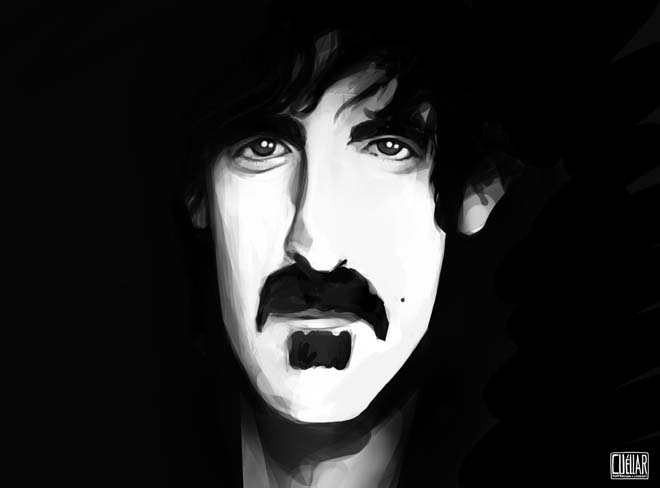
Ilustración: BORJA CUÉLLAR.


El pasado 29 de octubre se estrenaba en Londres “200 Motels”, una obra de Frank Zappa que había sido prohibida en la capital inglesa cuarenta años atrás, a principios de los años setenta. En aquella ocasión, una demanda por el contenido supuestamente obsceno de las canciones llevó a la cancelación de la obra. Pese a que Zappa acabaría ganando el caso tras un juicio surrealista, la obra siguió sin representarse, quedando como uno de los episodios más lamentables en la historia de la música contemporánea. Después de años de trabajo, Gail Zappa, viuda del músico y responsable del Zappa Family Trust, conseguía llevar a Londres la parte orquestal de “200 Motels” en una representación memorable. Las tres mil personas que abarrotaban el Royal Festival Hall ese último martes de octubre ofrecieron una prolongada y entusiástica ovación tras un concierto de la mejor música ofrecida como uno de los platos fuertes del festival “The Rest Is Noise”, que se dedica a recorrer las mejores composiciones musicales del siglo XX.

gail-zappa-30-11-13

El 4 de diciembre se cumplen veinte años del fallecimiento de Frank Zappa, uno de los compositores y músicos más inteligentes, originales y prolíficos, y un firme defensor de la libertad de expresión. Gail Zappa nos ofreció la siguiente entrevista, que tuvo lugar el pasado 20 de noviembre y que constituye la primera que realiza con un medio español. Con ella hablamos del concierto, de la situación actual de la censura artística (que su marido combatió durante toda su trayectoria) y de los próximos proyectos de edición. Frank Zappa dejó multitud de grabaciones de sus conciertos en su estudio, en la “cripta”, que contiene numerosos tesoros ocultos que van saliendo a la luz en cuidadas ediciones que demuestran la vigencia de su legado.

¿Qué tal fue en Londres? ¿Qué balance hace del concierto?
Fue fabuloso, tanto la respuesta del público como todo en general. Aún no puedo dar una repuesta completa hasta tener la cinta y la filmación del concierto. Pero estar allí escuchando la obra fue fantástico.

El aplauso del público fue muy prolongado, se vivió un momento muy especial.
Fue una experiencia muy emocionante, desde el festival se dijo que había sido extraordinario el entusiasmo del público.

Un entusiasmo que se veía también en la organización del festival.
Jude [Kelly] es una persona increíble. Es la directora del festival, ha llevado a cabo una impresionante labor, involucrando a todo el país a lo largo de todo el año. Además, uno de los ejes temáticos del festival ha sido la música de los años sesenta y da la casualidad de que yo viví en Inglaterra durante esos años, a principios de la década.

¿Tenían uestedes muchas cosas en común?
Sí, sí, dio la circunstancia de que estaba allí en aquel momento histórico, que fue muy importante para la historia de Inglaterra.

Dos días antes de la celebración del concierto, usted celebró un encuentro con los asistentes al festival en el Southbank Centre de Londres. Recordó sus años de juventud en Londres, ciudad en la que estuvo destinado su padre. En los años sesenta fue testigo del momento de efervescencia cultural y política de la ciudad y, entre otros encuentros, recordaba una manifestación en la que había visto a Bertrand Russell con Vanessa Redgrave. ¿Cómo vincularía “200 Motels” con ese contexto al que hace referencia? ¿Ha tenido que actualizar algún aspecto de “200 Motels” para su estreno de hace unas semanas?
No creo que “200 Motels” necesite una puesta al día. La idea inicial parecía imposible y solo el hecho de ponerla en pie también parecía imposible, pero creo que es importante que seamos capaces de ver cómo lo imposible puede llegar a materializarse. Aquella película y aquel proyecto trataba sobre algo que no existía entonces porque aún se estaban inventando las giras de rock and roll a principios de los años setenta y fue en 1968 cuando Frank empezó a trabajar en el proyecto. Era una novedad en aquella época porque la gente tenía que sacar adelante su música y sus proyectos por sí mismos. Así es como tenían que darse a conocer los músicos e iniciar sus carreras. Era algo inédito, nunca se había hecho así. De repente, en todo el mundo, la música se electrificó y hoy nos parece muy sencillo salir de gira con todos esos equipos eléctricos y ya todos están acostumbrados. Todos los jóvenes de hoy en día que rondan la veintena creen que es sencillo, pero eso es así porque los jóvenes de entonces tuvieron que pensar en cómo hacerlo y diseñaron el modelo para hacerlo. Cómo iniciar una carrera en el rock en aquel entonces, de eso trata la película, de estar de gira en la carretera y todos los aspectos surrealistas que ello comporta.

La película “200 Motels” trataba de la vida en la carretera. Mientras el resto de grupos de rock and roll cantaban canciones de amor, Frank Zappa reflexionaba ya entonces sobre el oficio de músico en las letras de las canciones.
Cierto, en parte “200 Motels” habla de eso, pero también de la música y de toda la información que no se ve en un escenario de rock and roll. No hay que olvidar que Frank era compositor y tenía un conocimiento más profundo que la mayoría de los músicos de rock and roll al respecto de las fuentes musicales y de las fuentes de las ideas musicales.

¿Cómo ve la censura de entonces y cómo ve la que tenemos hoy en día?
Hoy vivimos un tipo diferente de censura, la censura que existe en  la actualidad está más orientada hacia el control y la legislación de la moralidad. En aquel entonces aún no funcionaba así. Pero hoy los censores de todo el mundo y la gente que hace las leyes están mucho más desenfrenadas porque quieren controlar el comportamiento de la gente.

En España estamos viviendo esta situación con especial dureza, con el gobierno estableciendo un control de la población mientras recorta con dureza los servicios sociales.
Creo que la gente que se presenta a las elecciones, no solo los partidos gobernantes sino también ellos cuando se mantienen en el poder y quieren seguir con el status quo, siempre hablan de ley y orden, siempre están con esa idea o alguna derivación porque la gente tiene mucho miedo y esa es la raíz en que se funda la mayor preocupación de gran parte de la población: la ley y el orden porque así es como les han entrenado los gobiernos.

Una cosa llamativa de las letras de las canciones de Frank Zappa es que nos habla de problemas que son totalmente vigentes en la actualidad.
Este tipo de problemas no desaparecen un día sin más, a no ser que la gente se despierte, adquiera consciencia y pase a la acción siguiendo siempre la “regla de oro”, es así de sencillo.

Esta “regla de oro” es la “golden rule” en inglés, que se podría resumir como sigue: “trata a los demás como te gustaría que te tratasen a ti”. ¿Cree que la solución a la situación actual está en el voto de la gente, que las cosas cambiarían si votase más población?
Todo país que legítimamente le dé la voz al pueblo y respete esa voz tiene más posibilidades de salir adelante en la cooperación global con otras comunidades.

¿Eso es lo que le llevó a Frank Zappa a pedir insistentemente a la gente que votara?
La verdad es que sí porque nuestra Constitución garantiza la búsqueda de la felicidad.

Por eso creía en la Constitución más que en los políticos.
Exacto, exacto. Basta con buscar en el diccionario el sentido de la palabra “política”. “Política”, no “políticos”. Es una bella palabra porque significa la mejor solución para todos los que tomen parte, pero eso no es lo que se hace en la política actual.

La política es el poder de la gente. Una de las definiciones clásicas de la palabra es “el poder del pueblo para el pueblo”, y de ahí viene la Constitución.
Cierto.

Ya más adelante es cuando ese concepto se tradujo como democracia, pero democracia es el modo que tenemos de organizarnos. La relación entre las personas es política. Pero tal vez estemos insistiendo demasiado en esto y nos interesaba también su relación personal con el legado de Frank Zappa, que usted se encarga de mantener y continuar. ¿Cuáles son sus planes inmediatos?
Mi primera obligación siempre es la obra que existe, tal y como la creó Frank Zappa. Ni yo ni nadie sabe qué estaría haciendo con toda su obra en el caso de que siguiera vivo. Así que lo primero es tener disponible la versión más fidedigna que Frank había concebido y yo me encargo de gestionar las cosas que contribuyen a ello y ponerlas a disposición de la gente. Mi objetivo es que todo salga de la manera que él quería y, a continuación, abrir pequeñas ventanas. Por ejemplo, acabamos de editar una nueva serie de volúmenes, y acaba de salir el segundo, que es “Road Tapes, Venue #2″. Son obras que mantenemos tal cual, lo que hay es lo que hay, no se pueden modificar pero representan una ventana al mundo de Frank Zappa, y eso es importante. Son grabaciones de sus conciertos y queríamos compartirlas con las personas a las que les pudieran interesar. Así que esa es la segunda parte del trabajo que hacemos.

Él también grabó numerosas obras con el Synclavier.
Sí, también me gustaría reunirlas y presentarlas de manera que pudieran tocarlas otros músicos, que otros pudieran, con nuestra autorización, hacer arreglos e interpretarla. Hay que transcribir esas piezas desde el Synclavier a partituras y partes para que las toquen los músicos. Eso implica que, en algunos casos, haya que “reinterpretar” las obras, algo que deseamos hacer en algún momento. Creo que lo de “200 Motels” nos abre estas posibilidades, la opción de recibir sugerencias a partir de oportunidades como ésta.

En su autobiografía, Frank Zappa mencionaba la inversión de mucho dinero y tiempo para transcribir su música en partituras.
El concierto de “200 Motels” fue el resultado de un trabajo que ha supuesto miles y miles de dólares para convertir cada página en música que se pudiera interpretar. Es un proceso carísimo y mi objetivo es hacer que todo esté disponible. Intentaré llevar a cabo este propósito, es un proyecto que sigue en marcha.

En resumen, que ese sería básicamente el plan para el futuro.
Sí, y he tenido la suerte de dar con alguien que me ayuda en esa tarea. No tenía a nadie que cumpliese con los requisitos y un día, por casualidad, entró en contacto conmigo una persona para ser mi asistente y resultó ser todo un experto. Se encarga de pasar y depurar las partituras, de reunirlas todas y de asegurarse de que las transcripciones sean precisas. Se llama Kurt Morgan y es el bajista de la gira Zappa Plays Zappa. Es quien ayudó a nos ayudó a reunir la partitura de “200 Motels” que pudisteis escuchar.

En Londres se le preguntó por el proyecto del Roxy. ¿Qué nos puede decir al respecto?
¡Pues que hoy mismo voy a verlo! [risas] Voy a ver lo que espero que sea la edición final.

¿Es una primicia que nos está ofreciendo?
Igual es una primicia total para la prensa española, depende de cuándo publiquéis la entrevista.

La conversación deriva hacia otros temas, hacia más planes de proyectos futuros, algunos de ellos inmediatos. En Londres, Gail Zappa se mostró con ganas. Confesó que, cuando falleció su marido, se quedó impresionada por el repentino “gigantesco silencio” que experimentó en casa. Recordó, además, algo que su marido decía sobre su país, que la democracia era la gran aportación de Estados Unidos al mundo. La agenda de Gail Zappa está llena de proyectos para demostrar la vigencia de una obra única, que resiste contra el silencio y contra todo tipo de censura. Porque, como le gustaba decir a Zappa parafraseando a Edgar Varèse, “el compositor del presente se resiste a morir”.

Tags: , , , ,


November 28, 2013

08 “¿Dónde se detiene el proceso que inician Escocia y Cataluña?”

Filed under: archivo personal,economía,future,interesting news — fores @ 9:18 am
ANTHONY GIDDENS

“¿Dónde se detiene el proceso que inician Escocia y Cataluña?”

El sociólogo y exrector de la London School habla sobre el futuro de los nacionalismos

“Las pretensiones independentistas son otra consecuencia de la crisis”

Bruselas 27 NOV 2013 – 21:56 CET16
Giddens, en una entrevista en enero en Praga. / Getty Images

Escribir es prever, decía Paul Valéry. Allá por 2005, Anthony Giddens se declaraba un previsor azorado: “Temo un desplome de la economía europea y un retorno del nacionalismo”, escribía. Giddens, reputado sociólogo británico e inspirador intelectual de la tercera vía, apoyaba sin remilgos por aquel entonces la reforma del Estado del bienestar para combatir la dulce decadencia europea. Las reformas no llegaron; lo que vino fue una crisis no tan dulce. Paralelamente, la socialdemocracia se metió en un lío morrocotudo, pero —paradojas de la historia— esa crisis ha traído de la mano una avalancha reformista, hasta el punto de que “el alabado modelo social europeo corre peligro”, apunta. Giddens reflexiona sobre un continente que se asoma a un largo estancamiento, atacado por los populistas, espiado por sus aliados, inseguro de sí mismo, más alemán que nunca. Y no evita los charcos: analiza las pretensiones independentistas en su país y en España como “otra consecuencia de la crisis” y no esconde sus críticas a un debate “en general poco adulto, en el que falta reflexión y sobran emociones”. “Siento decirles esto a escoceses y catalanes, pero es imprescindible hacerse una pregunta sobre las pretensiones secesionistas: ¿Dónde se detiene ese proceso?”

El mito fundacional de Europa es “la semilla de una idea más amplia”, en palabras del fallecido Tony Judt. Pero Giddens (Londres, 1938), en una charla con este diario, detecta un movimiento pendular en sentido contrario. Especialmente en Reino Unido: “Mi país demuestra una vez más que es un caso aparte. A los problemas no responde con un referéndum, sino con dos: el escocés y el europeo. Eso nos convierte en un peligro para la estabilidad, ante la perspectiva de que Escocia salga de Reino Unido y Reino Unido de Europa. Pase lo que pase, el país tiene que repensar su identidad”.

“Lo más preocupante”, a su juicio, “es que los británicos se enfrentan a decisiones tan importantes sin un debate serio”. “Si una mayoría reflexiona sobre estos temas y, con todos los datos sobre la mesa, los británicos decidimos irnos de la UE, o los escoceses deciden separarse, entonces no hay más que hablar: están en su derecho. Creo que Reino Unido puede sobrevivir sin la UE, y Escocia sin Reino Unido. Pero también creo que no hemos pensado lo suficiente en las consecuencias”.

En el debate soberanista falta reflexión y sobran emociones”

Giddens no ve paralelismos entre Escocia y Cataluña: “Es mucho más que eso: hay una conexión directa. Primero, porque no hay más que ver los continuos contactos entre los nacionalismos catalán y escocés. Y segundo, porque España puede llegar a vetar el acceso de Escocia a la UE” (y viceversa, Londres puede vetar la entrada de Cataluña). “Estoy firmemente a favor de las naciones cosmopolitas, en las que la gente es capaz de vivir al lado de alguien que piensa y siente de forma distinta”, se confiesa. “Pero no haga mucho caso”, ironiza, “al fin y al cabo soy británico y un europeísta entusiasta, algo aparentemente incompatible”.

La crisis ha hecho aflorar dramáticamente los problemas que se venían incubando desde hace tiempo. Los nacionalismos son solo uno de ellos. A sus 75 años y con 35 libros a sus espaldas, Giddens presentó el lunes en Bruselas —de la mano del Lisbon Council— Un continente turbulento y poderoso, un ensayo sobre Europa con una idea fuerza: en los próximos seis meses se juega la batalla por la Unión, y la clave no está en los dos kilómetros cuadrados escasos que ocupan las instituciones en Bruselas y Estrasburgo: “El partido se juega en Berlín”.

Hay continuos contactos entre los nacionalismos catalán y escocés”

“El euro ha hecho a la UE mucho más interdependiente que antes. A la vez, esto se ha hecho de una forma obtusa, explosiva y en muchos aspectos irresponsable. Con las nuevas medidas de disciplina fiscal nos están hablando de coordinación económica, pero no de integración: la UE ha ido muy lejos, siempre bajo el mando de Alemania, pero sin la imprescindible integración política, y con los consiguientes problemas de legitimidad democrática. Es urgente un nuevo salto político. El nuevo Gobierno alemán será crucial”.

“Merkel ha hecho un buen trabajo manteniendo unido el euro, lo que no era nada fácil. Se abre una nueva etapa: el liderazgo alemán no puede ser el mismo que hasta ahora: la fractura Norte-Sur, acreedores-deudores, no puede agravarse, porque es el caldo de cultivo que haría emerger los populismos. Necesitamos una Alemania que reconozca que es vulnerable a lo que pase en Europa”.

España puede vetar a Escocia en la UE y Londres a Cataluña”

Hace 10 años, Alemania era el enfermo del continente. “¿No se da cuenta Berlín de que, con la crisis europea, puede volver a enfermar?”. “La UE necesita más cambios: el Sur hace reformas estructurales, pero deben hacerse también en el Norte. La defensa del euro requiere además una unión bancaria en condiciones y transferencia de poder fiscal al centro; a cambio debe haber alguna forma de mutualización, de compartir responsabilidades entre acreedores y deudores. Alemania debe despertar y darse cuenta antes de que vuelva el peligro”.

Giddens, además de padre de la tercera vía, es hijo de un trabajador del metro londinense. ¿Podría hoy el hijo de un trabajador del metro de Sevilla convertirse en lord Giddens? El entrevistado se remueve en la silla y rechaza la pregunta: “Es inaceptable para un sociólogo, las circunstancias históricas son muy diferentes”. ¿Qué responsabilidad tiene la tercera vía en la crisis de la socialdemocracia? Ahí Giddens, amable, simpático y con la frescura analítica de siempre, vuelve a mostrarse incómodo, pero dispara: “La causa de la crisis es esa nueva forma de capitalismo financiero que se incubó durante décadas. La socialdemocracia pudo contribuir a la desregulación, pero ahora tiene la responsabilidad de transformarse: debe recuperar el control de los mercados. Y a escala europea hay debe enfrentarse a otro cambio: sustituir el Estado del bienestar por un Estado de inversión social. En un continente con casi 30 millones de parados, hay que ver dónde se puede crear empleo, y para ello se debe recuperar base industrial; además, queda por hacer la reflexión de cuánta cohesión social podemos pagar en términos de competitividad global, y plantearse cómo puede cambiar la respuesta todo lo relacionado con la revolución tecnológica”.

November 17, 2013

08 Could arthritis drug combat Alzheimer’s?

Filed under: archivo personal,future,Holístico — fores @ 9:57 am

Could arthritis drug combat Alzheimer’s?

Alzheimer’s affects 35 million people worldwide and billions have been spent on research – to little avail. But an unconventional approach based on a 30-year-old evolutionary theory might provide a way forward
alzheimers graphic View larger picture

At the beginning of next year, Clive Holmes will attempt to do something remarkable. But you’d never guess it from meeting this mild-mannered psychiatrist with a hint of a Midlands accent. In fact, you could be sitting in his office in the Memory Assessment and Research Centre at Southampton University and be unaware that he was up to anything out of the ordinary – save for a small whiteboard behind his desk, on which he’s drawn a few amorphous blobs and squiggles. These, he’ll assure you, are components of the immune system.

As a psychiatrist, he’s had little formal training in immunology, but has spent much of his time of late trying to figure how immune cells in the body communicate with others in the brain. These signals into the brain, he thinks, accelerate the speed at which neurons – nerve cells in the brain – are killed in late-stage Alzheimer’s disease and at the beginning of next year he hopes to test the idea that blocking these signals can stop or slow down disease progression.

If he shows any dent on disease progression, he would be the first to do so. Despite the billions of pounds pumped into finding a cure over the last 30 years, there are currently no treatments or prevention strategies.

“Drug development has been largely focused on amyloid beta,” says Holmes, referring to the protein deposits that are characteristically seen in the brains of people with Alzheimer’s and are thought to be toxic to neurons, “but we’re seeing that even if you remove amyloid, it seems to make no difference to disease progression.”

He mentions two huge recent failures in drugs that remove amyloid. The plug has been pulled on bapineuzumab by its developers Johnson & Johnson and Pfizer after trials showed its inability to halt disease progression; and the wheels seem to be coming off Eli Lilly’s drug solanezumab after similarly disappointing results.

Other drugs in the experimental pipeline are a long way off. Few make the jump from efficacy in animals to efficacy in people. Fewer still prove safe enough to be used widely.

Holmes’s theory, if true, would have none of these problems. He’s been testing etanercept, a drug widely used for rheumatoid arthritis. It blocks the production of TNF-alpha, one of the signalling molecules, or cytokines, used by immune cells to communicate with each other. In the next few months, he expects the results of a pilot trial in people with Alzheimer’s. If they are positive, he’ll test the strategy in people with only the mildest early forms of the disease.

“If we can show that this approach works,” says Holmes, leaning forward in his chair, “then since we already know a hell of a lot about the pharmacology of these drugs, I’m naive enough to think that they could be made available for people with the disease or in the early stages of the disease and we can move very quickly into clinical application.”

It seems too good to be true. Why, then, has the multibillion-pound drug industry not at least tested this theory? There are roughly 35 million people in the world with this devastating, memory-robbing disease, and with an increasingly ageing population, this number is expected to rise to 115 million by 2050. It’s not as if there is no financial incentive.

The answer might be because the idea that Holmes and his colleagues are testing took an unconventional route to get to this point. It started life as an evolutionary theory about something few people have even considered – why we feel ill when we are unwell. The year was 1980. Benjamin Hart, a vet and behavioural scientist at the University of California, Davis had been grappling with how animals in the wild do so well without veterinary interventions such as immunisations or antibiotics. He’d attended a lecture on the benefits of fever and how it suppresses bacterial growth. But fever is an energy-consuming process; the body has to spend 13% more energy for every 1°C rise in body temperature.

“So I started thinking about how animals act when they’re sick,” says Hart. “They get depressed, they lose their appetite. But if fever is so important, what they need is more food to fuel the fever. It didn’t stack up.”

After a few years of mulling this over, Hart published a paper on what he termed “sickness behaviour” in 1985. Lethargy, depression and loss of appetite were not, as people thought, a consequence of infection, but a programmed, normal response to infection that conferred a clear survival advantage in the wild. If an animal moves around less when ill it is less likely to pick up another infection; if it eats or drinks less, it is less likely to ingest another toxin.

“The body goes into a do-or-die, make-or-break mode,” says Hart. “In the wild, an animal can afford not to eat for a while if it means avoiding death. It allows the immune system to get going. You do this – and this is the important bit – before you’re debilitated, when it’s still going to do you some good.”

The next crucial step came from across the Atlantic in Bordeaux. In a series of experiments published between 1988 and 1994, Robert Dantzer, a vet turned biologist, showed three things. First, that inflammatory cytokines in the blood, even in the absence of infection, were enough to bring about sickness behaviour. Second, that these cytokines, produced by immune cells called macrophages, a type of white-blood cell, signal along sensory nerves to inform the brain of an infection. And third, that this signal is relayed to microglial cells, the brain’s resident macrophages, which in turn secrete further cytokines that bring about sickness behaviours: lethargy, depression and loss of appetite.

Dantzer, who has since moved to the University of Texas, had thus dispelled one of the biggest dogmas in neurology – that emotions and behaviours always stemmed from the activity of neurons and neurotransmitters. He showed that in times of trouble, the immune system seizes control of the brain to use behaviour and emotions as an extension of the immune system and to ensure the full participation of the body in fighting infection.

In late April 1996, he set up a meeting in Saint-Jean-de-Luz, on the Bay of Biscay in the southwest of France, to gather together researchers interested in cytokines in the brain. It was there, in a chance meeting over breakfast in the hotel lobby, that he met Hugh Perry, a neuroscientist from Oxford University.

Perry is now at Southampton University. Sitting in his office, surrounded by framed pictures of neurons, his eyes light up as he recounts that meeting with Dantzer. “I remember as he told me about this idea of sickness behaviour thinking, ‘Wait a minute, this is a really interesting idea’. And then when he said that the innate immune cells in the brain must be involved in the process, a bell rang.” He puts down his coffee and rings an imaginary bell above his head. “Ding, ding, ding – so what if instead of a normal brain, it was a diseased brain. What happens then?”

Perry had just started working on a model of neurodegenerative disease in mice. He was studying prion disease, a degenerative disease in the brain, to see how the brain’s immune system responds to the death of neurons. He had switched laboratories from Oxford to Southampton the year after meeting Dantzer and the idea had travelled with him.

He injected his mice with a bacterial extract to induce sickness behaviour, and instead of a normal sickness behaviour response, he saw something extraordinary. His mice with brain disease did substantially worse than those with otherwise healthy brains. They were very susceptible to the inflammation and had an exaggerated sickness behaviour response. They stayed worse even though his healthy mice got better.

This, Perry explains, is because one of the microglial cells’ many roles is to patrol the brain and scavenge any debris or damaged cells, such as the misfolded proteins in prion disease. “When there’s ongoing brain disease, the microglial cells increase in number and become what’s called primed,” he says, referring to the procedure by which the immune system learns how to deal better and more efficiently with harmful stimuli. “When primed, they make a bigger, more aggressive response to a secondary stimulus.”

When the signal of peripheral infection came into the diseased brains of the mice, their microglial cells, already primed, switched into this aggressive phase. They began, as they usually would, to secrete cytokines to modulate behaviour, but secreted them at such high concentrations that they were toxic, leading to the death of neurons.

“But you never really know how your findings will translate to humans,” Perry adds. “So all this mouse stuff could be great, but is there any real importance to it? Does it matter? And that’s when I called Clive.”

Perry hadn’t met Clive Holmes at that point, but had heard of him through Southampton University’s Neuroscience Group, which brings basic researchers and clinicians together. He’d called him in 2001 to ask whether people with Alzheimer’s disease got worse after an infection. The answer was a categorical yes.

“And then Perry asked me if there was evidence to show this,” remembers Holmes. “And I was sure there must be. It was so clinically obvious. Everybody who works with Alzheimer’s just knows it. But when I looked into it, there was no evidence – nobody had really looked at it.”

In several ensuing studies, Holmes and Perry have since provided that evidence. Patients with Alzheimer’s do indeed do worse, cognitively, after an infection. But it’s not only after an infection. Chronic inflammatory conditions such as rheumatoid arthritis or diabetes, which many elderly patients have, and which also lead to the production of inflammatory cytokines, also seem to play an important part.

Holmes and Perry speculate that it’s the presence of the characteristic amyloid beta deposits in the brains of these individuals that primes the microglial cells. And that when signals of inflammation come in, be it from an infection or low-grade chronic inflammatory condition, the microglial cells switch into their aggressive, neuron-killing mode. This, they think, is why removal of amyloid beta might not be working: the damage, or in this case the priming of the microglial cells, might have already been done, meaning that the killing of neurons will continue unabated.

“So next year if these initial results look promising,” says Holmes, “we’re hoping to try and block TNF-alpha in people with the early stages of Alzheimer’s to block this peripheral signal before the disease fully takes hold. We want to see what kind of a dent on disease progression we can get. I don’t know what that’s going to be, but that’s what we’re going to find out.”

If all goes according to plan, and he can secure funding to start the trial at the beginning of next year, Holmes will, by mid-2017, find out for sure whether he can stop the disease taking hold. But the results of his trial in people with late-stage disease, due in the next few months, will give him a strong indication of what to expect.

November 11, 2013

08 » ¿Cuáles son los principios y normas de participación en el Foro EL PAÍS?

Filed under: archivo personal,future,George Lakoff,interesting news — fores @ 11:58 am
El país
Foro Abierto
Hola Vicente
Vicente
Cumples los requisitos
Cumples todos los requisitos para ser miembro del Foro abierto EL PAÍS.
A partir de este momento puedes comentar en todas las noticias que quieras de EL PAÍS.

¡Empieza!

Tú opinión es muy importante para nosotros.
Gracias

http://sociedad.elpais.com/sociedad/2013/11/09/actualidad/1384031991_094308.html

» ¿Cuáles son los principios y normas de participación en el Foro EL PAÍS? EL PAÍS quiere favorecer la participación de los lectores a través de comentarios a las noticias, tribunas, blogs y otros contenidos que publica en su web, siempre bajo una exigencia de calidad que excluye insultos, descalificaciones y consideraciones no relacionadas con el tema en cuestión. El objetivo es ofrecer al lector una plataforma de debate y discusión amparada por los siguientes principios:

1. Son bienvenidos todos los comentarios de todos los lectores que contribuyan a enriquecer el contenido y la calidad de la página web de EL PAÍS.

2. La discrepancia y el contraste de pareceres son elementos básicos del debate. Los insultos, ataques personales, descalificaciones o cualquier expresión o contenido que se aleje de los cauces correctos de discusión no tienen cabida en EL PAÍS.

3. La política de moderación garantizará la calidad del debate, que deberá ser acorde con los principios de pluralidad y respeto de EL PAÍS recogidos en su Libro de estilo. El periódico será muy estricto a la hora de rechazar opiniones insultantes, xenófobas, racistas, homófobas, difamatorias o de cualquier otra índole que se consideren inaceptables.

4. La dirección editorial decidirá a diario qué noticias, artículos, blogs o cualquier otro contenido se abren a comentarios. Esta selección se hará con criterios de valor informativo y siempre que resulte posible gestionar una moderación de calidad. La lista de contenidos abierta a comentarios aspira a ser lo más amplia posible y a estar en permanente actualización.

5. Los comentarios en el Foro abierto de EL PAÍS deberán ir acompañados del nombre y apellidos del autor.

6. Los comentarios realizados en EL PAÍS pueden publicarse simultáneamente en las principales redes sociales dentro de la aspiración a ampliar el foro a otros espacios de conversación.

7. Los mensajes publicitarios o sobre cuestiones no relacionadas con el tema del artículo en cuestión serán rechazados.

8. Los mensajes escritos en mayúsculas serán rechazados.

9. Las fotos y vídeos serán rechazados.

10. EL PAÍS se reserva el derecho de eliminar comentarios que considere inadecuados y de expulsar a aquellas personas que incumplan estas normas.

» ¿Qué hacer si es rechazado y quiere volver a postularse? El lector cuya solicitud haya sido denegada podrá postularse de nuevo al cabo de 10 días. En este plazo, deberá comprobar si está cumpliendo los requisitos (nombre y apellido son imprescindibles) y seguir comentando en el espacio “Todos los comentarios” hasta acumular un historial de al menos 20 comentarios a las noticias. Una nueva solicitud será evaluada conforme a estos elementos.


He sido rechazado y borrado por el registrador en multiples ocasiones. Siempre que he jugado con las palabras para insultar la polìtica del PP. Esos mismos adjetivos los he leído miles de veces en otros comentarios pero ciertamente nunca en relación con la palabra PP. Como mucho me temo que este mismo comentario tampoco será publicado y rápidamente borrado lo copio lo pego y pueden leerlo los interesados en:
http://uvpress.blogs.uv.es/

salut
vicente

Su petición ha sido enviada correctamente.

Si cumples todos los requisitos,
recibirás un e-mail de bienvenida
al foro abierto de EL PAÍS.

Gracias

Continuar

« Previous Page — Next Page »

WPMU Theme pack by WPMU-DEV.