Forés @ UVPress


         Universitat de València PRESS -UVPress- weblog for research uses

February 22, 2011

03 Wissensdatenbank: Der Traum von der maschinenlesbaren Wikipedia

Filed under: archivo personal,future,Holístico — fores @ 9:54 am

Wissensdatenbank Der Traum von der maschinenlesbaren Wikipedia

Die Wikipedia hat den Markt für Enzyklopädien umgekrempelt. Doch technisch ist sie veraltet. Um ihr Potenzial zu nutzen, muss sie für Computer verständlich werden.

© Flickr/Bastique

Die Weltkugel aus Puzzleteilen ist weltweit bekannt - ein Schlüsselanhänger in Form des Wikipedia-Logos

Die Weltkugel aus Puzzleteilen ist weltweit bekannt – ein Schlüsselanhänger in Form des Wikipedia-Logos


“Wikipedia ist heute noch an viel zu vielen Stellen gebunden an Kompromisse der Print-Zeit”, sagt Mathias Schindler, Projekt-Manager beim Verein Wikimedia Deutschland. So sei zum Beispiel die Aufteilung des Weltwissens in einzelne Artikel eine Reminiszenz an ein “lineares, statisches Speichermedium”, wie es gedruckte Enzyklopädien waren.

Schindlers Vision geht weiter: In der Zukunft könnte die Online-Enzyklopädie zu einem Wissensspeicher werden, der Wissen nicht über den Umweg des Textes enthält, sondern die faktischen Zusammenhänge direkt erfasst.

  • 10 Jahre Zusammenarbeit
10 Jahre Zusammenarbeit

Am 15. Januar 2001 ging die englische Version der Wikipedia online. Innerhalb weniger Jahre wuchs das Projekt von Jimmy Wales zu einer globalen Wissensammlung und bewies, dass das Internet den Menschheitstraum erfüllen kann, allen das Wissen der Welt zugänglich zu machen, wenn viele mithelfen. Anlässlich dieses Geburtstages veröffentlicht ZEIT ONLINE einen Themenschwerpunkt Wikipedia.

Die technische Entwicklung ist in den vergangenen Jahren ein wenig an der Online-Enzyklopädie vorbeigegangen. Während andere Angebote die Einbindung von Fotos, Videos und anderen Medien auf Mausklick erlauben, ist die Wikipedia noch weitgehend Handarbeit. Jeder Artikel muss nicht nur geschrieben, sondern auch von erfahreneren Autoren an die Wikipedia-Konventionen angepasst werden.

Die Folge sind Inkonsistenzen. Die Wikipedia-Community ist recht gut darin, aktuelle Fakten wie Todesfälle oder Skandale einzupflegen. Bei weniger prominenten Themen hinken die Freiwilligen jedoch oft hinterher. Nur ein Beispiel: Im englischen Artikel über  den ehemaligen Präsidenten des Bundesverfassungsgerichts Hans-Jürgen Papier ist das Ende seiner Amtszeit korrekt verzeichnet. Seine ebenfalls aus dem Amt geschiedene Kollegin Lerke Osterloh wird dort jedoch noch als Verfassungsrichterin geführt. In den 250 anderen Sprachversionen wird die Richterin gleich überhaupt nicht erwähnt.

Lösung für das Problem könnte eine semantische Komponente sein. Schon seit Jahren versuchen Suchmaschinenbetreiber mit semantischer Analyse den Inhalt von Texten zu erfassen und so die Fragen ihrer Kunden direkt zu beantworten. Statt nur nach Suchwörtern zu fischen, sollen die Server Anfragen verstehen und die relevanteste Antwort präsentieren.

So bemühte sich das Suchmaschinen-Startup Powerset bereits 2008 um die automatische Auswertung von Wikipedia-Texten. Such-Algorithmen sollten die Artikel in ihrem Kontext analysieren und Beziehungen zwischen den verschiedenen Faktensplittern oder “Factz” herstellen. Doch die Intelligenz der Algorithmen reichte nicht aus, den Fleiß der Wikipedia-Autoren wesentlich zu übertrumpfen: Die Fakten, die Powerset aus den Artikeln herauslesen konnte, hatten die Wikipedia-Nutzer längst in handliche Listen zusammengefasst. Bevor der Ansatz weiterverfolgt werden konnte, kaufte Microsoft Powerset auf.

Ein anderer Ansatz versucht, gleich selbst Fakten zu liefern, statt sie umständlich aus Texten zu klauben. Das Projekt dazu heißt Semantic MediaWiki und erweitert die der Wikipedia zugrunde liegende Software um die Fähigkeit, Zusammenhänge darzustellen. Schon 2005 hatten die Wikipedia-Enthusiasten Markus Krötzsch und Denny Vrandecic das Konzept vorgestellt, das die Wikipedia von der Textsammlung zur Wissenssammlung machen soll.

“Eine semantische Wikipedia wäre frei von Inkonsistenzen”, hofft Schindler. Mit Semantik lassen sich logische und faktische Zusammenhänge in einer Datenbank abbilden. Kern der Idee: Anstatt den Satz “Berlin ist die Hauptstadt Deutschlands” in 250 verschiedenen Sprachen aufzuschreiben, könnte die Beziehung zwischen Deutschland und Berlin einmal zentral festgelegt werden. Der Fakt könnte nicht nur in allen Artikeln über Berlin abrufbar sein, sondern auch die Länderartikel über Deutschland ergänzen. Zudem könnte Wikipedia automatisch eine Liste aller Hauptstädte erstellen, sie – geeignete Daten vorausgesetzt – nach Größe oder nach Kontinenten sortieren. Bis heute werden solche Listen in Wikipedia per Hand erstellt.

Übersicht zu diesem Artikel:
  1. Seite 1 Der Traum von der maschinenlesbaren Wikipedia
  2. Seite 2 Zu groß, um sich noch schnell zu ändern

February 21, 2011

03 La tasa de paro de los titulados en FP duplica la de los licenciados

Filed under: archivo personal,future — fores @ 10:42 am

La tasa de paro de los titulados en FP duplica la de los licenciados

Un joven con estudios de ciclo formativo superior tiene un 17% más de probabilidades de tener empleo que uno con solo la Primaria

09:14


VOTE ESTA NOTICIA 
Enviar
Imprimir
Aumentar el texto
Reducir el texto
Un alumno de Formación Profesional, en su laboratorio, en una foto de archivo .


Un alumno de Formación Profesional, en su laboratorio, en una foto de archivo .  Levante-EMV

MAITE DUCAJÚ VALENCIA La formación académica continúa siendo un valor al alza para encontrar trabajo, incluso en tiempos de crisis económica. En la Comunitat Valenciana, las tasas de paro en 2010 afectaron al 10,6 por ciento de los licenciados mientras que llegó al 23,7% entre quienes tienen el título de ciclo formativo de grado medio y un 22% de los que cuenta con el superior. En cambio, apenas hay diferencias con los diplomados, en donde el desempleo fue del 11,5%, según datos facilitados por el Instituto Valenciano de Investigaciones Económicas (IVIE).
Estas tasas, en el conjunto de España son un poco mejor ya que entre los licenciados el paro se cebó en el 8,6% de esta población, y en los ciclos formativos (FP) de grado superior alcanzó al 22%, bastante menos que en el grado medio, lo que supuso un 20,1%. Los graduados se vieron desempleados en un 10%.
Comparando estas cifras con 2007, cuando la crisis empezaba a asomar, los porcentajes son muy distintos. Así, un 8,3% de los titulados en FP de grado medio valencianos no consiguió un puesto de trabajo y un 7,6% de los de grado superior.
Los licenciados hace cuatro años apenas estaban en paro, con un 5,7 de afectados, y los graduados solo representaba un 5,7%, siempre según la estadística de la “Serie de capital humano” de Bancaja-IVIE.
En 2007, según datos de la Conselleria de Educación, el 80% de los titulados en FP encontraba su primer empleo en el primer año de finalizar sus estudios y la mitad lo obtenía al mes de finalizar. En cuanto al sexo, no había diferencias entre la empleabilidad de chicos y chicas.
No obstante, si se desciende a quienes solo tienen estudios de Educación Primaria, el paro aún es mucho mas llamativo. En 2010, tener un ciclo superior suponía contar con un 17,1% más de probabilidad de estar ocupado que una persona con estudios primarios (este porcentaje era del 4,4% contabilizado en 2007, indicaron a Levante-EMV fuentes del citado instituto).
En cuanto a la matrícula de alumnos en el actual FP fueron 34.988 en grado medio y otros 30.217 en el superior en los 1.137 ciclos que hay en la Comunitat Valenciana. Según fuentes de la conselleria, se ha producido un incremento de 5.910 estudiantes respecto al año anterior (un 10% más).

La situación en la Universitat
Por su parte, la calidad del trabajo de los titulados y tituladas de la Universitat de València aumenta con el paso del tiempo. A pesar de ello, persisten las diferencias de salario y la categoría profesional para hombres y mujeres, según lo demuestran los resultados del segundo estudio de inserción laboral de los titulados de esta institución académica, realizado por el Observatorio de Inserción Profesional y Asesoramiento Laboral (OPAL).
El OPAL entrevistó una muestra representativa de 7.616 egresados de 57 titulaciones que terminaron sus estudios entre 2002 y 2006, y que llevaban entre dos y cinco años en el mercado laboral en el momento de la encuesta.
El porcentaje de titulados empleados con un trabajo de calidad (es decir, que requiere estudios universitarios y está bastante o muy relacionado con la titulación) aumenta a partir del primer empleo que se tuvo después de terminar la carrera.
Así, el 54% de los titulados encuestados tuvo un primer trabajo de calidad después de obtener la titulación, porcentaje que asciende al 69% cuando se pregunta por el empleo actual o último en el momento de la encuesta. Este patrón de aumento se observa en todas las áreas académicas: Ciencias de la Salud (del 85,5% al 90,1%), Enseñanzas Técnicas (del 63,1% al 72,2%), Ciencias Básicas (d

February 16, 2011

03 SDO Celebrates One Year Anniversary

Filed under: archivo personal,future,Holístico,tecnología — fores @ 7:08 pm
SDO Celebrates One Year Anniversary
02.11.11

So Much More Than Pretty Pictures

the Solar Dynamics Observatory (SDO) is launched into space on an Atlas V-401 from Cape Canaveral. › View larger
One year ago, on February 11, 2010, at 10:23 in the morning, SDO launched into space on an Atlas V-401 from Cape Canaveral. Credit: NASA On February 11, 2010, at 10:23 in the morning, NASA’s Solar Dynamics Observatory (SDO) launched into space on an Atlas rocket from Cape Canaveral. A year later, SDO has sent back millions of stunning images of the sun and a host of new data to help us understand the complex star at the heart of our solar system.

“One of the highlights of the last year is just that everything worked so smoothly,” says astrophysicist Dean Pesnell, the project scientist for SDO at NASA’s Goddard Space Flight Center in Greenbelt, Md. “We turned it on in March and it immediately started sending us data at 150 megabits per second. It worked from the very get go.”

The first things scientists and the public saw from SDO was an array of wonderfully detailed pictures of the sun. One of the three instruments on board, called the Atmospheric Imaging Assembly (AIA), captures a shot of the sun every 12 seconds in 10 different wavelengths — each wavelength helps illuminate aspects of the sun at different temperatures. The images are all available in real time online for everyone to see.

“It’s been great to watch how popular these images are,” says Phil Chamberlin, another astrophysicist at Goddard and one of SDO’s deputy project scientists. “The public has been extremely interested. And it’s important that people see what the sun is doing and how it affects us.”

A solar eruptive prominence as seen in extreme UV light on March 30, 2010 with Earth superimposed for a sense of scale. › View larger
Here is one of the first images taken by SDO and still a favorite: A solar eruptive prominence as seen in extreme UV light on March 30, 2010 with Earth superimposed for a sense of scale. Credit: NASA/SDO

These images have regularly caught solar flares, coronal mass ejections, filament eruptions and other space weather phenomena in the act. Such images are helping to flesh out such questions as why the sun’s corona – its atmosphere – is thousands of times hotter than the surface of the sun. For example, given how quickly SDO takes its pictures, scientists were recently able to track plumes of plasma heating up as they moved from the sun’s surface up into the corona.

Another fruitful area of research from SDO involves understanding the massive explosions on the sun’s surface called solar flares. Scientists have been able to use the GOES spacecraft to look at X-rays emitted from solar flares for some 40 years. But observing them in X-rays means one can only see those parts of the flares that are about 10 million degrees Celsius. Other spacecraft have since shown the flares in other wavelengths, but SDO’s ability to provide detailed images of the same event in so many wavelengths allows one to see different parts of the flare no matter what temperature. It now appears that flares may be more complex than previously known.

The other two instruments onboard SDO also have made a strong impact. The Extreme Ultraviolet Variability Experiment (EVE) examines the extreme ultraviolet photons from the sun that are responsible for heating in Earth’s upper atmosphere. The Helioseismic and Magnetic Imager (HMI) observes how the magnetic fields across the surface of the sun change, as well as seismic activity across the sun. “These are the doorway to the interior of the sun,” says Pesnell. “This is how we understand what’s going on inside it.”

Artist rendition of SDO spacecraft. › View larger
Artist’s concept of the Solar Dynamics Observatory. Credit: NASA/Goddard Space Flight Center Conceptual Image Lab One of SDO’s greatest successes so far may be how well these three instruments coordinate with other spacecraft observing the sun. For example, the two STEREO spacecraft moved into position on opposite sides of the sun on February 6, 2011 and will continue towards the far side and all the way around again over the next eight years. For that entire time, STEREO and SDO together will offer scientists their first opportunity to watch the entire sun simultaneously. There are many clues that solar weather can be connected over distances up to a million miles, but this will be the first chance to see how flares on one side coordinate with flares on the other.

In addition, sun observers such as the Reuven Ramaty High Energy Solar Spectroscopic Imager (RHESSI) can show the highest energy, highest temperature bursts on the sun. These can be overlaid on SDO’s images to get a more comprehensive picture of each individual event. On January 28, 2011, for example, two bursts of plasma jumped out from each side of the sun simultaneously — an example of unconfirmed theories that such things often happen 180 degrees apart. Luckily, RHESSI caught the same event in its images, offering an unprecedented chance to examine all parts of the bursts at all temperatures.

“It’s not just SDO. It’s RHESSI, STEREO, SDO’s three instruments all together,” says Chamberlin. “The whole is much greater than the sum of the individual parts. We’ve been talking about putting together this great Heliophysics observatory and this really is what we have.”

A composite SDO image from Feb. 11, 2011, exactly one year after its launch. › View larger
A composite SDO image from Feb. 11, 2011, exactly one year after its launch. The image combines three wavelengths of extreme ultraviolet light. Credit: NASA/SDO

SDO is the first mission in a NASA science program called Living With a Star, the goal of which is to develop the scientific understanding necessary to address those aspects of the sun-Earth system that directly affect our lives and society. NASA Goddard built, operates, and manages the SDO spacecraft for NASA’s Science Mission Directorate in Washington.

For more information about SDO, visit: www.nasa.gov/sdo.

Karen C. Fox
NASA’s Goddard Space Flight Center

February 1, 2011

03 Ägyptens Netz ist tot – es lebe das Netz

Filed under: archivo personal,future — fores @ 12:55 pm

http://www.zeit.de/digital/internet/2011-02/egypt-killswitch-internet

Ägyptens Netz ist tot – es lebe das Netz

© Khaled Desouki/AFP/Getty Images

Demonstranten auf dem Tahrir-Platz in Kairo

Demonstranten auf dem Tahrir-Platz in Kairo

In der Nacht vom 27. auf den 28. Januar ging Ägypten vom Netz. Alle Provider des Landes schalteten innerhalb von vielleicht zehn Minuten ihre Router aus und blockierten jeden Datenverkehr. Alle, bis auf einen: Noor Group blieb online. Wohl um die Wirtschaft nicht völlig zu ruinieren, denn über diesen Anbieter laufen auch die Leitungen der ägyptischen Börse. Beziehungsweise liefen, denn seit Montagnacht ist auch Noor tot.

Nie zuvor hat ein so großes Land sich so konsequent von der Moderne abgeklemmt. Und es ist gut möglich, dass das so schnell nicht wieder passiert. Denn der  Fall Ägypten zeigt, wer damit eigentlich getroffen wird: alle. Der ägyptische Präsident Hosni Mubarak hat das Internet abschalten lassen, um die Protestierer zu isolieren und zum Schweigen zu bringen. Doch ohne Internet kann eine Gesellschaft heute kaum noch funktionieren.

Inzwischen gibt es Berichte, die Preise für Lebensmittel seien teilweise um bis zu 50 Prozent gestiegen, Banken seien zu, Krankenhäuser würden nicht mehr beliefert, Firmen seien geschlossen. Ein Twitterer fasst es auf wenigen Zeichen zusammen: “The market has crashed, tourism collapsed, nothing’s working. What more can Mubarak destroy?” Was kann Mubarak noch zerstören, alles sei bereits hin, bedeutet das.

Der Blogger Evgeni Morozov aus Weißrussland erklärt im Gespräch mit ZEIT ONLINE-Redakteur Kai Biermann, inwiefern das Internet Demokratie nicht nur befördert. [Video kommentieren]

eim amerikanischen Protecting Cyberspace as a National Asset Act of 2010 geht es inzwischen nicht mehr um das gesamte Netz, vor allem kritische Infrastruktur wie Wasser, Energie oder Militär soll bei einem Angriff vom Netz abgeklemmt werden können. Allerdings ist das Gesetz so unklar formuliert, dass der Stoppschalter bei jeder Bedrohung gedrückt werden dürfte – mit unabsehbaren und im Zweifel katastrophalen Folgen, wie Ägypten zeigt.

Das Netz ist inzwischen mit all unseren gesellschaftlichen Strukturen so verwoben, dass ein Abschalten einem Hirntod gleichkommt. Die eher satirische Drohung, die derzeit im Netz herumgeschickt wird, ist deswegen nicht weit hergeholt: “If your government shuts down the internet, shut down your government” – wenn Deine Regierung das Netz abschaltet, dann schalte Deine Regierung ab.


03 How to teach boys and girls

Filed under: interesting news — fores @ 12:41 pm

How to teach boys and girls

What does news that female pupils learn better in warmer classrooms mean for mixed-sex schools?

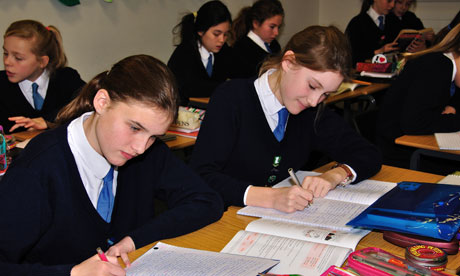
  • Girls in classroom
  • Girls learn best in a classroom heated to 24C. Photograph: Greg Balfour Evans/Alamy

Research now suggests that girls do better in warmer classrooms. Heavenly news for the Girls’ Day School Trust, the group of 26 independent schools behind this finding, but what if we want to keep our girls and boys in the same classroom? It won’t be easy, now that we have this temperature problem (24C for girls, 21C for boys) on top of all the other differences.

We have already been told that girls like a cosy, intimate, safe environment, boys like a big, brutish, perilous one; girls like to sit still, write neatly and work, without having to raise their hands, in a smallish, contained area, for an hour at a time, and like to relate the Fibonacci series to the bracts on a pine-cone; boys like to jump around, throw their pine-cones about, spread their equipment widely, and only work in short half-hour chunks; girls like a quietly spoken, friendly teacher on first-name terms; boys like a strict shouter, roaring “hands up”, who avoids direct eye-contact.

I generalise, of course. In my years at the chalkface I came across a boy who liked to sit in a warm room quietly reading, but the other boys would quickly find him and smack his book into the air, so in the main, boys and girls do have conflicting requirements, and arrangements must be made.

Regretfully, the class will have to be divided – boys on one side, girls on the other. To avoid distraction, there will be a screen down the centre (teacher is visible from both sides) with fan heaters on the girls’ side, which will contain alcoves, comfy chairs and sofas, and tables around which the groups of co-operative, collaborative girls may sit, while teacher mingles with them, quietly encouraging the girls, who though cleverer than the boys, have a lower opinion of their own achievements.

Meanwhile, on the boys’ side, there will be an adjoining, sound-proofed and padded chamber, into which, after a short burst of competitive, unco-operative work, the boys can escape for some rough and tumble and bouncing on fart-cushions. Better still, this chamber could lead to a hazardous cliff edge, with abseiling facility, above an icy plunge pool to cool down the boiling boys. Then they can return calmly to their section of class, at the back of which an ex-army chappie will be standing ready to discipline any boy who isn’t calm enough. That should do it.

« Previous Page — Next Page »

WPMU Theme pack by WPMU-DEV.