Forés @ UVPress


         Universitat de València PRESS -UVPress- weblog for research uses

January 28, 2013

07 The all-new British citizenship test – take the quiz

Filed under: archivo personal,future,política,recomendaciones — fores @ 1:27 pm


http://www.guardian.co.uk/uk/quiz/2013/jan/27/british-citizenship-test-quiz-new

The all-new British citizenship test – take the quiz

The coalition government has announced a new citizenship test for aspiring Britons, intended to place more emphasis on British history and achievements than versions drawn up under Labour. Take the sample questions below and see whether you score the 75% necessary to pass


Union jack umbrella

Are you British enough to pass the all-new citizenship test? Photograph: Andrew Cowie/AFP/Getty Images

  1. 1. Which landmark is a prehistoric monument which still stands in the English county of Wiltshire?
  2. 2. What is the name of the admiral who died in a sea battle in 1805 and has a monument in Trafalgar Square, London?
  3. 3. In 1801, a new version of the official flag of the United Kingdom was created.  What is it often called?
  4. 4. Who is the patron saint of Scotland?
  5. 5. What flower is traditionally worn by people on Remembrance Day?
  6. 6. Which of these sporting events was hosted in London in 2012?
  7. 7. At her jubilee in 2012, how many years as queen did Queen Elizabeth II celebrate?
  8. 8. The second largest party in the House of Commons is usually known by what name?
  9. 9. From what age can you be asked to serve on a jury?
  10. 10. What is the title given to the person who chairs the debates in the House of Commons?

January 27, 2013

07 The ultimate Davos debate: Marx takes on Keynes, Friedman and Schumacher

Filed under: economía,future,Holístico,politics & literature — fores @ 8:49 pm
The Guardian home

The ultimate Davos debate: Marx takes on Keynes, Friedman and Schumacher

If you could construct the best panel at a World Economic Forum debate, this would be it. But what would they say about present problems? Read on …

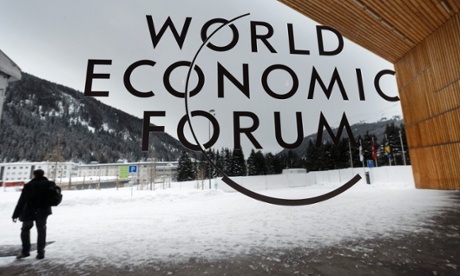
As the cold winds of the recession blow around Europe a man walks outside the main entrance of the Davos congress centre, on the eve of the opening of the 43rd Annual Meeting of the World Economic Forum, WEF, in Switzerland.

What if Karl Marx and Keynes, Friedman and Schumacher were at the 43rd World Economic Forum in Davos, Switzerland? Photograph: Laurent Gillieron/AP

Imagine that you could construct the ultimate Davos panel. From the annals of history you can choose any quartet that could put the world to rights in an hour-long talk, the format beloved of the World Economic Forum.

Klaus Schwab, the man who has been organising the forum since 1971, ensured there were plenty of stellar names strutting their stuff in the high Alps last week. Davos attendees could watch Nouriel “Dr Doom” Roubini cross swords with Adam Posen, recently a member of the Bank of England’s monetary policy committee about the merits of quantitative easing. They could listen to Mark Carney, soon to take over from Sir Mervyn King at Threadneedle Street, warn that the global economy is far from out of the woods. George Soros held forth on drugs; Facebook’s Sheryl Sandberg spoke passionately about sexual stereotyping; David Cameron called for the G8 to act against tax avoidance and corruption.

But how about this for a panel? Karl Marx, John Maynard Keynes, Milton Friedman and Fritz Schumacher, all no longer with us, kept in line by the IMF’s Christine Lagarde, thankfully still alive and kicking, and one of the standout performers last week.

Lagarde kicks off our fantasy discussion with a few words of introduction. She says business leaders have left Davos in a slightly better frame of mind not because of the millions of words spouted in Davos, but because of three little words spoken by the president of the European Central Bank, Mario Draghi, in London in July. Those words were “whatever it takes”, a commitment by the ECB to buy up the bonds of troubled eurozone countries in unlimited quantities. That has removed one of the big tail risks to the global economy – a chaotic break-up of the eurozone. But, she adds, any recovery in 2013 will be fragile and timid, and there is a risk of a relapse. “Turning first to you Karl, how do you see things”.

Marx: “The capitalist class gathered in Davos has spent the last few days wringing their hands about unemployment and the lack of demand for their goods. What they seem incapable of recognising is that these are inevitable in a globalised economy. There is a tendency towards over-investment, over-production and a falling rate of profit, which, as ever, employers have sought to counter by cutting wages and creating a reserve army of labour. That’s why there are more than 200 million people unemployed around the world and there has been a trend towards greater inequality. It is possible that 2013 will be better than 2012 but it will be a brief respite.”

Lagarde: “That’s a gloomy analysis, Karl. Wages are growing quite fast in some parts of the world, such as China, but I’d agree that inequality is a threat. The IMF’s own research shows that inequality is correlated to economic instability.”

Marx: “It is true that the emerging market economies are growing rapidly now but in time they too will be affected by the same forces.”

Lagarde: “Maynard, do you think things are as bleak as Karl says?

Keynes: “No I don’t Christine. I think the problem is serious but soluble. When we last faced a crisis of this magnitude we responded by aggressive loosening of monetary policy – driving down both short-term and long-term interest rates – and by the use of public works to boost aggregate demand. In the US, my friend Franklin Roosevelt supported legislation that allowed workers to organise. After the second world war, the international community created the IMF in order to smooth out balance of payments imbalances, prevent beggar-my-neighbour currency wars and control movements of capital. All these lessons have been forgotten. The balance between fiscal and monetary policy is wrong; currency wars are brewing; the financial sector remains largely unreformed, and aggregate demand is weak because workers are not getting a fair share of their productivity gains. Economics is stuck in the past; it is as if physics had not moved on since Kepler.”

Lagarde: “I gather from what you are saying, Maynard, that you do not approve of the way George Osborne is running the UK economy.”

Keynes: “The man has taken leave of his senses. Britain has a growth problem, not a deficit problem.”

Lagarde: “I daresay Milton that you disagree with everything Maynard has said? You would make the case, presumably, for nature’s cure?”

Milton Friedman: “Some of my friends in the Austrian school of economics would certainly favour doing nothing in the hope of a cleansing of the system, but I wouldn’t. Unlike Maynard, I wouldn’t support measures that would increase the bargaining power of trade unions and I’ve never been keen on public works as a response to a slump.

“But I would certainly support what Ben Bernanke has been doing with monetary policy in the US and would support even more drastic action if it proved necessary.”

Lagarde: “Such as?”

Friedman: “Well, I think monetary policy should be set in order to hit a target for nominal output – the increase in the size of the economy unadjusted for inflation. If that growth is too high, central banks should tighten policy. If it is too low, the trend since the crisis broke, they should loosen it. In extreme circumstances, I’d favour policies that blur the distinction between monetary and fiscal policy. That’s what I mean when I talk about helicopter drops of money into the economy.”

Lagarde: “Fritz, you have been sitting there patiently listening to Karl, Maynard and Milton. How do you assess the state of the world?

Fritz Schumacher: “I am greatly disturbed by the way the debate is being framed. There is an obsession with growth at all costs regardless of the environmental costs. Climate change was rarely mentioned in Davos: this after a year of extreme weather events. It is frightening that so little attention has been paid to global warming, and almost criminally neglectful of governments not to use ultra-low interest rates to invest in green technologies.

“As has been the case in the past, recessions have pushed green issues down the political agenda. In good times policymakers say they are in favour of sustainable development, but the pledges are forgotten as soon as unemployment starts to rise. Then it is back to business as usual: more roads, expanding airports, tax cuts to encourage consumption. When scientists are warning that global temperatures are on course to rise several degrees above pre-industrial levels on unchanged policies, this is the economics of the madhouse.”

Lagarde: “Maynard, what’s your response to that?”

Keynes: “I agree with him. If I were advising Roosevelt today I would be calling for a Green New Deal. I find it hard to envisage a world without growth, something that is politically unacceptable in the developing world in any case. But Fritz is right, we need smarter, cleaner growth. As you yourself said last week, Christine, if we carry on as we are the next generation will be ‘roasted, toasted, fried and grilled’.”

Schumacher: “I couldn’t have put it better myself.”

  • © 2013 Guardian News and Media Limited or its affiliated companies. All rights reserved.

January 24, 2013

07 Unemployment hits yet new record high at the end of 2012

Filed under: archivo personal,economía,future,Holístico,política — fores @ 3:28 pm
el país
SPANISH ECONOMY

Unemployment hits yet new record high at the end of 2012

Just under six million Spaniards out of work as labor leaders decry “unsustainable” situation

Madrid 24 ENE 2013 – 13:48 CET

Unemployment in Spain reached record highs in the last quarter of 2012 as the recession deepened due to the government’s austerity drive to trim the public deficit.

According to the Active Population Survey (EPA) for the fourth quarter, released Thursday by the National Statistics Institute (INE), the number of people out of work fell just short of six million at 5.965 million as the jobless rate rose from 25.02 percent to 26.02 percent, both records for the current historical series, which dates back to 1976.

The number of unemployed in the quarter increased by 187,300 from the previous three months, and by 691,700 for the full year. The economy shed 363,300 jobs in the three months and 850,000 for the 12 months, the second-worst year in the crisis since the height of the previous recession in 2009, when 1.2 million jobs were lost. The size of Spain’s active population shrank to 16.957 million, the lowest level since 2003, representing about one-third of the population.

The Bank of Spain on Wednesday estimated that the pace of the downturn in activity accelerated to 0.6 percent on a quarterly basis from 0.4 percent in the previous three months as GDP shrank 1.3 percent for the year.

The risk of further job destruction remains high”

The government believes that the economy will be growing at a sufficient clip at the end of 2013 to start creating jobs again. However, the IMF on Wednesday said it expects activity to deteriorate further this year, with GDP forecast to shrink 1.5 percent. The administration’s estimate is for a contraction of 0.5 percent, a figure few experts share.

“The government expects unemployment to come down in 2013 but it seems too optimistic given not only the weak economic activity we expect, but also the usual lag between activity and unemployment,” Bloomberg quoted Ricardo Santos, a euro-area economist at BNP Paribas in London, as saying. “This will continue going forward given that the bulk of the cuts in the public sector have yet to be made.”

The government is expected to miss its deficit-reduction target for 2012 of 6.3 percent of GDP, and will be challenged to meet this year’s goal. “For 2013, the European commitments acquired under the Stability and Growth Pact lay down an overall general government deficit target of 4.5 percent of GDP, the attainment of which will require a further and very ambitious fiscal effort on the part of the central government and the regional governments,” the Bank of Spain said Wednesday in its latest economic bulletin.

Other experts agreed the situation is going to get worse before it gets better. “We believe that in the first part of the year, the jobless rate could approach 27 percent, and we believe the risk of further job destruction remains high,” Reuters quoted Cortal Consors, director of strategy and the economy, as saying.

1.833 million households have all their active members out of work

The number of people in work in the fourth quarter increased only in agriculture, with services, construction and industry all seeing a fall. The number of part-time workers rose to 15.33 percent of the total labor force, while the number of people in full-time employment plunged by 473,400 in the final quarter. Over the year, the number of freelance workers rose by 53,300.

The number of households with all of their active members out of work increased by 95,800 in the fourth quarter to 1.833 million.

A draconian labor reform introduced by the Popular Party (PP) government of Prime Mariano Rajoy making it easier and cheaper to sack workers, together with the government’s austerity policies, sparked two one-day general strikes and regular massive street protests.

“The situation is unsustainable. The figures show that the labor reform has only made the problem worse,” Cándido Méndez, the leader of the UGT labor union said in an interview with EL PAÍS.

“It’s a job-destruction machine. It is essential to make a shift in policy and focus objectives on a recovery in economic activity and employment without undermining the welfare state. The destruction of the productive and social fabric will take decades to repair itself,” Méndez said.

January 22, 2013

07 Inaugural Address by President Barack Obama

Filed under: archivo personal,future,Holístico,política,recomendaciones — fores @ 11:41 am

The White House

Office of the Press Secretary

For Immediate Release
January 21, 2013

Inaugural Address by President Barack Obama


United States Capitol
11:55 A.M. EST
THE PRESIDENT:  Vice President Biden, Mr. Chief Justice,
members of the United States Congress, distinguished guests, and fellow citizens:
Each time we gather to inaugurate a President we bear witness to the enduring strength of our Constitution.  We affirm the promise of our democracy.  We recall that what binds this nation together is not the colors of our skin or the tenets of our faith or the origins of our names.  What makes us exceptional — what makes us American — is our allegiance to an idea articulated in a declaration made more than two centuries ago:
“We hold these truths to be self-evident, that all men are created equal; that they are endowed by their Creator with certain unalienable rights; that among these are life, liberty, and the pursuit of happiness.”
Today we continue a never-ending journey to bridge the meaning of those words with the realities of our time.  For history tells us that while these truths may be self-evident, they’ve never been self-executing; that while freedom is a gift from God, it must be secured by His people here on Earth.  (Applause.)  The patriots of 1776 did not fight to replace the tyranny of a king with the privileges of a few or the rule of a mob.  They gave to us a republic, a government of, and by, and for the people, entrusting each generation to keep safe our founding creed.
And for more than two hundred years, we have.
Through blood drawn by lash and blood drawn by sword, we learned that no union founded on the principles of liberty and equality could survive half-slave and half-free.  We made ourselves anew, and vowed to move forward together.
Together, we determined that a modern economy requires railroads and highways to speed travel and commerce, schools and colleges to train our workers.
Together, we discovered that a free market only thrives when there are rules to ensure competition and fair play.
Together, we resolved that a great nation must care for the vulnerable, and protect its people from life’s worst hazards and misfortune.
Through it all, we have never relinquished our skepticism of central authority, nor have we succumbed to the fiction that all society’s ills can be cured through government alone.  Our celebration of initiative and enterprise, our insistence on hard work and personal responsibility, these are constants in our character.
But we have always understood that when times change, so must we; that fidelity to our founding principles requires new responses to new challenges; that preserving our individual freedoms ultimately requires collective action.  For the American people can no more meet the demands of today’s world by acting alone than American soldiers could have met the forces of fascism or communism with muskets and militias.  No single person can train all the math and science teachers we’ll need to equip our children for the future, or build the roads and networks and research labs that will bring new jobs and businesses to our shores.  Now, more than ever, we must do these things together, as one nation and one people.  (Applause.)
This generation of Americans has been tested by crises that steeled our resolve and proved our resilience.  A decade of war is now ending.  (Applause.)  An economic recovery has begun.  (Applause.)  America’s possibilities are limitless, for we possess all the qualities that this world without boundaries demands:  youth and drive; diversity and openness; an endless capacity for risk and a gift for reinvention.  My fellow Americans, we are made for this moment, and we will seize it — so long as we seize it together.  (Applause.)
For we, the people, understand that our country cannot succeed when a shrinking few do very well and a growing many barely make it.  (Applause.)  We believe that America’s prosperity must rest upon the broad shoulders of a rising middle class.  We know that America thrives when every person can find independence and pride in their work; when the wages of honest labor liberate families from the brink of hardship.  We are true to our creed when a little girl born into the bleakest poverty knows that she has the same chance to succeed as anybody else, because she is an American; she is free, and she is equal, not just in the eyes of God but also in our own.  (Applause.)
We understand that outworn programs are inadequate to the needs of our time.  So we must harness new ideas and technology to remake our government, revamp our tax code, reform our schools, and empower our citizens with the skills they need to work harder, learn more, reach higher.  But while the means will change, our purpose endures:  a nation that rewards the effort and determination of every single American.  That is what this moment requires.  That is what will give real meaning to our creed.
We, the people, still believe that every citizen deserves a basic measure of security and dignity.  We must make the hard choices to reduce the cost of health care and the size of our deficit.  But we reject the belief that America must choose between caring for the generation that built this country and investing in the generation that will build its future.  (Applause.)  For we remember the lessons of our past, when twilight years were spent in poverty and parents of a child with a disability had nowhere to turn.
We do not believe that in this country freedom is reserved for the lucky, or happiness for the few.  We recognize that no matter how responsibly we live our lives, any one of us at any time may face a job loss, or a sudden illness, or a home swept away in a terrible storm.  The commitments we make to each other through Medicare and Medicaid and Social Security, these things do not sap our initiative, they strengthen us.  (Applause.)  They do not make us a nation of takers; they free us to take the risks that make this country great.  (Applause.)
We, the people, still believe that our obligations as Americans are not just to ourselves, but to all posterity.  We will respond to the threat of climate change, knowing that the failure to do so would betray our children and future generations.  (Applause.)  Some may still deny the overwhelming judgment of science, but none can avoid the devastating impact of raging fires and crippling drought and more powerful storms.
The path towards sustainable energy sources will be long and sometimes difficult.  But America cannot resist this transition, we must lead it.  We cannot cede to other nations the technology that will power new jobs and new industries, we must claim its promise.  That’s how we will maintain our economic vitality and our national treasure — our forests and waterways, our crop lands and snow-capped peaks.  That is how we will preserve our planet, commanded to our care by God.  That’s what will lend meaning to the creed our fathers once declared.
We, the people, still believe that enduring security and lasting peace do not require perpetual war.  (Applause.)  Our brave men and women in uniform, tempered by the flames of battle, are unmatched in skill and courage.  (Applause.)  Our citizens, seared by the memory of those we have lost, know too well the price that is paid for liberty.  The knowledge of their sacrifice will keep us forever vigilant against those who would do us harm. But we are also heirs to those who won the peace and not just the war; who turned sworn enemies into the surest of friends — and we must carry those lessons into this time as well.
We will defend our people and uphold our values through strength of arms and rule of law.  We will show the courage to try and resolve our differences with other nations peacefully –- not because we are naïve about the dangers we face, but because engagement can more durably lift suspicion and fear.  (Applause.)
America will remain the anchor of strong alliances in every corner of the globe.  And we will renew those institutions that extend our capacity to manage crisis abroad, for no one has a greater stake in a peaceful world than its most powerful nation.  We will support democracy from Asia to Africa, from the Americas to the Middle East, because our interests and our conscience compel us to act on behalf of those who long for freedom.  And we must be a source of hope to the poor, the sick, the marginalized, the victims of prejudice –- not out of mere charity, but because peace in our time requires the constant advance of those principles that our common creed describes:  tolerance and opportunity, human dignity and justice.
We, the people, declare today that the most evident of truths –- that all of us are created equal –- is the star that guides us still; just as it guided our forebears through Seneca Falls, and Selma, and Stonewall; just as it guided all those men and women, sung and unsung, who left footprints along this great Mall, to hear a preacher say that we cannot walk alone; to hear a King proclaim that our individual freedom is inextricably bound to the freedom of every soul on Earth.  (Applause.)
It is now our generation’s task to carry on what those pioneers began.  For our journey is not complete until our wives, our mothers and daughters can earn a living equal to their efforts.  (Applause.)  Our journey is not complete until our gay brothers and sisters are treated like anyone else under the law  –- (applause) — for if we are truly created equal, then surely the love we commit to one another must be equal as well.  (Applause.)  Our journey is not complete until no citizen is forced to wait for hours to exercise the right to vote.  (Applause.)  Our journey is not complete until we find a better way to welcome the striving, hopeful immigrants who still see America as a land of opportunity — (applause) — until bright young students and engineers are enlisted in our workforce rather than expelled from our country.  (Applause.)   Our journey is not complete until all our children, from the streets of Detroit to the hills of Appalachia, to the quiet lanes of Newtown, know that they are cared for and cherished and always safe from harm.
That is our generation’s task — to make these words, these rights, these values of life and liberty and the pursuit of happiness real for every American.  Being true to our founding documents does not require us to agree on every contour of life. It does not mean we all define liberty in exactly the same way or follow the same precise path to happiness.  Progress does not compel us to settle centuries-long debates about the role of government for all time, but it does require us to act in our time.  (Applause.)
For now decisions are upon us and we cannot afford delay.  We cannot mistake absolutism for principle, or substitute spectacle for politics, or treat name-calling as reasoned debate.  (Applause.)  We must act, knowing that our work will be imperfect.  We must act, knowing that today’s victories will be only partial and that it will be up to those who stand here in four years and 40 years and 400 years hence to advance the timeless spirit once conferred to us in a spare Philadelphia hall.
My fellow Americans, the oath I have sworn before you today, like the one recited by others who serve in this Capitol, was an oath to God and country, not party or faction.  And we must faithfully execute that pledge during the duration of our service.  But the words I spoke today are not so different from the oath that is taken each time a soldier signs up for duty or an immigrant realizes her dream.  My oath is not so different from the pledge we all make to the flag that waves above and that fills our hearts with pride.
They are the words of citizens and they represent our greatest hope.  You and I, as citizens, have the power to set this country’s course.  You and I, as citizens, have the obligation to shape the debates of our time — not only with the votes we cast, but with the voices we lift in defense of our most ancient values and enduring ideals.  (Applause.)
Let us, each of us, now embrace with solemn duty and awesome joy what is our lasting birthright.  With common effort and common purpose, with passion and dedication, let us answer the call of history and carry into an uncertain future that precious light of freedom.
Thank you.  God bless you, and may He forever bless these United States of America.  (Applause.)
END
12:10 P.M. EST

January 14, 2013

07 Germany and Israel A Relationship Full of Misunderstandings

Filed under: archivo personal,future,Holístico,política — fores @ 9:36 pm
SPIEGEL ONLINE

01/14/2013 05:45 PM

Germany and Israel A Relationship Full of Misunderstandings

By Christiane Hoffmann and René Pfister

German Chancellor Angela Merkel has charted a firmly pro-Israeli course.Zoom

REUTERS

German Chancellor Angela Merkel has charted a firmly pro-Israeli course.

How critical can one be of Israel? It is a question that Germany has been debating since SPIEGEL ONLINE columnist Jakob Augstein was included on the Simon Wiesenthal Center’s list of the world’s worst anti-Semites. Political leaders in Berlin have a different answer than Germans at large.

Does Angela Merkel mistrust the very people she governs? Is she uncomfortable with the German people?


ANZEIGE

In October 2011, the German chancellor stood onstage at the academy of the Jewish Museum, in Berlin, next to conductor Daniel Barenboim. The celebratory concert had concluded, and the museum’s director had just presented Merkel with its Award for Understanding and Tolerance.This is one of many awards the chancellor has received from Jewish institutions over the last couple years, including the Heinz Galinski Prize from the Jewish Community of Berlin, the American Jewish Committee’s Light Unto the Nations Award and an honorary doctorate from Tel Aviv University.

At the Jewish Museum, Merkel spoke a few pleasant words, calling the award both an honor and a responsibility. Then she cited a study, according to which 60 percent of Europeans — including Germans — consider Israel the most significant threat to world peace.

Following Merkel’s logic seems to present a conclusion that two thirds of Germans harbor anti-Semitic sentiments. Is this really what the chancellor believes? Or was her intention simply, as she said in her speech, to warn against allowing anti-Semitism to increase?

Merkel’s speech provides a direct path into the minefield that is relations between Jews and Germans, and between Germany and Israel. Of course it is absurd to label Israel the world’s worst aggressor. But does simply making such a statement count as anti-Semitism? Where does objective criticism end and defamation begin? The controversy over journalist Jakob Augstein’s columns in SPIEGEL ONLINE and elsewhere has re-ignited this debate, a storm triggered when the Simon Wiesenthal Center in Los Angeles placed Augstein on its list of the world’s worst anti-Semites.

Every Society Needs Taboos

Two different arenas of discussion have arisen in Germany in recent years, one for the country’s politicians and one for the public. Most politicians cling tightly and fearfully to the safety of the official line when they give speeches. Particularly members of the Bundestag, Germany’s parliament, haven’t forgotten the 1988 case of Philipp Jenninger. Then president of the Bundestag, Jenninger expressed himself unclearly in a commemorative speech on the anniversary of the Nazi Kristallnacht pogroms in 1938, leaving his own views too open to interpretation. Within 24 hours of that speech, Jenninger resigned.

The general public, on the other hand, is tired of the strictures that dictate what can and cannot be said for the sake of maintaining good German-Israeli relations.

Every society needs its taboos, of course. In Germany, Holocaust denial is one such taboo, as is casting aspersions on Israel’s right to exist. But doesn’t each era need to find its own particular language in which to communicate? World War II has been over for more than six decades. The generation that perpetrated the crimes is dying out. Germany has become one of Israel’s closest allies, as can be seen from the billions of euros’ worth of arms sales from Germany to Israel. Isn’t that grounds enough for speaking openly, even expressing severe criticism if necessary?

The chancellor certainly doesn’t think so. More than any other head of government, she has aligned Germany with Israel. Some see these efforts toward reconciliation with the Jewish people as the only conviction the chancellor truly holds. “She takes the matter personally,” says Deidre Berger, head of the Berlin office of the American Jewish Committee. Shimon Stein, former Israeli ambassador to Germany, was even a private guest at Merkel’s weekend house in the Uckermark region northeast of Berlin.

In a 2008 address to the Knesset, Merkel declared Israel’s security “part of my country’s raison d’être.” Even more spectacular was the statement that followed: “And if that is so, then these cannot be allowed to remain empty words at a critical time.” This can only be understood as Merkel assuring Israel that Germany will step in with military aid if necessary.

Unconditional Solidarity

“A German politician must establish a relationship of mutual trust with Israel, so that criticism of Jerusalem is not misunderstood,” says Ruprecht Polenz, a member of Merkel’s Christian Democratic Union (CDU) and chair of the Foreign Policy Committee in the Bundestag. Chancellor Merkel has certainly done this. But she has also offered at most quiet protest over Israel’s settlement policy, to little effect. Many within the Chancellery are frustrated that these arguments have not moved Israeli Prime Minister Benjamin Netanyahu in the least.

Merkel’s unconditional solidarity with Israel has thus failed to pay off, yet at the same time her approach has distanced the chancellor from many Germans, who are unwilling to follow her so unconditionally. Just how wide that rift has grown could be seen in the public debate last spring over a poem by Günter Grass, in which the author portrayed Israel as the aggressor in the Middle East and a threat to world peace. None of the country’s top politicians came to Grass’ defense. Hermann Gröhe, secretary general of the CDU, said he was “appalled” by the poem and even Sigmar Gabriel, chair of the Social Democratic Party (SPD) stated, “Some of it is excessive, and in many parts hysterical.” These reactions only made the public’s support for Grass all the more vehement, with letters piling up in the parties’ headquarters expressing outrage over the politicians’ rebuke of Grass.

What exactly does this response signify? Are the Germans a nation of anti-Semites, with the ugly countenance of hatred toward Jews lurking behind every corner, as author Tuvia Tenenbom recently suggested in his book “I Sleep in Hitler’s Room: An American Jew Visits Germany”?

There have been a number of studies on anti-Semitism in Germany, and few topics have been examined as extensively as Germans’ resentments toward Jews. The most recent major study, conducted on behalf of the Federal Interior Ministry, clocks in at 204 pages.

A Degree of Skepticism

Still, the question remains: How can one measure an attitude, a feeling? In what units is hate calculated? Is someone an anti-Semite if they say Jews have too much influence in Germany? Or if they express agreement with the opinion that Jews never look after anyone but themselves and their own?

One thing can be said for certain, and that is that Germany falls more to the middle of the spectrum on such questions. In Poland andHungary, for example, resentment toward Jews is far more widespread than in Germany. All told, according to the Interior Ministry study, 20 percent of Germans harbor latent anti-Semitism.

Certainly these numbers should be taken with a degree of skepticism. The researchers themselves admit it’s impossible to produce clearly measured results in this field. But one thing is clear: Germans’ anti-Semitism acts as a great temptation in politics — any politician looking to garner votes for his or her party quickly can play on anti-Jewish resentment.

That, though, is a dangerous game, as politician Martin Hohmann found out when he used the term “a nation of perpetrators” in connection with Jews. Merkel excluded him from the CDU’s parliamentary group as a result.

The story of Jürgen W. Möllemann ended badly as well. Möllemann, a top politician in the Free Democratic Party (FDP), played a game that held not only many voters in thrall, but his own party as well, stating in an interview that he could sympathize with Palestinian suicide attackers, and accusing then-Vice President of the Central Council of Jews in Germany Michel Friedman of being “intolerant and spiteful.”

FDP party head Guido Westerwelle was slow to take any action on Möllemann. Not until Hans-Dietrich Genscher and the party’s higher-ups intervened did Westerwelle break with Möllemann. Israel hasn’t forgotten the incident and keeps Westerwelle, now Germany’s foreign minister, under close observation to this day because of the Möllemann affair.

‘Sobering’

Israel feels under threat more than ever before, both from Iran and through the developments throughout the Arab world, and that sensitivity is only growing. At the same time, from Germany’s perspective there are many reasons to view Israeli policies critically. The country has changed, with demographic changes due to immigration from Eastern Europe and Africa causing a political shift to the right. Hardliners will have the say here for the foreseeable future.

Meanwhile, Israel’s settlement policy will soon render the idea of a Palestinian state impossible. When Hans-Ulrich Klose, the SPD’s top politician on foreign policy issues, recently attended a political congress in Israel, he met hardly any politicians still working for a two-state solution — the solution Germany considers the only viable path to peace in the Middle East. “It was sobering,” Klose stated.

What, then, should Germany do? Klose says he still believes the German government should refrain from publicly reprimanding Israel. “Why should Germany of all countries make itself Israel’s critic?” he asks.


But some younger politicians take a different view, and are increasingly unwilling to stick to the old approach. “Germany has a historical responsibility,” agrees Julia Klöckner, 40, head of the CDU in the federal state of Rhineland-Palatinate. “But that’s not a blank check to be uncritical in foreign policy.”Germany needs to find a way to be less inhibited in its dealings with Israel, Klöckner suggests. She adds, “Those who throw around accusations of anti-Semitism at every turn lose credibility.”

“Less inhibited in dealings with Israel”? “Throwing around accusations of anti-Semitism”? Are these acceptable things to say? Klöckner may find herself taking considerable heat for her statements — or meeting with considerable approval.

Translated by Ella Ornstein

« Previous Page — Next Page »

WPMU Theme pack by WPMU-DEV.