01 Lightning streaks across the sky
Photo 1+2 / 24
Lightning streaks across the sky as lava flows from a volcano in Eyjafjallajokul April 17, 2010.
Credit: REUTERS/Lucas Jackson
Universitat de València PRESS -UVPress- weblog for research uses
Photo 1+2 / 24
Lightning streaks across the sky as lava flows from a volcano in Eyjafjallajokul April 17, 2010.
Credit: REUTERS/Lucas Jackson

Ramamurti Shankar’s Physics 201 at Yale, coming soon to a portal near you. The course is Professor Shankar’s second to be put online.
At 83, Marian C. Diamond has been teaching anatomy at the University of California, Berkeley, for 50 years. Her class is so popular that it’s difficult for students to get in, though she holds court at the campus’s largest lecture hall, with room for 736.
Share your thoughts.
She begins by opening a colorful hatbox. Dressed in an elegant suit and scarf with her hair swept back into a chignon, Professor Diamond pulls on a pair of latex gloves and reveals the box’s contents: a human brain. It is in alcohol, she says, “because alcohol will preserve the brain. Need I say more?” The students laugh as they take this in. She has the room in the palm of her hands.
Professor Diamond is one of the tweedy celebrities of cyberspace. Videos of her anatomy course, Integrative Biology 131, have been viewed nearly 1.5 million times on YouTube, where they have been available since 2005 to anyone with an Internet connection. Some of the world’s foremost scholars are up there for viewing, tuition free. From Yale, you can tune into an economics class by a professor with his own home-price index, Robert Shiller, or a course by the Milton scholar John Rogers. The undisputed rock star academic is Walter H. G. Lewin of the Massachusetts Institute of Technology, who flies across the room to demonstrate that a pendulum swings no faster or slower when there is an added mass (Professor Lewin) hanging at the end.
A decade has passed since M.I.T. decided to give much of its course materials to the public in an act of largesse. The M.I.T. OpenCourseWare Initiative helped usher in the “open educational resources” movement, with its ethos of sharing knowledge via free online educational offerings, including podcasts and videos of lectures, syllabuses and downloadable textbooks. The movement has also helped dislodge higher education from its brick-and-mortar moorings.
“Everyone is in one way or another doing O.E.R. today,” says Roger C. Schonfeld, research manager at Ithaka S+R, a nonprofit service that helps academic institutions use technology for research and teaching.
If the mission of the university is the creation of knowledge (via research) and the dissemination of knowledge (via teaching and publishing), then it stands to reason that giving that knowledge away fits neatly with that mission. And the branding benefits are clear.
The Open University, the distance-learning behemoth based in England, has vastly increased its visibility with open courses, which frequently show up in the Top 5 downloads on Apple’s iTunes U, a portal to institutions’ free courseware as well as marketing material. The Open University’s free offerings have been downloaded more than 16 million times, with 89 percent of those downloads outside the U.K., says Martin Bean, vice chancellor of the university. Some 6,000 students started out with a free online course before registering for a paid online course.
In December, iTunes U itself surpassed the 100 million download mark.
Undoubtedly, open educational resources have given higher education unprecedented reach.
So, a decade in, what has it taught us?
This is not an idle question.
Open course material on the Internet may be free, but getting it there definitely isn’t. The William and Flora Hewlett Foundation, the principal financial backer of the open educational movement, has spent more than $110 million over the past eight years, with more than $14 million going to M.I.T. The cost of re-creating the educational experience is high. Only 33 of the 1,975 courses posted by M.I.T. have videos of lectures. Another hundred or so contain multimedia material like simulations and animations. The rest is simply text: syllabuses, class notes, reading lists, problem sets, homework assignments.
Relying largely on money from Hewlett, Yale has spent $30,000 to $40,000 for each course it puts online. This includes the cost of the videographer, generating a transcript and providing what Diana E. E. Kleiner, who runs Open Yale Courses, calls “quality assurance.” By next fall, Yale will have reached its initial goal of putting up 36 courses, and has plans to add more.
Mr. Schonfeld estimates that $150 million has been spent on open education over the past decade, and more money is coming in from other sources, including $8 million contributed last year by the Bill and Melinda Gates Foundation.
But now the Hewlett Foundation is pushing its grant recipients to do more than just make courseware available. In a letter to grantees in February, the foundation said that the current financial climate had forced it to reduce its education grant-making budget by 40 percent since 2008, stiffening the competition. Hewlett would hew more closely to its primary goals: “to increase access to knowledge for all and improve the practices of teaching and learning.”
Katie Hafner, co-author of “Where Wizards Stay Up Late: The Origins of the Internet,” writes about the Internet and society from San Francisco.
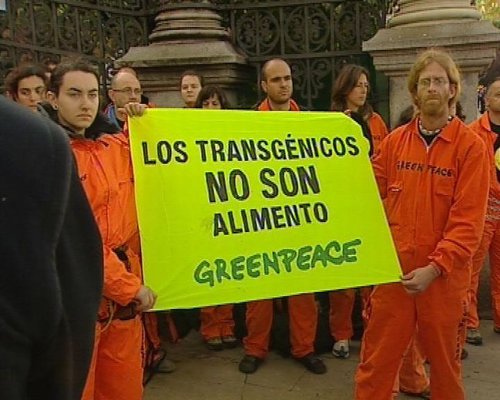
MADRID, 16 Abr. (EUROPA PRESS) –
Una veintena de asociaciones y organizaciones ecologistas, agrícolas y de consumidores han pedido a los ciudadanos sumarse a la campaña ‘Por una agricultura y una alimentación Libres de Transgénicos’, una manifestación que recorrerá este sábado las calles de Madrid para mostrar el rechazo a los organismos modificados genéticamente (OMG).
Con esta protesta se pone el ‘broche final’ a la Semana Estatal de Lucha contra los transgénicos, en la que se han realizado diferentes actividades por toda España contra este tipo de productos. Así, a la manifestación de mañana –que comenzará a las 11:30 horas en la Puerta de Alcalá y finalizará en el Ministerio de Medio Ambiente y Medio Rural y Marino (MARM)– acudirán ciudadanos procedentes de distintos puntos del país para mostrar su oposición al respecto.
La marcha está organizada por la Plataforma Rural –que engloba a Cáritas Española, Amigos de la Tierra, Colectivos de Acción Solidaria, Confederación de Consumidores y Usuarios (CECU), CERAI, CIC BATA, CIFAES, Coordinadora de Organizaciones de Agricultores y Ganaderos (COAG), Colectivo Tierra de Campos, Ecologistas en Acción, Entrepueblos, Fundación Emaus, Jóvenes Rurales Cristianos, Movimiento Rural Cristiano, MUNDUBAT, Red África Europa, Red de semillas resembrando, Sociedad Española de Agricultura Ecológica (SEAE), SOC, SODEPAZ, Universidad Rural Paulo Freire, Veterinarios sin Fronteras, Xarxa de Consum Solidari y ACSUD Las Segovias País Valencià– y Greenpeace.
También han mostrado su respaldo a la manifestación organizaciones como Comisiones Obreras, la Confederación Española de Madres y Padres del Alumnado (CEAPA) y el Consejo de la Juventud de España, entre otras.
“ESPAÑA, A FAVOR DE LAS MULTINACIONALES”
Según los convocantes, España es el único país de la Unión Europea que permite el cultivo de transgénicos a gran escala, una decisión que favorece los intereses de las grandes multinacionales. Así, Greenpeace denuncia que los cultivos que se realizan en España se llevan a cabo con “una absoluta falta de transparencia y control” por parte de las autoridades, que no evalúan los riesgos ni exigen a las empresas que respeten las leyes vigentes, además de provocar la contaminación a otros cultivos no transgénicos.
A modo de ejemplo, afirman que en 2009 se cultivaron en España más de 76.000 hectáreas de una variedad de maíz transgénico, el MON 810, que ha sido vetado por otros países europeos como Francia, Alemania, Austria, Grecia, Luxemburgo, Irlanda, Polonia, Hungría o Italia. Además, el año pasado, España albergó la mitad de los ensayos experimentales al aire libre con estos peligrosos cultivos.
Por este motivo, a lo largo de esta semana, varias organizaciones realizaron actos de protesta como el que tuvo lugar en la sede de la Embajada de España en siete países de la Unión Europea (UE) para denunciar la actitud “totalmente insostenible” del gobierno español; o el reparto de pinchos de tortilla natural en el Congreso de los Diputados para mostrar el rechazo a la alimentación y agricultura transgénica.
La última acción ha estado protagonizada por Greenpeace, después de que cuatro activistas de esta organización se encaramaran este viernes a las puertas de edificio de la puerta principal del MARM, en la madrileña glorieta de Atocha. Asimismo, unos cuarenta activistas de Greenpeace han montado un “campamento de resistencia” en las inmediaciones de la sede del ministerio.
“ATAQUE INDISCRIMINADO”
Por el contrario, diferentes asociaciones científicas y empresarias han mostrado su oposición al “ataque indiscriminado” contra los cultivos transgénicos en base a “informaciones falsas y alarmistas”. En el manifiesto ‘Biotecnología, una herramienta para la agro-alimentación de la que no podemos prescindir’, aseguran que las posturas y decisiones expresadas “no se basan en la ciencia, sino en intereses ideológicos y económicos”.
En medio de esta polémica, el pleno del Senado rechazó este martes una moción del senador del Bloc Per Mallorca, Pere Sampol, por la que se instaba al Gobierno a establecer una moratoria para el cultivo de transgénicos, así como la paralización de la importación de productos modificados genéticamente (OMG).
La moción pretendía, además, elaborar unas normas sobre la coexistencia entre cultivos transgénicos, convencionales y ecológico, al tiempo que proponía establecer un sistema de evaluación de riesgos ambientales, sanitarios, económicos y sociales, así como regular la trazabilidad y el etiquetado de este tipo de productos.
Low solar activity link to cold UK winters |
||||||||
The UK and continental Europe could be gripped by more frequent cold winters in the future as a result of low solar activity, say researchers. They identified a link between fewer sunspots and atmospheric conditions that “block” warm, westerly winds reaching Europe during winter months. But they added that the phenomenon only affected a limited region and would not alter the overall global warming trend. The findings appear in the journal Environmental Research Letters. “By recent standards, we have just had what could be called a very cold winter and I wanted to see if this was just another coincidence or statistically robust,” said lead author Mike Lockwood, professor of space environment physics at the University of Reading, UK. To examine whether there was a link, Professor Lockwood and his co-authors compared past levels of solar activity with the Central England Temperature (CET) record, which is the world’s longest continuous instrumental record of such data. The researchers used the 351-year CET record because it provided data that went back to the beginning of the Maunder Minimum, a prolonged period of very low activity on the Sun that lasted about half a century.
The Maunder Minimum occurred in the latter half of the 17th Century – a period when Europe experienced a series of harsh winters, which has been dubbed by some as the Little Ice Age. Following this, there was a gradual increase in solar activity that lasted 300 years. Professor Lockwood explained that studies of activity on the Sun, which provides data stretching back over 9,000 years, showed that it tended to “ramp up quite slowly over about a 300-year period, then drop quite quickly over about a 100-year period”. He said the present decline started in 1985 and was currently about “half way back to a Maunder Minimum condition”. This allowed the team to compare recent years with what happened in the late 1600s. “We found that you could accommodate both the Maunder Minimum and the last few years into the same framework,” he told BBC News. Big chill Professor Lockwood said that there were a number of possibilities that could explain the link, but the team favoured the idea of a meteorological phenomenon known as “blocking”. This affects the dynamics of jet streams, which are very strong winds about 7-12km above the Earth’s surface that can have a major influence on weather systems. There is one jet stream present in each hemisphere.
“Europe is particularly susceptible because, firstly, it lies underneath the (northern hemisphere’s) jet stream,” he explained. A “blocking” occurs when the jet stream forms an “s” shape over the north-eastern Atlantic, causing the wind to fold back over itself. “If you haven’t got blocking, then the jet stream brings the mild, wet westerly winds to give us the weather we are famous for.” But, he added, if the jet stream is “blocked”, and pushed further northwards, then cold, dry winds from the east flow over Europe, resulting in a sharp fall in temperatures. “This… ‘blocking’ does seem to be one of the things that can be modulated by solar activity,” he said. Recent studies suggest that when solar activity is low, “blocking” events move eastwards from above north-eastern North America towards Europe, and become more stable. A prolonged “blocking” during the most recent winter was responsible for the long spell of freezing conditions that gripped Europe. Written observations from the period of the Maunder Minimum referred to the wind coming from the east during particularly cold winters, which strengthened the team’s “blocking” hypothesis. The way in which solar activity affects the behaviour of blocking episodes is linked to the amount of ultraviolet (UV) emissions being produced by the Sun. Solar UV heats the stratosphere (20-50km above the surface), particularly the equatorial stratosphere. This results in a temperature gradient, which leads to the formation of high level winds. “The change in solar activity undoubtedly changes the stratospheric winds,” said Professor Lockwood. Studies have shown that the state of the stratosphere can make a considerable difference to what happens in the troposphere, which is where the jet stream occurs, Professor Lockwood explained. “There has been some quite simple modelling that indicated that heating the equatorial stratosphere with more UV would actually move the jet streams a little bit, by just a few degrees. “That, of course, has the potential to change the behaviour of the jet streams – and that is the sort of thing that we think we are seeing.” ‘Blocking central’ Professor Lockwood was keen to stress that “blocking” only affected a limited geographical region, and would not have a widespread impact on the global climate system. To illustrate the point, he said that while the CET record showed that this winter was the UK’s 14th coldest in 160 years, global figures listed it as the fifth warmest. He said that one of his colleagues at the University of Reading referred to Europe as “blocking central”.
“The reason is largely because the jet stream has to come to us over the Atlantic Ocean and it is slowed down when it hits the land in Europe. “You don’t quite have the same combination of circumstances anywhere else in the world that gives you such strong blocking.” While the current decline in solar activity is expected to continue in the coming decades, he cautioned that more frequent “blocking” episodes would not result in Europe being plunged into sub-zero temperatures every winter. “If we look at the last period of very low solar activity at the end of the 17th Century, we find the coldest winter on record in 1684, but the very next year – when solar activity was still low – saw third warmest winter in the entire 350-year (CET) record.” A number of other meteorological factors also influenced the weather systems over Europe, so a number of parameters had to be met before a “blocking” occurred, he observed. Responding to the team’s findings, Dr Peter Stott, head of climate monitoring and attribution at the UK Met Office, said: “This paper provides some additional evidence that what happens in the stratosphere could be important for climate at the surface.” But he added: “The findings are suggestive of a possible effect but more research is needed to pin down the mechanisms and determine how significant such effects could be for determining the probability of cold winters in the UK. “At the Met Office, we are already working on research into incorporating better representation of the stratosphere into our seasonal and decadal forecasting models.” Professor Lockwood said he now planned to examine the influence of low solar activity on European weather during the summer months. |
||||||||
(Reuters) – Genetically modified crops were planted on 134 million hectares (335 million acres) in 2009, up 7 percent from 2008, according to the International Service for the Acquisition of Agri-biotech Applications (ISAAA).
The following is a look at the global area planted to biotech crops since the world’s first crop, a biotech soybean, was introduced in 1996.
| Year | Hectares (million) |
Acres (million) |
|---|---|---|
| 1996 | 1.7 | 4.3 |
| 1997 | 11 | 27.5 |
| 1998 | 27.8 | 69.5 |
| 1999 | 39.9 | 98.6 |
| 2000 | 44.2 | 109.2 |
| 2001 | 52.6 | 130 |
| 2002 | 58.7 | 145 |
| 2003 | 67.7 | 167.2 |
| 2004 | 81 | 200 |
| 2005 | 90 | 222 |
| 2006 | 102 | 252 |
| 2007 | 114.3 | 282 |
| 2008 | 125 | 308.8 |
| 2009 | 134 | 335 |
Source: ISAAA
(Reporting by Carey Gillam)
(Reuters) – Led by U.S. producers, 14 million farmers in 25 countries planted genetically modified crops in 2009, increasing planted biotech cropland by 7 percent, even as biotech crop use declined in Europe, according to the International Service for the Acquisition of Agri-biotech Applications (ISAAA), a pro-biotech crop group.
Biotech soybeans made up more than three-quarters of global soybean plantings; biotech cotton was nearly half of global cotton, and biotech maize accounted for more than one-quarter of global maize land.
The following is a list of 15 countries that planted at least 100,000 hectares in 2009 to genetically modified corn, soybeans, cotton and other crops, according to ISAAA. Ten countries planted less than 100,000 hectares.
(acres is hectares x 2.47)
| Country | 2009 | 2008 |
|---|---|---|
| United States | 64 | 62.5 |
| Brazil | 21.4 | 15.8 |
| Argentina | 21.3 | 21 |
| India | 8.4 | 7.6 |
| Canada | 8.2 | 7.6 |
| China | 3.7 | 3.8 |
| Paraguay | 2.2 | 2.7 |
| South Africa | 2.1 | 1.8 |
| Uruguay | 0.8 | 0.7 |
| Bolivia | 0.8 | 0.6 |
| Philippines | 0.5 | 0.4 |
| Australia | 0.2 | 0.2 |
| Burkina Faso | 0.1 | 0.1 |
| Spain | 0.1 | 0.1 |
| Mexico | 0.1 | 0.1 |
(million hectares)
Ten countries planting less than 100,000 hectares
Chile, Colombia, Honduras, Czech Republic, Portugal, Romania, Poland, Costa Rica, Egypt, Slovakia
Source: ISAAA
(Reporting by Carey Gillam)
WPMU Theme pack by WPMU-DEV.


 E-mail this to a friend
 Printable version


 Europe is particularly susceptible because it lies underneath the jet stream


